



Explorando el riff de 'Pinetop Smith'

Con
Paddy Milner
Qué incluye el curso
14 lecciones (2h 17m) · 2 gratis
01. Demostración: toquemos algo de blues
Lección gratis3:48
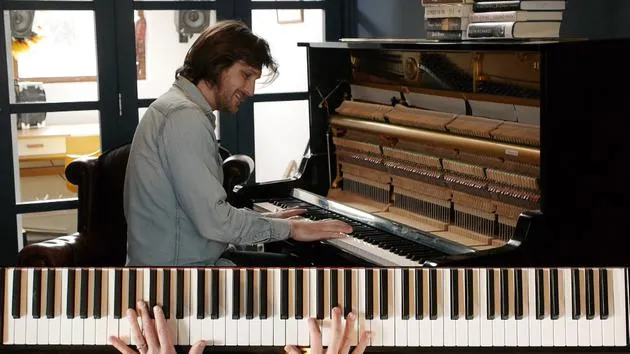
02. Explorando el riff de 'Pinetop Smith'
Estás aquí15:29

03. Combinando ideas con el riff de 'Pinetop Smith'
7:59

04. Riffs basados en un acorde en segunda inversión
20:24
05. Explorar terceras descendentes
15:28
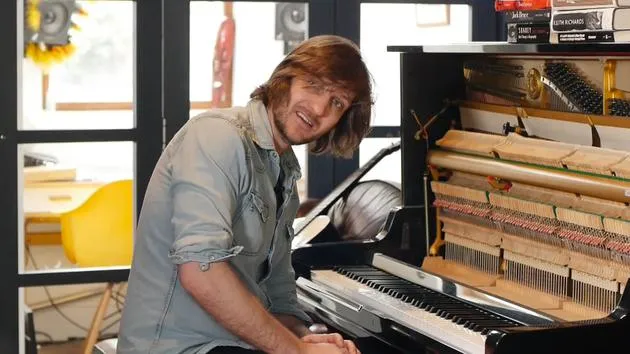
06. Ideas para una introducción
9:34
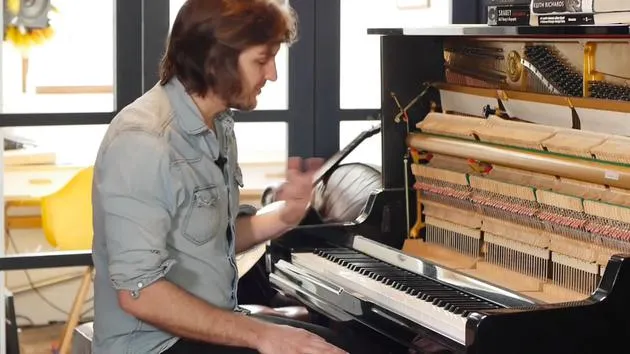
07. La sala de máquinas: el bajo de la mano izquierda
10:59
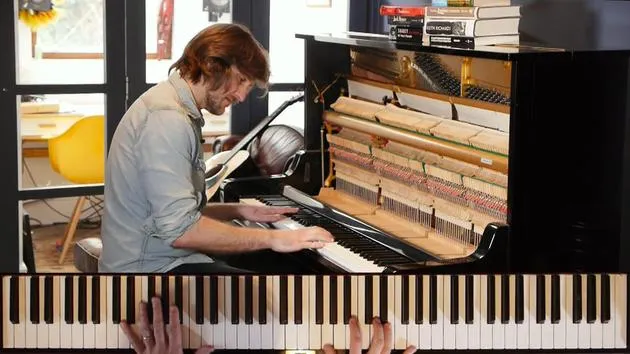
08. Ideas para los acordes V-IV (compases 9-10)
12:00
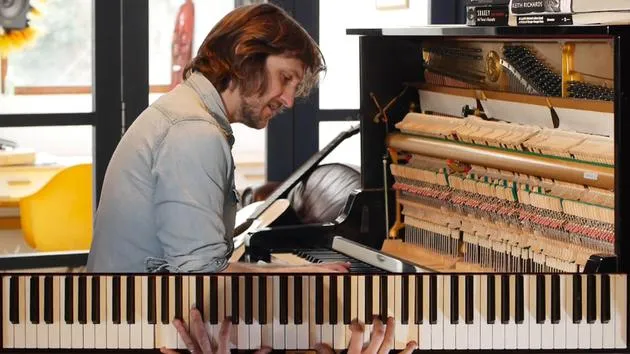
09. Explorar los acordes 'rolling'
7:24
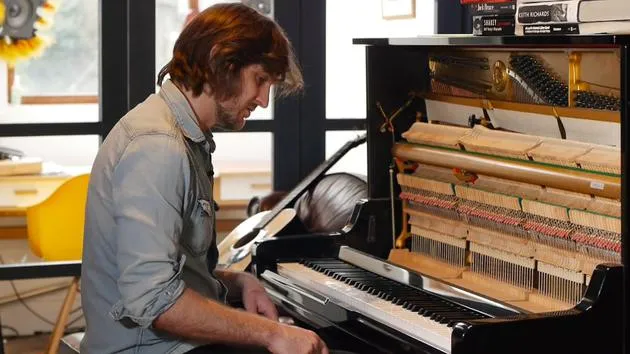
10. Break de piano n.º 1
8:58
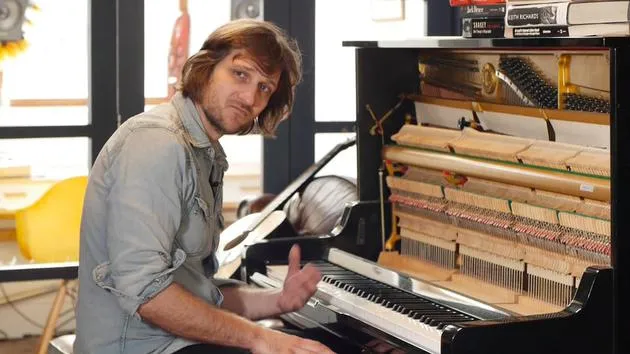
11. Break de piano n.º 2
6:15
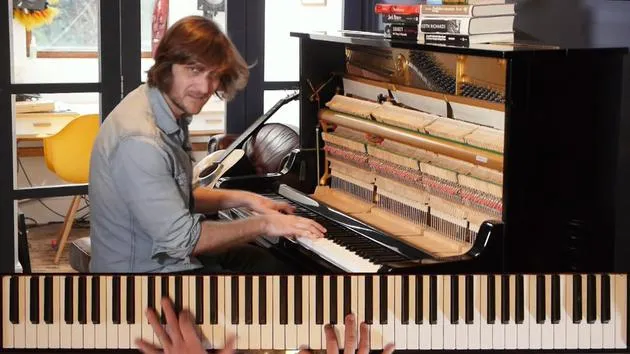
12. Explorando los finales
10:25
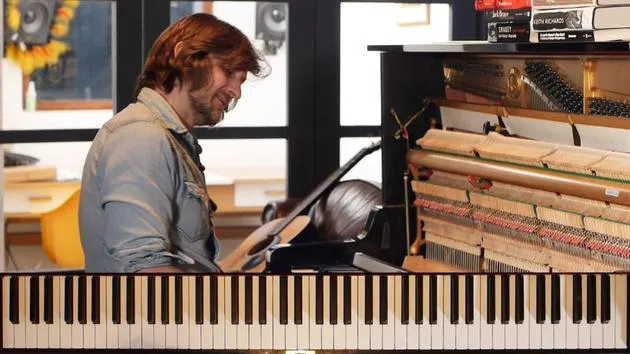
13. Algunas ideas extra
6:53
14. Everyday I'm Shufflin' - El reto del shuffle de blues
1:35
Transcripción de la lección
Welcome to Blues Piano
Hey, how you doing, guys? I'm Paddy Milner. Welcome to this course on blues piano.
Course Aim
The aim of this course is to really get you playing some authentic blues piano, inspired by some of the greats like:
- Johnny Johnson
- Otis Spann
- Pinetop Perkins
But also to help you understand the language and stylistic elements in the music, so you can explore your own creative angles.
Overview of the Lesson
We're going to delve into what I did in that demonstration video, which I hope you've watched. I tried to cram in loads of different ideas and riffs. I will break that down as much as possible to show you exactly what I was doing from the ground up. Hopefully, this will give you plenty of ideas to do your own thing. So, let's get stuck into it. Cool? Let's dive in.
Introduction and Basic Riff
As you will have heard, the tune I played has a little four-bar introduction. We'll look at that later, but for now, let's focus on a little riff that I think I introduced after that introduction.
This riff is one of the earliest documented, recorded riffs, by Pine Top Smith back in 1923 in the key of F sharp. It's a riff with a lot of history, really identifiable with blues piano. You'll hear all sorts of piano players using it, especially Johnny Johnson, all over those Chuck Berry records.
Chords in the Key of G
We will be looking at all of this in the key of G, which is the key I played the tune in, a handy key for playing this kind of shuffle blues on the piano.
Basic Chords
In a 12-bar blues, in the key of G, we have:
- 4 bars on G
- 2 bars of C
- 2 bars of G
- 1 bar of D
- 1 bar of C
- 1 turn around from G to D for a bar
Exploring the Riff
Let's dive into this first riff. This riff is based on a kind of ninth chords:
- G7, that's the G9.
- If you count up the major scale: 1, 2, 3, 4, 5, 6, 7, 8, 9, that's the ninth note.
- It's based on a dominant seventh as well, so that seventh is flattened, giving it more of an A Blues kind of sound.
This riff essentially moves down in thirds, rocking between the thirds up there and the B down below. In its basic form, it goes like this:
3, 4...
Then on the C, that's the C9, and on the D, that's the D9. It can be slightly trickier on that D due to the black notes in the way, so try to make it fluent under your fingers without gaps between the chord changes.
Enhancing the Riff
Let's explore ways to make that a bit more interesting.
Adding Passing Notes
- Add a couple of passing notes going up to the third, which is the note you're rocking between.
- For the C7, you would approach that third by semitones from below.
- On the D, you may find the fingering trickier because of the raised F sharp. A possible approach is to use the thumb for the transition.
Practice Tips
To get that riff under your fingers:
- Start at the fastest tempo that is comfortable for you, even if it's very slow.
- Use a metronome for a consistent sense of tempo.
Having a good sense of time is crucial when playing with other musicians, so ensure those chord changes are completed without hesitation before increasing the metronome speed.
Variations on the Riff
Now, let's look at some variations:
-
Rhythmic Variations:
- Add a triplet to it for a more interesting sound.
- Additionally, transform it into a 16th note feel, which is tricky as your left hand maintains the shuffle groove.
-
Chromatic Notes:
- Add chromatic passing notes going down, where you are moving between notes rather than down the scale of the key.
Exploring Further Variations
You can also:
- Roll the notes, but keep it consistent.
- Combine rolling with chromatic passing notes.
- Add triplets leading to the passing notes.
Practical Application
We've covered quite a bit already! So, why not play around a 12-bar, using these variations to give it some direction and movement?
Here we go: One, two, you know what to do...
Final Thoughts
There you go! A few variations of that riff, which originally started out as a simple foundational piece.
Experiment:
- Try creating your own variations of the riff.
- Don't be afraid to explore odd-sounding elements; you might discover something funky.
- Remember, adding passing notes and triplets can bring creativity into your playing.
Have fun!
14 lecciones
2h 17m de lecciones en vídeo estructuradas
Funciones de vídeo avanzadas
Ralentiza, repite un pasaje, sigue la partitura
Móvil, tablet y ordenador
Practica donde quieras
Garantía de satisfacción 100%
30 días de garantía de devolución
Conoce a tu gurú
Conoce a tu gurú
Paddy Milner está reconocido como uno de los mejores pianistas de blues del mundo: actualmente es el teclista de confianza de Sir Tom Jones, tras varios años con el gran y ya desaparecido Jack Bruce, pero también es un magnífico compositor original y un cantante con personalidad propia. ¡Basta con leer los elogios de figuras como Dave Brubeck que aparecen más abajo! Su forma de tocar apareció en la banda sonora de la exitosa película de 2019 'Rocketman'.
Ha ganado dos veces el premio al Mejor teclista en los British Blues Awards, y mantiene una residencia de larga trayectoria como miembro fundador de la Ronnie Scott's Blues Explosion en el mundialmente famoso club Ronnie Scott's.
Su grupo actual LONDONOLA toca música británica de cosecha propia con una buena dosis de espíritu de Nueva Orleans, y su grupo colaborativo JAWBONE va de fuerza en fuerza tras la publicación de su álbum de debut homónimo.
- "Me encanta... hay un tipo que sabe tocar de verdad el piano" - Dave Brubeck
- "Lo recomiendo encarecidamente. ¡De algún modo las cosas empiezan a sentirse mucho mejor!" - Jack Bruce
- "El mejor pianista de blues de Europa..." - Blues Access, EE. UU.
- "Impresionante y original" - The Times
- "Deslumbrante" - The Independent
A lo largo de sus cursos, Paddy desglosa el auténtico shuffle de blues, el slow blues, el boogie-woogie, el rock 'n' roll y el piano de Nueva Orleans -incluidas tres canciones clásicas de boogie-woogie- para que aprendas estos estilos de uno de los mejores del oficio.







