



Ideas para una introducción

Con
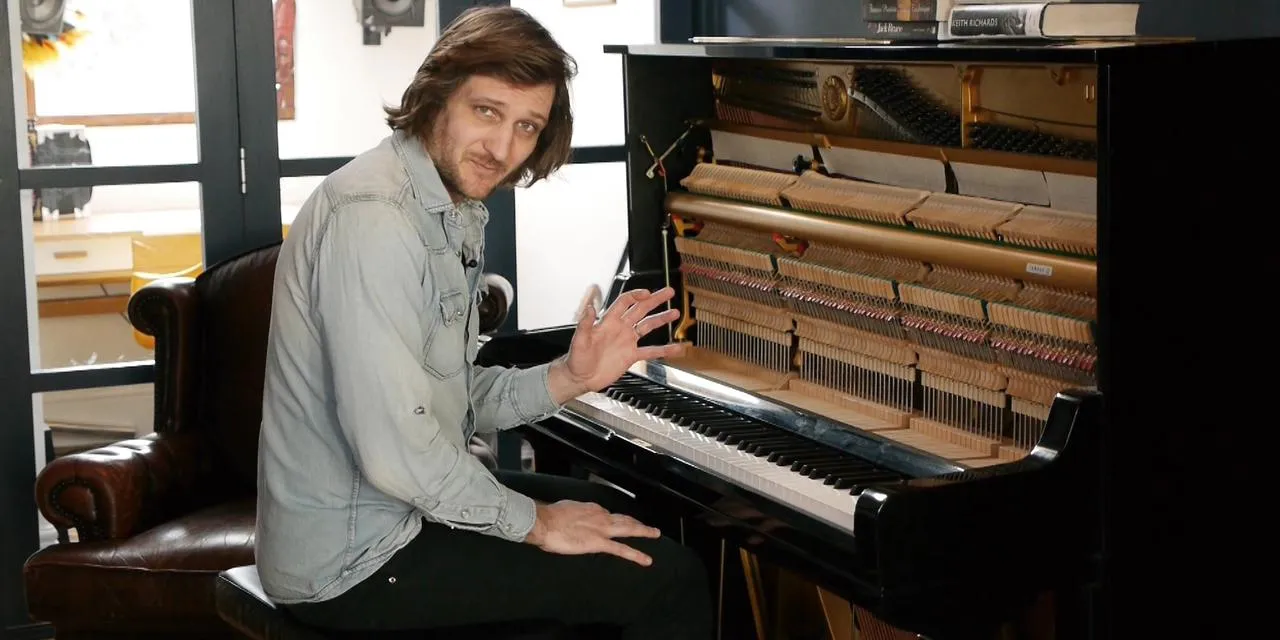
Paddy MilnerPaddy Milner desglosa la intro de su tema de blues, construida sobre el movimiento entre G7 y G séptima disminuida.
Qué incluye el curso
14 lecciones (2h 17m) · 2 gratis
01. Demostración: toquemos algo de blues
Lección gratis3:48
02. Explorando el riff de 'Pinetop Smith'
Lección gratis15:29
03. Combinando ideas con el riff de 'Pinetop Smith'
7:59
04. Riffs basados en un acorde en segunda inversión
20:24
05. Explorar terceras descendentes
15:28
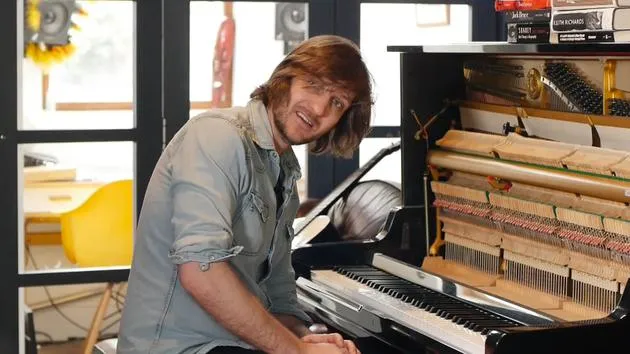
06. Ideas para una introducción
Estás aquí9:34
07. La sala de máquinas: el bajo de la mano izquierda
10:59
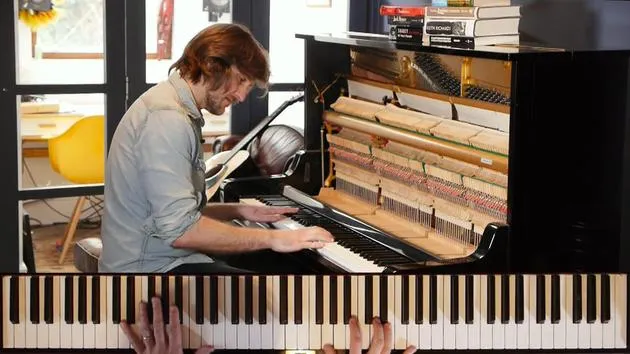
08. Ideas para los acordes V-IV (compases 9-10)
12:00
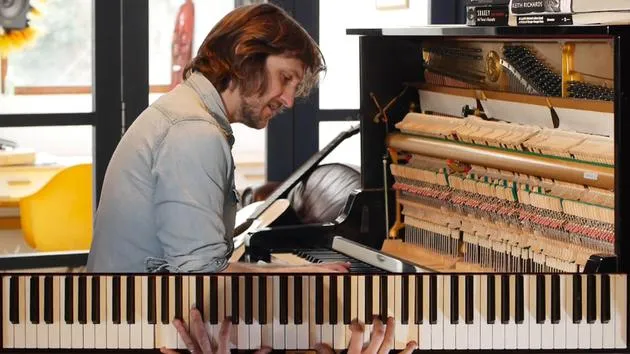
09. Explorar los acordes 'rolling'
7:24
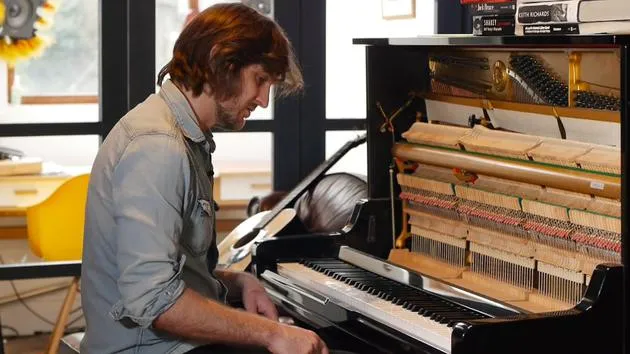
10. Break de piano n.º 1
8:58
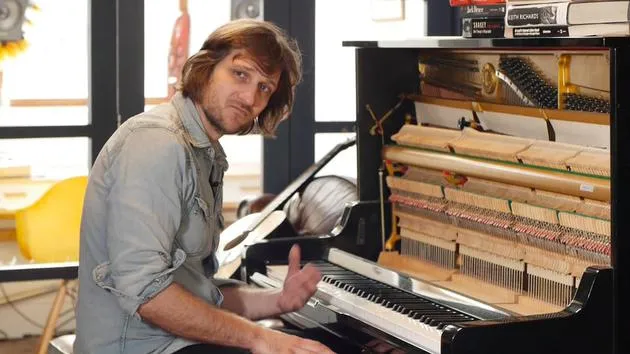
11. Break de piano n.º 2
6:15
12. Explorando los finales
10:25
13. Algunas ideas extra
6:53
14. Everyday I'm Shufflin' - El reto del shuffle de blues
1:35
Transcripción de la lección
Music Lesson: Exploring G7 and G Diminished 7th
Introduction
Cool. So let's look at the introduction I played on that little tune.
Basic Harmony
The basic harmony involves going between:
- G7
- G diminished seventh
- Back to G
That is the basic harmony that has been embellished.
Left Hand and Right Hand Explanation
I'm splitting that up in the hands:
- The left hand is playing G7 in third inversion with the F at the bottom.
- Then it transitions to that version of the inversion of the G diminished seven, which is essentially an E diminished seven.
However, it's better to think of it in terms of a G diminished 7.
In the right hand, I'm doing the following:
- The G is always sounding at the top.
- If you want to simplify it without that triplet in the middle, it's just:
Note: The actual notes played should be indicated here.
The first time, I'm going via the B natural. The second time, I'm going via that C sharp because that's part of that diminished chord.
Dissonance and Choices
There is a bit of dissonance there, but that really doesn't matter. It would probably sound alright, but it might sound a bit forced if I went too far. You could do it that way, and it does sound cool too, but I've chosen to just stick on that D.
At the end of that phrase, it has something like that, which we looked at in another video.
Rolling and Tenth Usage
The whole thing has a lot of those little rolls going on. Then we're into the tune. In the left hand, I was sticking in some tenths over the harmonics.
Sound Options
- Something like that sounds nice and fat and meaty.
- You don't have to use tenths; you could go down in:
- Fifths
- Octaves
- Thirds (which I don't think is quite as cool)
You could use G D to B, going down with the seventh and the tenth, which sounds a bit fruity. Or you could do a little anticipation there and break the tenth up.
Exploring Variations
To me, that felt a bit unnatural, maybe sounding a bit unnatural too. But, you know, I'm just exploring. I really want you to get into the habit of trying different things as well. Not just recreating what I'm doing; use it as a basis and explore all kinds of other ways.
Full Introduction Play
I'll play that introduction for you in full so you can hear it in context.
Common Introduction Patterns
The reason I decided to start the demo tune with that introduction is that the G7 to G diminished seventh thing is such a common introductory pattern, especially in boogie-woogie tunes, like, for example, Roll and Pete.
- This kind of sound evokes great examples, though it wasn't the actual Roland Pete intro.
- It kind of starts like that, echoing classic styles of musicians like Robert Johnson.
Blues Application
You'll find this harmonic pattern all over the blues. It's a really good source of tension.
IV Chord Usage
You can use it over the IV chord as well:
- You could play G diminished seventh over the IV chord for a real crunch.
For example, you might be playing going up to the IV chord, and it delivers that real dissonance.
Conclusion
It's a great edgy sound, so definitely a harmony that will keep cropping up in your blues playing. Get stuck into that intro, try some different variations, and let's look at some other stuff!
14 lecciones
2h 17m de lecciones en vídeo estructuradas
Funciones de vídeo avanzadas
Ralentiza, repite un pasaje, sigue la partitura
Móvil, tablet y ordenador
Practica donde quieras
Garantía de satisfacción 100%
30 días de garantía de devolución
Conoce a tu gurú
Conoce a tu gurú
Paddy Milner está reconocido como uno de los mejores pianistas de blues del mundo: actualmente es el teclista de confianza de Sir Tom Jones, tras varios años con el gran y ya desaparecido Jack Bruce, pero también es un magnífico compositor original y un cantante con personalidad propia. ¡Basta con leer los elogios de figuras como Dave Brubeck que aparecen más abajo! Su forma de tocar apareció en la banda sonora de la exitosa película de 2019 'Rocketman'.
Ha ganado dos veces el premio al Mejor teclista en los British Blues Awards, y mantiene una residencia de larga trayectoria como miembro fundador de la Ronnie Scott's Blues Explosion en el mundialmente famoso club Ronnie Scott's.
Su grupo actual LONDONOLA toca música británica de cosecha propia con una buena dosis de espíritu de Nueva Orleans, y su grupo colaborativo JAWBONE va de fuerza en fuerza tras la publicación de su álbum de debut homónimo.
- "Me encanta... hay un tipo que sabe tocar de verdad el piano" - Dave Brubeck
- "Lo recomiendo encarecidamente. ¡De algún modo las cosas empiezan a sentirse mucho mejor!" - Jack Bruce
- "El mejor pianista de blues de Europa..." - Blues Access, EE. UU.
- "Impresionante y original" - The Times
- "Deslumbrante" - The Independent
A lo largo de sus cursos, Paddy desglosa el auténtico shuffle de blues, el slow blues, el boogie-woogie, el rock 'n' roll y el piano de Nueva Orleans -incluidas tres canciones clásicas de boogie-woogie- para que aprendas estos estilos de uno de los mejores del oficio.







