



Break de piano n.º 1

Con
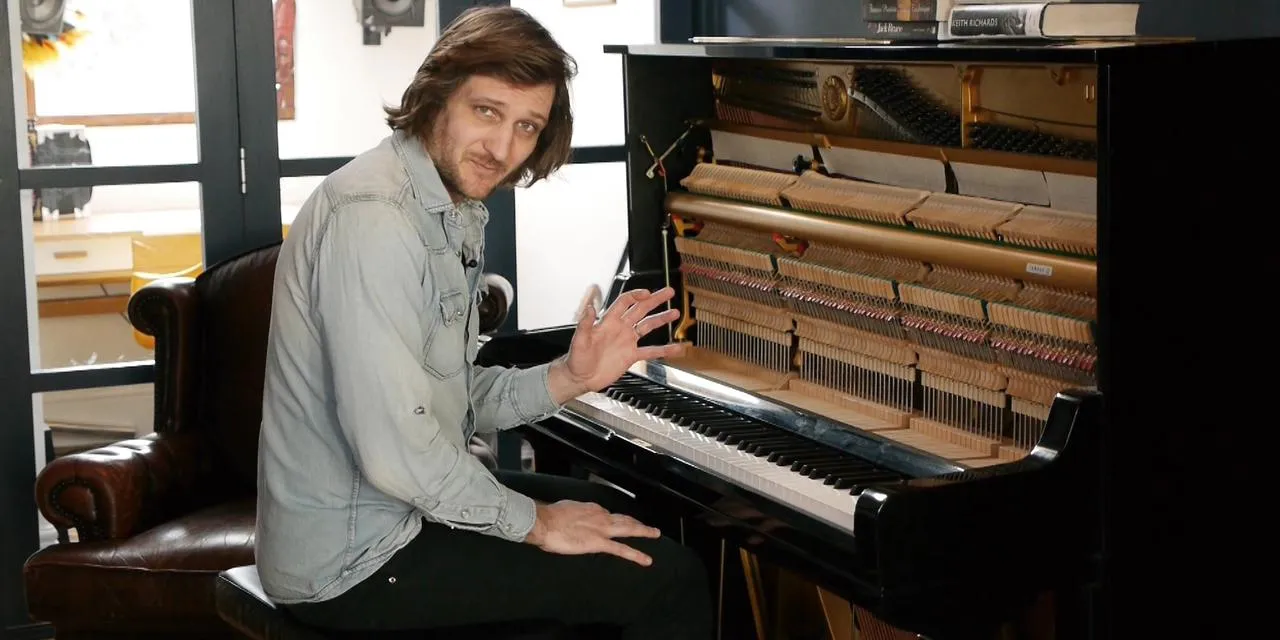
Paddy MilnerPaddy Milner desglosa el primer 'break' de la mano izquierda, tomado de 'Suitcase Blues' de Albert Ammons, construido sobre un arpegio de sol con décimas y notas de adorno.
Qué incluye el curso
14 lecciones (2h 17m) · 2 gratis
01. Demostración: toquemos algo de blues
Lección gratis3:48
02. Explorando el riff de 'Pinetop Smith'
Lección gratis15:29
03. Combinando ideas con el riff de 'Pinetop Smith'
7:59
04. Riffs basados en un acorde en segunda inversión
20:24
05. Explorar terceras descendentes
15:28
06. Ideas para una introducción
9:34
07. La sala de máquinas: el bajo de la mano izquierda
10:59
08. Ideas para los acordes V-IV (compases 9-10)
12:00
09. Explorar los acordes 'rolling'
7:24
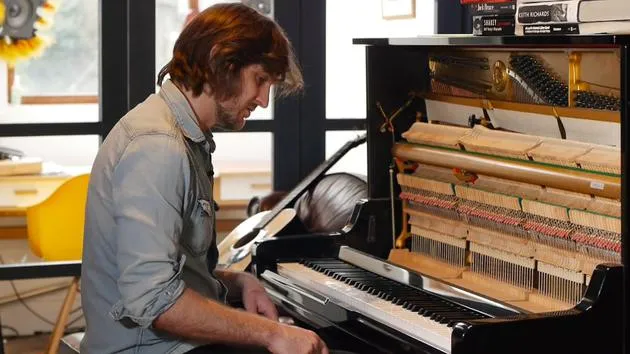
10. Break de piano n.º 1
Estás aquí8:58
11. Break de piano n.º 2
6:15
12. Explorando los finales
10:25
13. Algunas ideas extra
6:53
14. Everyday I'm Shufflin' - El reto del shuffle de blues
1:35
Transcripción de la lección
Music Lesson: Breaks and Variations
Overview of Breaks
Let's take a look at the breaks I demonstrated in the recording from the first video.
First Break - Suitcase Blues
The first break was taken from a little Albert Ammons tune called Suitcase Blues. It's a great tune and goes something like this:
[Plays tune]
When you break it down, it's actually pretty simple. Here's how it works:
Left Hand Technique
- The left hand is simply going up and down the G arpeggio.
- It's using a 10th in the left hand when it goes back into it.
- There are grace notes in between, which makes it sound impressive.
Tip: Practice it at a slower tempo to ensure it's comfortable under your fingers. It's quite a feature in the tune, so it needs to stand out from the right hand as well.
Right Hand Technique
- The right hand is also simple. It plays essentially sixths down with leading notes before it.
Whole Technique:
- It's important to keep your wrist flexible here.
- Avoid using your whole arm; otherwise, you risk injury and won't be able to gain speed.
- Focus on having a relaxed wrist. Your upper arms, lower arms, and wrists should all be relaxed.
Visualize: You should be able to see the muscle relaxing and flapping underneath, an important aspect of playing comfortably.
Variations on the Break
Left Hand Variations
Instead of the usual up and down approach, consider starting with the left hand at the top, moving to the bottom, and back to the top:
- Fun Experiment: Let's see how that sounds with the right hand.
[Plays new pattern]
Right Hand Variations
- You could change what you're doing with the right hand. Consider trying different riffs, like the one we looked at earlier.
[Plays new riff]
Exploring Trills
We haven't really covered trills yet, but you could incorporate one:
- A basic G7 chord played with a voicing that covers the F and G with the thumb.
- Rock around the B and slide off the B.
Inversions:
- In the second half, slide to the next inversion or two inversions up of the G7 and slide off the D flat.
Experimentation:
- You could use different inversions while reducing the time spent on each one.
Bringing the Left Hand Higher
You might find it interesting to carry on with the left hand up at the top.
[Demonstrates idea]
This may lead to a nice feature in the tune, especially if the bass is typically low.
Conclusion
This breakdown of the break includes a couple of ideas for variations. I recommend listening to Albert Ammons' original of Suitcase Blues to hear his approach.
In the next video, we'll explore the other break I did.
14 lecciones
2h 17m de lecciones en vídeo estructuradas
Funciones de vídeo avanzadas
Ralentiza, repite un pasaje, sigue la partitura
Móvil, tablet y ordenador
Practica donde quieras
Garantía de satisfacción 100%
30 días de garantía de devolución
Conoce a tu gurú
Conoce a tu gurú
Paddy Milner está reconocido como uno de los mejores pianistas de blues del mundo: actualmente es el teclista de confianza de Sir Tom Jones, tras varios años con el gran y ya desaparecido Jack Bruce, pero también es un magnífico compositor original y un cantante con personalidad propia. ¡Basta con leer los elogios de figuras como Dave Brubeck que aparecen más abajo! Su forma de tocar apareció en la banda sonora de la exitosa película de 2019 'Rocketman'.
Ha ganado dos veces el premio al Mejor teclista en los British Blues Awards, y mantiene una residencia de larga trayectoria como miembro fundador de la Ronnie Scott's Blues Explosion en el mundialmente famoso club Ronnie Scott's.
Su grupo actual LONDONOLA toca música británica de cosecha propia con una buena dosis de espíritu de Nueva Orleans, y su grupo colaborativo JAWBONE va de fuerza en fuerza tras la publicación de su álbum de debut homónimo.
- "Me encanta... hay un tipo que sabe tocar de verdad el piano" - Dave Brubeck
- "Lo recomiendo encarecidamente. ¡De algún modo las cosas empiezan a sentirse mucho mejor!" - Jack Bruce
- "El mejor pianista de blues de Europa..." - Blues Access, EE. UU.
- "Impresionante y original" - The Times
- "Deslumbrante" - The Independent
A lo largo de sus cursos, Paddy desglosa el auténtico shuffle de blues, el slow blues, el boogie-woogie, el rock 'n' roll y el piano de Nueva Orleans -incluidas tres canciones clásicas de boogie-woogie- para que aprendas estos estilos de uno de los mejores del oficio.







