



Ideas para los acordes V-IV (compases 9-10)

Con
Paddy MilnerPaddy Milner comparte ideas arquetípicas de piano blues para los acordes V y IV -los compases 9 y 10 de la secuencia de 12 compases-, incluidas notas de adorno y digitaciones deslizadas.
Qué incluye el curso
14 lecciones (2h 17m) · 2 gratis
01. Demostración: toquemos algo de blues
Lección gratis3:48
02. Explorando el riff de 'Pinetop Smith'
Lección gratis15:29
03. Combinando ideas con el riff de 'Pinetop Smith'
7:59

04. Riffs basados en un acorde en segunda inversión
20:24
05. Explorar terceras descendentes
15:28
06. Ideas para una introducción
9:34
07. La sala de máquinas: el bajo de la mano izquierda
10:59
08. Ideas para los acordes V-IV (compases 9-10)
Estás aquí12:00
09. Explorar los acordes 'rolling'
7:24
10. Break de piano n.º 1
8:58
11. Break de piano n.º 2
6:15
12. Explorando los finales
10:25
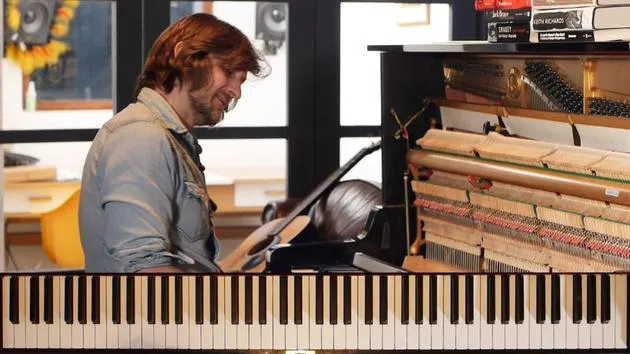
13. Algunas ideas extra
6:53
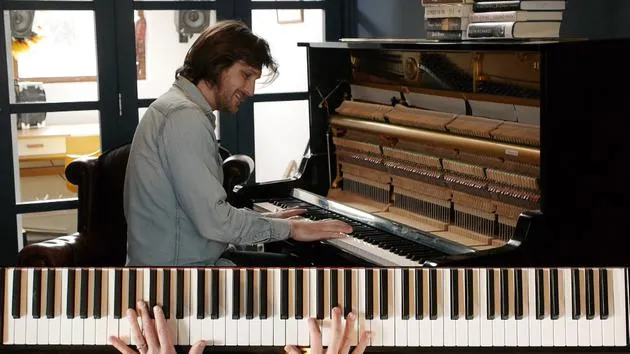
14. Everyday I'm Shufflin' - El reto del shuffle de blues
1:35
Transcripción de la lección
Blues Piano Lesson: Playing Over the 5 and 4 Chord
Welcome back! In this video, we're going to look at the material I was playing over the 5 and the 4 chord in bars 9 to 10 of the 12-bar sequence. The goal is to get you playing some archetypal blues piano techniques.
Demonstration
I'll play around that a couple of times, refresh your memory, and then explain what I'm doing. So, coming up to bar nine... here we go!
Demonstrates the sound
I think that sounds pretty authentic!
The V Chord
On the V chord, you'll see me often outline the D to D7.
Notice I'm playing that E and adding a few grace notes. This outlines the D7 and includes some elements based on the blues scale at the end.
Example Technique:
- Sliding up from the thumb to the second finger and then to the third.
- You could also replicate that sliding motion.
Refreshing the Concept
Let's refresh that:
Plays again
Rolling down is like playing a D6 but with a 7.
Influence of Guitar
This style may originate from piano imitation of the guitar, definitely something you might hear Muddy Waters do. But it works great on the piano too!
The Turnaround
We're approaching the territory of the turnaround, which I'll cover in another video.
Key Patterns
Now, here's one thing you can play over the D to C and back to G, which sounds pretty cool:
- Muddy Waters Influence:
Another common move is outlining the D7...- Then play the C in octaves.
- This is a real signature move you'll hear Muddy Waters performing on the guitar, and we can adapt it for piano.
Adds a little ornament there.
You could also do this on the D, going up a C chord, it fits nicely under the fingers.
Creative Variations
Get that under your fingers! These are a couple of nice things you can play over the transition from the 5 to the 4 and then back to the 1.
Consider varying the riffs. You could play:
-
Example Riff 1:
Going back to the riff based on the 9th. -
Example Riff 2:
Or try something like this...
Rhythmic Play
You might also experiment with the feel and time. Instead of playing:
- A straight rhythm, try a shuffle-like groove.
*Demonstrates the context with bars *
Adds rhythmic interest.
Band Interaction
In a band setting, once you start playing that rhythm, one of the other instruments might nod to that idea and join you, which is always fun. After all, it's got to be great fun!
Practical Application
Putting that into context, I'll demonstrate a couple of bars leading up to it with a shuffle, then switch to a more straight groove in the right hand.
Plays demonstration
Additional Techniques
You can add the third, going from the major third to the minor third sounds pretty hip! Other ideas for the 5 to 4 transition could include:
- Example Move:
Playing descending thirds.
Listening and Learning
Remember to listen closely to what piano players are doing on classic records. Think about what the harmonica and guitars are doing too, and try to work out versions of those for the piano.
Final Thoughts
As always, let your creativity be your guide and come up with your own weird and wonderful ideas. Happy playing!
14 lecciones
2h 17m de lecciones en vídeo estructuradas
Funciones de vídeo avanzadas
Ralentiza, repite un pasaje, sigue la partitura
Móvil, tablet y ordenador
Practica donde quieras
Garantía de satisfacción 100%
30 días de garantía de devolución
Conoce a tu gurú
Conoce a tu gurú
Paddy Milner está reconocido como uno de los mejores pianistas de blues del mundo: actualmente es el teclista de confianza de Sir Tom Jones, tras varios años con el gran y ya desaparecido Jack Bruce, pero también es un magnífico compositor original y un cantante con personalidad propia. ¡Basta con leer los elogios de figuras como Dave Brubeck que aparecen más abajo! Su forma de tocar apareció en la banda sonora de la exitosa película de 2019 'Rocketman'.
Ha ganado dos veces el premio al Mejor teclista en los British Blues Awards, y mantiene una residencia de larga trayectoria como miembro fundador de la Ronnie Scott's Blues Explosion en el mundialmente famoso club Ronnie Scott's.
Su grupo actual LONDONOLA toca música británica de cosecha propia con una buena dosis de espíritu de Nueva Orleans, y su grupo colaborativo JAWBONE va de fuerza en fuerza tras la publicación de su álbum de debut homónimo.
- "Me encanta... hay un tipo que sabe tocar de verdad el piano" - Dave Brubeck
- "Lo recomiendo encarecidamente. ¡De algún modo las cosas empiezan a sentirse mucho mejor!" - Jack Bruce
- "El mejor pianista de blues de Europa..." - Blues Access, EE. UU.
- "Impresionante y original" - The Times
- "Deslumbrante" - The Independent
A lo largo de sus cursos, Paddy desglosa el auténtico shuffle de blues, el slow blues, el boogie-woogie, el rock 'n' roll y el piano de Nueva Orleans -incluidas tres canciones clásicas de boogie-woogie- para que aprendas estos estilos de uno de los mejores del oficio.







