



Improvisación rítmica y comping
Empieza con la improvisación rítmica, o 'comping': contar las subdivisiones habituales y construir patrones de rasgueo sobre un acorde de Sol fijo.

Qué incluye el curso
41 lecciones (2h 51m) · 1 gratis
01. Introducción a los enfoques de la improvisación
1:00
02. Primeros pasos con la improvisación
9:22
03. Tarea: encontrar las notas del acorde
4:05
04. Improvisar usando notas de acorde
10:18
05. Añadir interés rítmico a tus solos
4:11
06. Ejercicio: improvisar sobre un cambio de acorde
2:52
07. Reto: Envía tu improvisación
0:24
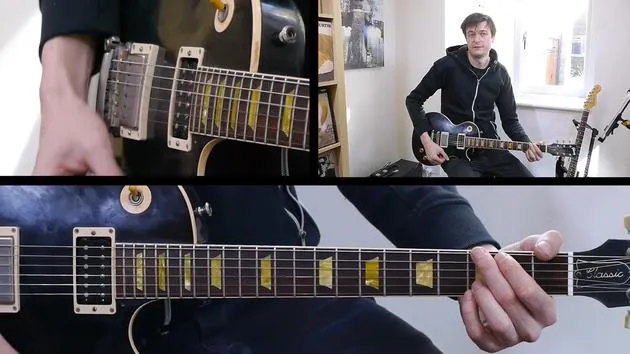
08. Improvisación rítmica y comping
Estás aquí9:55
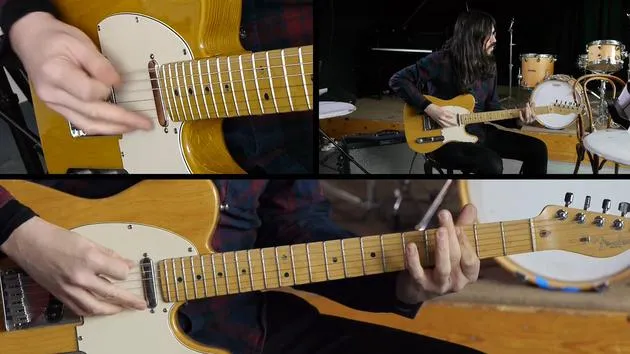
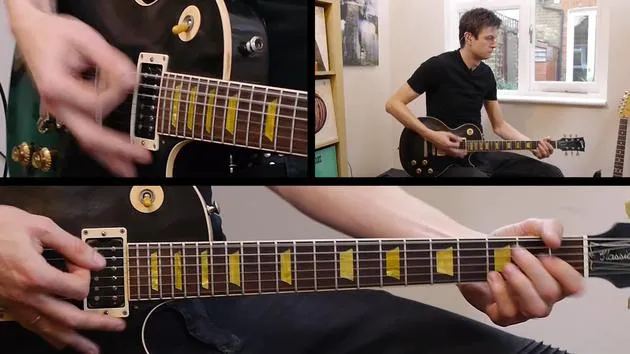
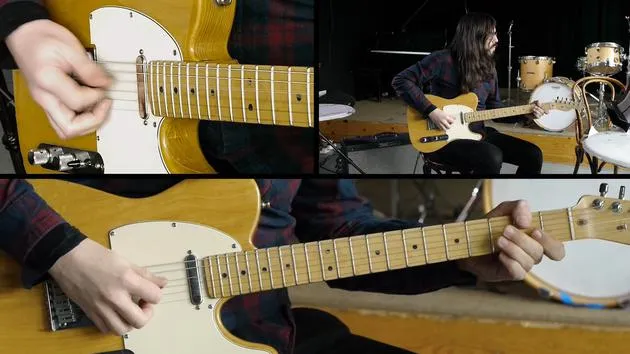
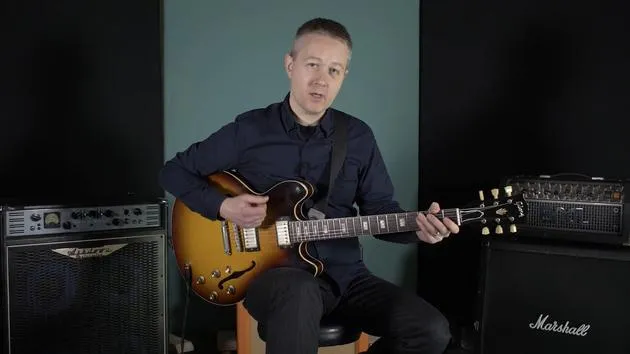
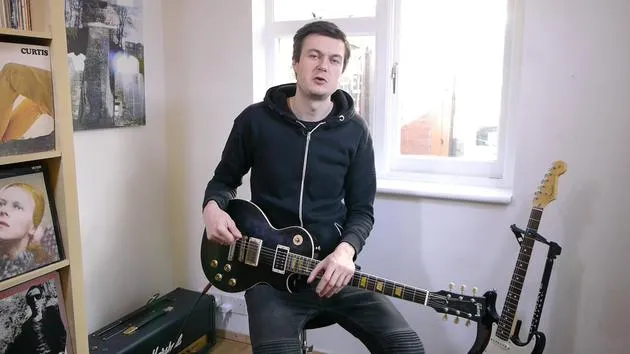
Transcripción de la lección
Rhythmic Based Improvisation: Comping
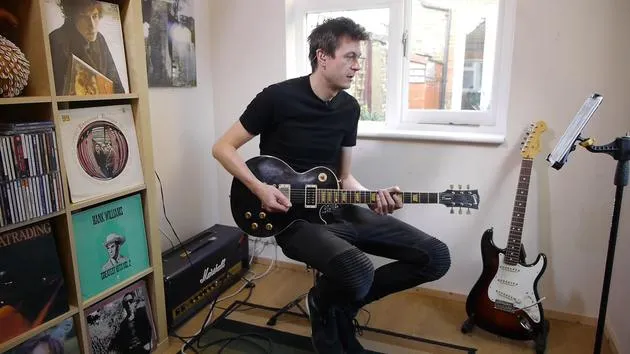
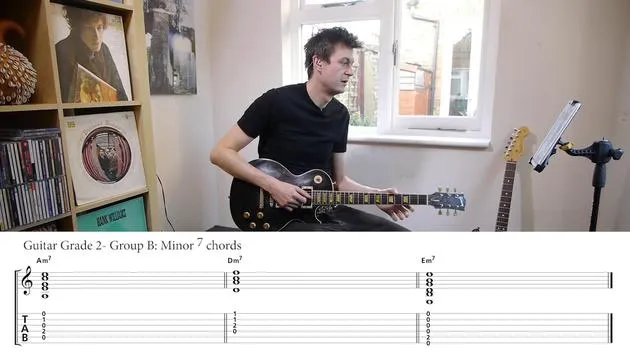
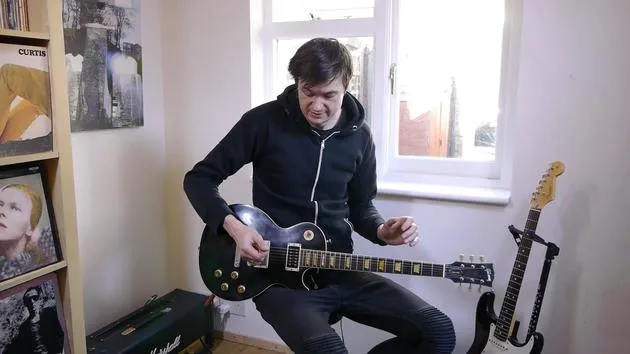
Okay, so what I'd like to talk to you about now is rhythmic based improvisation, or comping as it's known. This is probably something you'll do more often than even the lead-based improvisation. It's an absolutely essential skill; being able to keep solid time and come up with interesting and stylistic rhythm parts to accompany a band, a song, or another soloist potentially.
Getting Started: The Basics
We're going to start at the very, very beginning, looking at the basics and discussing some strum pattern ideas.
-
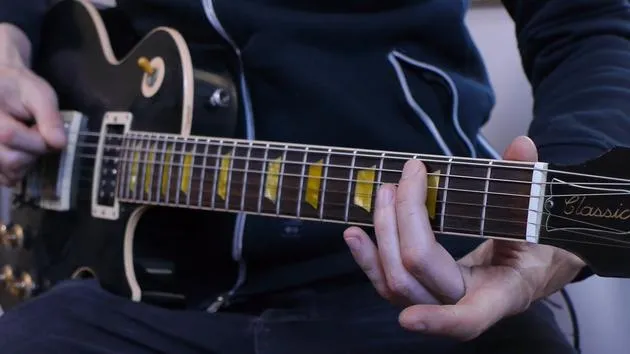
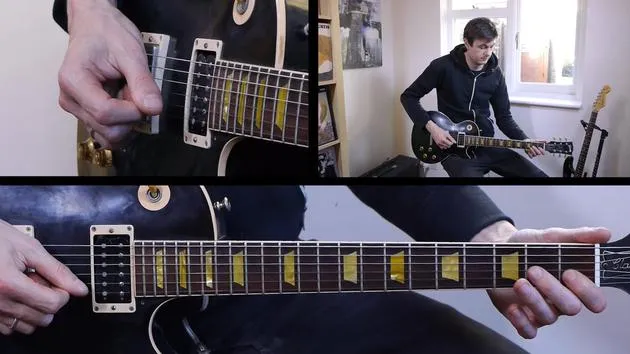
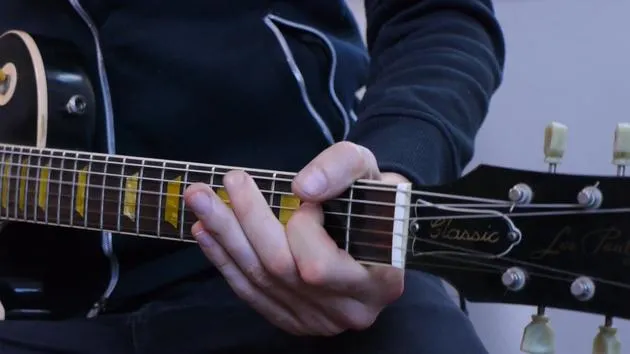
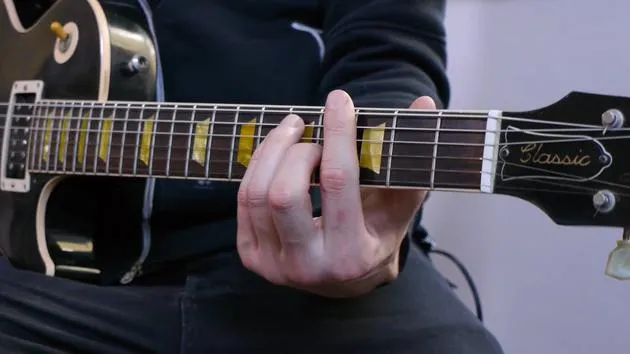
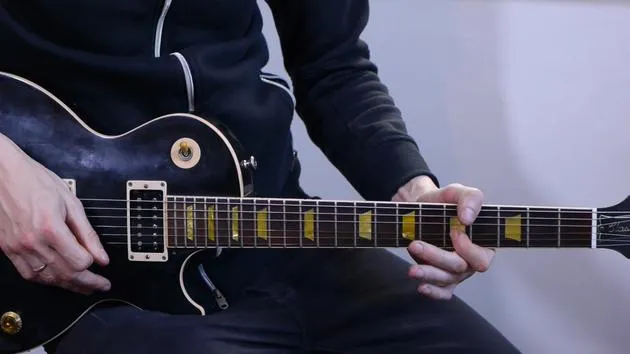
Static Chord: Let's take a static chord here, a G major chord. Hopefully, you're all familiar with that great chord.
-
Rhythmic Subdivisions: We need to be aware of different rhythmic subdivisions. Here are the three most common ones:
-
Crotchet (Quarter Note):
- Count: 1, 2, 3, 4
- Playing on every beat of the bar with a downstroke.
-
Eighth Notes (Quavers):
- Count: 1 and 2 and 3 and 4.
-
Semiquavers (16th Notes):
- Count: 1 E and A, 2 E and A, 3 E and A, 4 E and A.
-
"Okay, so they're the three really common subdivisions that you want to be really confident playing."
I think it's a great exercise to stick a metronome on and do exactly what I just did there. Start off by playing crotchets, and then whenever you feel comfortable, move on to semiquavers, doubling or quadrupling the speed of crotchets. You might go into eighths, back to crotchets, and then back to semiquavers.
"Doing it on a scratchy kind of sound can be really good as well, just to really hear how you're nailing the rhythm."
Combining Rhythms: Strum Patterns
Let's take a look at combining some of those rhythms to come up with some strum patterns. We're going to use a really simple chord progression (this is available on the PDF that you can download from the website):
- C Major
- A Minor
- F Major: Played as a half barre if you're not familiar with the full barre chord.
- G Major
Now, let's do some eighth note-based strum ideas:
Eighth Note Strum Pattern:
- Count: 1, 2, 3, 4.
- Important: Maintain the movement of the right hand.
Although I'm not playing every single eighth note (1 and 2 and 3 and 4), my right hand is in a consistent motion.
"I don't want to be going 1 and 2 and 3 and 4, because then when I repeat it, my 1 is an upstroke, which feels really weird. And we don't like that."
Variations on Strum Patterns
There are a few other ways you can strum that type of pattern.
- Ghosting Technique:
- This means looking like you're playing, but actually ghosting over the strings.
- Example: 2, 3, 4. Miss, miss.
Taking the idea of ghosting and eighth notes provides lots of variations within the bar.
- Experiment with strumming different places within the bar.
"If ghosting is new to you, maybe just try it on a single chord rather than a chord progression to begin with."
Dynamics
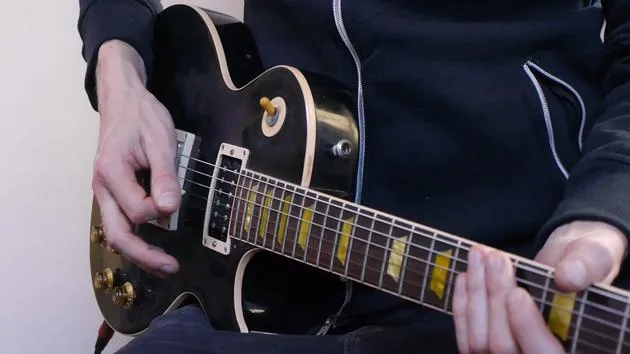
Let's talk about dynamics with your right hand. What you'll notice is when I was strumming that chord progression, I wasn't hitting all the strings evenly.
- Hitting all strings at the same dynamic sounds flat and uninteresting.
"Let me demonstrate that. 2, 3, 4. Sounds very flat, very kind of uninteresting."
If I vary how hard I hit the strings, it transforms the sound:
Dynamic Variation Example:
- Count: 3, 4.
You don't have to hit all strings evenly. On downstrokes, you might hit all the strings, but on upstrokes, you might catch just the higher strings.
"It gives your strum pattern that dynamic flow, which is a really nice thing to develop."
Ghosting with 16th Notes
Let's take that one step further and look at ghosting with 16th note rhythms.
- Example: On a G chord. Count: 2, 3.
When there are passages of eighth notes, they end up being played as downstrokes. The right hand should maintain a 16th note pace:
"Imagine your strum pattern and think, what is the shortest subdivision that I have? In this case, it's a 16th note."
Musical Application:
- This could be any number of songs you know.
Maintaining dynamic is even more important with a 16th note pattern. To sound musical, avoid hitting strings evenly, it's much better not to.
"It's worth experimenting with all examples on the PDF. If you'd like to record yourself creating your own strum patterns, please send them in. It would be great to hear them, and we can provide feedback."
41 lecciones
2h 51m de lecciones en vídeo estructuradas
Funciones de vídeo avanzadas
Ralentiza, repite un pasaje, sigue la partitura
Móvil, tablet y ordenador
Practica donde quieras
Garantía de satisfacción 100%
30 días de garantía de devolución







