



Legato (hammer-ons y pull-offs)

Qué incluye el curso
41 lecciones (2h 51m) · 1 gratis
01. Introducción a los enfoques de la improvisación
1:00
02. Primeros pasos con la improvisación
9:22
03. Tarea: encontrar las notas del acorde
4:05
04. Improvisar usando notas de acorde
10:18
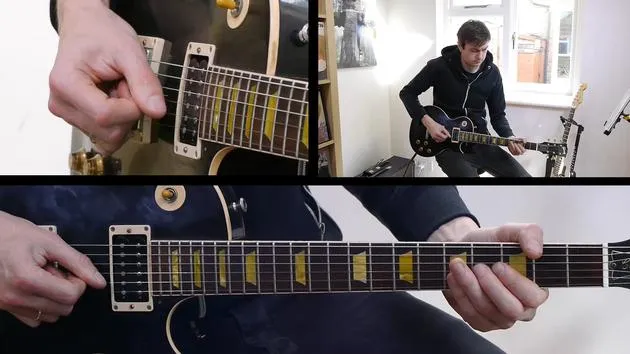
05. Añadir interés rítmico a tus solos
4:11
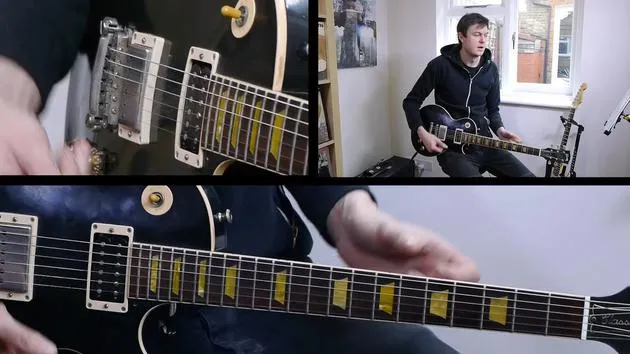
06. Ejercicio: improvisar sobre un cambio de acorde
2:52
07. Reto: Envía tu improvisación
0:24
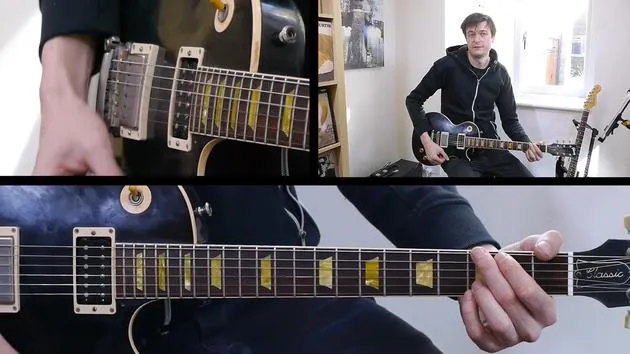
08. Improvisación rítmica y comping
9:55
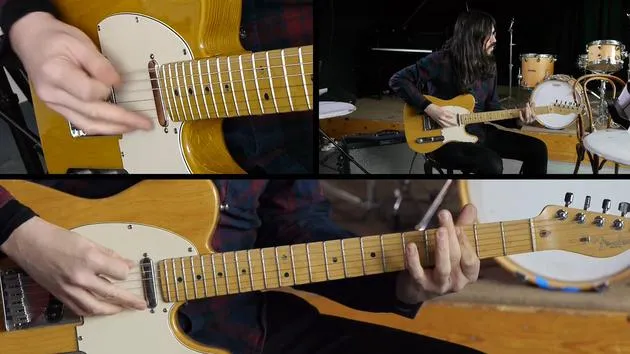
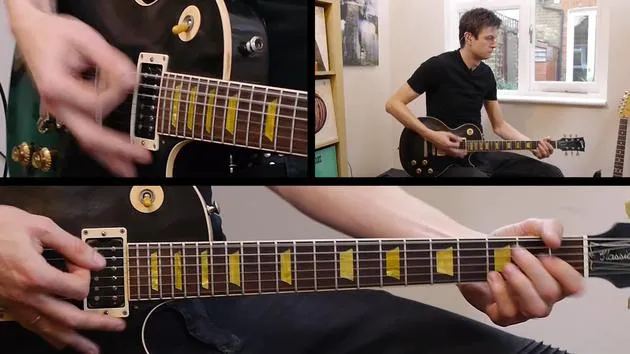
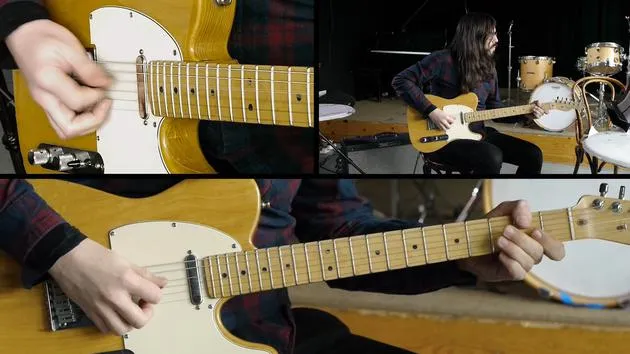
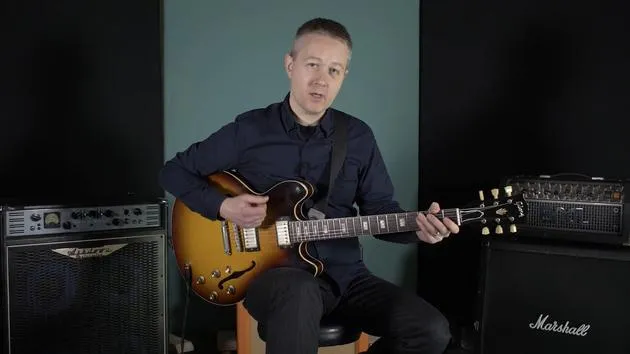
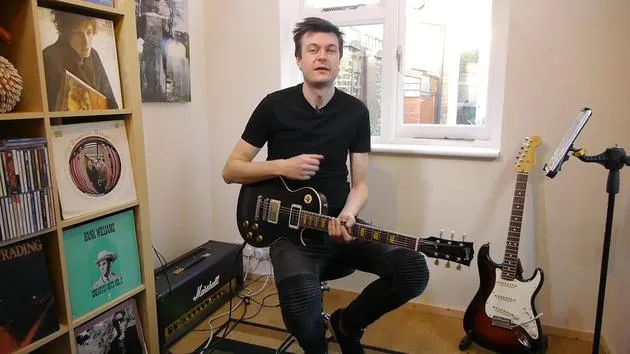
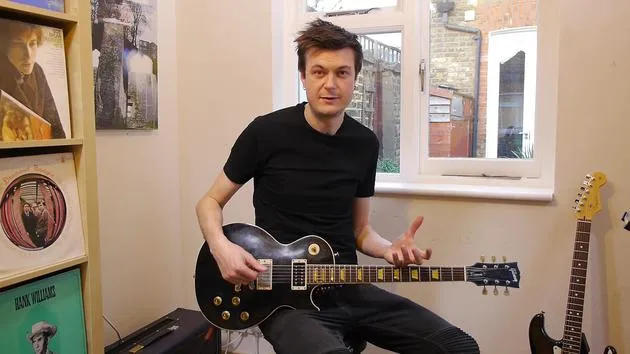
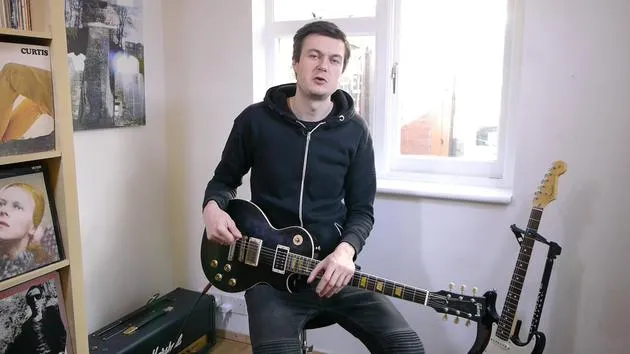
Transcripción de la lección
Basic Legato Technique
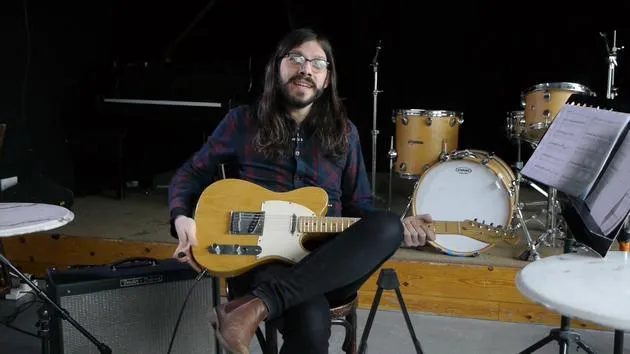
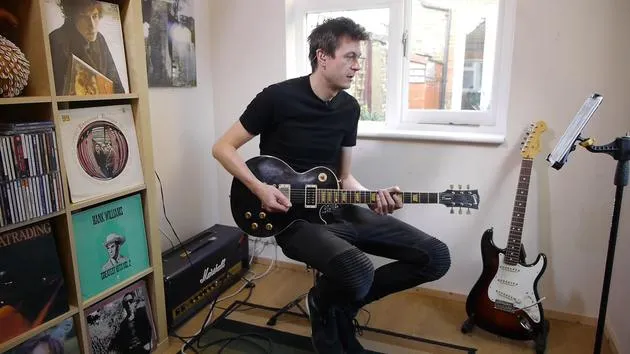
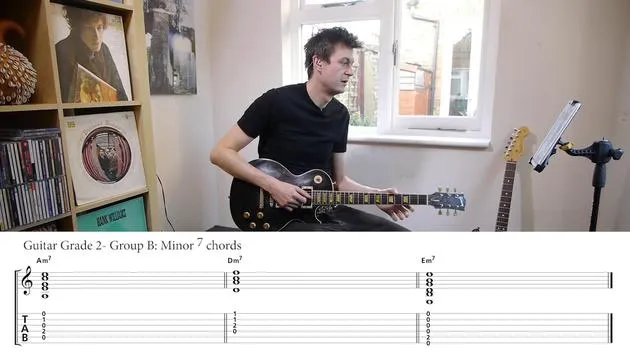
So next, I'd like to discuss with you a little bit of basic legato technique.
What is Legato Technique?
Legato technique is simply hammer-ons and pull-offs. They are the two main types of legato technique we have on guitar.
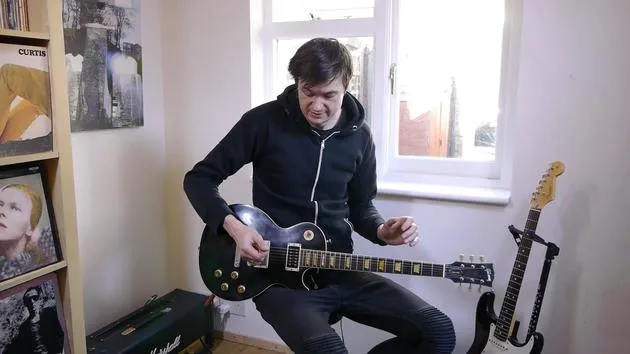
I'm going to play for you now a G Major scale descending down. I'm going to pick it all first, and then I'm going to play it legato, so you can hear the difference.
The Meaning of Legato
The meaning of "legato" is smooth. Hopefully, it will come across that when I pick it, although it sounds kind of clean, it doesn't necessarily sound smooth.
Now, what I'm going to do is play it legato, and hopefully, you'll agree that it sounds smoother when I play it with hammer-ons and pull-offs than it does when I play it all picked. Here's the G Major scale.
Picking and Legato
If I play it legato, I'm just picking with my right hand. As I cross the strings, I'm picking the first new note on each new string. Other than that, all the power from the notes is generated from my left hand.
So that was me descending the G Major scale using pull-offs.
- Pull-offs are when you're moving down a legato phrase.
- Hammer-ons are when you're moving up.
Let me just demonstrate hammer-ons real quick, and then we'll do some finer examples.
Hammer-ons Demonstration
Here's the G Major scale performed ascending using hammer-ons. Okay, so again, it sounds nice and smooth on the way up.
Practicing Hammer-ons and Pull-offs
There are a few ways to practice the hammer-ons and pull-offs. Let me show you them in isolation.
- Pick a string: Let's pick the D string.
- Pick the open D note.
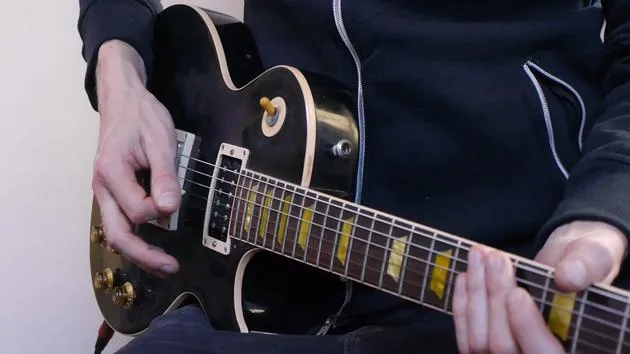
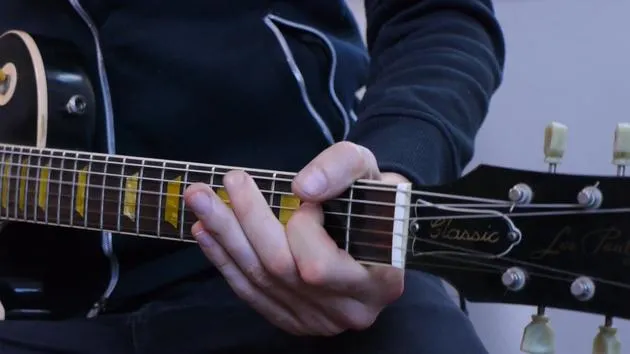
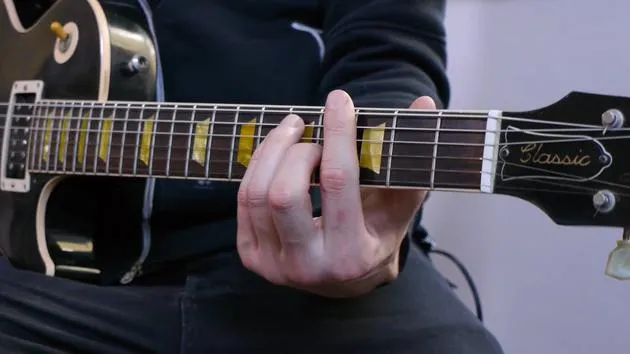
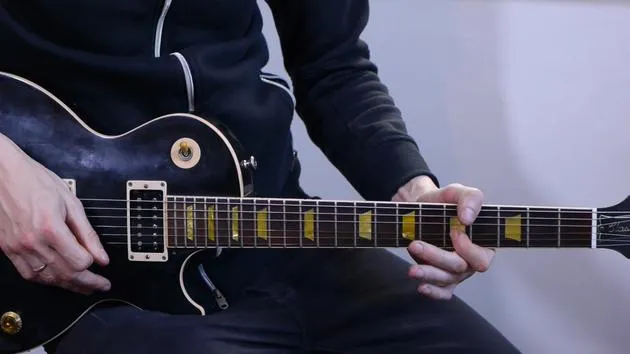
- With any finger on your left hand (I'm going to use my second finger), hammer on to the second fret.
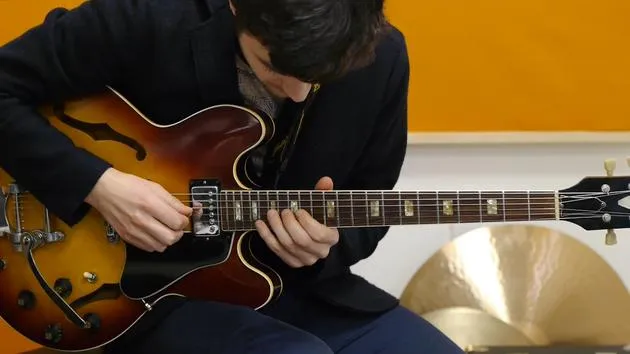
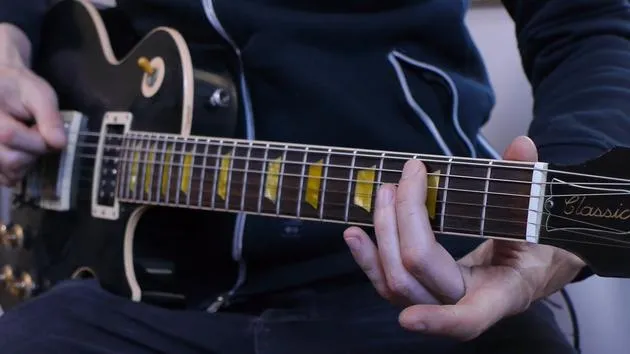
When I say "hammer on," what that means is just with my left hand. Physically, it's a great way to describe it, hammering onto the fretboard.
My right hand, my picking hand, isn't going to touch the string after I've played that first note.
Here's how it looks in practice:
- Really slow, I'm going to pick and then hammer on.
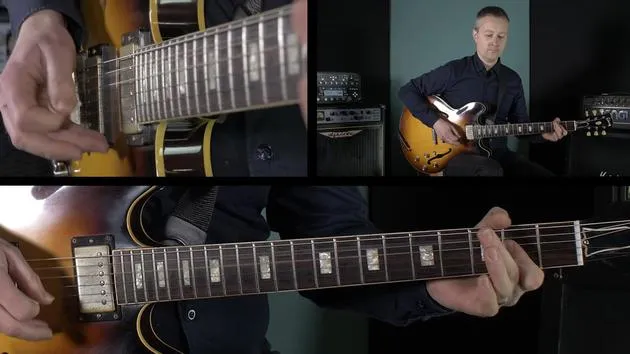
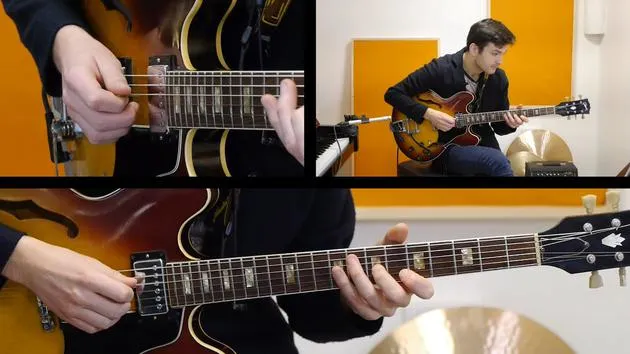
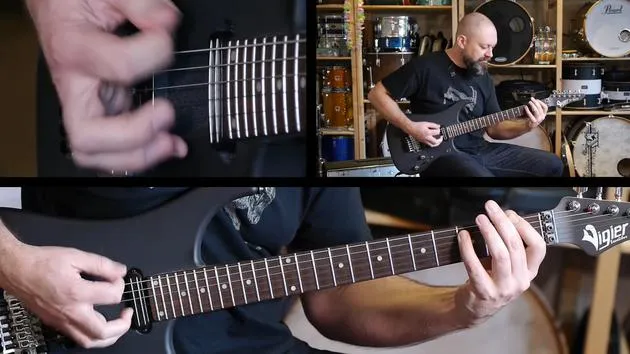
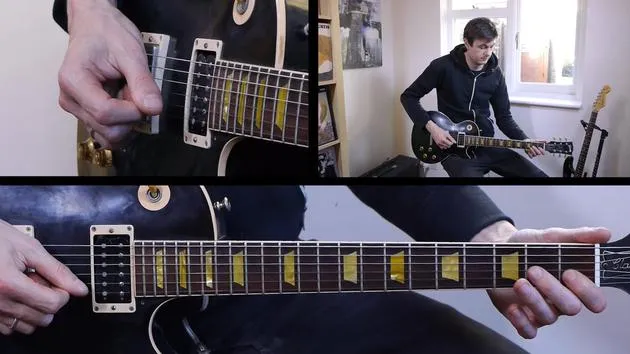
You can see that my right hand is out of the way. If I'm not putting enough energy into the string, I'll get a really quiet hammer-on, and that's something we don't want. We want the hammer-on to sound the same volume as the picked note, if possible.
Practicing Pull-offs
Now what we can do is reverse that and practice pull-offs.
- Pick the second fret first.
- Then, remove my right hand. It's not going to do anything.
- Pull off to the open D string without picking it.
It should sound like this:
And you can see that what I'm doing is actually pulling off to the side of the string. I'm not coming directly off the string, because that won't give any energy to the open string.
If I do that, I'll have a loud pick note and then a really quiet pull-off, which is not what we want.
Treating the String Like an Elastic Band
Treat the string like an elastic band that you're going to flick back on itself, and come off the side of the string to get a nice powerful pull-off.
Combining Hammer-ons and Pull-offs
If we put them together, we can get a hammer-on and a pull-off.
- Pick the open D string, hammer on, and then pull off, and we get this.
If we add lots of those together, we can create a trill if we do it fast enough.
Trilling and Application
Here's a trill with the first finger.
That's something you can practice on any open string and any fretted note. You could also do it on two fretted notes if you want to. For example:
- Let's say the second fret on the G string, hammering on and pulling off from the fourth fret on the B string.
You get this sound. It requires a little more strength from your left hand because we have to keep that back end note fretted all the time.
Key Points for Practice
- The first finger needs to stay nice and solid.
- The third finger is going to generate the energy for the hammer-on and the elastic pull-off off the side of the string.
As soon as you're comfortable with it on one string, that's when you can start applying it to scales or melodies that you may have learned.
Going back to our G Major scale, we can start at the bottom and just pick the first note on each new string:
- Pick, pick, hammer-on, hammer-on, pick, hammer-on, hammer-on, pick.
And when going back down, we'll do the opposite:
- Pick the first note on each string, but follow with pulling off in the opposite direction.
This gives you that really smooth sound, as opposed to all picks. It sounds much smoother!
Conclusion
This technique is something you can apply to your everyday playing. Once you have a reasonable grounding in it, it's a cool thing to incorporate into songs that you may have learned.
41 lecciones
2h 51m de lecciones en vídeo estructuradas
Funciones de vídeo avanzadas
Ralentiza, repite un pasaje, sigue la partitura
Móvil, tablet y ordenador
Practica donde quieras
Garantía de satisfacción 100%
30 días de garantía de devolución







