



The Bean
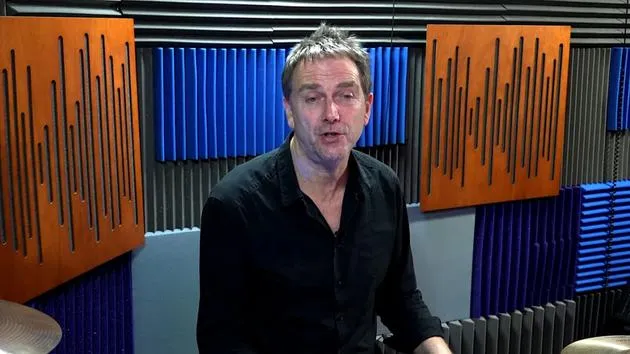
Yusef Ahmed comparte su enfoque de la pieza de Grado 7 de Rockschool The Bean, abordando sus secciones en 5/8 y 6/8 y sus rellenos rápidos al estilo de Bill Bruford.

Qué incluye el curso
29 lecciones (2h 45m) · 1 gratis
01. Control – Chase & Status
3:12
02. Law – Richard Spaven
3:11
03. Cry Me A River – Justin Timberlake
3:06
04. Family Affair – Mary J Blige
3:27
05. What Is Hip? – Tower of Power
3:19
06. Techno – John Scofield
3:13
07. Razorhead
3:17
08. Buena Havana
2:38
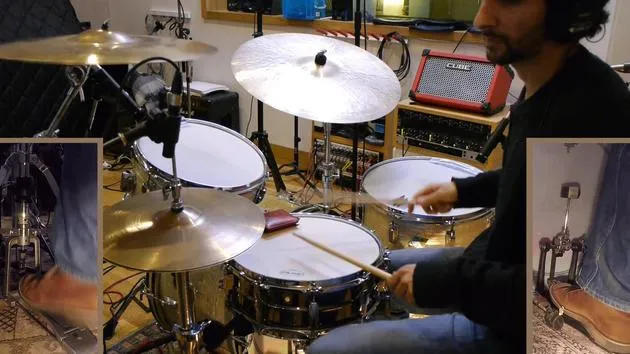
09. The Bean
3:19
10. Eastern Adventure
Lección gratis2:48
11. Full English Breckerfest
2:35
12. Kita's Five
2:59
01. Control – Chase & Status
13:17
02. Cry Me A River – Justin Timberlake (Lección)
15:05
03. Family Affair – Mary J Blige (Lección)
11:59
04. Law – Richard Spaven (Lección)
6:05
05. Techno – John Scofield (Lección)
10:43
06. What Is Hip? – Tower of Power (Lección)
10:54
07. Razorhead
7:23
08. Buena Havana
7:17
09. The Bean
Estás aquí9:50
10. Eastern Adventure
6:01
11. Full English Breckerfest
5:45
12. Kita's Five
7:03
Transcripción de la lección
Music Lesson: Understanding Complex Time Signatures
Okay, so the bean here. In this tune, we have a lot of challenging sections. This kind of style is most notably played by drummers such as Bill Bruford. So check him out!
Time Signatures and Techniques
- It's really cool to have some 5/8 and 6/8.
- There are a lot of fast lines.
- Right at the beginning in the second bar, there's this really fast sort of 30-second note fill.
My approach to this would be:
- There are two ways you can approach this:
- Doubles
- Singles
At this speed, doubles are a little bit easier, but you have less articulation.
- When you practice this with doubles, make sure you get the second note of each hand really kind of snapping back.
For example, I try to focus on my fingers pulling the stick in, like: snapping sound.
- It sounds something like this, as opposed to a more buzz, kind of floppy roll.
So focus on that and also try to get the single stroke rolls up to that speed as well.
You can also experiment with moving around the kit to the different toms, which brings in a whole new dynamic of the muscles you need to use your shoulders and arms to get around smoothly.
Internalizing the Rhythm
If you're having trouble with the time signature changes in a tune like this, I would really recommend trying to sing the melodic line.
- Whether it's the guitar part, the bass line, or if there's a melody or a vocal line, this can really be helpful for internalizing the odd meter rhythms.
Focus on not necessarily counting and saying, "Okay, this is 5, this is 6, this is 7, this is 9," but just hear how the musical phrase goes.
Once you grasp it, you can analyze what it actually is.
Key Sections to Note
Another tricky section in this song is at Bar 13, where we have the 6/8 groove.
- There's a lot of intricate bass drum patterns.
- You will notice that this follows the melodic phrasing.
- If you know that and you sing it, you might find it becomes a lot easier than what it looks like on the page.
Sometimes how something looks on the page is more complicated than actually playing it or being able to hear it the right way. So, approach it that way with your teacher as well.
Filling It Up
A lot of the fills in this song are not as difficult as they may seem.
- Many of them are hand to hand or right, left, right, left sticking around the drums in a very natural way.
- An example of this is the bar just before going into the D section, the last bar before the D section.
You have a fill that sounds intricate but is quite simple. It sounds like this one more time: [demonstration of fill].
- So this is just right, left, right, left, with the bass drum around the kit in a very standard way.
- This repeats again, same kind of figure, same approach in the D section, and repeats throughout the piece.
Be creative! Explore it in different ways, changing the sticking pattern or orchestrating differently.
Creative Development in 6/8
In the development section of the 6/8 groove, when we're approaching the end, I think I doubled some notes on the hi-hat.
- Instead of playing constant eighth notes, I would play kind of three notes in a row and then leave some space, something like this: [demonstration of groove].
This creates a funkier, more dynamic-sounding groove that you can play around with.
Preparing for Professional Situations
This shot is another great example of how you can prepare yourself for a professional situation.
- It's just two pages, but there's a lot going on in terms of the geography of the piece.
- There's a lot of notation to be aware of.
- Be mindful of the repeat signs and where to go to when you need to go to the coda, which is actually half a page long.
Dynamic Markings
Other things to consider are the dynamic markings.
- For example, at the very beginning, there's an F (forte).
- Only four bars later, it goes down to mezzo piano.
Be aware of these dynamic changes. One helpful tip is to go through this and mentally make notes before you actually play the piece. Sometimes it's useful to use a highlighter to remind yourself of where things are connected.
Interpretation and Improvisation
So, the E section of the bean is really interesting because there's a lot of space for your own interpretation.
- If you're doing the exam, try to stick as closely as possible to what's notated.
- I had some fun experimenting with playing on the ride, using the bell, and phrasing with the guitar a little bit.
Every one and a half bars, there's a written fill, allowing space for your own creative improvisation.
- Explore using the toms and the different sounds of the cymbals.
Notated Bell Part
- There's a notated bell part on the ride cymbal. If you alternate between playing upbeats and downbeats on the bell, keeping your hand in consistent motion, it will alternate every two bars because of the 7/8 beat.
Notice how playing in 7! If you do something symmetrical, it will eventually swap and then come back around.
Sonic Textures
Another point I'd like to make about this section is that there's a nice sonic texture when you have the snare drum and bass drum coming together.
- That's not done so often, but when done in a tasteful way, it can add a lot to a different section.
- The sound gives a nicer, deeper quality.
As we move onto the ride cymbal, the song opens up more.
- The guitars can be more free, encouraging you to play with the song in different ways.
Embracing Time Signatures
In this tune, there are lots of different time signatures: 5/8, 6/8, 7/8, going from one to the other, and it can be a real challenge.
Here are some tips to tackle these transitions:
- Singing is essential when learning music.
- Counting either out loud or in your head can help.
- Identify the common pulse in all the different time signatures. For this case, the eighth note is the pulse to keep in mind.
Keep your left foot bouncing away at that pulse for smooth transitions.
Example Rhythm Practice:
- I'll play through a 6/8 groove and then a 7/8 groove while keeping my left foot consistent: [demonstration].
Final Tips
So, when you're practicing, if you're having trouble, ask your teacher for help.
- Perhaps they can count along while you're playing and changing the time signatures.
- Check out different drummers and bands like Frank Zappa for progressive and experimental pieces.
- Pink Floyd is also a great listening choice!
Listen to these songs, and try to memorize them as a way to internalize the rhythms.
Have fun and be patient!
29 lecciones
2h 45m de lecciones en vídeo estructuradas
Funciones de vídeo avanzadas
Ralentiza, repite un pasaje, sigue la partitura
Móvil, tablet y ordenador
Practica donde quieras
Garantía de satisfacción 100%
30 días de garantía de devolución







