



Control – Chase & Status
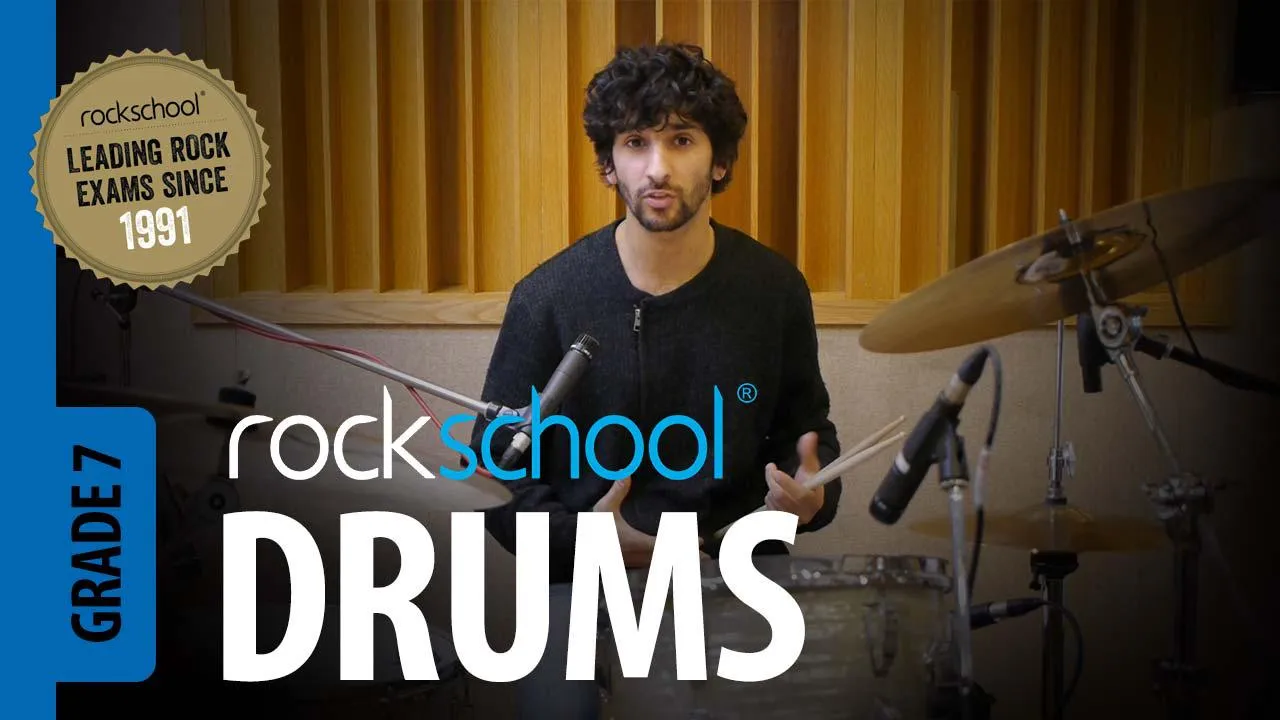
Stu Roberts analiza en detalle 'Control' de Chase & Status, la pieza de Grade 7 de Rockschool, repasando su tempo, los cambios de feel y la técnica stick-on-stick.
Qué incluye el curso
29 lecciones (2h 45m) · 1 gratis
01. Control – Chase & Status
3:12
02. Law – Richard Spaven
3:11
03. Cry Me A River – Justin Timberlake
3:06
04. Family Affair – Mary J Blige
3:27
05. What Is Hip? – Tower of Power
3:19
06. Techno – John Scofield
3:13
07. Razorhead
3:17
08. Buena Havana
2:38
09. The Bean
3:19
10. Eastern Adventure
Lección gratis2:48
11. Full English Breckerfest
2:35
12. Kita's Five
2:59
01. Control – Chase & Status
Estás aquí13:17
02. Cry Me A River – Justin Timberlake (Lección)
15:05
03. Family Affair – Mary J Blige (Lección)
11:59
04. Law – Richard Spaven (Lección)
6:05
05. Techno – John Scofield (Lección)
10:43
06. What Is Hip? – Tower of Power (Lección)
10:54
07. Razorhead
7:23
08. Buena Havana
7:17
09. The Bean
9:50
10. Eastern Adventure
6:01
11. Full English Breckerfest
5:45
12. Kita's Five
7:03
Transcripción de la lección
Drum Lesson: Control by Chase and Status
Hi, welcome to our drum lesson on Control by Chase and Status. This is a Grade 7 Rock School track and definitely deserves its place in the Grade 7 repertoire.
Overview
It is a technically difficult piece because of:
- The velocity
- The tempo you're playing at
- Various groove and feel changes
- Some unusual techniques
Stick on Stick Sound
In this Rock School version, to achieve the stick-on-stick sound that you hear on the record, the drummer is asked to play both sticks together. To illustrate this:
- Play straight eights with an accent on the first of every group of two.
- Refer to bar five on the chart.
The motion I'm using is similar to what I'd use on a hi-hat for an accent in a straight rock pattern, just transferring that movement to the hands.
Drum Fill
At the end of the second line, we have a little drum fill. It's not difficult:
- Two 16th notes on the snare drum
- Followed by a high tom and a low tom.
I tend to stick with right, left, right, right. Pay attention to transitioning back into stick-on-stick contact; it's an unusual movement to check a few times.
Rehearsal Letter B
When we get into rehearsal letter B, the ride cymbal is introduced. Key points:
- The bass drum remains quite constant dynamically.
- There is a crescendo (going from softer to louder).
Play the ride cymbal intentionally over the first four bars, but don't give too much away too soon, leave some space.
Hand-to-Hand 16th Notes
Next, we move to hand-to-hand 16th notes:
- I'm leading with my right hand to play the crash cymbal on the first beat of the bar.
- Sticking pattern: right, left, right, left, right, left, right, left.
Accents on the hi-hat are played on the edge with the shaft of the stick, unaccented notes with the tip in the middle of the cymbal.
Drum Fill Variation
At the end of the second line on the second page, you have the same drum fill again with maybe a slight tonal variation. It's just a musical sound.
Rehearsal Letter D
As we reach rehearsal letter D, listen for:
- Crash cymbal accents at an increased rate, creating tension in the music.
- Accents occur in the first two bars, then every other bar, and finally every other beat leading to the drum fill at bar 39.
The drum fill consists mainly of moving three over four accents, Think of a dotted quarter note worth 38 notes. The accented pattern occurs every 3 eighth notes.
Advanced Techniques
For the additional details:
- Use two on the snare and two on the high tom, returning to the snare and high tom.
- I recommend using a paradiddle sticking for the last five notes:
- Right, left, right, right, left (with the bass drum underneath on the final note).
Work on this slowly until it feels natural. Don't stress; keep in mind the three-over-four accents.
Rehearsal Letter E
As we move to rehearsal letter E, the dynamic shifts to fortissimo (two Fs):
- This section combines elements of drum and bass, funk, and rock.
Challenges
- Pay special attention to bar 47 with consecutive double strokes on the bass drum.
- It's essential to slow down and work on this, adapting the part is preferable to forcing it through.
Page Turns
When dealing with page turns:
- Fold the page for easier access.
- Memorize the next couple of bars, ideally playing the right hand down to the snare drum during the transition.
Rehearsal Letter F
In rehearsal letter F, a half-time feel occurs:
- Keep the tempo the same while changing the backbeat placement.
Next, you'll notice certain drum fills noted by slash marks, feel free to improvise.
Finale
When we reach rehearsal letter H, focus on:
- Increasing dynamics back to forte.
- Filling the ends of each bar and using the recurring three over four rhythm in the second bar.
Experimentation
Feel free to create an ending that resonates with you. Record examples to determine what sounds best.
Conclusion
All rhythmic elements beyond this point have been covered. As you practice:
- Play powerfully with good dynamics and accuracy.
- Explore footage of Chase and Status and the incredible drummer Andy Gangadine for inspiration.
My top tip: Memorizing the track can enhance your performance during the exam, focus on playing with conviction.
Good luck, enjoy, and all the very best with Chase and Status and Control!
29 lecciones
2h 45m de lecciones en vídeo estructuradas
Funciones de vídeo avanzadas
Ralentiza, repite un pasaje, sigue la partitura
Móvil, tablet y ordenador
Practica donde quieras
Garantía de satisfacción 100%
30 días de garantía de devolución







