



Plugins de distorsión
Con
Aamir Yaqub
Qué incluye el curso
16 lecciones (1h 33m) · 1 gratis
01. Bienvenido a los efectos de audio
Lección gratis0:46
02. Efectos de audio
3:00
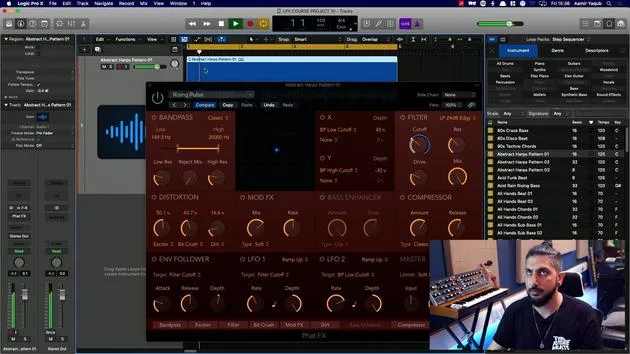
03. Uso de los Multi Effects - Phat FX y Step FX
5:11
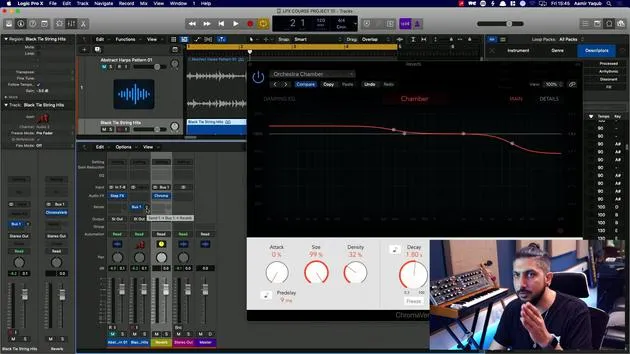
04. Configurar un bus de reverb con un send
3:58
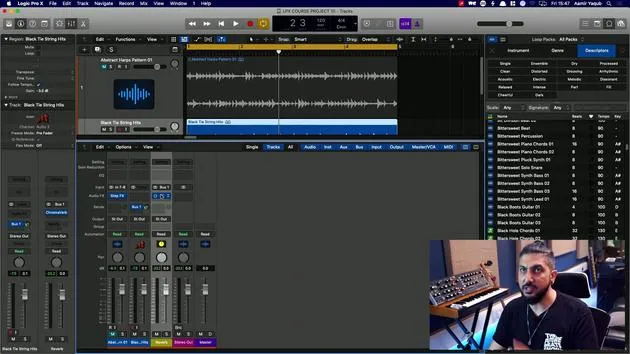
05. Usar reverbs en Logic Pro
3:27
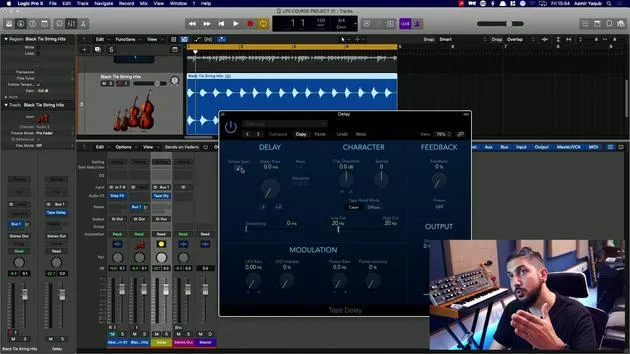
06. Uso de delays en Logic Pro
8:02
07. Plugins de distorsión
Estás aquí6:35
08. Plugins de filtro
5:35
09. Cierre de distorsión y filtros
0:30
10. Plugins de modulación
12:54
11. Plugins de pitch
6:50
12. Cierre de modulación y pitch
1:03
13. Amplificadores y efectos de pedal
10:38
14. Efectos especializados
5:49
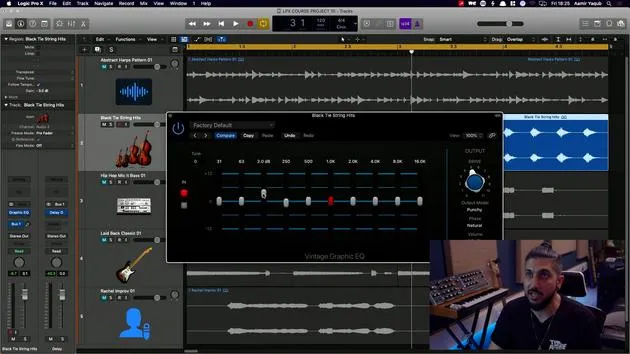
15. EQs (ecualizadores)
7:18
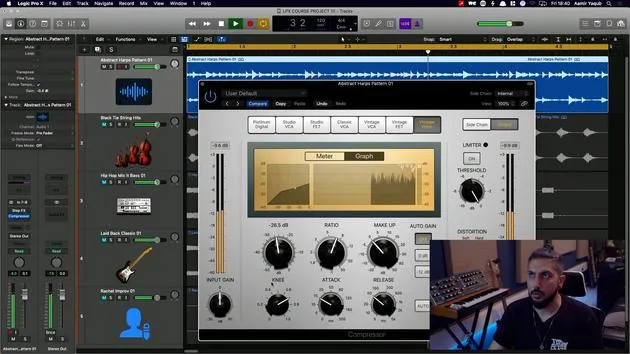
16. Dinámica y compresión
11:43
Transcripción de la lección
Exploring Distortion Plugins
One of the categories you might want to explore in the audio effects is the distortion plugins. Distortion plugins can:
- Add warmth
- Add grit
- Add edge to your sounds
Bit Crusher
The first one we're going to look at is the bit crusher. This effect works by degrading the signal to a point reminiscent of old Nintendo machines, which produced 8-bit and 16-bit sounds. Reducing the resolution tends to give you that extra bit of edge and crunch to a sound.
Without effect:
I've got a bass line here that sounds like this.
With effect:
If I turn this on now, that may or may not be the sound that you're looking for.
You can use something like a 16-bit downshift to hear how that sound has a buzz.
Tip: Be sure to mess around with the drive settings and the resolution settings.
Clip Distortion
Next up in the distortion category, we have clip distortion. Clip distortion essentially gives you the sound you would get if you clipped a signal, meaning if you overloaded it.
- You can make this effect very subtle or quite pronounced.
Let's pick a default option, such as Clean Boost.
Important Note:
Do be careful when using these plugins, especially the distortion ones, as they can be significantly louder than the source material. Always try to keep your speakers down, or if you're using headphones, ensure they are at a lower volume.
Sound:
Let's hear what this sounds like.
You can hear it gives a darker, warmer sound with a little bit of edge.
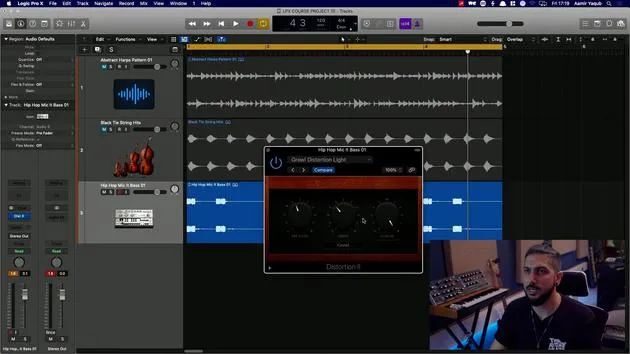
Distortion and Distortion II
Next, we have the distortion plugins called Distortion and Distortion II.
- Distortion: This effect breaks up the signal for added edge. You can adjust:
- Tone
- Drive
- Level compensation
Sound Comparison:
Without this effect now with.
As you can hear, the level increases, so be mindful of your audio settings.
- Distortion II: This is a different model of distortion based on the sound of an organ. It's ideal for adding a gritty texture to organ sounds.
Example:
I'm going to go for growl, distortion, light.
Let's see what happens when we listen to that.
You can tweak the tone and input, and experiment with different styles such as:
- Bitey
- Nasty
- Class AB1 Soft
- Class AB1 Hard
Overdrive
Next, we have overdrive. Overdrive is a sound synonymous with guitars, commonly found in guitar pedals and amps.
Sound Check:
If we were to boost this with a bright tube, what would this sound like?
We can also darken the sound by bringing the tone down.
Phase Distortion
Finally, in the distortion category, we have phase distortion. This plugin introduces both distortion and phase, giving your sound a distorted feeling with a touch of psychedelia.
Example Setting:
A good setting to work with is warm phase.
You can hear it sounds distorted but has a weird, spatial effect as well. Increasing the cutoff and resonance can further enhance this effect.
Conclusion
These distortion plugins are fantastic for adding edge, grit, or warmth to your sounds. Experiment with each to find the right fit for your audio projects!
16 lecciones
1h 33m de lecciones en vídeo estructuradas
Funciones de vídeo avanzadas
Ralentiza, repite un pasaje, sigue la partitura
Móvil, tablet y ordenador
Practica donde quieras
Garantía de satisfacción 100%
30 días de garantía de devolución
Conoce a tu gurú
Conoce a tu gurú
Aamir Yaqub es un productor e ingeniero musical afincado en Londres. Ha trabajado con algunos de los nombres más grandes de la música, entre ellos Alicia Keys, David Guetta, Rihanna, Sia y will.i.am, además de desarrollar a artistas independientes.
A lo largo de sus cursos enseña su flujo de trabajo completo en Logic Pro: desde la interfaz y la grabación, pasando por la creación de ritmos, la síntesis y los efectos MIDI, hasta la mezcla y el acabado de un tema.







