



Preparación para el calentamiento

Lesson time: (4min 58sec)
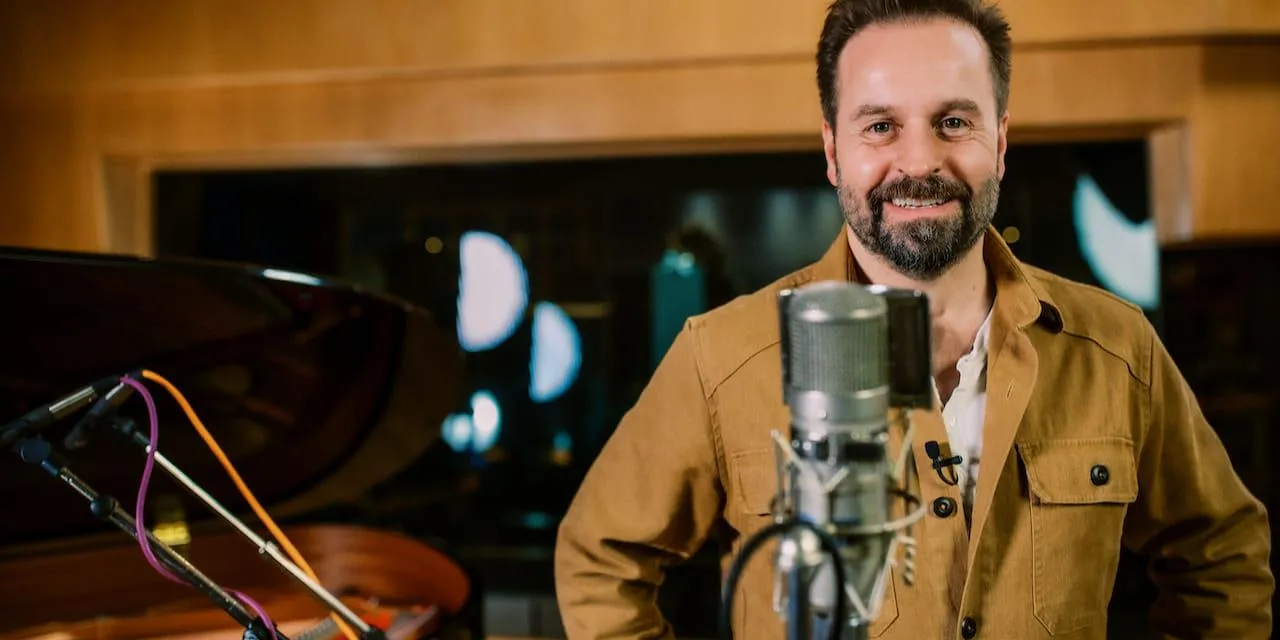
Alfie Boe explica cómo abordar un calentamiento vocal: mantenerte relajado y suave en lugar de forzar, para que tu voz esté fresca para una actuación.
Course preview
This lesson is part of the course Aprende a cantar con Alfie Boe
Watch a preview of the full course below.
Lesson transcript:
Embracing the Meditative State for Vocal Warm-Up
So now that we've gotten into that meditative state, our producer mentioned that word, and it's a fantastic one to use. That meditative state is the mindset we want when approaching a song or a performance.
The Importance of a Vocal Warm-Up
We're going to do a little vocal warm-up. There's a reason why it's called a warm-up.
-
Personal Experience: I used to believe that I needed to do thousands of scales, going up and down for a long time before stepping onto the stage. I did this frequently, but I found that by the time I was on stage, my voice felt tired, and I was vocally fatigued quicker than normal.
-
Lack of Proper Training: Back then, I hadn't had any training, so I didn't work on my breathing or that meditative state I'm discussing. Instead of preserving my voice and using gentle warm-ups, I was screaming scales, thinking I was doing well.
The Purpose of a Warm-Up
The warm-up should be:
- Relaxing
- Fun
- Exciting
Knowing where your voice will lie for a particular performance is essential. Your voice won't always be the same. You may show up to another performance with a tireder voice than the week before, and that's okay.
The Natural Change of Your Voice
-
The voice is a natural muscle and instrument; it will change over time.
-
I guarantee that in 10 years, as you continue singing, your voice will sound completely different.
-
I remember listening to myself at 16, thinking I had a big voice, when in reality, it wasn't great at all. Only after training did I discover my true sound.
-
Growth and Development: A male singer's voice typically breaks around 12 to 14 years old, but it continues to develop often into the early 40s or late 30s. In contrast, a female voice settles quicker because younger and older women are on similar tonal planes.
Understanding Voice Changes
- When a guy's voice breaks or cracks, it transitions from a higher register to a lower one, resulting in a more mature sound.
- We need to allow our voices to settle.
Gently Preparing for Performance
To preserve your voice as a male singer, it's important to let it grow naturally.
The Warm-Up Exercises
The exercises I'm going to show you will gently prepare you for a performance.
-
Structure of the Warm-Up:
- We warm the voice up in the register.
- Then we come down.
- Finally, we warm it up to a higher step in the musical phrase.
-
We will go up in semitones, similar to a piano with white and black notes, gradually warming up the scale.
Keeping Your Voice Vibrant
You want your voice to be bright, vibrant, and high.
-
Avoid Starting with a Downward Warm-Up: If you start warming down the scale before your performance, you may struggle to bring it back up to where you want it to be.
-
Pre and Post Warm-Ups:
- Always do a warm-up before the show.
- After the performance, warm your voice down the scale to relax it and gently sway back into a calm state, preparing for the next performance.
About the instructor
Alfie Boe es un tenor de Fleetwood, en la costa de Lancashire. Ha cantado en muchos de los principales escenarios de ópera del mundo, encabezó el reparto de Les Misérables en el West End durante casi un año y actuó en el Queen's Diamond Jubilee Concert del Palacio de Buckingham. Ha tenido cuatro álbumes en el top ten y ventas de platino en el Reino Unido, con giras con las entradas agotadas en salas como el Royal Festival Hall y el Royal Albert Hall. En su curso comparte los ejercicios vocales diarios y los calentamientos que utiliza antes de actuar —de Jean Valjean a cantar para la reina—, el oficio que mantiene en forma una voz poderosa. read more