Petite Waltz - Clase

Con
Chet Atkins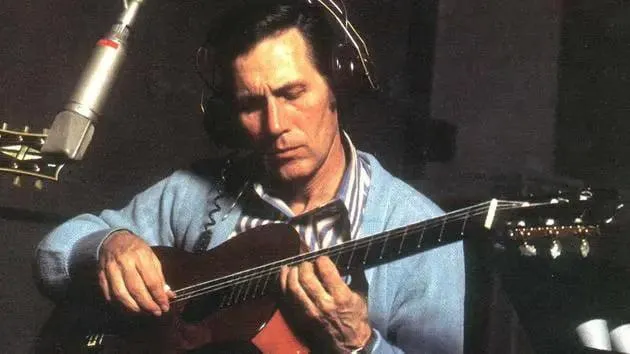
Qué incluye el curso
19 lecciones (1h 24m) · 1 gratis
01. Maybelle - Interpretación
Lección gratis2:37
02. Bye Bye Blackbird - Interpretación
2:31
03. Londonderry Aire - Enseñanza
6:25
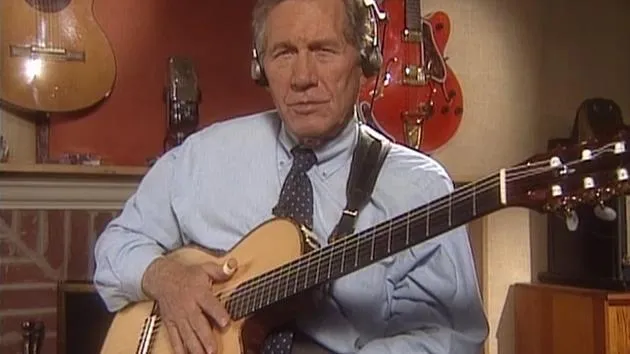
04. Petite Waltz - Clase
Estás aquí4:14
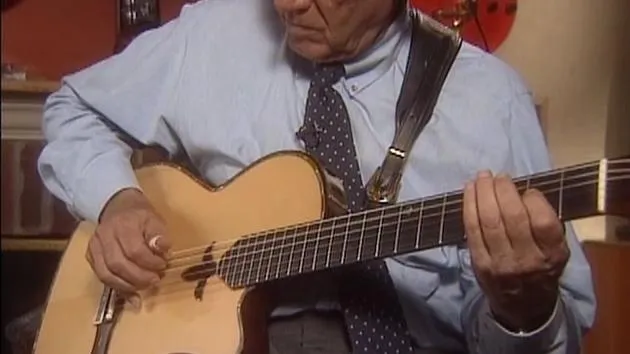
05. Young Thing: enseñanza
6:17
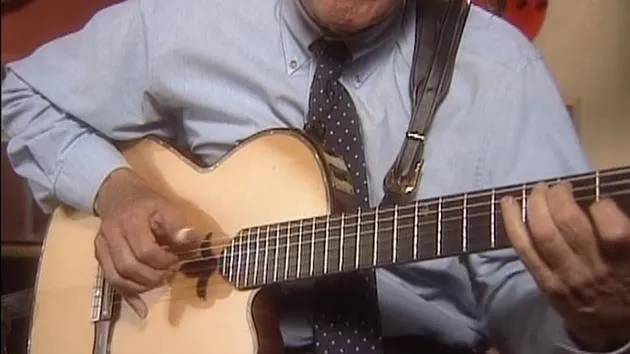
06. Young Thing - Interpretación
3:14
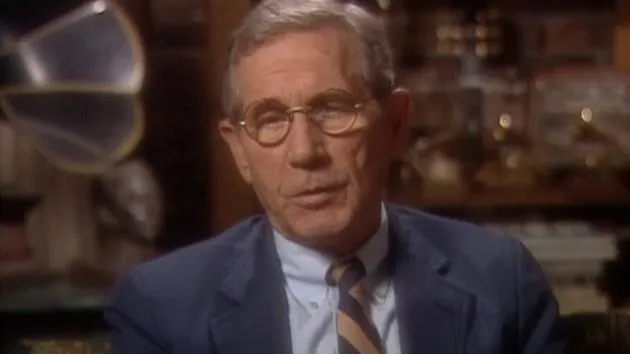
07. Chet habla
10:26
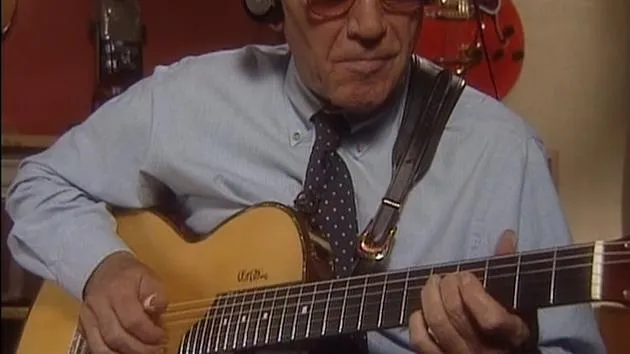
08. When You Wish Upon A Star - Interpretación
2:35
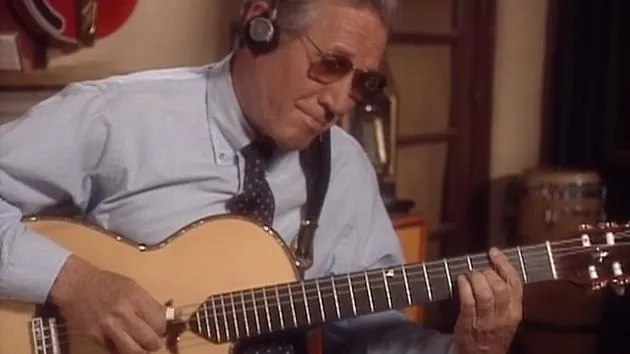
09. Londonderry Aire - Interpretación
3:12
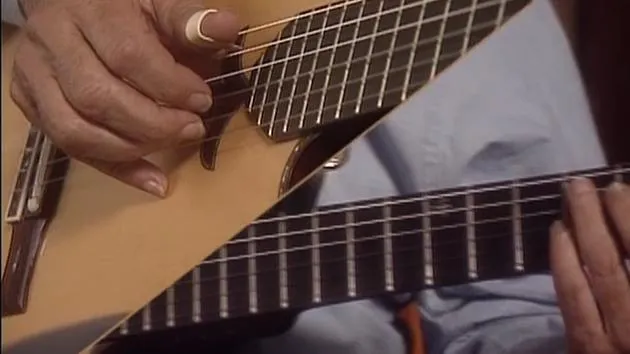
10. Mr. Bojangles - Enseñanza
6:45
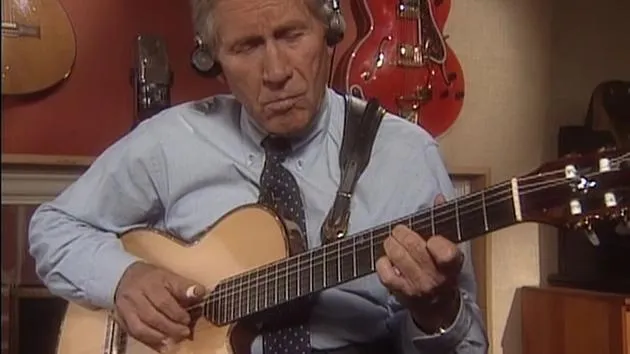
11. Mr. Bojangles - Interpretación
3:11
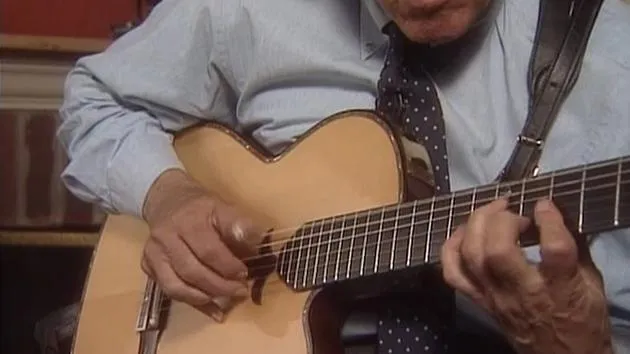
12. Lover Come Back - Interpretación
2:19
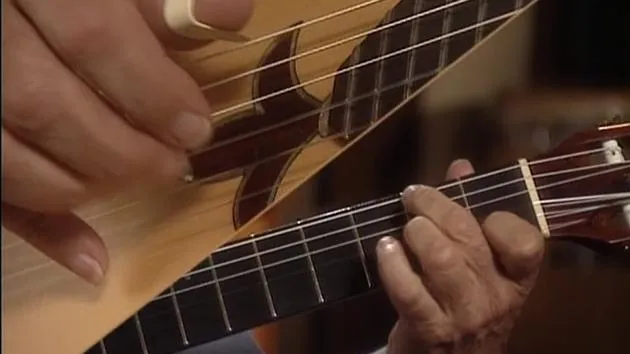
13. Maybelle - Enseñanza
3:02
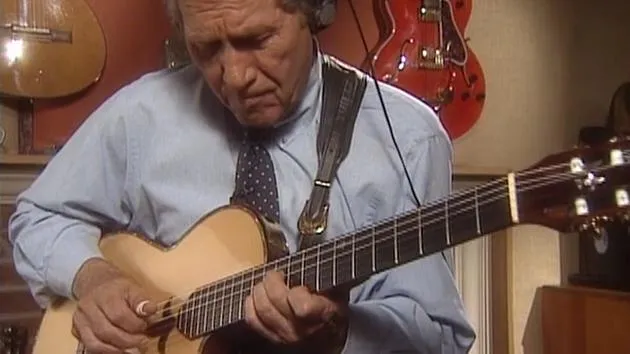
14. Petite Waltz - Interpretación
2:24
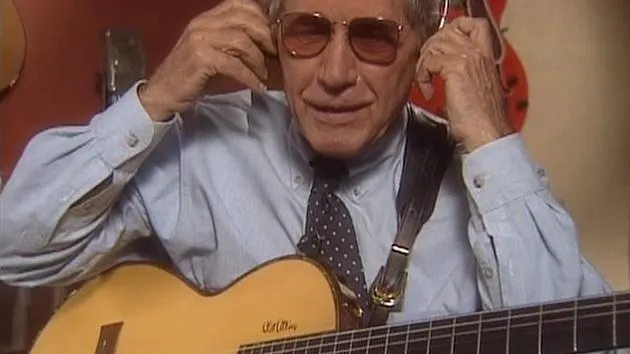
15. When You Wish Upon A Star - Enseñanza
5:23
16. Lover Come Back - Enseñanza
5:51
17. Bye Bye Blackbrid - Enseñanza
6:33
18. Happy Again - Enseñanza
4:41
19. Happy Again - Interpretación
2:24
Transcripción de la lección
Music Lesson: Petite Waltz
Okay. That was a tune titled Petite Waltz. And that came out right after the Third Man Theme. You young people won't remember that, but I think probably it was played originally on the zither, which is a great German instrument that I love.
Love to hear it but can't play.
Importance of Technique
It's fun to play, of course, and I guess you should. It's important to:
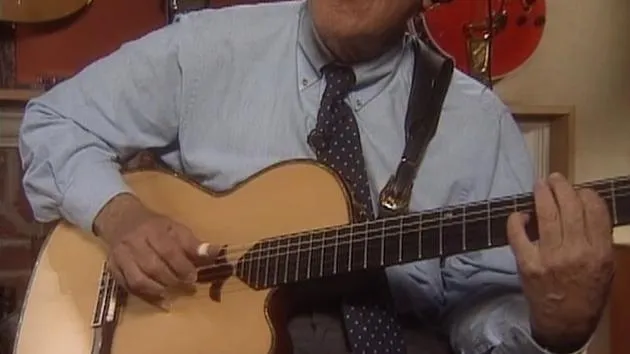
- Keep a finger anchored when you can.
- Ensure that the first finger is ready to grab that A chord from a six to an A in the first position with an alternate bass there.
Techniques to Practice
I do a half bar with my little finger, comes in handy. Just grab an A minor and slide it up to an A major with the first finger.
- Then proceed to:
- F sharp seventh
- A flat nine
- B minor
- Another B minor
You got a high melody there to a D minor. That's an A with a third in the bass, it's an important chord there to a C diminished.
The Bridge
And then the bridge is:
- I sometimes play that diminished there, F diminished.
- Then you play triplets.
I'll do that again slowly to an open D.
Progression to the Ending
And then you're ready to go back here to:
- B seventh
- E minor
- G minor
Where is it? That's a D with a third in the bass. It's an E minor.
Final Thoughts
The ending:
This has been so long since I recorded this; I don't remember making the arrangement or anything. But the ending is very simple. Just, and the melody goes in.
Yeah, so it's simple. Just takes a little practice.
19 lecciones
1h 24m de lecciones en vídeo estructuradas
Funciones de vídeo avanzadas
Ralentiza, repite un pasaje, sigue la partitura
Móvil, tablet y ordenador
Practica donde quieras
Garantía de satisfacción 100%
30 días de garantía de devolución
Conoce a tu gurú
Conoce a tu gurú
Conocido como «Mr. Guitar», Chet Atkins es el instrumentista solista más grabado de la historia de la música. Su característico estilo de púa se inspiró en Merle Travis, con otras grandes influencias como Django Reinhardt, George Barnes, Les Paul y, más tarde, Jerry Reed. Ese sello inconfundible en la digitación y su musicalidad le granjearon admiradores dentro y mucho más allá de la escena country, tanto en Estados Unidos como a nivel internacional.
Como músico de estudio, su forma de tocar enriqueció discos de Elvis Presley, Kitty Wells, The Everly Brothers, Hank Williams y decenas de otras leyendas de Nashville. Su estilo llegó a influir en grandes del pop como Mark Knopfler, Duane Eddy, George Harrison, The Ventures, George Benson y Eddie Cochran, así como en miles de guitarristas de country. Ganó nueve CMA Awards como Musician of the Year, cuatro galardones de la encuesta de jazz de Playboy y trece Grammys.
Con más de 35 millones de copias vendidas de sus más de 75 lanzamientos originales, Atkins también recibió el Grammy Lifetime Achievement Award.
Ayudó a crear el Nashville sound, un estilo de música country que debía casi tanto al pop como a los honky tonks, y sin él el country tal vez nunca habría dado el salto a las listas de pop en los años 50 y 60.
Aprende del maestro: ¡solo tienes que hacer clic en uno de los cursos de esta página!