



Lover Come Back - Enseñanza
Lesson time: (5min 51sec)
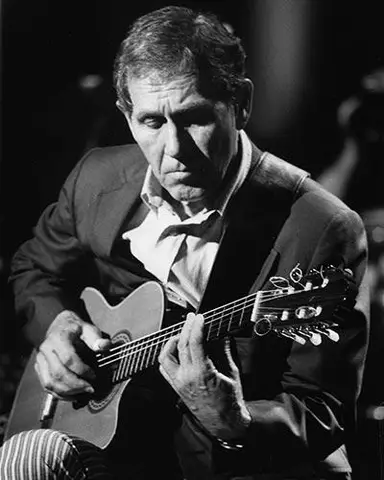
Chet Atkins enseña su arreglo de guitarra de Lover Come Back, el tema de Sigmund Romberg, guiándote por su progresión de acordes y los movimientos del bajo.
Course preview
This lesson is part of the course La guitarra de Chet Atkins
Watch a preview of the full course below.
Lesson transcript:
Music Lesson: Exploring a Classic Tune by Sigmund Romberg
That's a tune written by Sigmund Romberg, one of the greatest. One of the greatest writers this country has ever produced.
Why I Like This Tune
I like it because it's like Cheek to Cheek. It's long enough that you can play it all the way through twice. This length means you don't have to improvise too much.
Chord Progression
- E to D: I have to use a 3 in the bass there. I didn't do that on the record, but it's a pretty good idea.
- Then it goes: C, F, B flat.
- Finally, you get to G, and then you reach D in the bass.
- After that, you go to E, then E Sus.
Lyrics Insight
I remember every little thing, so it's:
- E
- I'm so F lonely
- Everyone I want no one
It's all right to go to the 3 in the bass there because you resolve to up a half tone. That sounds nice.
Tune Changes
Now here, the tune changes. This great composer doesn't repeat the same phrases. Instead, he goes to A seventh. That's beautiful!
Improvization Techniques
To improvise, I just do a little Jerry Reed or banjo playing roll here:
- 1, 2, 3, 4.
I go into rhythm there because I don't have my band with me, don't you know? I play just a roll, but I don't think I did that in that performance.
Personal Challenge
That's one of my problems: I can't play the same thing twice. It's an advantage, but sometimes it's a disadvantage.
Slow Playthrough
I'll do it slowly. One time I did the same lick, only I skipped a string each time.
Let's see, what else did I do? I went:
- Then I did a nice little Jerry Reed lick, one of the greatest ones he ever showed me.
- Two and a half: that's nice.
Changing the Melody
I changed the melody a little there. The melody goes:
- "I remember every little..."
On that, I deadened the strings with the heel of my hand. I haven't figured out a good ending for it if it's slow enough.
Sometimes I play Lover Come Back to Me, but it was too fast when I played it a while ago, and I couldn't do that, don't you know?
And because I'm not that quick.
About the instructor
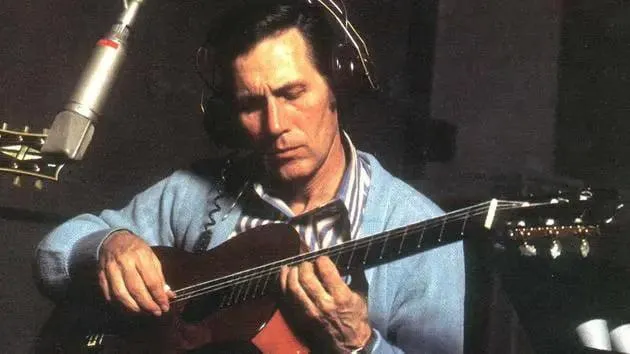
Conocido como «Mr. Guitar», Chet Atkins es el instrumentista solista más grabado de la historia de la música. Su característico estilo de púa se inspiró en Merle Travis, con otras grandes influencias como Django Reinhardt, George Barnes, Les Paul y, más tarde, Jerry Reed. Ese sello inconfundible en la digitación y su musicalidad le granjearon admiradores dentro y mucho más allá de la escena country, tanto en Estados Unidos como a nivel internacional. Como músico de estudio, su forma de tocar enriqueció discos de Elvis Presley, Kitty Wells, The Everly Brothers, Hank Williams y decenas de otras leyendas de Nashville. Su estilo llegó a influir en grandes del pop como Mark Knopfler, Duane Eddy, George Harrison, The Ventures, George Benson y Eddie Cochran, así como en miles de guitarristas de country. Ganó nueve CMA Awards como Musician of the Year, cuatro galardones de la encuesta de jazz de Playboy y trece Grammys. Con más de 35 millones de copias vendidas de sus más de 75 lanzamientos originales, Atkins también recibió el Grammy Lifetime Achievement Award. Ayudó a crear el Nashville sound, un estilo de música country que debía casi tanto al pop como a los honky tonks, y sin él el country tal vez nunca habría dado el salto a las listas de pop en los años 50 y 60. Aprende del maestro: ¡solo tienes que hacer clic en uno de los cursos de esta página! read more