



Sol# grave y agudo - Digitación y ejercicios
James Rae presenta el Sol# grave y agudo en el saxofón, usando la llave del meñique de la mano izquierda, con ejercicios para fortalecer los dedos y pasar limpiamente entre La y Sol#.
Copyright © 2023 Universal Edition (London) Ltd., todas las composiciones son de James Rae salvo que se indique lo contrario.
Qué incluye el curso
27 lecciones (1h 0m) · 1 gratis
Transcripción de la lección
Introducing G Sharps
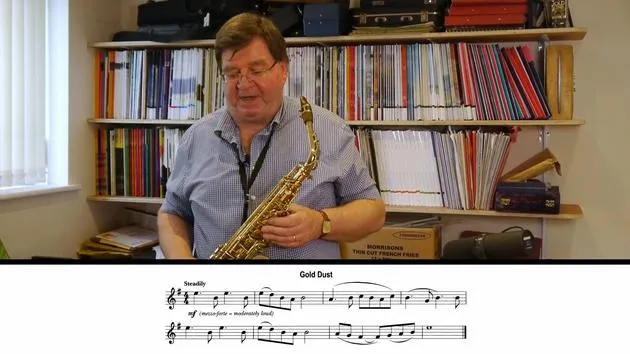
Now we come to introducing G sharps. We know all about sharps: they raise notes by a semitone. We know all about G sharps because we've played them several times already.
Understanding G Sharps
- Low G
- High G
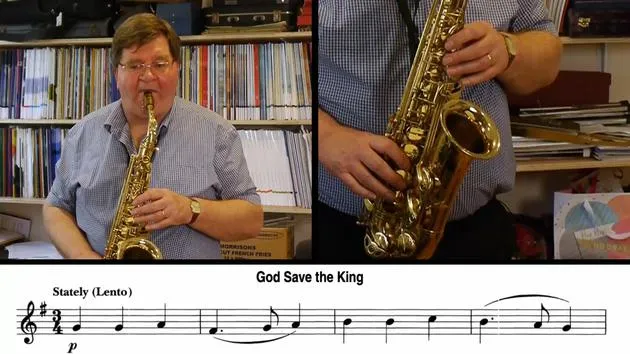
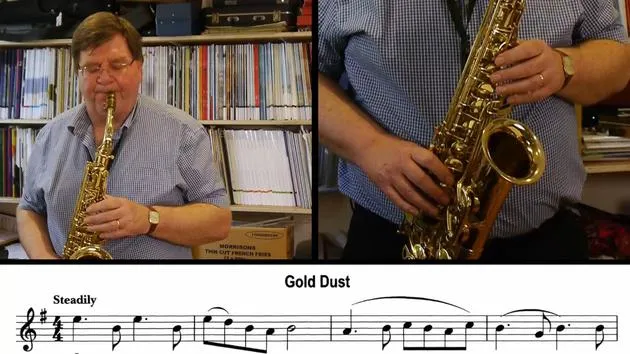
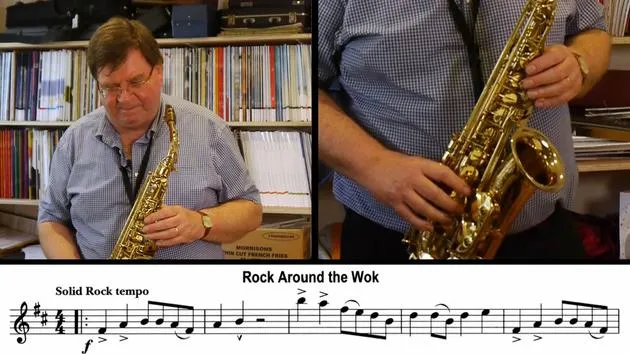
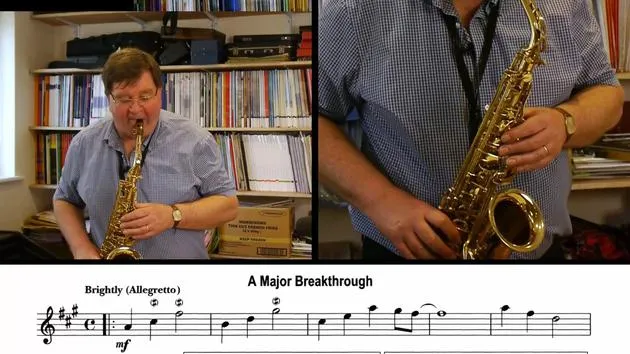
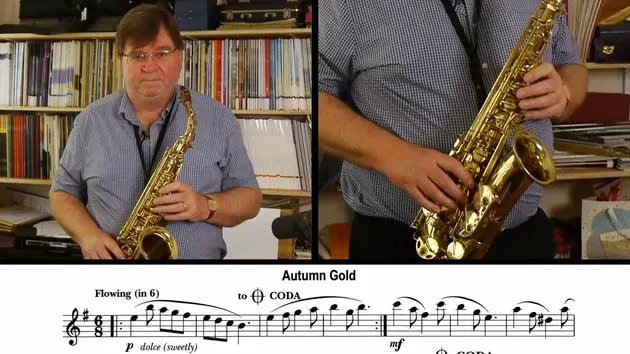
By adding this key here, with the little finger of the left hand, we turn the G into a G sharp. There's G, G, sharp a little bit higher. High G, high G.
The same applies to both octaves.
Exercises
Exercise One:
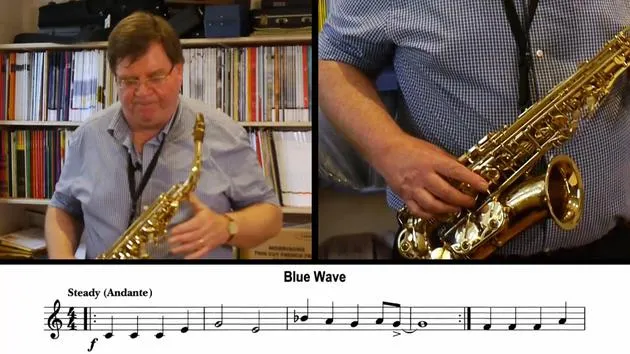
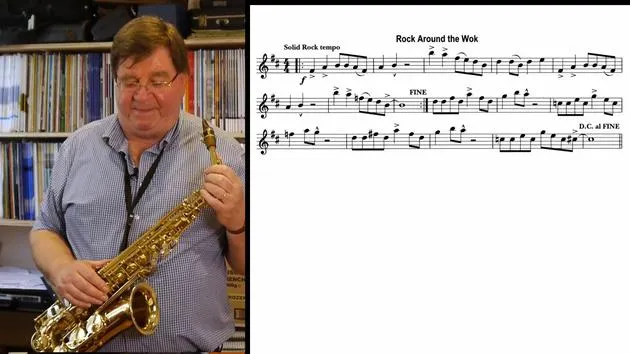
This is a finger strengthening exercise that goes backwards and forwards from A to G sharp. Make sure that these two fingers move together as one, as if they're welded together with an invisible metal rod.
Exercise Two:
Similar to Exercise One, but one octave higher. These exercises conclude with a long note just to reestablish your sound. Keep it in check, okay?
Exercise Three:
This exercise is similar, but we throw a G natural into the mix, which makes things a little bit harder.
Introduction to Minor Scales
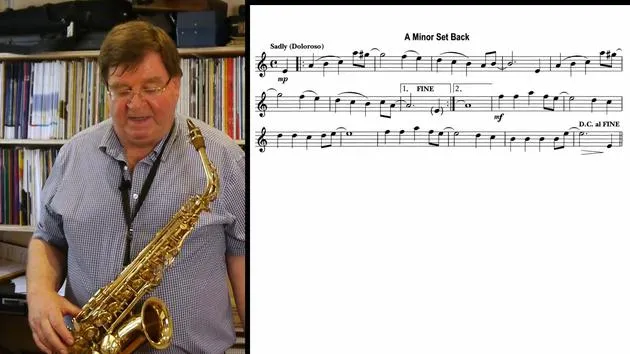
Up till now, we've been playing major scales, which have been pretty happy in mood. Minor scales, on the other hand, have a sad feeling. Beautiful, but sad.
The Articulated G Sharp Mechanism
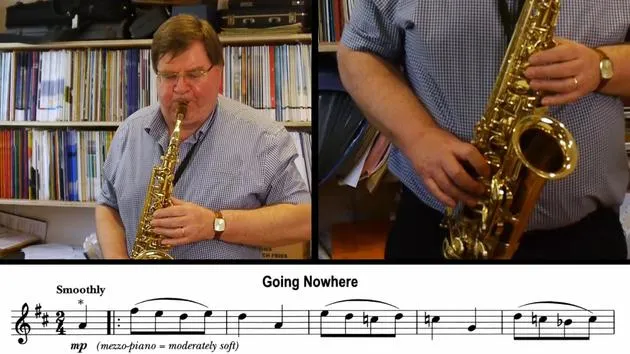
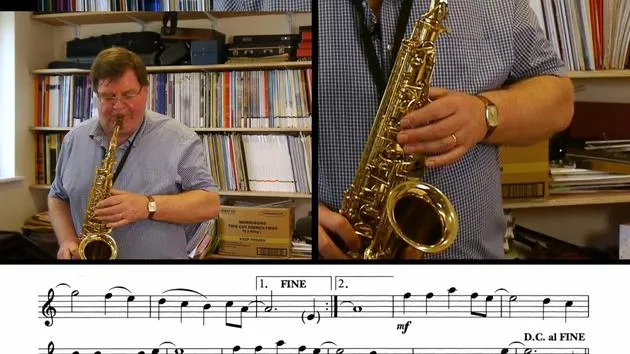
Now, there's a clever piece of kit on the saxophone that can make the scale very smooth. It's called the articulated G sharp mechanism, which allows us to preset the G sharp key as soon as we go onto the D. This enables a smooth transition at the top when we go from F to G sharp.
- If you just move from F to G sharp with the G sharp key down, we only need to move one finger because the G sharp key is already preset.
- Notice my little finger: as soon as I go into the D, I smack down the G sharp key.
This gives us a smooth A minor scale.
Harmonic Minor Scale
This is the harmonic form of the minor. There are several forms of the minor, but for the purposes of this course, we'll introduce the harmonic first because it's the same in both directions.
A Major Scale
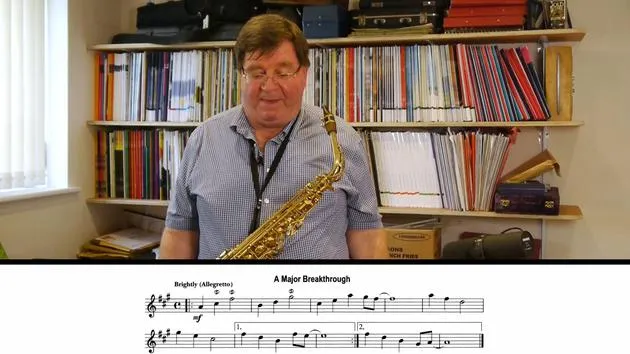
Now, A major consists of three sharps in the key signature: F sharp, C sharp, and G sharp. This is, I think, the most common scale on the alto saxophone, and it's well worth practicing because it is the equivalent of C major on the piano, which is the natural scale with no sharps or flats.
You often find yourself playing in three sharps when you're playing in a band. Saxophone music often is in sharp-infested key signatures.
As soon as you go onto the D, put your G sharp key down in readiness, and that gives you a very smooth top end of the scale.
Arpeggios
The arpeggios are fairly straightforward in these two keys:
- A Minor Arpeggio: A, C, E, and top A. (Remember: Ace plus the top ? easy to remember!)
- A Major Arpeggio: You can hear the difference.
Remember: Minor has a sad feeling.
27 lecciones
1h 0m de lecciones en vídeo estructuradas
Funciones de vídeo avanzadas
Ralentiza, repite un pasaje, sigue la partitura
Móvil, tablet y ordenador
Practica donde quieras
Garantía de satisfacción 100%
30 días de garantía de devolución
Conoce a tu gurú
Conoce a tu gurú
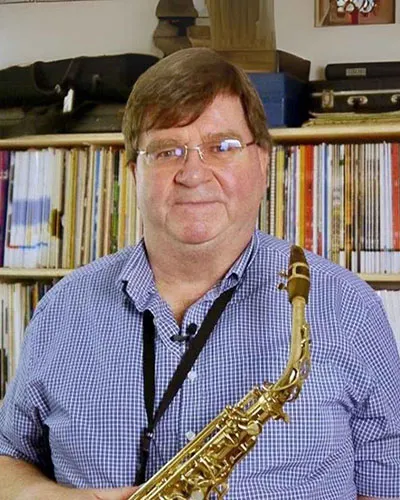
James Rae nació en Tyneside en 1957. Estudió clarinete, clarinete bajo, piano y composición en la Guildhall School of Music and Drama de 1975 a 1979, bajo la tutela de los profesores Yona Ettlinger, Stephen Trier, Meriel Jefferson y Patric Standford, respectivamente. Desde que dejó la Guildhall, ha desarrollado una carrera muy exitosa y variada en tres ámbitos: la interpretación, la composición y la enseñanza.
James Rae ha trabajado en numerosas producciones del West End y del Royal National Theatre, incluida la galardonada Oresteia de Sir Peter Hall con música de Sir Harrison Birtwistle, y ha recibido numerosos encargos como freelance con algunas de las principales orquestas y conjuntos del país. Es el líder del Phoenix Saxophone Quartet, que a lo largo de los años ha ofrecido numerosos recitales y emisiones para la BBC, y ha grabado la obra completa de Carey Blyton en dos álbumes, 'The Return of Bulgy Gogo' y 'Sherlock Holmes meets Dr Who'.
Como compositor, James Rae es uno de los autores de música educativa para viento más publicados de Europa, con más de 250 publicaciones en su haber, editadas principalmente por Universal Edition. Su música incluye cuadernos de estudio instrumental, sonatas, métodos, transcripciones barrocas, clásicas y de jazz, además de numerosos volúmenes de dúos, muchos de los cuales figuran en todos los principales programas de examen de viento del mundo. También ha escrito cuatro musicales para colegios con Mike Cornick, y entre sus encargos de mayor envergadura se encuentran The Turn of a Wheel, una gran obra para banda de concierto estrenada en noviembre de 1999 para la North Tyneside Concert Band, de la que fue miembro fundador de niño, y la obertura Moving On en 2012.
James Rae ha trabajado ampliamente como asesor de programas y compositor tanto para la Associated Board como para el Trinity College London, y ha participado de forma destacada en el desarrollo de los requisitos de lectura a primera vista para viento madera de ambos comités de examen. Como profesor, ha ocupado numerosos puestos tanto en el sector público como en el privado, y actualmente trabaja en la King's College School Wimbledon, donde dirige la Wind Orchestra y la Concert Band, y en la Shrewsbury House School de Surbiton, donde entrena a tres grandes bandas y a un grupo de cámara. Esa experiencia docente recorre toda su serie de saxofón para MusicGurus, que te lleva paso a paso desde tus primeras notas hasta convertirte en un intérprete seguro y con estilo: First Notes, New Keys & Low Notes, Expanding Your Range, Scales & High Notes, Extended Range & Rhythm, y Polish & Style.







