



La nota fa# - Introducción y ejercicios
Aprende la nota fa# y la escala de sol mayor en el registro agudo usando la llave de octava, con ejercicios para desarrollar la digitación.
Copyright © 2023 Universal Edition (London) Ltd., All compositions by James Rae except where otherwise indicated.
Qué incluye el curso
27 lecciones (1h 0m) · 1 gratis
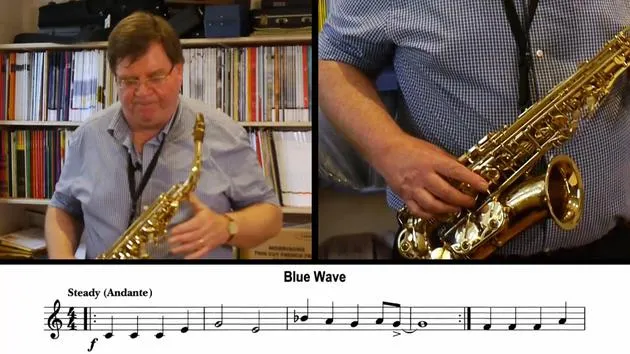
Transcripción de la lección
G Major Scale Lesson
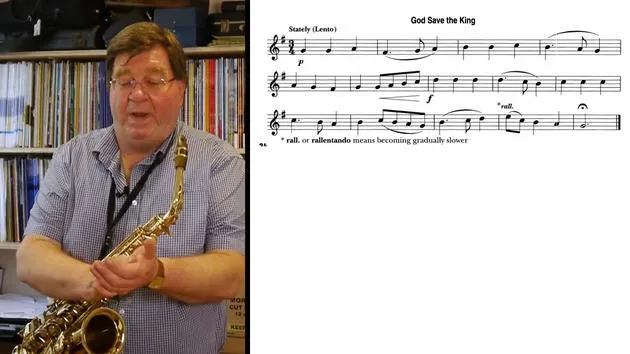
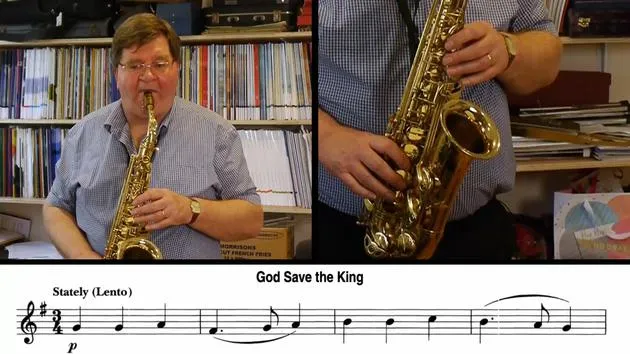
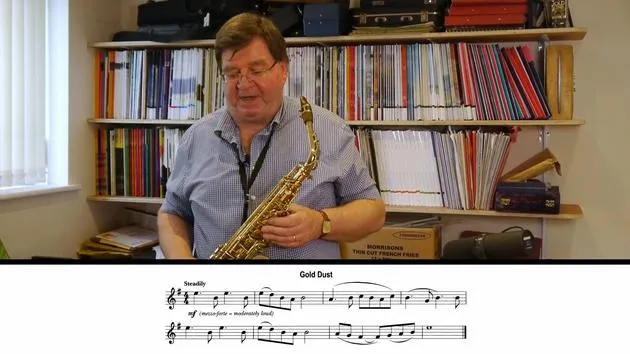
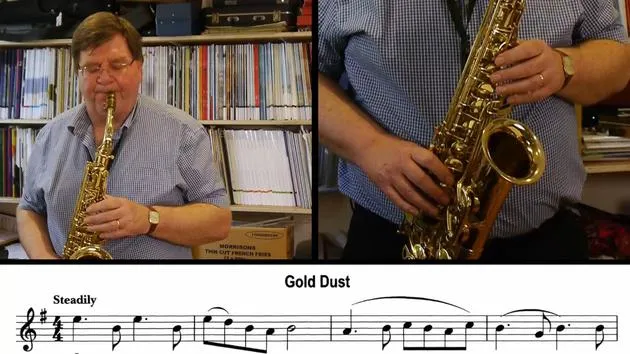
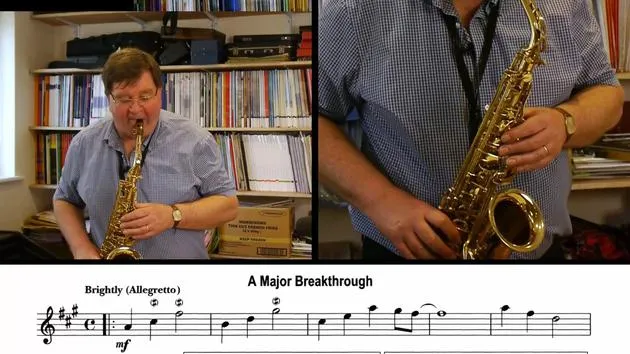
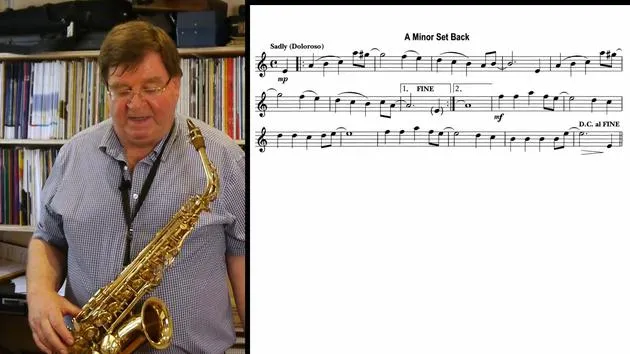
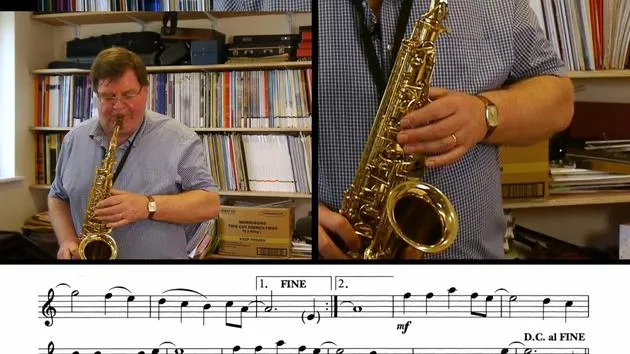
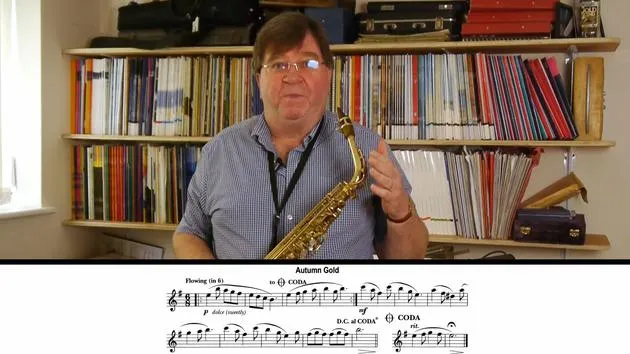
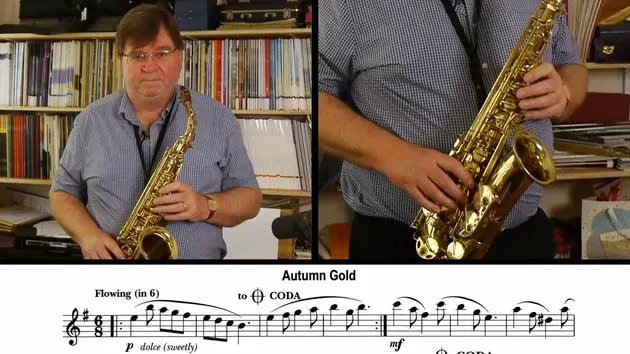
The next scale we learn is the scale of G major, which involves the F sharp. We learned about this earlier in the low octave register of the saxophone. In this case, we use the upper F sharp as well, which is fingered exactly the same, but with the octave key.
Tuning Note
There's the low one, nice easy note to play. That note is the tuning note, commonly used when you tune with a piano. It sounds A at concert pitch.
As you know, the saxophone is a transposing instrument:
- When you read a C and play what you read, it doesn't sound like a C.
- It's actually an E flat in this case.
This is why it's called an E flat alto saxophone. When you finger a C, and play a C, in order for the pianist to play the same note, they have to play an E flat.
Transposing Instruments
It's called a transposing instrument. A lot of instruments are transposing, such as:
- Trumpets
- Saxophones
- Clarinets
- Brass band instruments (cornets, flugelhorns, and more)
The alto saxophone is pitched in the key of E flat. So when you play a C, it sounds in the real world like an E flat.
On the tenor and soprano saxophones, which are pitched in B flat, when they read a C, it actually sounds B flat. That's why they're called:
- B flat tenor
- B flat soprano
- E flat alto
- E flat baritone saxophone
They are all transposing instruments.
G Major Scale Preparation
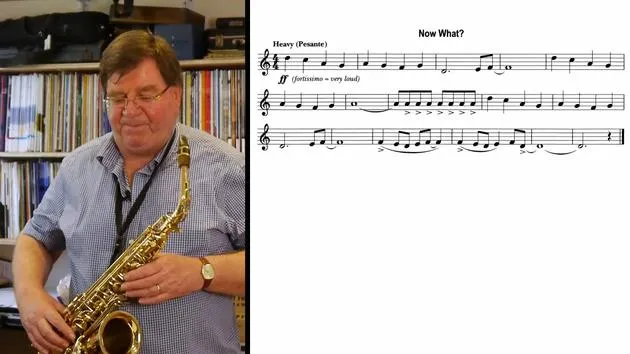
Now, back to the G major scale. We have the usual preparation here, where we do four notes. As you can see, I'm playing these slightly faster because as you progress, your technique will get faster, and you'll be able to play the exercises faster, too.
When we put that together, we get:
"Scales are fun when they're played well; they're not when they're not."
G Major Arpeggio Preparation
- Arpeggio Preparation involves again, two fingers, etc.
- You can play them more than four times if you want, but it's all good practice.
Then we put that lot together, and we have a perfectly formed arpeggio.
Dotted Crotchet
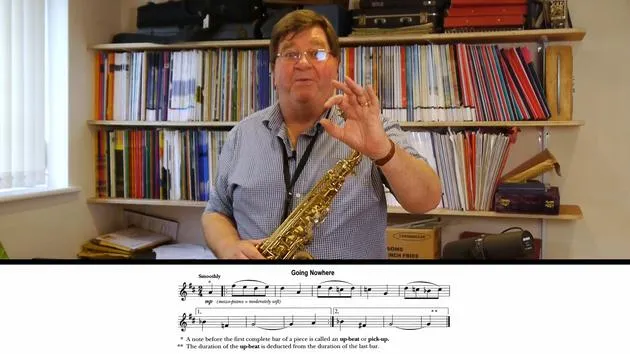
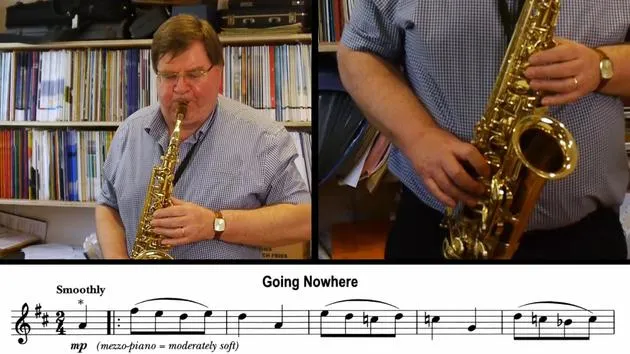
The next issue we deal with in this lesson section is the dotted crotchet.
We talked about dots earlier with regard to minims. A dot after a crotchet adds half its value, so it adds half a beat.
When practicing these rhythms, it's good to set your old metronome. Let's just do that now. I've got the metronome right here, just propped up there, giving us a nice even pulse.
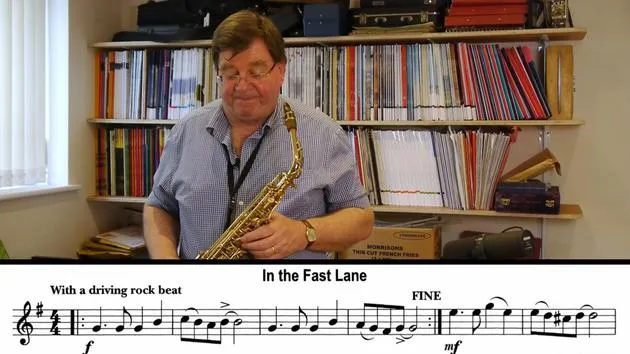
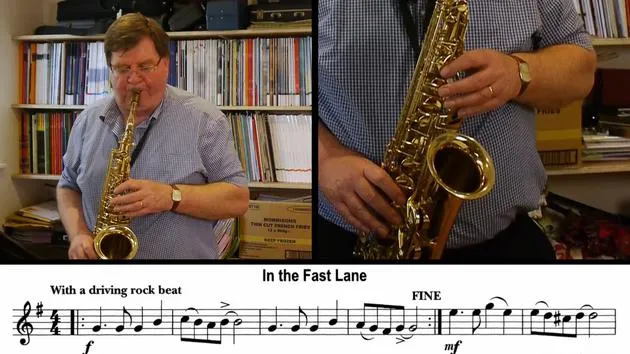
So, the rhythm of exercise five goes like this:
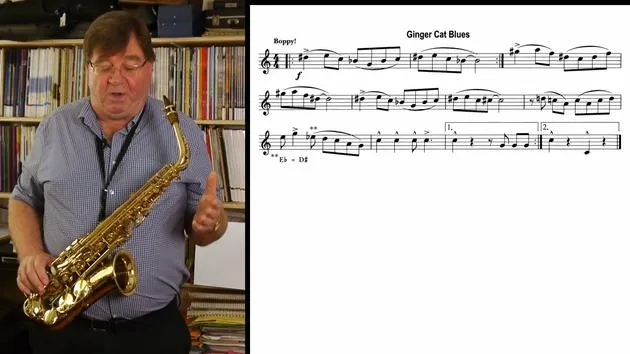
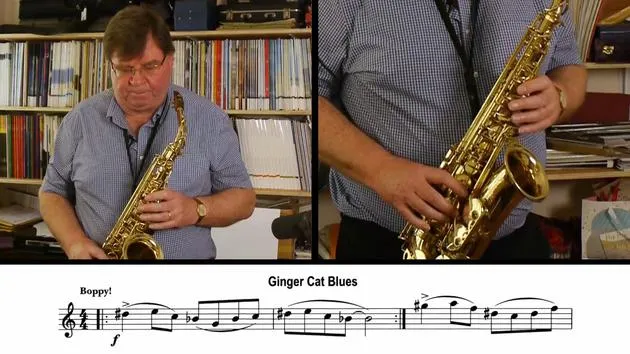
When I play that exercise on a single note, the next exercise involves a bit of movement. You have to move your tongue and your fingers at the same time. Always be precise.
27 lecciones
1h 0m de lecciones en vídeo estructuradas
Funciones de vídeo avanzadas
Ralentiza, repite un pasaje, sigue la partitura
Móvil, tablet y ordenador
Practica donde quieras
Garantía de satisfacción 100%
30 días de garantía de devolución
Conoce a tu gurú
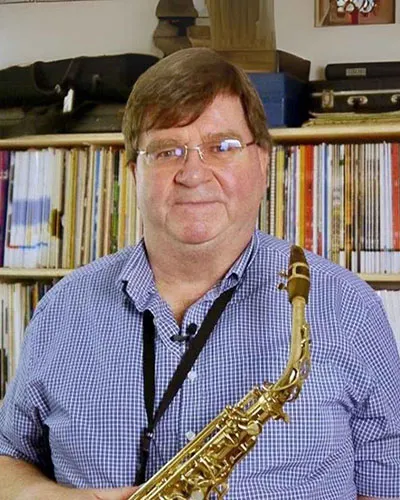
Conoce a tu gurú
James Rae nació en Tyneside en 1957. Estudió clarinete, clarinete bajo, piano y composición en la Guildhall School of Music and Drama de 1975 a 1979, bajo la tutela de los profesores Yona Ettlinger, Stephen Trier, Meriel Jefferson y Patric Standford, respectivamente. Desde que dejó la Guildhall, ha desarrollado una carrera muy exitosa y variada en tres ámbitos: la interpretación, la composición y la enseñanza.
James Rae ha trabajado en numerosas producciones del West End y del Royal National Theatre, incluida la galardonada Oresteia de Sir Peter Hall con música de Sir Harrison Birtwistle, y ha recibido numerosos encargos como freelance con algunas de las principales orquestas y conjuntos del país. Es el líder del Phoenix Saxophone Quartet, que a lo largo de los años ha ofrecido numerosos recitales y emisiones para la BBC, y ha grabado la obra completa de Carey Blyton en dos álbumes, 'The Return of Bulgy Gogo' y 'Sherlock Holmes meets Dr Who'.
Como compositor, James Rae es uno de los autores de música educativa para viento más publicados de Europa, con más de 250 publicaciones en su haber, editadas principalmente por Universal Edition. Su música incluye cuadernos de estudio instrumental, sonatas, métodos, transcripciones barrocas, clásicas y de jazz, además de numerosos volúmenes de dúos, muchos de los cuales figuran en todos los principales programas de examen de viento del mundo. También ha escrito cuatro musicales para colegios con Mike Cornick, y entre sus encargos de mayor envergadura se encuentran The Turn of a Wheel, una gran obra para banda de concierto estrenada en noviembre de 1999 para la North Tyneside Concert Band, de la que fue miembro fundador de niño, y la obertura Moving On en 2012.
James Rae ha trabajado ampliamente como asesor de programas y compositor tanto para la Associated Board como para el Trinity College London, y ha participado de forma destacada en el desarrollo de los requisitos de lectura a primera vista para viento madera de ambos comités de examen. Como profesor, ha ocupado numerosos puestos tanto en el sector público como en el privado, y actualmente trabaja en la King's College School Wimbledon, donde dirige la Wind Orchestra y la Concert Band, y en la Shrewsbury House School de Surbiton, donde entrena a tres grandes bandas y a un grupo de cámara. Esa experiencia docente recorre toda su serie de saxofón para MusicGurus, que te lleva paso a paso desde tus primeras notas hasta convertirte en un intérprete seguro y con estilo: First Notes, New Keys & Low Notes, Expanding Your Range, Scales & High Notes, Extended Range & Rhythm, y Polish & Style.







