



Wayfaring Stranger (lección)
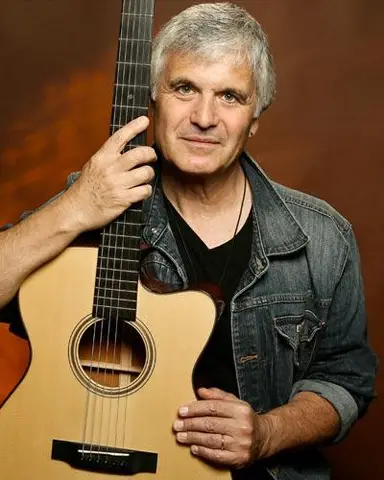
Lesson time: (7min 35sec)
Course preview
This lesson is part of the course Entender el DADGAD
Watch a preview of the full course below.
Lesson transcript:
Music Lesson: Exploring E Minor in DADGAD
So we've explored the key of D and the key of A minor. In DADGAD, I'm going to move us into the key of E minor, which on the surface may not seem quite as logical as the others. However, what's really cool about E minor is:
- Open D String: With the open D string, you have the flattened seventh at the bottom.
- Hammer-On Opportunities: This allows for hammer-ons on:
- The A string (the fifth string)
- The second string
- Chord Relationships: I'll move on to the second fret to illustrate the relationship from A to B. Additionally, on the third string, you have the second fret going from G to A. This provides the relationship for each of the primary chords:
- E chord
- B chord
- A chord
Each one of these can be approached from a whole step below the chord root, which contributes to a very nice quality.
Chord Shapes
Here's the shape I showed you previously:
- Moving the F shape back to the E shape
- Lifting off your first finger gives you an E minor shape with the D on top (the flattened seventh).
- If you lift off your pinky, you have:
- The second string open (A, the fourth)
- The third string with a very cool, floating kind of harmonic quality.
Arrangement of "Wayfaring Stranger"
I'm going to take the tune "Wayfaring Stranger" to arrange here. This very simple melody really only plays in one position if you're just focusing on the melody.
Chord Progression
In my arrangement, I'm filling in the E minor chord and adding the bass note, the flat seventh (D) to the E. This gives it a bit of a rock and roll vibe, with a bluesy rock feel.
For context, if you listen to my full band electric version, I'm playing electric guitar in standard tuning with a Hammond B3, bass, and drums. The tune suits that treatment as well.
This arrangement uses the following chords:
- A minor
- E minor
- C
- Dsus
Note: The Dsus utilizes open strings, showcasing a lot of open string activity.
Then transitioning to:
- C major 7
- G
Advanced Chords
Here's an example where I play the G with the 10th in the bottom. Instead of playing a straight B chord, I approach it with an F# minor 7, giving it a little staccato push.
You might expect the melody to return to E minor here, but I'm advancing the harmony a little bit by taking it to an A ninth chord over a C# (A first inversion).
Hear the difference:
- There's the E minor
- Here's the A
You can feel that emotional lift. This illustrates the essence of harmony:
- Underscoring Emotion: Harmony can underscore the emotion of a melody.
- Complexity in Chords: Instead of simple chords, using richer chords adds emotional depth.
I'm then moving it to the minor, further adding to the complexity.
Final Notes
One more time, instead of harmonizing the A melody note with an A minor, I'm going to a C minor chord. This captures the melody as the sixth, which again takes it to a darker place and then back to the beginning.
Creating Connecting Material
In the process of building an arrangement, you often want to find connecting material, such as an intro or a coda. For this arrangement, I've devised an intro inspired by a bluesy power chord that sets up a groove and allows for improvisation.
I'm going to give you a performance of this tune using that intro figure. Pay attention to how the harmony progresses, twisting from a simple chordal progression to something with a touch of jazz and blues rock , giving it a stylistic angle.
Conclusion
So this is "Wayfaring Stranger."
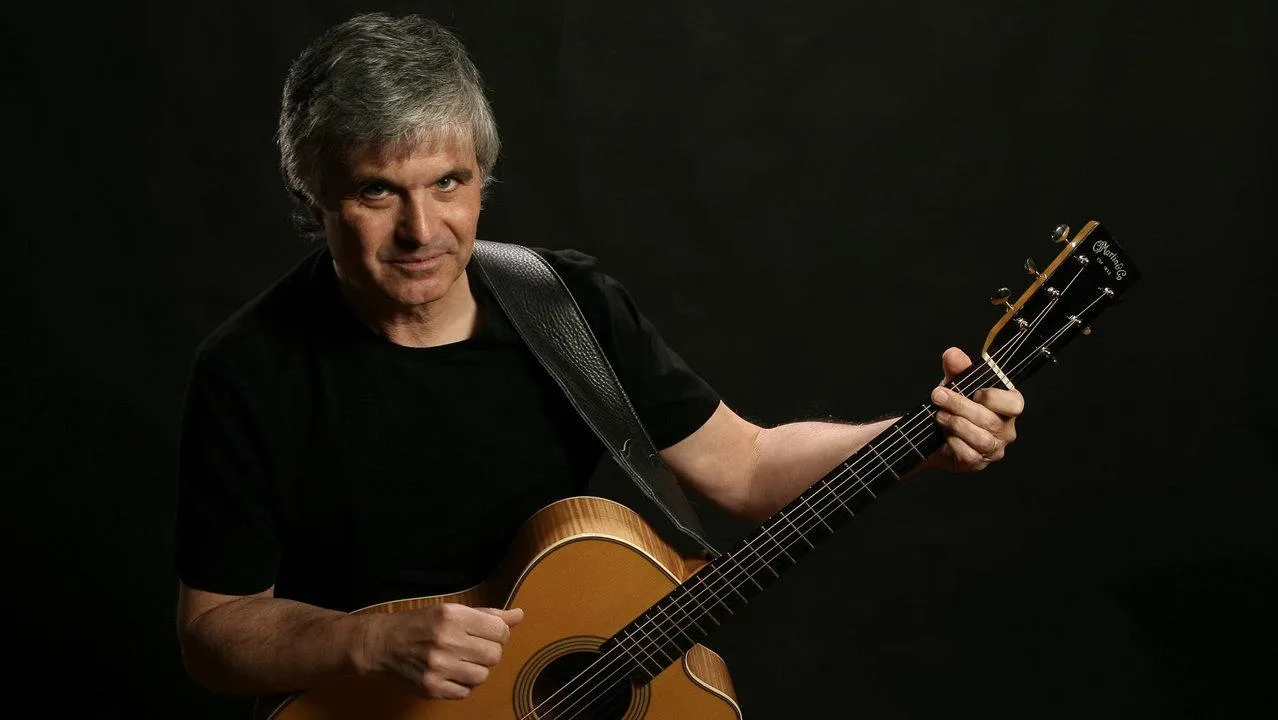
About the instructor
Laurence Juber se dio a conocer primero como guitarrista principal de Wings, la banda de Paul McCartney. Desde entonces ha construido una carrera como guitarrista fingerstyle, compositor y arreglista, trabajando en gran medida con la afinación DADGAD, que le valió el apodo de 'the Duke of DADGAD'.Los lectores de Fingerstyle Guitar Magazine lo han votado Guitarrista del año, y la revista Acoustic Guitar lo ha incluido entre los mejores guitarristas, junto a una larga lista de álbumes en solitario y giras por todo el mundo.En sus cursos enseña su técnica fingerstyle y la afinación DADGAD por la que es conocido, cómo combinar melodía, armonía y bajo en un arreglo para guitarra sola, y las piezas -como su emblemática 'Wooden Horses'- que lo reúnen todo. read more