



Meant To Be (lección)

Lesson time: (10min 25sec)
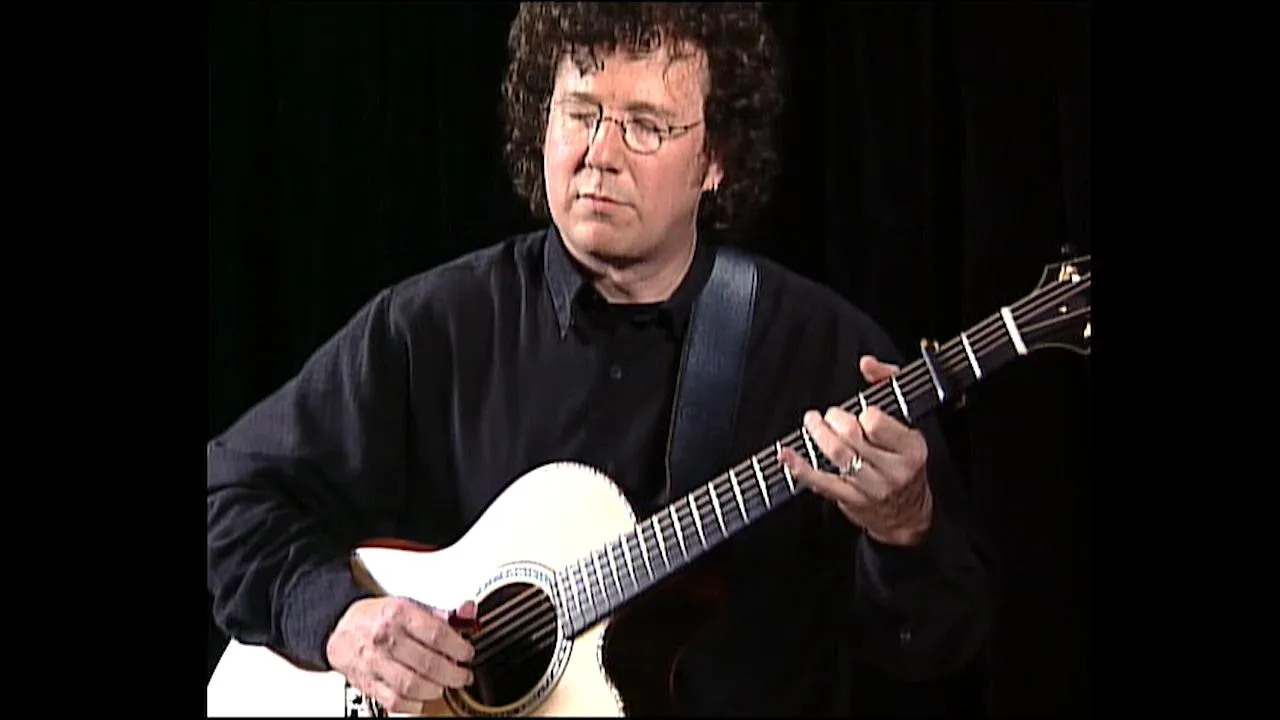
Al Petteway enseña su tema 'Meant To Be' en DADGAD, construyendo un groove constante tipo batería en los tiempos 2 y 4 mientras lleva a la vez el bajo, el ritmo y la melodía.
Course preview
This lesson is part of the course Celta, blues y más allá
Watch a preview of the full course below.
Lesson transcript:
Exploring DADGAD Tuning and Rhythm Techniques
A lot of people believe that DADGAD tuning is pretty much limited to playing in Celtic styles. For a while, I was doing a lot of what you'd call "sideman work" because I was hired for one concert at a time by various musicians. I found that, especially with Celtic music, sometimes it was more comfortable to play in standard tuning and sometimes in DADGAD.
So, I would try to learn all the tunes in both tunings, depending on where we ended up doing the most tunes. But then I discovered that I can actually do anything in DADGAD that I can do in standard tuning, and pretty much vice versa, if I just pick the right key.
The Shades of Blue Album
When I did the Shades of Blue album for Solidaire Records, I decided to keep the guitar mostly in DADGAD for the album. What happens is really cool: if you're getting a little blues flavor on top of this tuning, it gives you more flexibility in the strings because you're tuned down. You can actually get a stretch, almost like you would on an electric guitar. You can really stretch the string, and that's harder to do in standard tuning. I mean, you can do it in standard, but it hurts after a while.
A lot of the tunes I enjoyed playing, I found I enjoyed even more in the DADGAD tuning.
Introducing "Meant To Be"
One tune I wrote called "Meant To Be" has a lot to do with groove. I love hearing a guitar player that can accompany themselves. When you hear that, it's fascinating because you catch the bass, drums, rhythm, and melody all happening at once.
I made a challenge for myself on this tune to create a drum beat that would happen all the way through the tune, specifically on 2 and 4. So it would be:
1, 2, 3, 4.
That was fine as long as I was doing something simple like pulling up with the string and then coming down to hit it. However, all the melodies I wanted to play were falling on the guitar in such a way that made it impossible to maintain that.
I had to play notes when coming down. I thought, "How am I going to do that?" So, what I decided is that if I hit with the back of my nails as I come down, it gives you that little click just like you get when slapping the strings.
The Technique
I'll show you how I start "Meant To Be".
- I hit the strings and then strike with the back of my nail.
- You hear the nail hit the strings, creating that signature sound.
The goal is to play straight through the tune while keeping that pattern. The way I practice this, and teach my students, is to take a tune you're really familiar with, something like "Twinkle, Twinkle, Little Star," or anything that makes sense to you.
Practicing the Rhythm
Here's a simplified approach:
-
Focus on Consistency:
- Ensure every note is played, while keeping a consistent click on 2 and 4.
-
Use Your Fingers:
- Thumb down, back of the nail for slaps; no note for clarity.
-
Experiment with Patterns:
- Explore varying patterns, like hitting all four beats.
Demonstration of "Meant To Be"
Let me play a little of "Meant To Be" to illustrate this concept.
- This involves a pull-off,
- A back of the nail combination.
When you get it right, it feels incredibly cool.
Rhythmic Variations
You can try this technique with any tune. Accompany a song you already know or one you sing. Just play the chords, see how it feels, and then implement that rhythmic slap structure:
- Start with simple strumming.
- Add slaps on the downbeat.
- Mix in notes to see how they fit.
Stretching Techniques
The other thing I incorporate in this tune is stretching one string while holding the other string right next to it. When I go, there's a bit of vibrato. I start with the string already stretched, creating a very cool sound.
- Most people stretch up and down, but if you can stretch up first and then come down, it creates a sort of crying sound that I love.
Conclusion
The middle section of the tune is simple, with patterns in chords.
- Notice how I stick with first, third, and fourth positions all the way down.
- The rhythm should remain solid, always aiming for that click on 2 and 4.
Remember, achieving that sweet sound often comes from starting with the note you want rather than the conventional stretching approach.
Keep practicing the rhythm, if you take time out of your practice to master rhythm, it will enhance everything you do in this kind of music!
About the instructor
Artista de grabación e intérprete ganador de un Grammy Award, Al Petteway ha tocado prácticamente todos los tipos de música popular, folk y clásica. Aunque su instrumento principal siempre ha sido la guitarra, también ha estudiado laúd, contrabajo, percusión y composición musical. Sus composiciones para guitarra acústica fingerstyle están fuertemente influidas por su amor por la música celta y por sus propias raíces en el folk, el rock y el blues, exactamente el terreno que abre en su curso de MusicGurus, Celtic, Blues and Beyond. En Celtic, Blues and Beyond, Al comparte las afinaciones abiertas, las técnicas de fingerstyle y el enfoque melódico que hay detrás de su sonido, mostrándote cómo fusionar el fraseo celta con el feel del folk, el rock y el blues para que encuentres tu propia voz en la guitarra acústica. Al recibió cuarenta y cinco "Wammies" de la Washington Area Music Association, incluidos los máximos honores de "Artist of the Year" y "Musician of the Year". Fue galardonado con dos Maryland State Arts Council Individual Artist Awards de Composición Musical y ha actuado en la residencia del Vicepresidente y en The White House. Su forma de tocar aparece en más de sesenta grabaciones de algunos de los músicos de folk y celta más conocidos del mundo. En 2005 fue votado uno de los Top Fifty Acoustic Guitarists of all Time por los lectores de Acoustic Guitar Magazine, y en 2008 ganó medallas de Plata y Bronce en los Player's Choice Awards de la revista. Su CD "Caledon Wood" fue votado uno de los "Essential Albums of the Past Twenty Years" en el número del 20 aniversario de Acoustic Guitar Magazine, y su lanzamiento de 2012 "It's Only the Blues" figuró en dos de las listas "Top Ten Essential Albums of 2012" de los editores de Acoustic Guitar Magazine. En 2014 y 2015 publicó dos álbumes en solitario más, "Mountain Guitar" y "Dream Guitars, Vol. II." "Un instrumentista innovador conocido por sus afinaciones abiertas, Petteway ofrece un sonido rico y dulce que combina una fusión de lo antiguo y lo nuevo." --The Boston Globe read more