



Fishin' In The Wind (lección)
Con
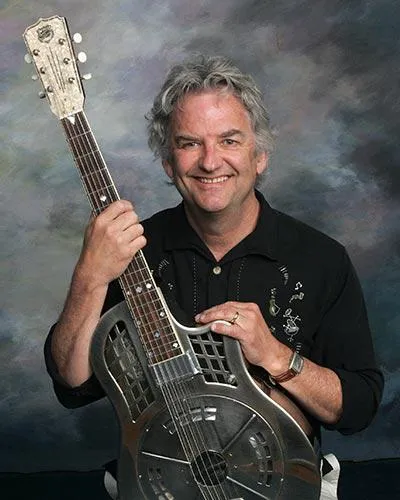
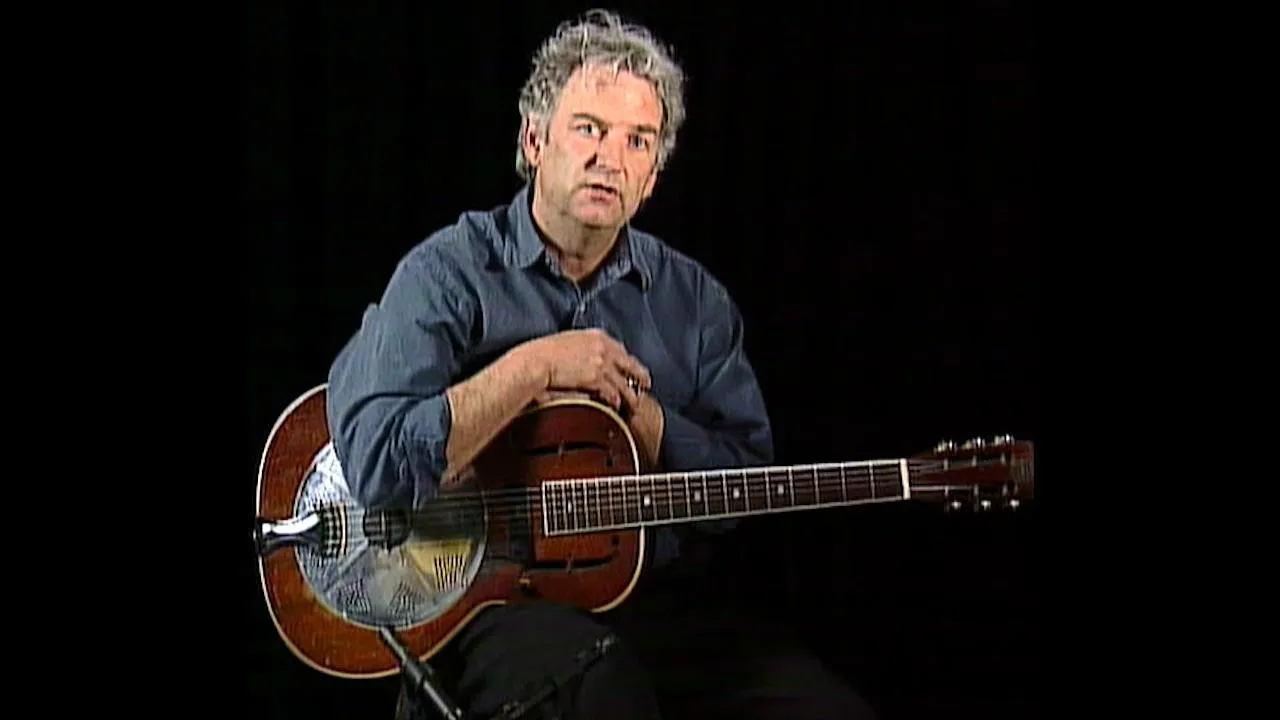
Mike DowlingMike Dowling enseña Fishin' In The Wind a la guitarra acústica y desglosa el hybrid picking que permite que una púa haga el papel de los dedos y de una púa de pulgar.
Qué incluye el curso
14 lecciones (1h 30m) · 1 gratis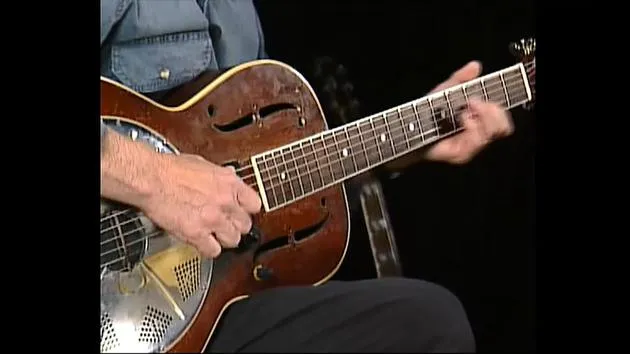
01. Rosalie (interpretación)
Lección gratis4:58
02. Rosalie (lección)
8:59
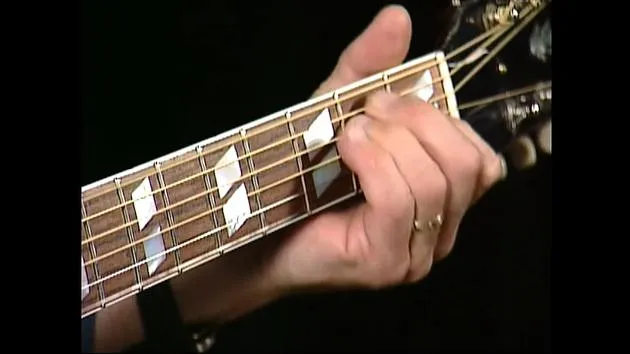
03. Nit Pickin' (interpretación)
3:22
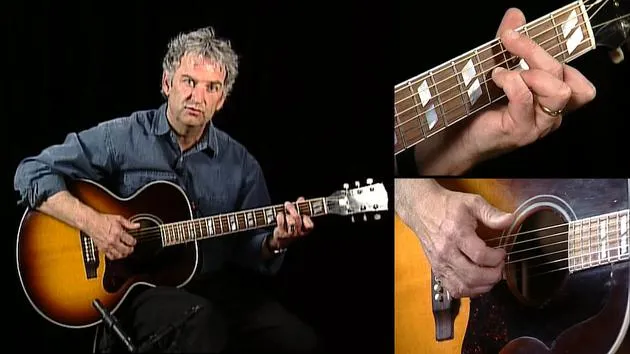
04. Nit Pickin' (lección)
11:02
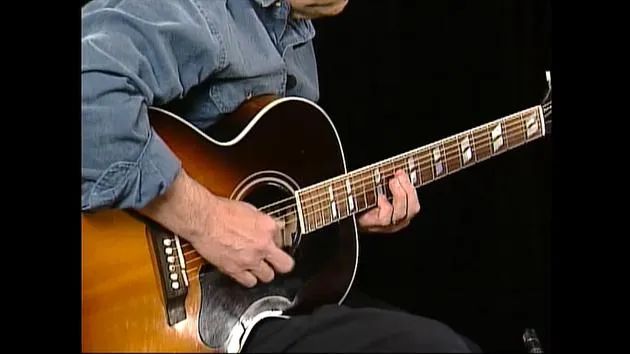
05. Minor Thing (interpretación)
4:21
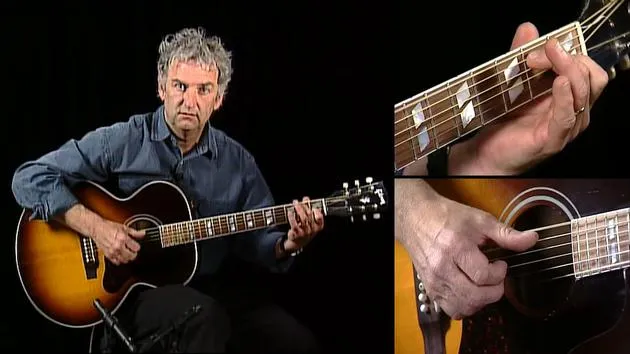
06. Minor Thing (lección)
10:48
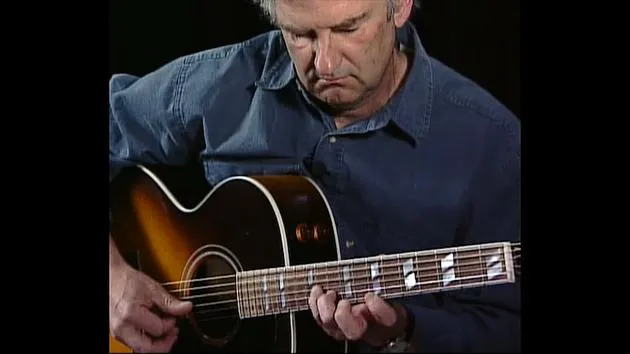
07. Johnson City Rag (interpretación)
3:33
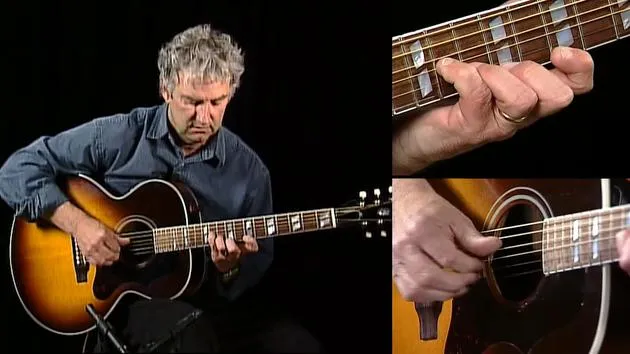
08. Johnson City Rag (lección)
9:39
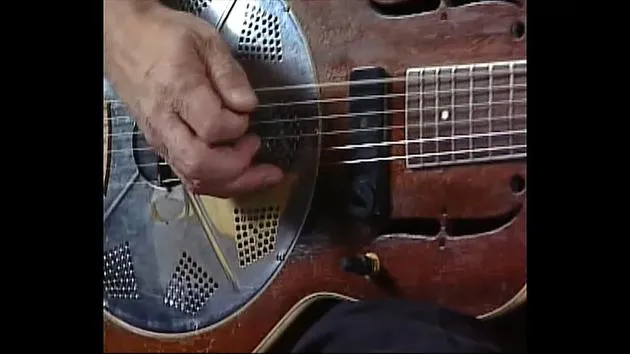
09. Fishin' In The Wind (interpretación)
2:35
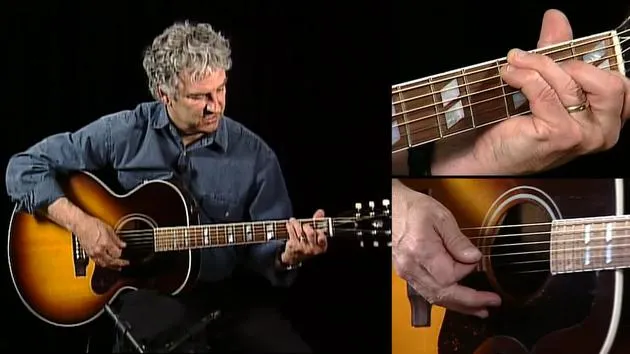
10. Fishin' In The Wind (lección)
Estás aquí10:15
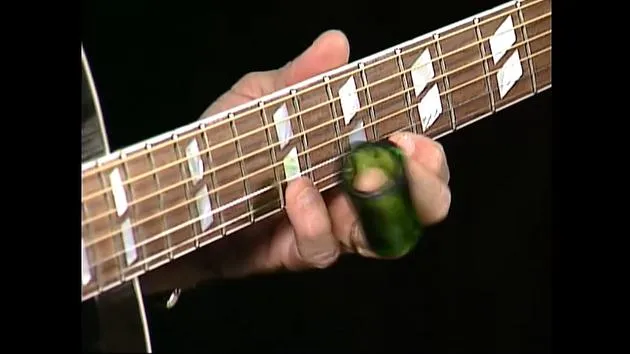
11. Bottleneck March (interpretación)
3:00
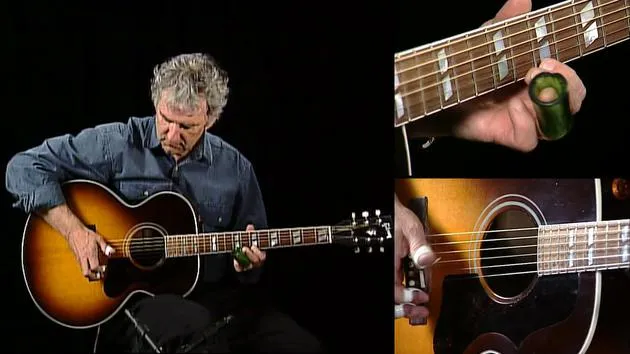
12. Bottleneck March (lección)
10:31
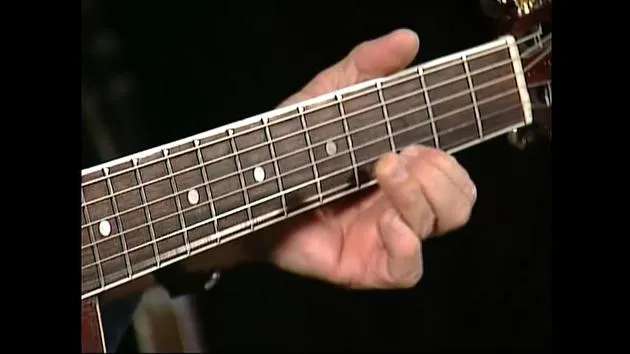
13. EXTRA: Bottom Lands (interpretación)
3:44
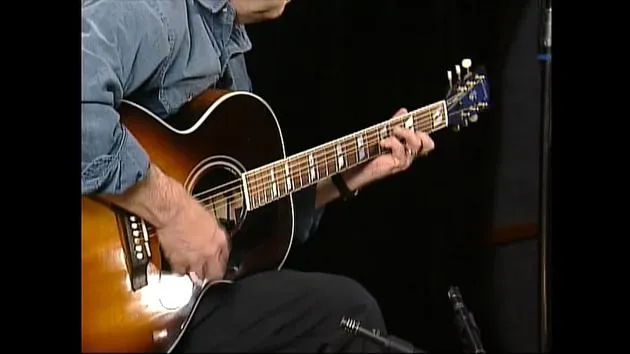
14. BONUS: String Crazy (interpretación)
3:34
Transcripción de la lección
Music Lesson: Hybrid Picking Explained
Introduction to Hybrid Picking
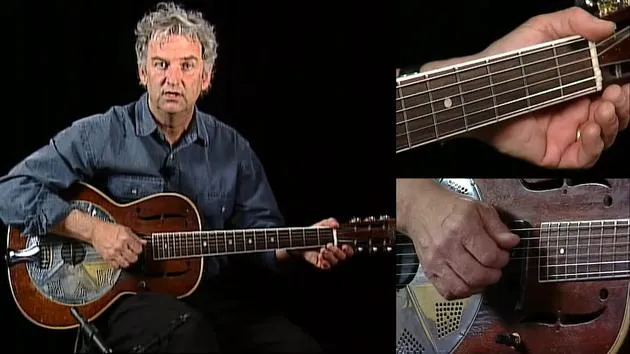
All right, let's take a look at this tune that involves some hybrid picking. Hybrid picking is when you hold the flat pick and then use your fingers to simulate some fingerpicking passages. So be it!
Overview of the Tune
This tune was originally sketched out to be a duet, so I've kind of pared it down here. Let me play it again for you or the main passage. Let me do that slowly.
"It's kind of hard to slow this down and play it. Who am I kidding? It's kind of hard to speed it up and play it too."
Breaking Down the Phrases
The second little phrase where I come up and do some plectrum playing is a little bit different. Here's the first one:
- Pinch.
- Here's the second one.
My flat pick is just acting as if I had a thumb pick.
Development of My Playing Style
So far, what's happened with my playing is it's developed over the years. Maybe it comes from this kind of hybrid playing. I've learned to use my ring finger, so now when I'm playing with a thumb pick and two fingers, I'll quite often not even use my first finger at all.
"Maybe it's because that finger just seems a little too short for me after all those years. Or maybe I've just developed a little acuity with the ring finger."
As you watch me playing, it may look like I'm not using my index finger at all to play, and you'd be right about that.
Returning to the Tune
Let's get back to this tune.
- Pull off G7, kind of the same motif on the B string.
- C with a G up high.
- C diminished, G7, diminished G7, C.
I'm setting up the second part of the tune now. This song is in the key of C and also in the key of E.
Here's my transition:
- When I go to the key of E, it's very blatant. I just hit the dominant chord for my new key.
- New key is E.
- I hit B7 to set it up.
- B7 up high, 9th position, B7.
- Repeat that up high.
"See, it's very pinchy here."
Transitioning Back
One more. I got us out of context. Let me start over. Repeat it up high. Time to get back to the new key.
Here's my transition:
- Okay, that's all E, isn't it?
- Now I'm going to play B7 or G7.
- Just a partial little chord and use my open G string and start walking up.
"A little more disguised, that modulation there to get me back to the key of C."
Not as heavy-handed as using that B7 to get to the key of E.
Triplet Patterns
Okay, here we go. Here's a little triplet:
- I could go just get my right hand here.
- Angle in on that.
There's the triplet right away or save it till there at the second fret I'm on G7 is what I'm thinking and then back into the theme.
Next Part of the Tune
Going to the next part of the tune, the next whole chorus of the song using it as a flat picker would.
Now, G.
"That's a big stretch. If you've got your guitar up like this, you'll be more able to easily grab those chords."
A friend of mine looked at what I was doing and he said, "Why, that's a three-dot grab." You go from that dot to that dot to that dot. He was pretty impressed by that three-dot graph.
Now every time I play about that thing, I think of the 3-dot graph. Anyway, and then come back to C.
- Nice big G.
- G13, add nine right there and then C.
Second B Part of the Tune
Now I'm going to the second B part of this tune.
- I'm just going to do this:
- I'm going to take my chords that I outlined before.
- There's E with a third in the bass.
- I'm going to stay off my A string.
- I probably won't even play anything on it.
Breaking my chord, thinking of that as B9 in a way.
Here's what I'm thinking:
- I'm thinking along the same lines.
- The underlying chords: E, B7, E, B7.
- And in a way, I'm harmonizing my chord forms down low, just using different inversions: E, B, E, B, E, G.
And that's my transition back a little more disguised.
Chords and Progression
I think I played what I played in performance here again:
- E with a third in the bass.
- B7 with an F sharp in the bass.
- B9 if you will, with an A in the bass, seventh in the bass.
- E,
- E major,
- B7B with a third in bass,
- E6.
Here's what I wanted to do, but it still worked the other way:
- E sixth, C sharp minor seventh, B, E, G.
Ending the Lesson
And then picking it up again.
Okay, you can hear me implying some almost fast waltz time cadence there.
If I've got two measures:
- 1, 2, 3, 4.
- 1, 2, 3, 4.
I could spend my quarter notes going:
- 1, 2, 3, 3.
- 1, 2, 3.
- 1, 2.
Okay, that makes eight quarter notes. That's my measure. So that's going in the back of my head there. If I can keep it straight.
Now here, if you're doing that, it really helps to play along with a track or have somebody else playing those rhythm chords for you to try to get that waltz time cadence in there.
"It really goes a long way to giving your fingerpicking a nice kind of bounce. It's almost unpredictable."
Some of these patterns you come up with after a while. At first, it's kind of hard to keep it straight, but you can get it all right.
I basically just played the tune to end it, recapping what I did the first time around.
- Diminish.
- And then I grab a 6, 9 chord, C69.
Here it is:
- 8th fret,
- 8th fret,
- 7th fret,
- 7th fret.
Seems like I've been using a lot of those 69 chords to put a button on the tunes today.
Final Thoughts
Last passage...
"All right. That should take care of Fishing in the Wind."
14 lecciones
1h 30m de lecciones en vídeo estructuradas
Funciones de vídeo avanzadas
Ralentiza, repite un pasaje, sigue la partitura
Móvil, tablet y ordenador
Practica donde quieras
Garantía de satisfacción 100%
30 días de garantía de devolución
Conoce a tu gurú
Conoce a tu gurú
Cuando el gran Vassar Clements, ya fallecido, escuchó tocar la guitarra a Mike Dowling allá por 1975, hizo lo más sensato. Lo contrató. Mike fue el guitarrista de la primera banda de gira de Vassar y se le puede escuchar en su “Nashville Jam”, nominada a un Grammy. Clements lo describió sencillamente como “uno de los mejores guitarristas que existen, en cualquier lugar”. Ese mismo sentir lo comparte un coro cada vez mayor de críticos musicales, estudiantes de guitarra y aficionados a la música acústica de todo el mundo.
Mike ahonda en el rico bagaje de la guitarra de raíces estadounidenses, con predilección por el melódico estilo Piedmont de maestros del blues acústico como Mississippi John Hurt y el gran intérprete de slide Tampa Red. Pero a Mike no se le puede encasillar como bluesman, ni siquiera como fingerstylist. Es demasiado versátil para eso. Del blues de bottleneck al jazz de antaño y mucho más de por medio, la musicalidad, la profundidad y el dominio del instrumento de Mike se trasladan con fluidez tanto a las guitarras de tapa plana como a las de tapa arqueada y a las resonadoras.
Intérprete, compositor, profesor, artista de sesión, inventor: todo lo que hace el guitarrista Mike Dowling refleja su amor y su dominio del instrumento que ha sido el eje de su vida durante más de cuarenta años.
En sus lecciones, Mike abre para ti el bagaje del uptown blues: fingerpicking Piedmont relajado, un bajo constante de pulgar alterno, ágiles líneas de nota única y los recursos de slide y bottleneck que dan alma a la guitarra de raíces estadounidenses, enseñado con el mismo sentimiento que él inyecta en cada nota.
“Un excelente instrumentista que se maneja con soltura en una amplia gama de estilos musicales. Inyecta sentimiento en cada palabra y en cada nota.”
--Hit List, Acoustic Guitar
“Dowling es un guitarrista fluido y preciso, y sus curtidas voces tienen un aire juguetón y saltarín de lo más atractivo.”
--Dirty Linen







