



3. Flujo de aire
Con
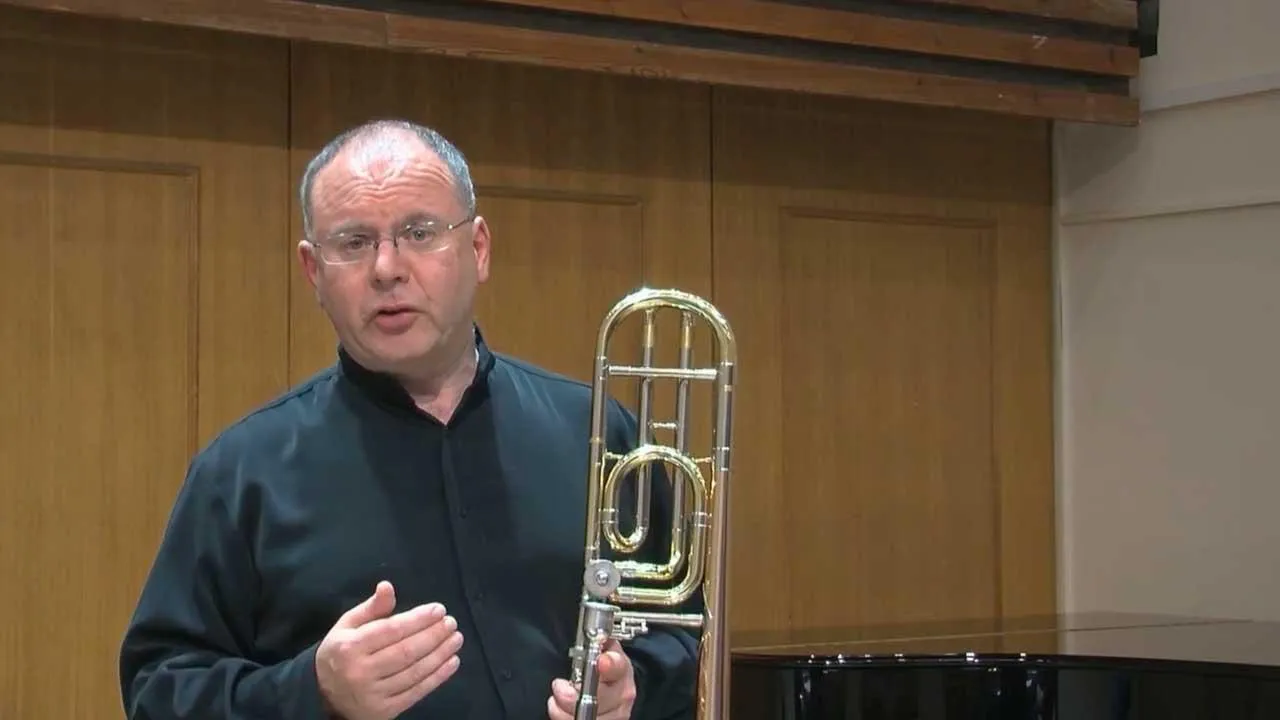
Peter GanePeter Gane y Chris Houlding cubren el control de la respiración en el trombón: cuándo respirar por la boca o la nariz, y cómo las posiciones de vara complementarias y los ligados de proximidad facilitan tu ejecución.
Qué incluye el curso
10 lecciones (1h 33m) · 1 gratis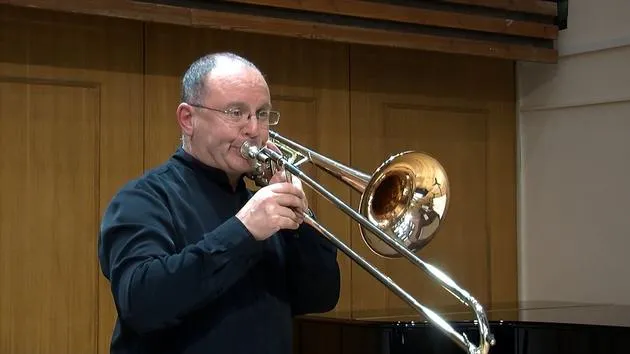

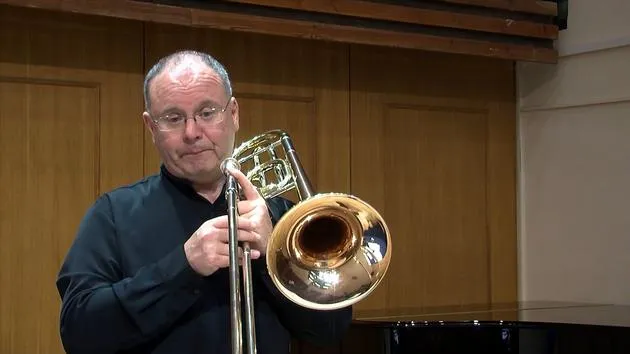
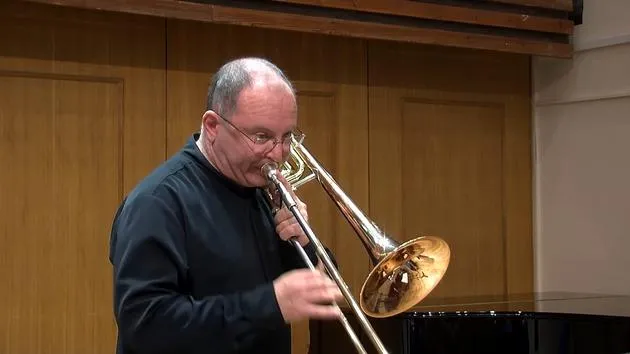
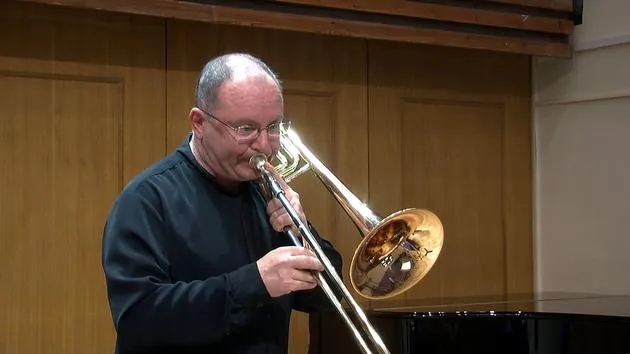
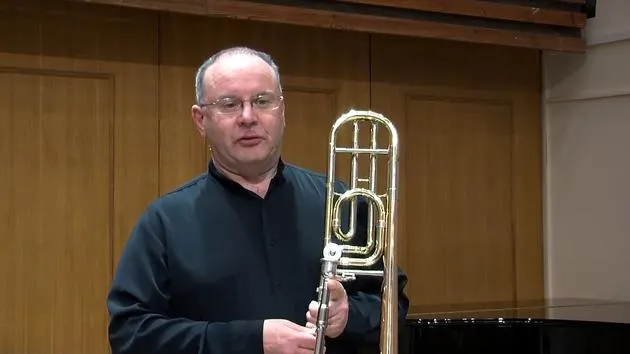
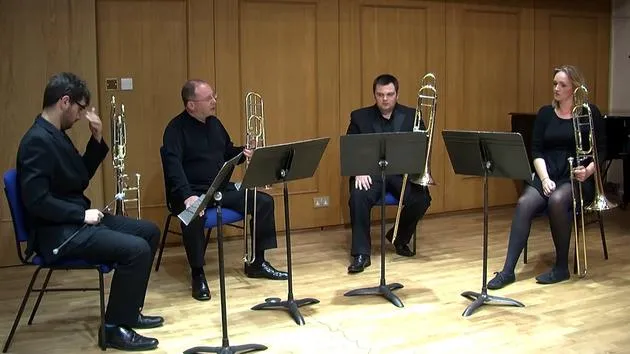
Transcripción de la lección
Circuit Training Unit 3: Airflow
Introduction
Hello and welcome to Circuit Training Unit 3, focusing on airflow. In this lesson, we'll explore breath control and oral memory. Proper airflow and support can solve many problems, and worries can and will disappear.
Breath Control
Chris, can you give us an insight into this by playing Figure 1 starting at page 19?
-
Take a Full Breath:
Taking a full breath at the beginning of every phrase is not only a psychological advantage, but it also:- Ensures you have the air to reach the end of the passage.
- Brings extra oxygen to the blood and brain, which helps build confidence and reduce stress.
-
Inhaling Techniques:
Try always to inhale through the mouth, not the nose. Inhaling through the nose can be good if you're nervous, as:- Oxygen goes through the receptors in the nose to the blood much quicker than through the mouth, calming you down.
-
Controlling Nerves:
Reduce your heart rate naturally before a performance to control nerves, but not during the piece.
While playing:- Breathe only through the mouth.
- Keep your mouthpiece connected to your top lip and breathe through the corners of your mouth for a good melodic and continuous line.
- Be sparing with air in the first part of the phrase then let it go when you reach the halfway point.
-
Volume Control:
Be careful not to play too loudly in the high register, as human ears perceive higher frequencies better than lower ones. Aim for:- Softer playing in the high range.
- Fuller sound in the low range to utilize breath control effectively.
-
Embouchure Stress:
Reduce any stress on your embouchure by maintaining your instrument at the same level. Avoid rocking the mouthpiece, which can cause problems.
Developing Oral Skills and Memory
Developing oral skills and memory are essential elements for the contemporary musician. Chris, could you expand a little on that?
-
Warm-Up with Students:
Warming up helps create:- A clear aural memory of the sound quality needed.
- Memorization of short sequences of common note groups found in everyday music.
-
Sound in Mind:
In a call-and-response situation, think of this as your passport. Remember:- Upon entering an examination, audition, or performing, your sound is the first impression.
- Always blow through your instrument, not just into it.
- Do not force the air; keep the sound in the bell where the overtones are produced.
-
Sound Projection:
Less is more; focus on sound projection rather than noise.
Demonstration: Complementary Positions and Proximity Slurs
Before playing the first of your interludes, can you demonstrate the use of complementary positions and proximity slurs?
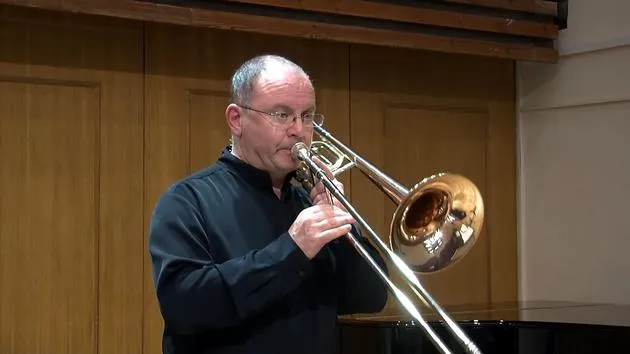
For this, I'm going to use the Morceau Symphonique by Alexander Guillemont. Notice how Chris demonstrates:
- The confidence to play the first B flat in fifth position.
- Slurs up to the G flat (a proximity slur from B flat to G flat) and uses the fourth position, F natural.
This excellent use of complementary positions contributes to the beauty of the piece.
Importance of Learning Complementary Positions
Learning to play notes confidently in complementary positions is worthwhile for several reasons:
- Continuously returning to first position can create a pumping action and often results in an accent.
- Aiding the flow of the music by creating a pattern for your slide helps maintain a smooth musical transition. Look for:
- Circles or possibly a figure of eight to ensure flow and ease.
Jazz Techniques
Remember, our colleagues in the jazz world rarely use first position in a ballad primarily for:
- Slide vibrato.
- Using bell positions to support the music, allowing phrases to float successfully to the audience.
Conclusion
To illustrate all the aspects from Unit 3, I'm going to play an original piece by Peter Gain entitled Lazy Yawns.
In this unit on airflow, we have covered:
- Elements of breath control.
- Aural memory.
- Airflow support.
- Complementary positions.
To consolidate, please work through this unit once again. Don't forget that everything we discussed can be found in Circuit Training, Volume 2.
10 lecciones
1h 33m de lecciones en vídeo estructuradas
Funciones de vídeo avanzadas
Ralentiza, repite un pasaje, sigue la partitura
Móvil, tablet y ordenador
Practica donde quieras
Garantía de satisfacción 100%
30 días de garantía de devolución
Conoce a tu gurú
Conoce a tu gurú
Peter Gane es uno de los principales especialistas en metales y trombonistas de Gran Bretaña. A los 19 años se convirtió en miembro de la London Symphony Orchestra. Fue nombrado profesor de la Guildhall School en 1971 y lo sigue siendo hoy. En 1981 fue elegido Fellow de la Guildhall School y fue Jefe del Departamento de Viento, Metal y Percusión de 1988 a 2008. Es asesor artístico del Combret Music Festival, en Aveyron, Francia.
Fundador y expresidente de la British Trombone Association, Peter es un reconocido pedagogo. Mantiene una prolongada relación con la National Youth Orchestra of Great Britain y la European Union Youth Orchestra, donde es profesor de trombón desde 1977 y 1984 respectivamente.
Como profesor, especialista en metales y director, ha impartido clases magistrales y talleres en numerosos conservatorios europeos y con grupos profesionales en Alemania, Francia, Dinamarca, Suecia, Noruega, España, Holanda, Austria, Italia y Estados Unidos. En 1996, su reputación internacional quedó confirmada con la concesión del Neill Humfeld Award a la excelencia en la enseñanza del trombón por parte de la International Trombone Association.
Entre las publicaciones de Peter figuran: The Good Brass Guide, Trombone Books 1 & 2, publicado por Trinity Guildhall; Circuit Training for Trombone, volumes 1 and 2, Slide Systems, Five Games, Guildhall 125, World in Motion, Mansion House Fanfare, todos publicados por Warwick Music; How Trombonists Do It, publicado por Brass Wind; y Brass Medals, publicado por la Associated Board.
Ese mismo enfoque de Circuit Training es lo que Peter comparte aquí contigo: ejercicios específicos y repetibles que desarrollan la precisión de la vara, el control de la respiración, la flexibilidad y el tono que necesitas para dominar de verdad el trombón, sea cual sea tu nivel.







