



Teoría 101
Laurence Juber expone la teoría musical que hay detrás del diapasón, desde la física de una cuerda que vibra y las octavas hasta cómo se construyen las escalas y los acordes.

Qué incluye el curso
11 lecciones (1h 58m) · 1 gratis
Transcripción de la lección
Introduction to Music Theory and Chords
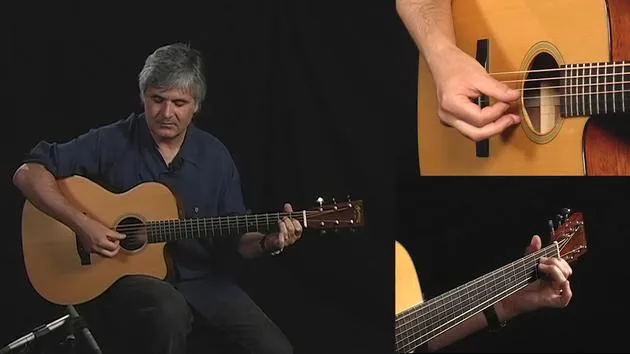
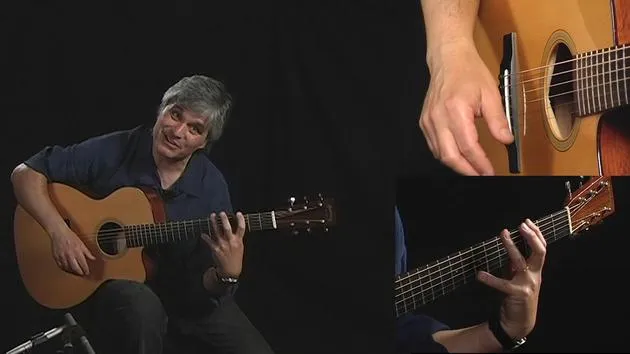
I'm going to give you a short introduction to music theory as preparation for discussing chords and how they're put together. It's not rocket science, but let's start off with a little bit of physics, just because it's important to understand that what we're dealing with is a vibrating string.
The Basics of a Guitar
A guitar fundamentally is:
- A vibrating string on a wooden box.
Dividing the String
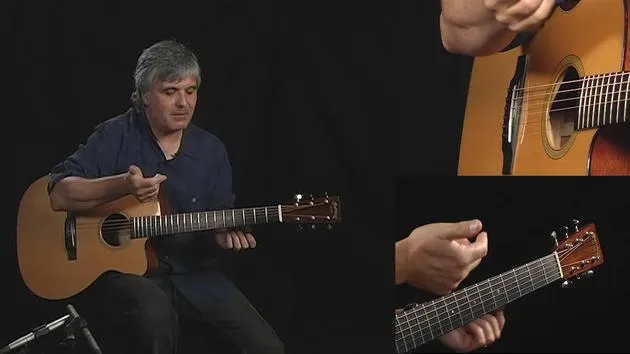
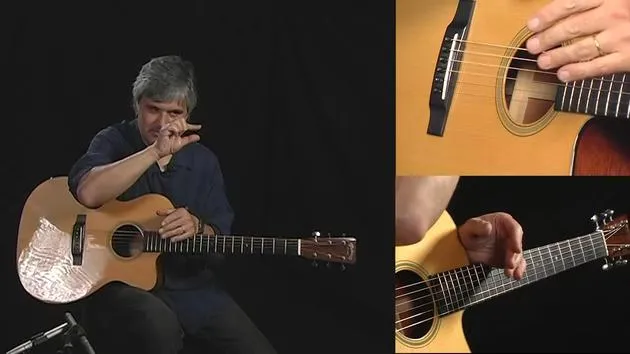
If you take that string and divide it in two, you're essentially dividing it in half. You can accomplish the same thing with a harmonic by touching the string exactly above the 12th fret. The note that you sound there and the note that you play are the same note with different tone qualities:
- Two halves of a string vibrating freely vs. a fretted string.
Understanding Octaves
When you divide the string, you get an octave, same note, but an octave higher. The vibration is double what it starts off as.
- Fundamental: The original note.
- Octave: The same note, an octave higher.
If I continue to divide the string, I get:
- A note corresponding to a B.
- A note corresponding to an E.
E Scale and Triads
You'll notice that by dividing the string, I get:
- An open string corresponding to an E.
- An octave corresponding to the same note, an octave higher.
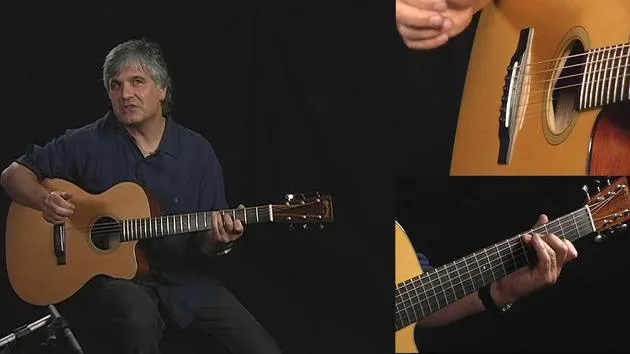
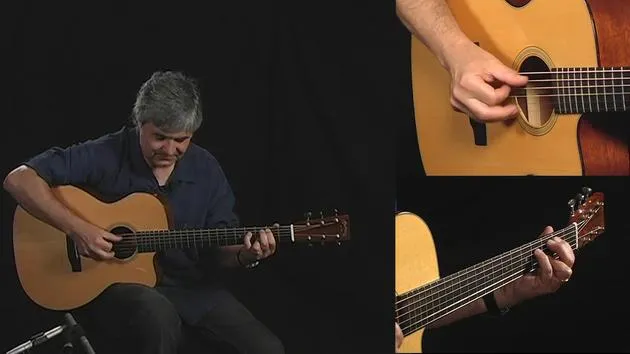
When I play an E chord, the notes I use are:
- Root (E)
- Fifth (B)
- Octave (E)
- Third (G#)
This gives us a very open sound.
The Scale of E
Here's a quick breakdown of the scale:
- Root (E)
- Second
- Third (G#)
- Fourth
- Fifth (B)
- Sixth
- Seventh
- Octave (E)
If you play these notes in different combinations, you discover harmonies:
- Root + Third creates harmony.
- Root + Fifth also creates a familiar sound.
Exploring Intervals
Now, exploring other intervals:
- Using Fourths:
- The fourth of an E scale is A.
- Using Fifths:
- The fifth provides a very open sound but does not define the character of a chord.
Dissonance in Music
When you reach the seventh degree, it introduces dissonance:
- In C major, if I include the seventh, you get a dissonant sound.
- But when you lift your finger off, you get a pleasant C major 7.
Triads and Voicings
Returning to our E chord, we have:
- E, G#, and B, which form a triad.
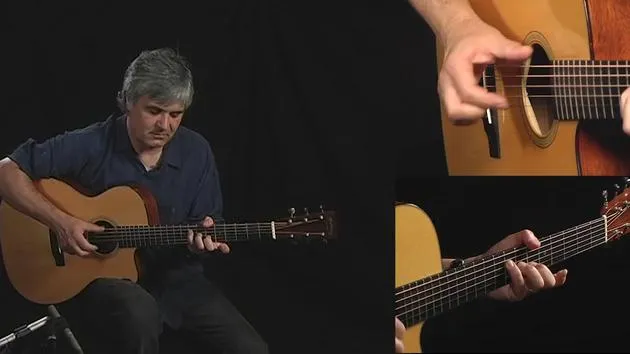
There is nothing preventing the arrangement of these notes in different positions. This is what we call a voicing, changing the order of the notes while maintaining the same harmonic quality.
Fingerstyle Guitar Techniques
In fingerstyle, you can explore various voicings for different dynamics. For example:
- Playing a chord here provides a different sonic quality than playing it elsewhere.
Harmonic Degrees
Recap on the degrees of the E scale:
- 1, 2, 3, 4, 5, 6, 7.
When you stack the notes:
- You get different triads, such as in an A chord.
Adding Notes to Chords
As we build from triads, we can add:
- A sixth or a seventh (which leads to familiar sounds).
When it comes to seventh chords:
- A major seventh (keeping it natural) vs. a flattened seventh (creating a minor seventh sound).
The Relationship between Chords
An E7 chord, which is an E chord with a flattened seventh:
- Leads us naturally to an A chord.
Conclusion
In this lesson, you've learned:
- The fundamental physics of vibrating strings.
- The basic structure of chords.
- How to explore dissonance and consonance through voicings and extensions.
This lays a strong foundation for understanding how these relationships work in music, preparing you for deeper exploration into effective chord progressions and fingerstyle techniques.
11 lecciones
1h 58m de lecciones en vídeo estructuradas
Funciones de vídeo avanzadas
Ralentiza, repite un pasaje, sigue la partitura
Móvil, tablet y ordenador
Practica donde quieras
Garantía de satisfacción 100%
30 días de garantía de devolución
Conoce a tu gurú
Conoce a tu gurú
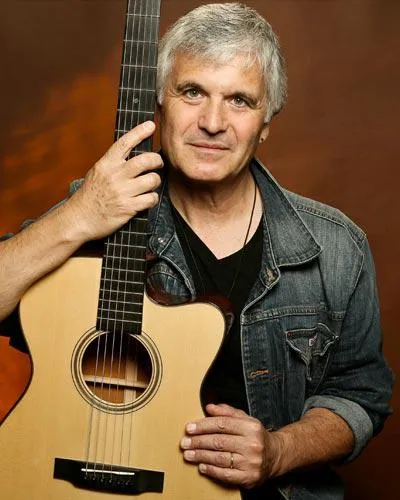
Laurence Juber se dio a conocer primero como guitarrista principal de Wings, la banda de Paul McCartney. Desde entonces ha construido una carrera como guitarrista fingerstyle, compositor y arreglista, trabajando en gran medida con la afinación DADGAD, que le valió el apodo de 'the Duke of DADGAD'.
Los lectores de Fingerstyle Guitar Magazine lo han votado Guitarrista del año, y la revista Acoustic Guitar lo ha incluido entre los mejores guitarristas, junto a una larga lista de álbumes en solitario y giras por todo el mundo.
En sus cursos enseña su técnica fingerstyle y la afinación DADGAD por la que es conocido, cómo combinar melodía, armonía y bajo en un arreglo para guitarra sola, y las piezas -como su emblemática 'Wooden Horses'- que lo reúnen todo.







