



Private Dick
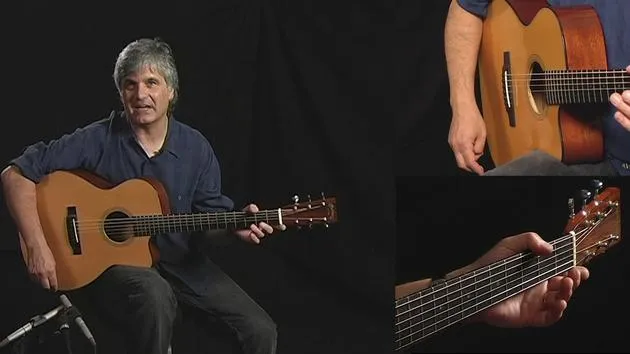
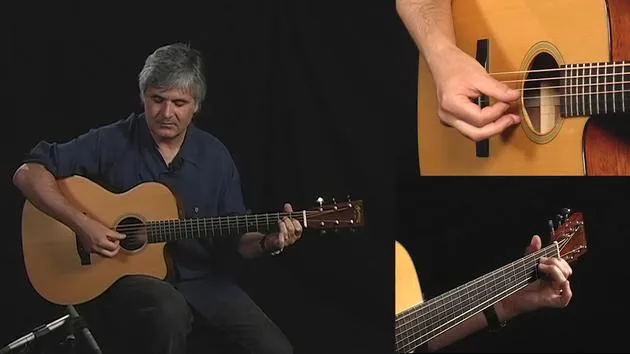
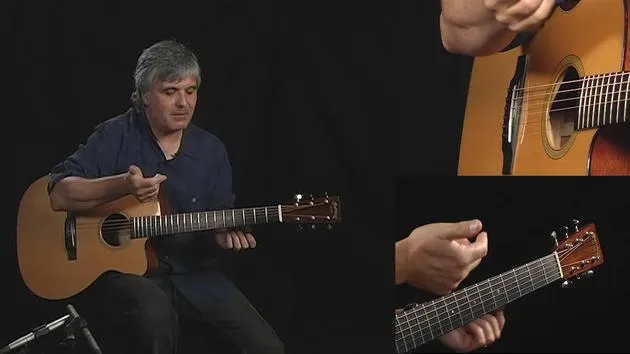
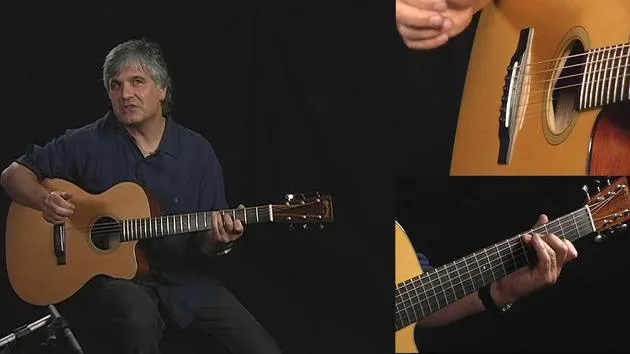
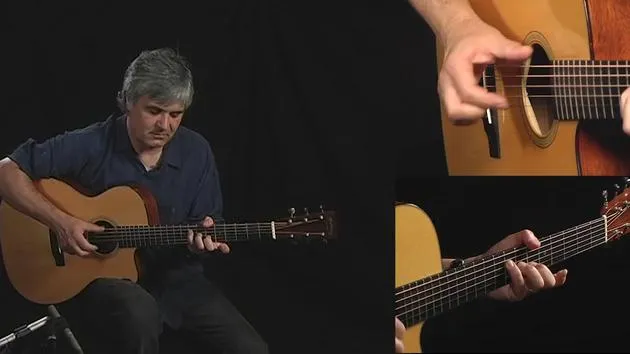
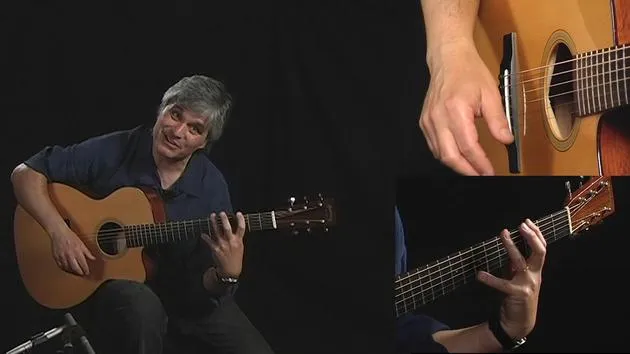
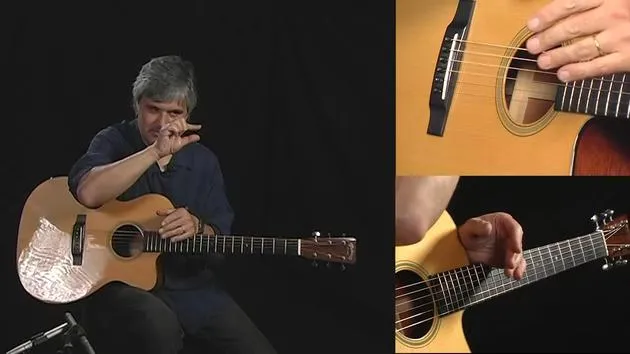
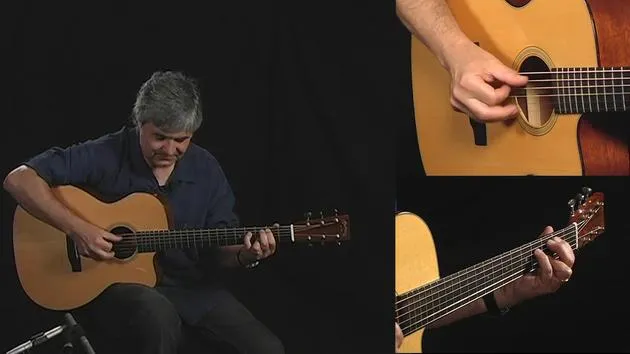
En este vídeo, Laurence te enseña e interpreta su tema Private Dick.
Qué incluye el curso
11 lecciones (1h 58m) · 1 gratis
Transcripción de la lección
Music Lesson: Exploring "Private Dick"
This is a tune of mine called Private Dick, and it explores the upper reaches of the kind of harmonizations that you can do with the melodic minor.
Understanding Melodic Minor
If you recall when we talked about melodic minor, the fact is that you can have both the major and minor 6 and major and minor 7 in the scale. In E minor, this means that as you go up the scale, you can have:
- C natural
- C sharp
- D natural
- D sharp
This allows us to do all kinds of cool and interesting things.
Characteristic Chord Progressions
One of the more characteristic things in this piece is when you have an E minor 9th chord, which consists of:
- An E minor triad: E, G, B
- The 9th: F sharp
- The major 7th: D sharp
This creates what I call a double 0 7th chord, resulting in this kind of harmony.
Chord Melody
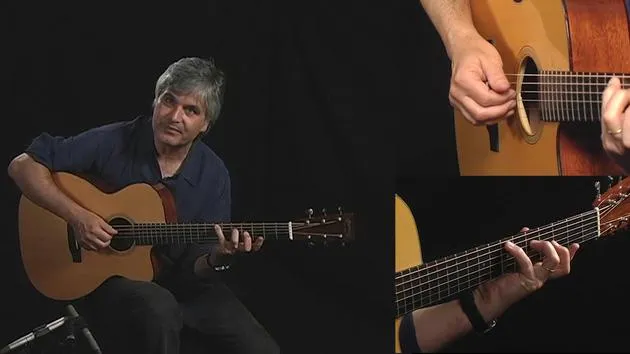
Now, this is also kind of in the nature of chord melody. It's not strict chord melody because I'm arpeggiating some of it, but here's an example. I'll bring this down an octave.
This is where you can get the B7 sharp nine chord, because you have a B chord (B seventh chord) structured as we would normally do it in our Cal position. However, due to the melodic minor, you can incorporate:
- A D, which is the 9th relative to the B
Instead of being a regular B ninth chord, which looks like this, it has the D natural as a sharp ninth. In the key, you can utilize both D sharp and D natural.
Moreover, the C can be natural or sharp; however, the sharp doesn't sound right, it's too major sounding. If you move the ninth down to the flat side, similar to descending melodic minor, you can have that C natural.
Playing "Private Dick"
Let me play through Private Dick, and we'll talk a little bit more about it afterward.
Chord Progressions
In terms of that kind of chord progression, I've got:
- Minor ninths with major sevenths
- Augmented sevenths with sharp and flat nines
For example:
- Here's a B7
- Here's a B7 augmented where I'm making the 5th technically an F double sharp (actually a G)
- Adding on top of that the 9th: sharp nine and flat nine
Additional Chords
- Here's an E minor sixth chord
You'll notice on this C minor six, I have a C sharp in there. When I was prior to playing the piece, I mentioned that going to the B chord with that C sharp doesn't sound so great. It sounds great with the C natural, but doesn't sound right when you put that C natural on the E chord.
You can get a feeling for how these notes correspond with the different tonalities of each chord.
- On the A minor, I've got an A minor 9 with a major 7, transitioning to an A minor 7 sus 4, where the 7 is a natural 7, as opposed to the A major seven.
Even here, I have a G13. It's not quite a 13, but it gives you the dominant of that C, which then leads to the B, ultimately going to E minor.
Bridge Section
On the bridge section, I'm basically just doing a thick line. This is another way to harmonize, sliding up a C9 chord chromatically all the way up.
I'm really not paying any attention at all to what's in the key signature there, as it's more of a musical gesture. Sometimes, music plays things that are more of a gesture than something that subscribes to a particular set of rules.
Because I'm using a fair amount of chromaticism, with many sharps and flats, I can get away with that in Private Dick. In a more folky context, it might not resonate as well, but in this case, it does.
Advanced Harmonizations
This piece features pretty advanced harmonization.
I don't want to go too deeply into how all these interactions happen, but if you analyze it, you can see that there's a lot to chew on:
- Cycle of fifths
- Melodic minor techniques
- Chord melody concepts
So, have fun with that one!
11 lecciones
1h 58m de lecciones en vídeo estructuradas
Funciones de vídeo avanzadas
Ralentiza, repite un pasaje, sigue la partitura
Móvil, tablet y ordenador
Practica donde quieras
Garantía de satisfacción 100%
30 días de garantía de devolución
Conoce a tu gurú
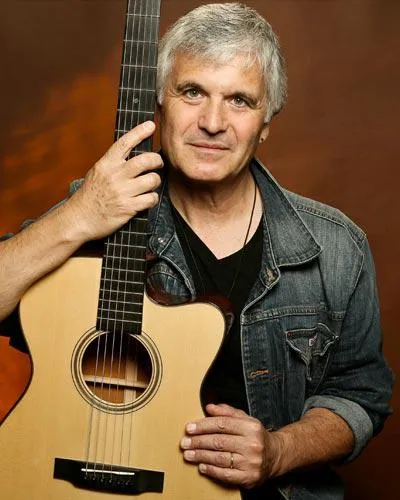
Conoce a tu gurú
Laurence Juber se dio a conocer primero como guitarrista principal de Wings, la banda de Paul McCartney. Desde entonces ha construido una carrera como guitarrista fingerstyle, compositor y arreglista, trabajando en gran medida con la afinación DADGAD, que le valió el apodo de 'the Duke of DADGAD'.
Los lectores de Fingerstyle Guitar Magazine lo han votado Guitarrista del año, y la revista Acoustic Guitar lo ha incluido entre los mejores guitarristas, junto a una larga lista de álbumes en solitario y giras por todo el mundo.
En sus cursos enseña su técnica fingerstyle y la afinación DADGAD por la que es conocido, cómo combinar melodía, armonía y bajo en un arreglo para guitarra sola, y las piezas -como su emblemática 'Wooden Horses'- que lo reúnen todo.







