



Inversiones

Qué incluye el curso
11 lecciones (1h 58m) · 1 gratis
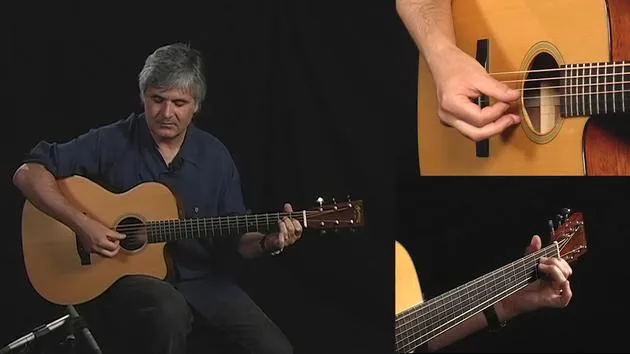
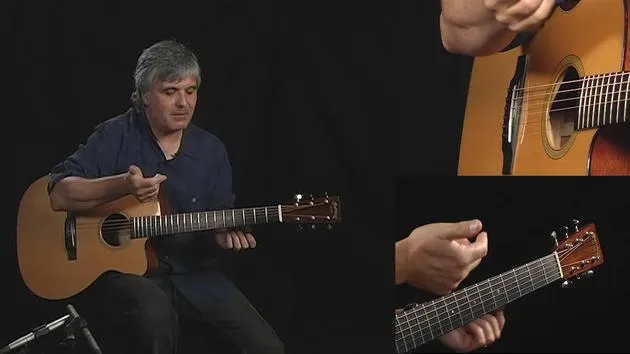
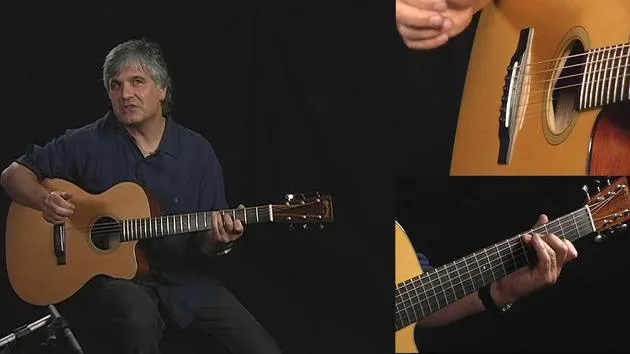
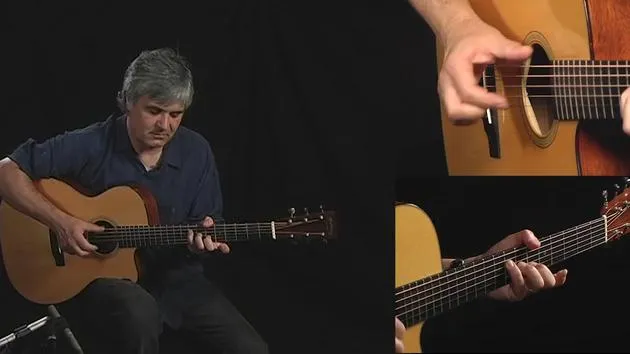
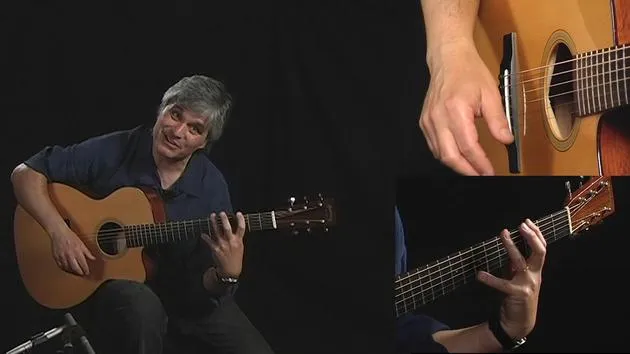
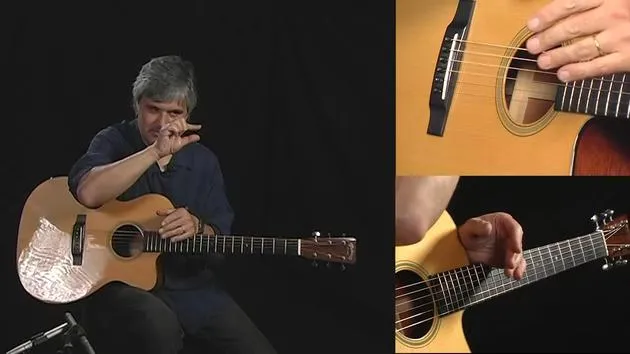
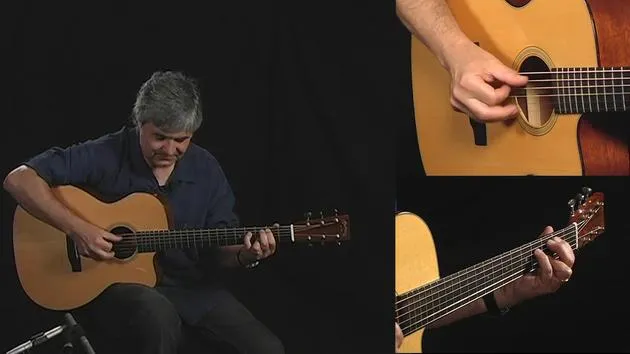
Transcripción de la lección
Understanding Chord Inversions
Our discussions of chords so far have really revolved around the root position of the chord, where the name note of the chord, the root note of the chord, is also the bass note.
Introducing Inversions
I'm going to introduce the concept of inversions now.
We touched on inversions in terms of when you take a third and you flip it upside down; it becomes a sixth. Similarly, a fourth inverted becomes a fifth. That's where you take two notes and you flip them.
Now, there's another meaning, another application of the term inversion, which concerns the nature of the chord itself.
Example: C Triad
Let's take our C triad, with the notes being C, E, and G, the root, the third, and the fifth.
Instead of having the bottom note of the chord be the root (the C), we walk up the scale and make the third of the scale (which is the third of the chord) the bottom note.
So now, instead of playing my C triad like this:
[ C - E - G ]
I'm going to play it like this:
[ E - G - C ]
This adds a new kind of information to the music. It still sounds like a C chord; my top note, my melody note, is still a C. However, rather than having that deeply rooted fundamental, it just floats a little bit more. That's because having the third at the bottom gives it a different quality.
Voicing versus Inversion
Now, remember the difference:
- Voicing: the arrangement of the notes
- Inversion: the description of which note is at the bottom
For example, in this voicing of the C triad:
- E (third)
- C (root)
- G (fifth)
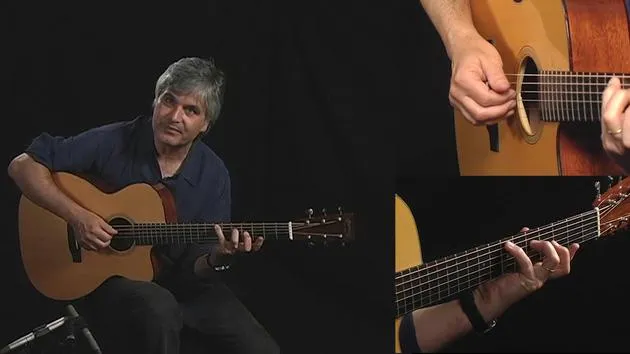
I might finger it as a first position version of the same thing.
Now, that doesn't feel truly satisfying; it's not a place that you would rest. But in the progression of a chord sequence, it might, for example, want to move to an F.
Instead of having a C moving directly to an F, I might have a first inversion C move to that F.
And if I wanted to, in addition, walk up in the bassline, this is how we get the evolution of movement in the bass.
Example: Creating Movement
Let's say my melody is going to come down from the E. Here's my C.
[ C ext{ (missing out the fourth string)} ]
Then, I'm going to have the D open as a passing note, and then I'm going to move to an F.
So:
- C with the D moving up
- to the D in the bass
- then moving to a first inversion C chord to an F
- then maybe go to the G
- then back to C.
By doing this, I've created some movement and added new information. I haven't changed the basic chord sequence.
Adding Complexity with Other Chords
Now let's move this over to an E chord and an A chord.
I could simply strum or pick on the E and then move to the A. But to make things a little more interesting, I might decide to move from that E to a first inversion E, where I've got the G# (the third of the chord) in the bass, then to the A.
Expanding with Tenths
Let me walk through that by breaking it down to a tenth.
A tenth happens when you expand a third by an octave. Here's a third with the E:
- If I put E at the bottom, that's a tenth.
Now, if I then move to:
- G# and B
- I don't even have to have the E.
The ear still hears that tonality of the E chord.
And there, I'm moving to an A, which just consists of two notes. I can finger it like this. If I fill it in, I've got a progression of tenths.
As I move up even more, we start to hear some real music happening.
Key Takeaway on Inversions
In each case, moving from E to first inversion E and A to first inversion A, I'm adding information and variety to a basic, familiar chord progression. This adds depth to what's essentially a simple progression.
Creating Moving Bass Lines
Let's go back to C. If I want to make a G chord a first inversion G, where the B is in the bass (the third of the chord), it leads me to the I, which is the C.
If I have my melody moving that way, and fill it in while adding a seventh, that's very satisfying.
This kind of progression can also be arranged for a choir of voices, resulting in satisfying harmony due to what we call voice leading.
Emphasizing Voice Leading
Voice leading is vital when working with the style of chord melody. For example, in a jazz context, we might have a progression where I've got block chords spelling out the melody but filled with dense harmonic content, with voices leading from one place to another.
Exploring Further Inversions
Let's go back to all the inversions. The second inversion is when the fifth becomes the bass note.
Often, you might recognize this situation when the IV chord moves back to the I chord but the I stays in the bass. For example, you may notice a C chord where the bass is still G.
Third Inversion
The third inversion occurs when the seventh is in the bass. For instance, if we play an A7 going to a D, but put the seventh in the bass. This creates a sense of unresolved tension that feels like it wants to move somewhere.
This tension often leads to a first inversion D chord. You may recognize this when playing a D chord and putting the F# in the bass.
Practical Application
You can create exercises from this learning. For example, trying a combination of:
- A over G
- Second inversion A7 chord going to a D with the F# in the bass
- First inversion D chord to B, to E
Moving up the neck can build these inversions into your practice routine.
Conclusion
The core lesson here is that the use of an inversion creates extra information. This allows the bassline to move in a more interesting way than simply progressing from one root position chord to the next.
To recap, using inversions is a powerful way to enrich your harmony. Rather than playing the root, you can base the chord on the third, the fifth, or even the seventh. By breaking down the chords into simpler intervals, you can leverage dynamic playing that brings more layers to your music.
11 lecciones
1h 58m de lecciones en vídeo estructuradas
Funciones de vídeo avanzadas
Ralentiza, repite un pasaje, sigue la partitura
Móvil, tablet y ordenador
Practica donde quieras
Garantía de satisfacción 100%
30 días de garantía de devolución
Conoce a tu gurú
Conoce a tu gurú
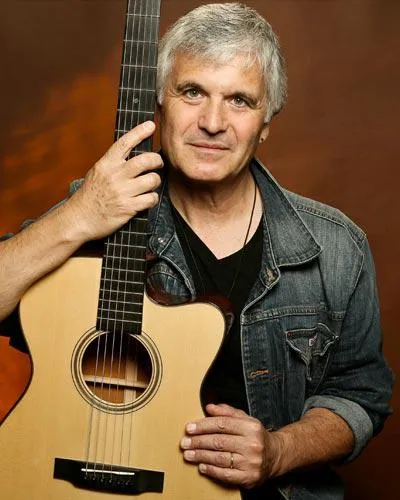
Laurence Juber se dio a conocer primero como guitarrista principal de Wings, la banda de Paul McCartney. Desde entonces ha construido una carrera como guitarrista fingerstyle, compositor y arreglista, trabajando en gran medida con la afinación DADGAD, que le valió el apodo de 'the Duke of DADGAD'.
Los lectores de Fingerstyle Guitar Magazine lo han votado Guitarrista del año, y la revista Acoustic Guitar lo ha incluido entre los mejores guitarristas, junto a una larga lista de álbumes en solitario y giras por todo el mundo.
En sus cursos enseña su técnica fingerstyle y la afinación DADGAD por la que es conocido, cómo combinar melodía, armonía y bajo en un arreglo para guitarra sola, y las piezas -como su emblemática 'Wooden Horses'- que lo reúnen todo.







