



Ritmo de acordes sencillo, primer solo de blues

Con
Mat WalklateCómo tocar el ritmo de acordes usando los tres primeros orificios de la armónica
Qué incluye el curso
9 lecciones (0h 54m) · 2 gratis
01. Familiarizarte con tu armónica
Lección gratis3:56
02. Ritmo de acordes sencillo, primer solo de blues
Estás aquí8:52

03. Aprende un solo de blues sencillo
7:04
04. Embocadura (forma de los labios)
4:51

05. When The Saints Go Marching In
12:37
06. Bloqueo con la lengua
8:03
07. Tocar escalas
1:58
08. Ritmo boogie simple
5:25

09. BONUS: Aprende a tocar The Beatles, Love Me Do
Lección gratis1:48
Transcripción de la lección
Lesson One: Simple Chord Rhythm
Introduction
Hello! In this lesson, we're going to explore a simple chord rhythm. It's a classic blues technique that fits perfectly throughout a blues song in the right key.
Key Information
- Harmonica Key: C
- Guitar Key: G
Now, don't worry, I'm not going to blind you with science! Each diatonic harmonica has a blues scale, and for a C harmonica, that scale is in the key of G. This is why the guitar plays in G while we use a C harmonica. This method is referred to as second position or cross harp, depending on who you talk to.
Chord Rhythm Steps
This initial chord rhythm involves just the first three holes on the harmonica: holes one, two, and three.
Step-by-Step Instructions
-
Breathe In:
- Focus on holes 1, 2, and 3.
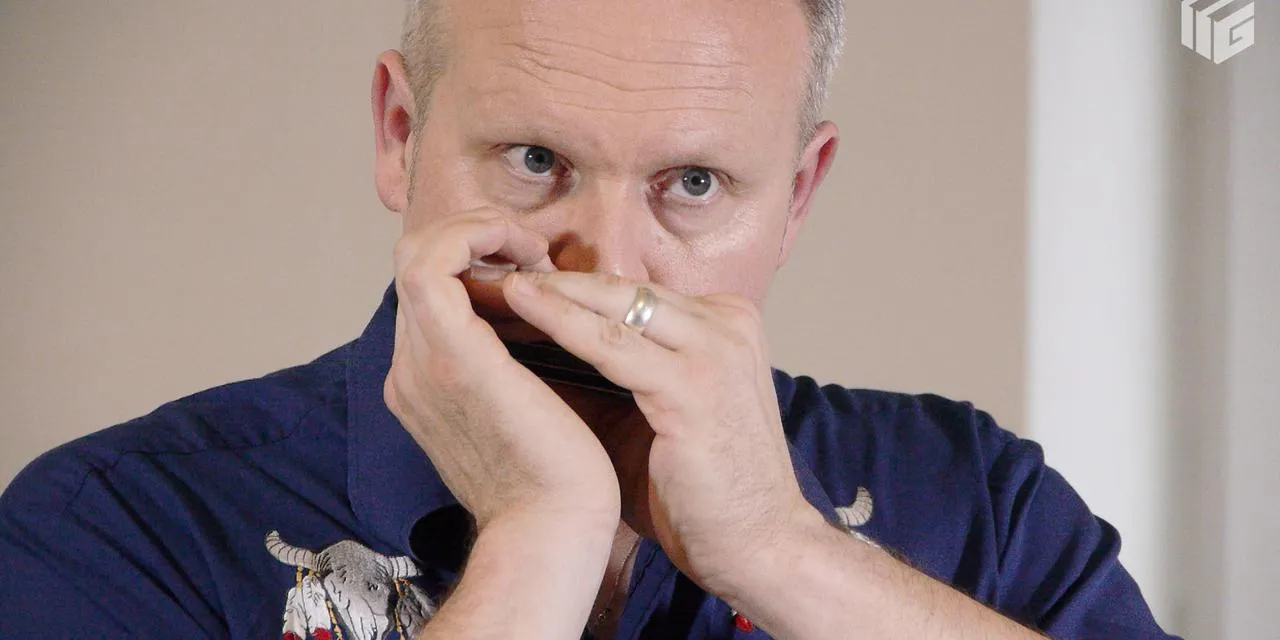
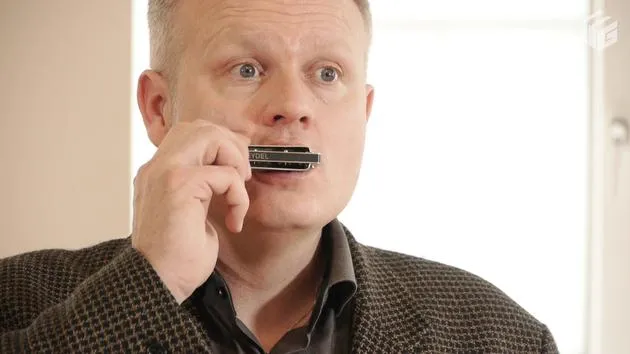
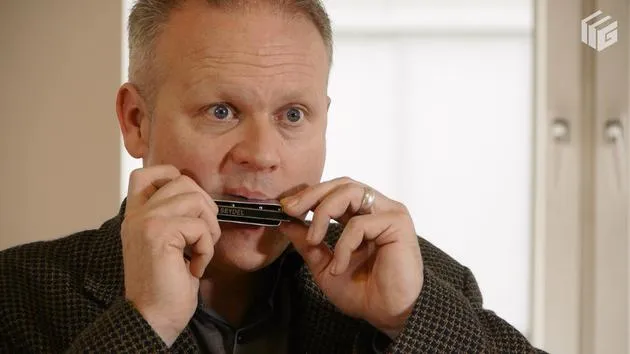
- Drop your chin and hold the harmonica between your fingers and thumb.
- Bring it up to your mouth and breathe in 1, 2, and 3.
Example: I'll hold the harmonica here so you can see what's going on.
-
Breathe Out:
- Blow into holes 1, 2, and 3.
-
Breathe In Again:
- This time, only focus on holes 1 and 2.
- To achieve this, slightly move your head to your left.
-
Blow Again:
- Blow into holes 1, 2, and 3 once more.
Summary of Steps:
- Breathe in holes 1, 2, and 3
- Blow holes 1, 2, and 3
- Breathe in holes 1 and 2
- Blow holes 1, 2, and 3 again
It should sound like this: (play the rhythm)
Let's try that four times in a row. After a count of four:
Adding Articulations
Next, we're going to add what's called articulations. This means talking into your harmonica without using your voice box to break up the airflow. You want to use your tongue to say consonants or syllables that will break up the air, allowing for notes of different lengths.
- The easiest one to start with is to say "D."
- It's like saying "D," but without any sound from your voice box.
When I add these articulations to the chord rhythm, I say "duh, duh" every time I breathe.
Without the harmonica, it sounds like this: (demonstrate)
- Gently say "duh, duh."
- Remember, this is still a long breath in and a long breath out.
Practice
- Breathe in holes 1, 2, and 3.
- Blow 1, 2, and 3.
- Breathe in holes 1 and 2.
- Blow 1, 2, and 3 again.
But this time, every time you breathe, your tongue is going "D, D" on the roof of your mouth.
Let's try that four times in a row. After a count of four:
Demonstration with Guitar
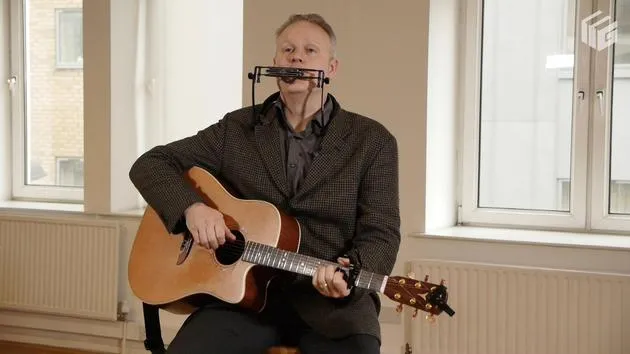
I've just grabbed my guitar because I'll demonstrate that the chord rhythm fits all the way through a 12-bar blues in the key of G.
- The guitar plays a 12-bar blues in G.
- We can play the chord rhythm with our C harmonicas without sounding out of tune.
This apparatus here is called a harmonica harness, which allows you to play the harmonica and guitar simultaneously.
Let's try the chord rhythm with the guitar after a count of four:
Extra Tip: It's always nice to finish on an extra little draw chord to round it off nicely.
Simple Blues Solo
Now, I'm going to show you the world's simplest blues solo. All you need to do is breathe in holes 4 and 5 at the same time while saying "duh, duh."
- Locate holes 4 and 5 on your harmonica.
- Stick them both in your mouth, breathe in, and while breathing in, say "duh, duh" with the tip of your tongue on the roof of your mouth.
- When breathing out, try to do it through your nose.
This will help you control your breathing without having to take the harmonica out of your mouth.
Let's practice this. After 4 counts:
If you want to try any of these techniques with a good backing track, you can find solid backing tracks in the key of G on the site along with this course. They are better than my guitar playing, trust me!
9 lecciones
0h 54m de lecciones en vídeo estructuradas
Funciones de vídeo avanzadas
Ralentiza, repite un pasaje, sigue la partitura
Móvil, tablet y ordenador
Practica donde quieras
Garantía de satisfacción 100%
30 días de garantía de devolución
Conoce a tu gurú
Conoce a tu gurú
Mat Walklate es un armonicista y profesor afincado en Mánchester que trabaja en el blues y el folk, y que también toca la flauta, el whistle y la gaita uilleann y canta. Ganó el British Blues Harmonica Championship en 1992 y el All-Britain Fleadh Cheoil de armónica en 1993, y es artista avalado por Seydel.
A lo largo de una trayectoria de treinta años ha girado por Europa con bandas como The Moochers y el grupo de música irlandesa The House Devils, ha grabado y mezclado unos catorce álbumes entre 2001 y 2021 —entre ellos Sea of Blues y Traditional Harmonica— y ahora actúa en dúo con el cantante y guitarrista Alex Haynes y junto al estudioso del blues Dr Tom Attah. Enseña armónica en el Leeds Conservatoire y de forma privada.
En MusicGurus sus cursos te llevan desde tus primeras notas con una armónica en Do —embocadura, la posición de cross-harp, los bendings y tu primera improvisación— hasta un blues fluido, con vibrato, posiciones alternativas y el fraseo que hace cantar a un solo.







