



Ritmo boogie simple

Con
Mat WalklateEl ritmo boogie o shuffle simple que se usa como base del blues
Qué incluye el curso
9 lecciones (0h 54m) · 2 gratis
01. Familiarizarte con tu armónica
Lección gratis3:56
02. Ritmo de acordes sencillo, primer solo de blues
8:52
03. Aprende un solo de blues sencillo
7:04
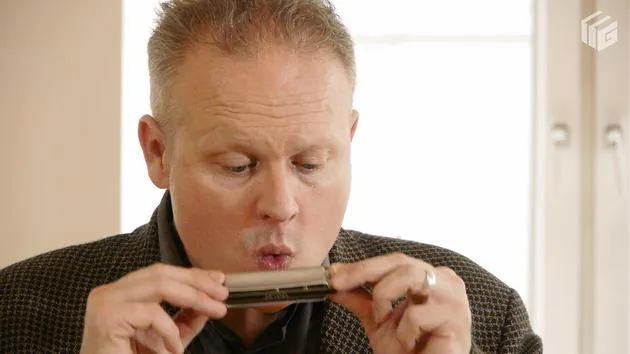
04. Embocadura (forma de los labios)
4:51

05. When The Saints Go Marching In
12:37
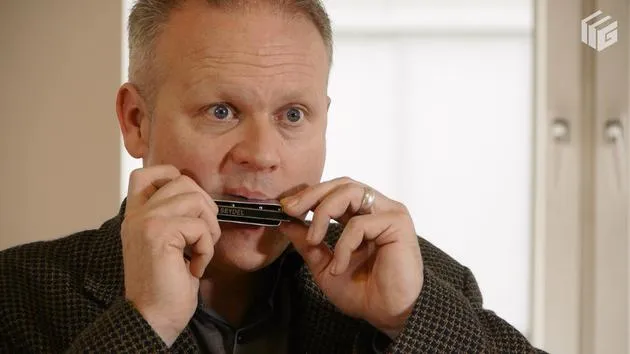
06. Bloqueo con la lengua
8:03
07. Tocar escalas
1:58
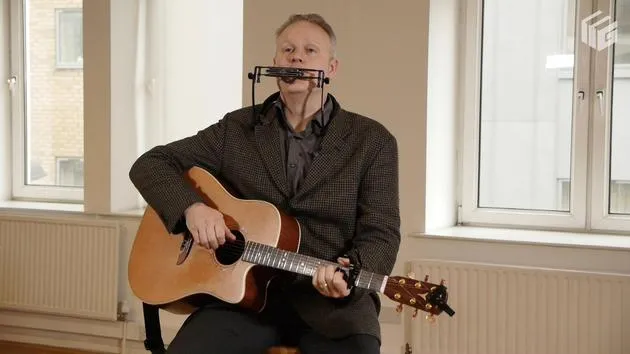
08. Ritmo boogie simple
Estás aquí5:25

09. BONUS: Aprende a tocar The Beatles, Love Me Do
Lección gratis1:48
Transcripción de la lección
Boogie Rhythm on the Diatonic Harmonica
Hello, my name's Matt. What we're going to look at now is playing a very simple boogie rhythm on the diatonic harmonica.
Introduction to Boogie Rhythm
You'll have heard something like this if you've listened to any music from the past hundred years. I'll give you a quick demonstration. Sometimes it's called the shuffle rhythm, and sometimes it's called a boogie rhythm. Here, we're calling it a boogie rhythm, and it's quite straightforward if we approach it slowly.
This rhythm fits along with the 12 bar blues in the appropriate key, which as usual is G in this case. There will be some tab for this on the site that tells you which notes to play and when.
Choosing Your Starting Note
You've probably noticed, if you try to play the harmonica a bit, that two draw is a difficult reed to play. It's challenging to make the note sound good at first. We tend to get this, which isn't very good.
What we're looking for is this:
- Two draw and three blow are the same note; both are notes of G.
- The three blow is very stable; you can't really make three blow misbehave.
- However, two draw will go flat; it will go down in pitch with very little encouragement.
So, if you're struggling with two draw, and most people do when they first start, then use three blow instead because it's much easier to play.
Boogie Rhythm Structure
The boogie rhythm starts off with this melody line, and we get that twice. This covers the first four bars of the 12 bar blues. Then the chord changes, so we change the melody that we're playing.
-
Start from hole number four blow.
- Play that once.
-
Play the first melody again just once.
- This takes us to the end of bar number eight.
-
For bar number nine, breathe in holes four and five together and say "D D," but there's a beat in between the Ds.
It sounds like this, like so.
- To finish off, we play a line that's very similar to the first line, except there's one note less, and we phrase the last three notes slightly differently.
It sounds like this, I'll play it again, like so.
When we put that all together, it follows a 12 bar blues, and it sounds quite good, quite melodic.
Demonstration
I'll play it for you nice and slow. If you want to join in, please feel free.
After a count of four:
1, 2, 3, 4.
And there you go!
Playing Along with the Guitar
Okay, folks, let's try playing the boogie rhythm along with the guitar. It will be after a count of four. You can either start on hole two draw or three blow, whichever one works best for you.
Here we go:
1, 2, 3, 4.
There!
9 lecciones
0h 54m de lecciones en vídeo estructuradas
Funciones de vídeo avanzadas
Ralentiza, repite un pasaje, sigue la partitura
Móvil, tablet y ordenador
Practica donde quieras
Garantía de satisfacción 100%
30 días de garantía de devolución
Conoce a tu gurú
Conoce a tu gurú
Mat Walklate es un armonicista y profesor afincado en Mánchester que trabaja en el blues y el folk, y que también toca la flauta, el whistle y la gaita uilleann y canta. Ganó el British Blues Harmonica Championship en 1992 y el All-Britain Fleadh Cheoil de armónica en 1993, y es artista avalado por Seydel.
A lo largo de una trayectoria de treinta años ha girado por Europa con bandas como The Moochers y el grupo de música irlandesa The House Devils, ha grabado y mezclado unos catorce álbumes entre 2001 y 2021 —entre ellos Sea of Blues y Traditional Harmonica— y ahora actúa en dúo con el cantante y guitarrista Alex Haynes y junto al estudioso del blues Dr Tom Attah. Enseña armónica en el Leeds Conservatoire y de forma privada.
En MusicGurus sus cursos te llevan desde tus primeras notas con una armónica en Do —embocadura, la posición de cross-harp, los bendings y tu primera improvisación— hasta un blues fluido, con vibrato, posiciones alternativas y el fraseo que hace cantar a un solo.







