



Embocadura (forma de los labios)

Con
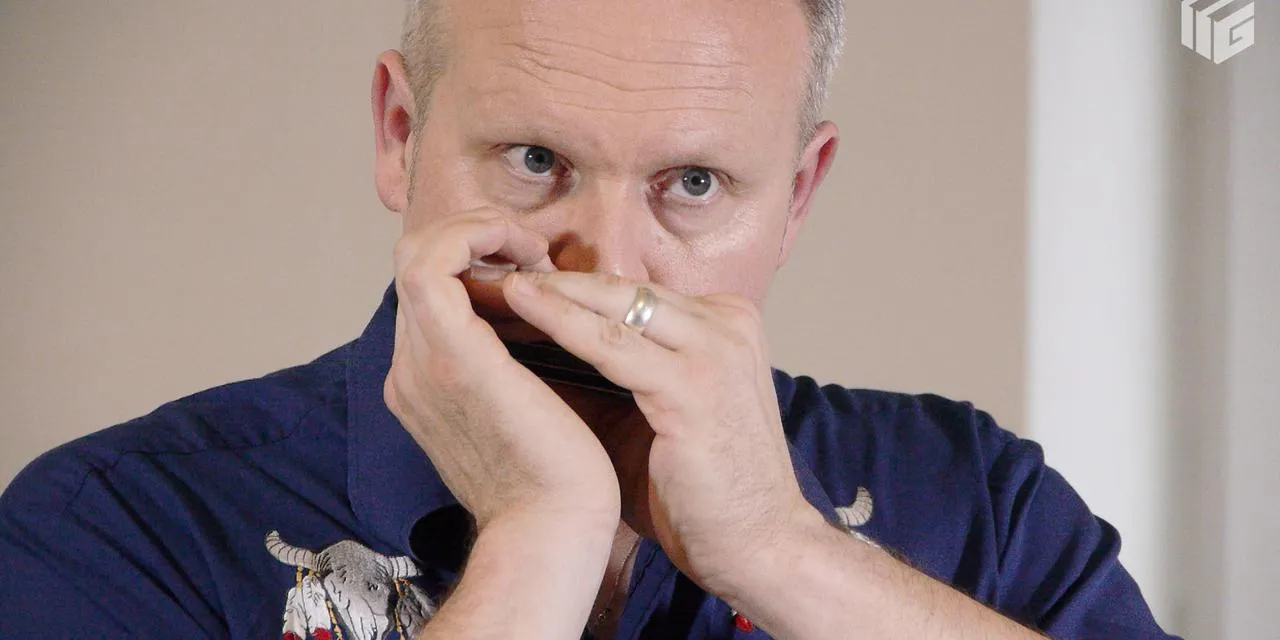
Mat WalklateMat Walklate muestra cómo dar forma a tu boca y usar el fruncido de labios para tocar una nota limpia cada vez en la armónica.
Qué incluye el curso
9 lecciones (0h 54m) · 2 gratis
01. Familiarizarte con tu armónica
Lección gratis3:56
02. Ritmo de acordes sencillo, primer solo de blues
8:52
03. Aprende un solo de blues sencillo
7:04
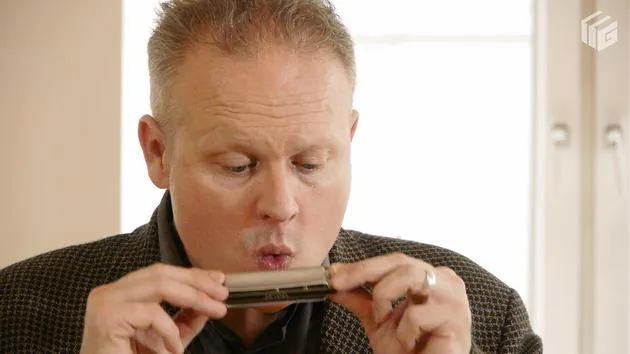
04. Embocadura (forma de los labios)
Estás aquí4:51
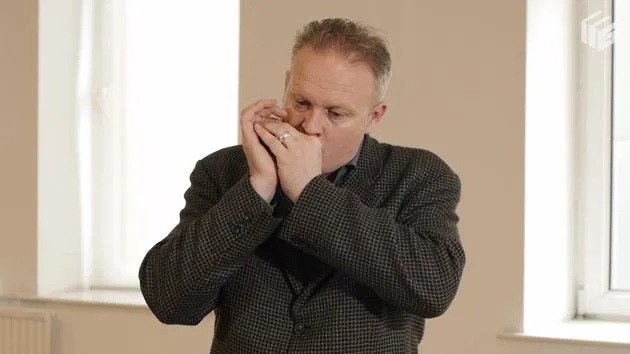
05. When The Saints Go Marching In
12:37
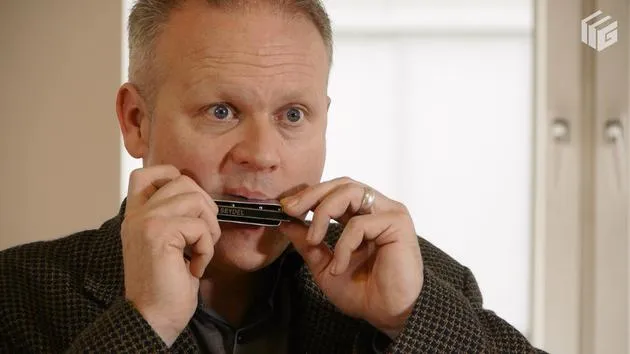
06. Bloqueo con la lengua
8:03
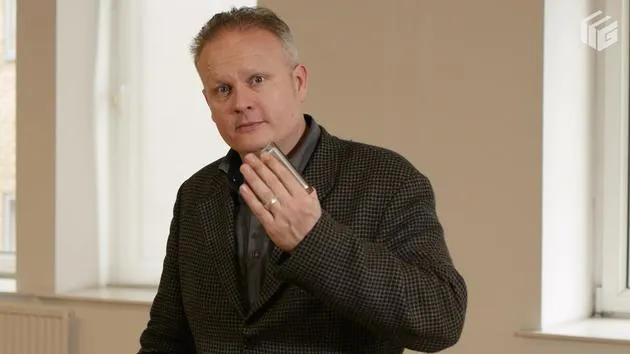
07. Tocar escalas
1:58
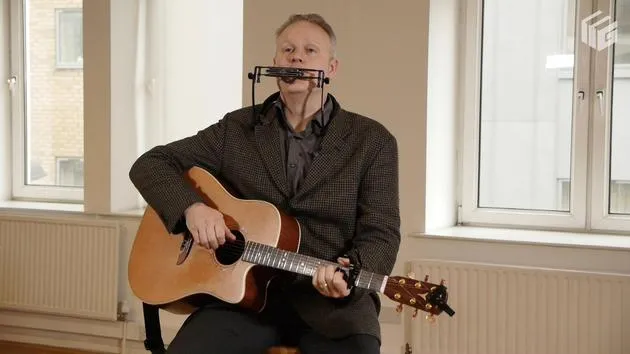
08. Ritmo boogie simple
5:25
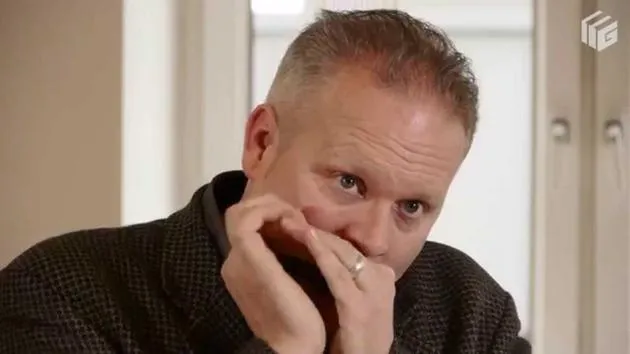
09. BONUS: Aprende a tocar The Beatles, Love Me Do
Lección gratis1:48
Transcripción de la lección
Embouchure in Music: A Lesson on Playing the Harmonica
Hello, my name is Matt. In this lesson, we're going to look at what's called embouchure in music, which is a fancy word for lip shape. We will focus on the best way of achieving one note at a time on the harmonica.
If you've tried to do this before, you know how difficult it can be.
Lip Pursing Technique
The most straightforward way of achieving one note at a time is to use lip pursing, which is basically going "oo," like so.
Practice Steps:
-
Practice the Sound:
- Go "oo" in your deepest voice.
- Freeze everything that happens when you do this.
-
Targeting Hole Number Four:
- Let's say we're going to play hole number four on the harmonica (four blow).
- We breathe into the harmonica, look at hole number four, and go "oo," freezing everything that happens.
-
Positioning the Harmonica:
- Try to get the harmonica inside that shape, like this: "Ooh."
Challenges You Might Face
At first, everybody gets two notes at once, so while you're aiming for one, you get two. This happens because it takes time for the lips to learn what to do to isolate one note at a time.
If you go "oo" in your deepest voice and freeze, what happens? It gets you 95% of the way there:
- When you do that, you put your lips into a sort of circle.
- You drop your chin, allowing the harmonica to fit inside the shape you've made.
- It also enlarges the cavity inside your head, which makes the harmonica sound more mellow.
Tongue Position
Additionally, the back of your tongue will humps up when you sing your lowest note, and it needs to stay there. The tip of your tongue remains free to articulate sounds for the harmonica.
By saying "oo" and freezing, you gain three benefits for the price of one. Just remember to freeze!
Playing Technique
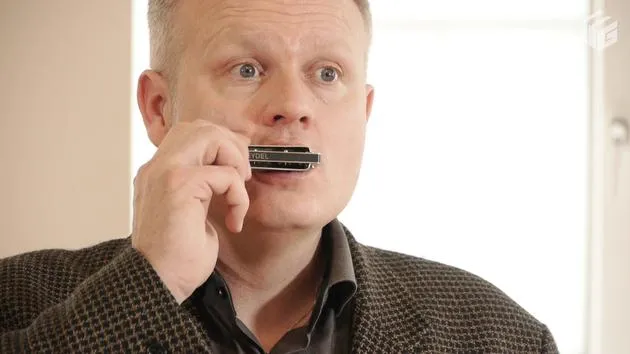
When you look at hole number four, aim to get the harmonica inside that shape:
- Most harmonicas have a screw at either end.
- Your lips should be level with those screws.
Lip Positioning
As you play, these parts of your bottom lip will block off the holes on either side of the note you want to play:
- If I'm playing number four:
- The left part of my bottom lip blocks off number three.
- The right part blocks off number five.
- The middle continues underneath.
There's nothing you can say that will make your lips take that peculiar shape. Just practice, and time will eventually get your lips to adopt the shape that blocks off the notes adjacent to the one you want to play.
Moving the Shape
When you want to move your shape, remember:
- Move it up and down the harmonica, your head moves, not the harmonica.
- Keep it the same distance over the instrument.
Breathing Technique
Try not to come away from the harmonica as you approach number ten. It's important to breathe gently; you don't need to breathe forcefully with the harmonica.
Clean Note Production
- Breathe gently and try to blow number four, breathe it in, and blow it again to achieve the cleanest note possible.
Following this, you can begin to move the shape around the harmonica and start playing some tunes, which we will cover in another lesson.
Facial Exercise for Embouchure
There is a little exercise you can do for the facial muscles involved in creating your embouchure when playing the harmonica.
But just a quick note: don't do this in public!
Exercise Steps:
- Part One: [Describe the first part of the exercise here.]
- Part Two: [Describe the second part of the exercise here.]
Do this about half a dozen times; it helps to limber up the muscles involved in making this embouchure.
It might make you look silly, but trust me, it works! Give it a go without laughing.
9 lecciones
0h 54m de lecciones en vídeo estructuradas
Funciones de vídeo avanzadas
Ralentiza, repite un pasaje, sigue la partitura
Móvil, tablet y ordenador
Practica donde quieras
Garantía de satisfacción 100%
30 días de garantía de devolución
Conoce a tu gurú
Conoce a tu gurú
Mat Walklate es un armonicista y profesor afincado en Mánchester que trabaja en el blues y el folk, y que también toca la flauta, el whistle y la gaita uilleann y canta. Ganó el British Blues Harmonica Championship en 1992 y el All-Britain Fleadh Cheoil de armónica en 1993, y es artista avalado por Seydel.
A lo largo de una trayectoria de treinta años ha girado por Europa con bandas como The Moochers y el grupo de música irlandesa The House Devils, ha grabado y mezclado unos catorce álbumes entre 2001 y 2021 —entre ellos Sea of Blues y Traditional Harmonica— y ahora actúa en dúo con el cantante y guitarrista Alex Haynes y junto al estudioso del blues Dr Tom Attah. Enseña armónica en el Leeds Conservatoire y de forma privada.
En MusicGurus sus cursos te llevan desde tus primeras notas con una armónica en Do —embocadura, la posición de cross-harp, los bendings y tu primera improvisación— hasta un blues fluido, con vibrato, posiciones alternativas y el fraseo que hace cantar a un solo.







