



Pentatonik- und Blues-Skalen-Formen: eine Wiederholung

Mit
Ron Sayer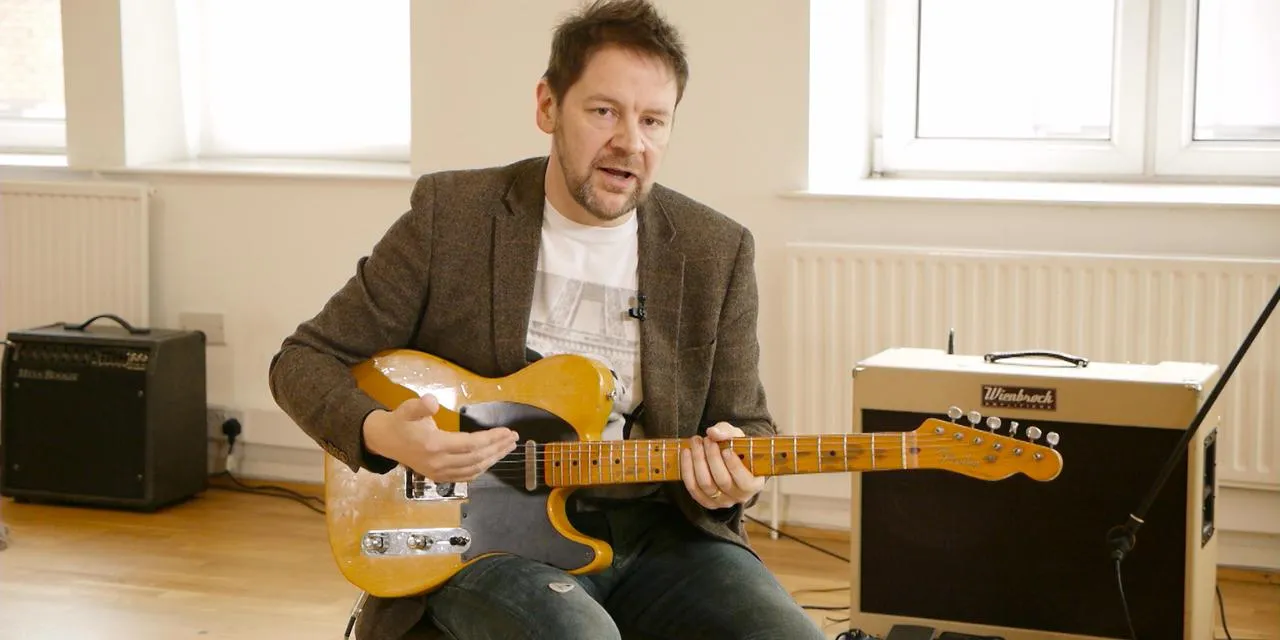
Das steckt im Kurs
12 Lektionen (1h 8m) · 1 gratis
01. Pentatonik- und Blues-Skalen-Formen: eine Wiederholung
Du bist hier6:59
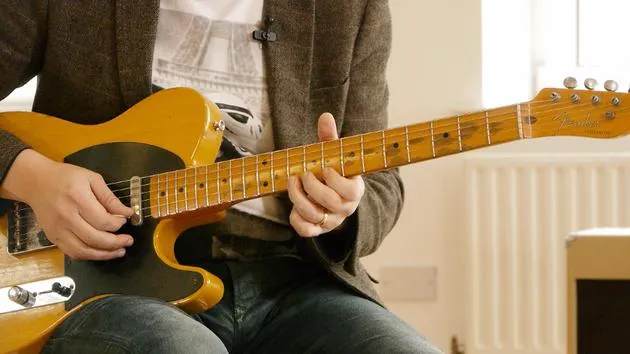
02. Eine andere Pentatonik-Form!
5:10
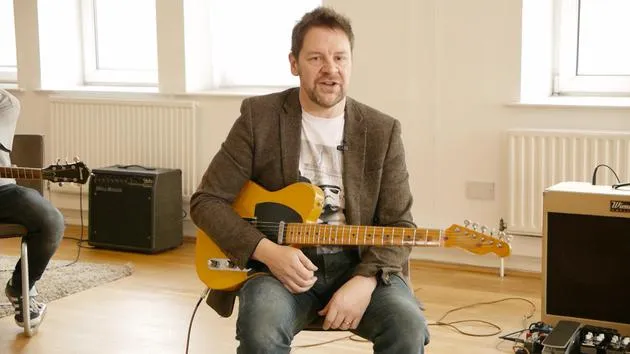
03. Verminderte Quinte und große Sexte zur Pentatonik hinzufügen
3:45
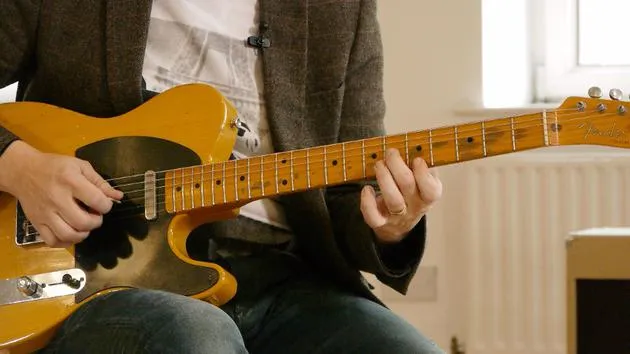
04. Dur- und Moll-Pentatonik mischen.
4:41
05. Die hybride Blues-Tonleiter
4:26
06. Double Stops verwenden
6:35
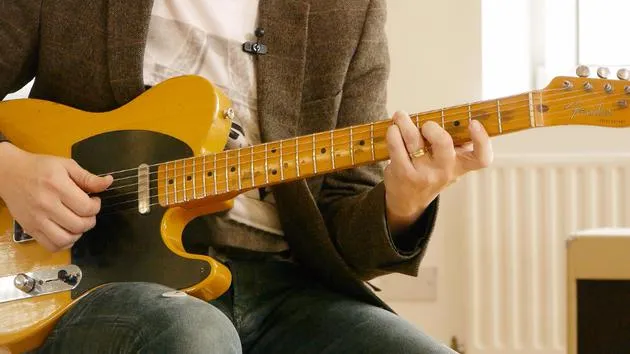
07. Double Stops mit Durchgangsnoten
4:18
08. Spielweisen: Septakkorde
6:26
09. Spielweisen: None-Akkorde
4:49
10. Coole Akkorde
10:42
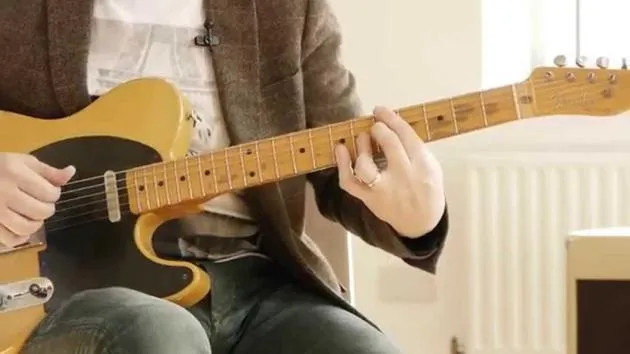
11. Turnaround-Variationen
5:25
12. BONUS-RIFF: Lerne, Pride & Joy von Stevie Ray Vaughan zu spielen
5:30
Transkript der Lektion
Introduction to the Pentatonic Scale
Okay, we're going to start off proceedings by learning the pentatonic scale. If you don't already know it, I'm assuming that you do know Shape 1, since most of this material will be based on it. However, I want to ensure that you understand it fairly in depth and that you are familiar with the rest of the pentatonic shapes. These will come in really handy!
Checking Position One
Let's start by checking that you can play Position One, the one everybody knows. Here are the shapes:
- Shape 1
- Shape 2
- Shape 3
- Shape 4
- Shape 5
Now, you might have guessed that when we get to Shape 5, we actually start from Shape 1 again right up here. Then we run out of frets, so we can't go any further. You can go back down to play in A, for example, Shape 5 here.
It's really important, if you want to open up your knowledge of the neck, that you learn all five shapes so you're familiar with those.
Playing Over Chords
Next up, think about the fact that you can play your pentatonic scale over each of the chords. This means that you can play A minor pentatonic over the entire 12-bar progression:
- A chord (Chord 1)
- D chord (Chord 4)
- E chord (Chord 5)
So, you can play the A minor pentatonic over all of that.
What you can try to get you into the idea of playing over changes is to move your pentatonic with the chords:
- Over A, play A minor pentatonic.
- Over D, play D minor pentatonic.
- Over E, play E minor pentatonic.
Demonstration
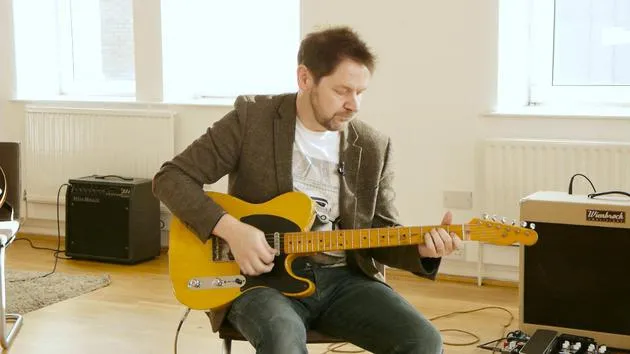
I will just demonstrate that with the help of Tom. We'll play a fairly slow 12-bar.
Okay, off we go.
You'll see me moving my hand up and down to play the following:
- A for the A chord
- D for the D chord
- E for the E chord
1, 2, 3, 4, and again.
Notice I'm playing the A minor pentatonic over the A chord, then moving up to the 10th fret for the D, back down to A, then up to E, and back down to A.
Using Your Ears
Lovely! You can see how that works. You're basically required to use your ears to hear where the changes happen, ensuring you switch from A pentatonic for the A chord, to D for the D chord, and E for the E chord.
Adding a Bend
What I want to tag onto the end of this lesson is the bend technique. I'm using a little bend when we get to the third note in the scale (or the second note in the pentatonic).
So, when we get to the C note, give it a slight bend. This is because the blues scale is actually based on the African pentatonic scale, which means it's not quite C if you're in A minor and not quite C sharp either. Just bending it slightly will make things sound a lot nicer.
We're going to play through it again, and I'll throw in that bent note to help you hear how it sounds more authentic.
If you're in D, bend that note to an E.
Conclusion
Let's quickly run through this again just to demonstrate:
One, one, two.
Lovely! You can see that with the last bit, if you bend it slightly, it sounds a bit more authentic. Throughout the whole exercise, try and hear where those changes happen, and apply your different scales each time a new chord comes in.
Have fun with that! See you in the next lesson.
12 Lektionen
1 Std. 8 Min. strukturierte Videolektionen
Erweiterte Videofunktionen
Verlangsamen, Passagen loopen, mitlesen
Handy, Tablet & Desktop
Üben, wo du willst
100 % Zufriedenheitsgarantie
30 Tage Geld-zurück-Garantie
Lern deinen Guru kennen
Lern deinen Guru kennen
Ron Sayer ist ein Gitarrist für Gitarristen auf der britischen Blues-Szene und Mentor von Spielern wie Oli Brown und Sol Philcox. Er wurde viermal für die British Blues Awards nominiert - für das Album 'Better Side', die Single 'Don't Make Me Stay' und seine Mitwirkung als Co-Autor bei Oli Browns 'Here I Am' - und hat den Preis als Guitarist of the Year gewonnen. In seinen Kursen schlüsselt er das Phrasing, den Ton und das Feeling hinter dem elektrischen Blues-Leadspiel auf.







