



Double Stops mit Durchgangsnoten

Lesson time: (6min 35sec)
Ron Sayer zeigt, wie man Durchgangsnoten zwischen Double Stops einfügt - zwei Griffe in derselben Position verbinden, damit deine Linien fließen.
Course preview
This lesson is part of the course Thinking Out Of The Box 1: Opening The Lid
Watch a preview of the full course below.
Lesson transcript:
Using Passing Notes in Double Stops
So, following on from that little feature on double stops, I want to throw in a little segment on using passing notes. I sort of threw a couple in there anyway, just as a matter of course.
What are Passing Notes?
When I say passing notes in your double stops, I mean:
- Throwing in notes that connect two double stops that are in the same feel and position.
For example, here's a nice little passing note.
Instances of Passing Notes
Let's go through the whole thing:
- There's the first passing note.
- And then there's another.
- Finally, there's a third.
I'll play that once more.
Working with Double Stops
How I like to work with this is that the double stops in this particular instance only have two shapes:
-
Diagonal Shape: One finger on the E and the second finger on the G , they're sort of crossways.
-
Horizontal Shape: You're on the same fret.
Any time in your double stops where you have two of those patterns following each other, you can throw in a passing note.
Patterns and Opportunities
Hopefully, that helps! For instance:
- Here to here (two horizontal patterns), you can throw in a passing note.
- Continuing on, again, two patterns that are the same shape allow you to insert a passing note.
- The last couple of notes in the scale also offer the same opportunity for a passing note.
Practical Exercise
Just very quickly, let's throw in 12 bars so you can hear how the passing notes work nicely.
Remember: When you do these, don't just stop there , go down as well!
- You don't just have to move up; you can also go the other way down the neck.
- Make sure that you learn these patterns all the way down as well as all the way up. This tends to be something that people neglect from time to time.
Let's Hear It
Alright, let's run a 12-bar progression and see how this sounds with our passing notes and double stops.
Count-in: One, two, one, two, three...
Okay, cool!
Hopefully, that demonstrated the idea of passing notes in there.
Final Thoughts
Give that a go again and try to incorporate it into your soloing.
- You don't have to structure your solos based solely on double stops all the way through.
- Try to throw them in here and there to make it sound a bit spicy!
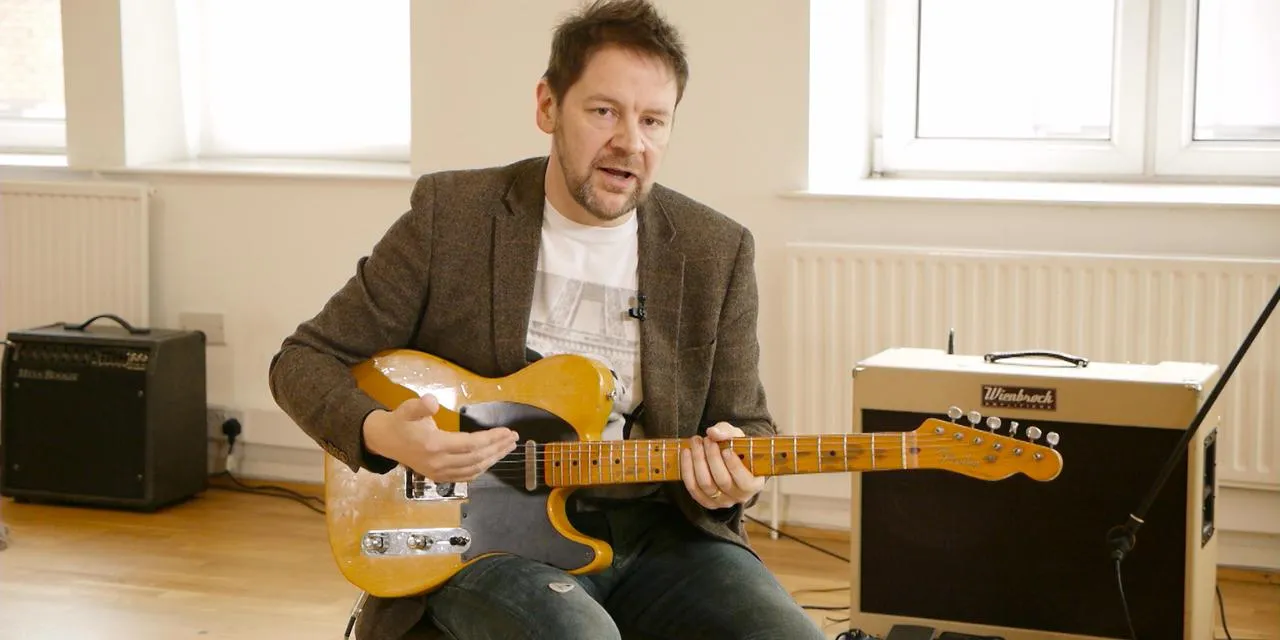
About the instructor
Ron Sayer ist ein Gitarrist für Gitarristen auf der britischen Blues-Szene und Mentor von Spielern wie Oli Brown und Sol Philcox. Er wurde viermal für die British Blues Awards nominiert - für das Album 'Better Side', die Single 'Don't Make Me Stay' und seine Mitwirkung als Co-Autor bei Oli Browns 'Here I Am' - und hat den Preis als Guitarist of the Year gewonnen. In seinen Kursen schlüsselt er das Phrasing, den Ton und das Feeling hinter dem elektrischen Blues-Leadspiel auf. read more