



BONUS-RIFF: Lerne, Pride & Joy von Stevie Ray Vaughan zu spielen

Mit
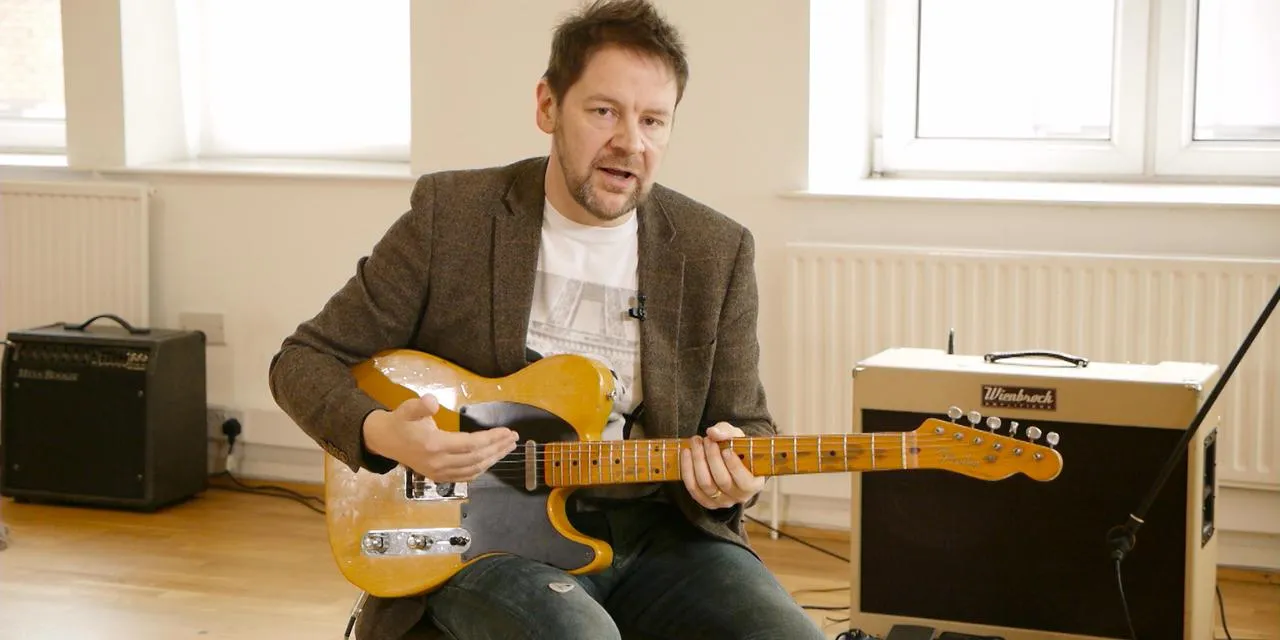
Ron SayerRon Sayer nutzt 'Pride and Joy' von Stevie Ray Vaughan, um das Abdämpfen mit der linken Hand über einem 12-taktigen Boogie-Riff voller Leersaiten zu vermitteln.
Das steckt im Kurs
12 Lektionen (1h 8m) · 1 gratis
01. Pentatonik- und Blues-Skalen-Formen: eine Wiederholung
Gratis-Lektion6:59
02. Eine andere Pentatonik-Form!
5:10
03. Verminderte Quinte und große Sexte zur Pentatonik hinzufügen
3:45
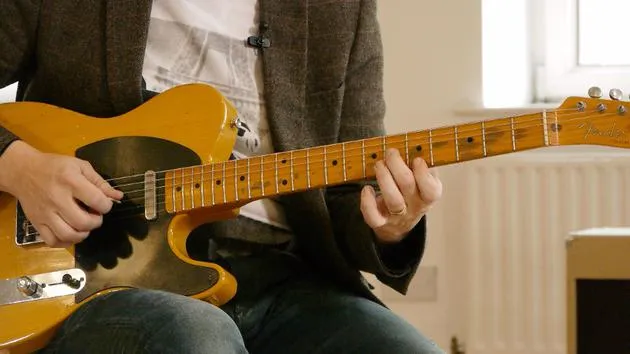
04. Dur- und Moll-Pentatonik mischen.
4:41
05. Die hybride Blues-Tonleiter
4:26
06. Double Stops verwenden
6:35
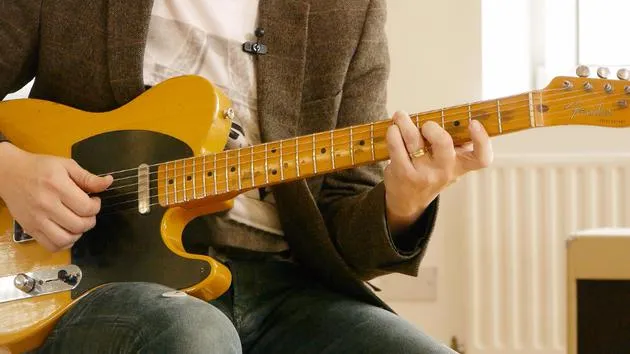
07. Double Stops mit Durchgangsnoten
4:18
08. Spielweisen: Septakkorde
6:26
09. Spielweisen: None-Akkorde
4:49
10. Coole Akkorde
10:42
11. Turnaround-Variationen
5:25
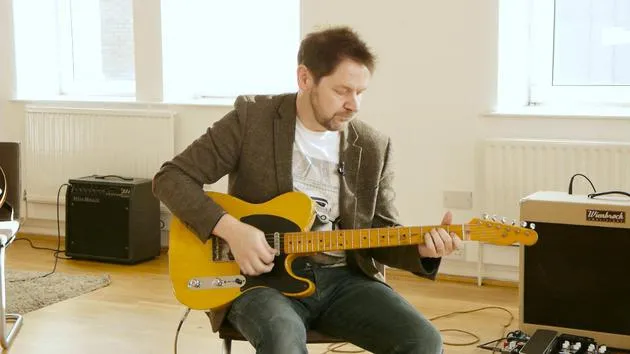
12. BONUS-RIFF: Lerne, Pride & Joy von Stevie Ray Vaughan zu spielen
Du bist hier5:30
Transkript der Lektion
Left Hand Damping with Ron Sayer
Hi, I'm Ron Sayer from musicgurus.com. Today, I'm going to use Steve Ray Vaughan's "Pride and Joy" to give you a little lesson on left hand damping.
Introduction to Left Hand Damping
Left hand damping is a tricky little technique, but it requires some work, like most things worth learning. Here's what you need to do:
- Ensure your left hand dampens all the notes that you're not going to use.
- In "Pride and Joy", the riff is a fairly standard 12-bar boogie, but it also includes quite a lot of open strings.
The Riff Explained
Let's break down the riff:
-
Starting Note:
- Begin with the low E string.
- The top strings of the guitar are hit in between every note.
For example:
- On the low notes, you'll play E, followed by an upstroke hitting the open strings.
Very slow version might not sound much like it, but that's how it goes. It starts off like this:
(Play the notes here) -
Technique:
- You can start with an upstroke hitting the open strings, then hit the low string.
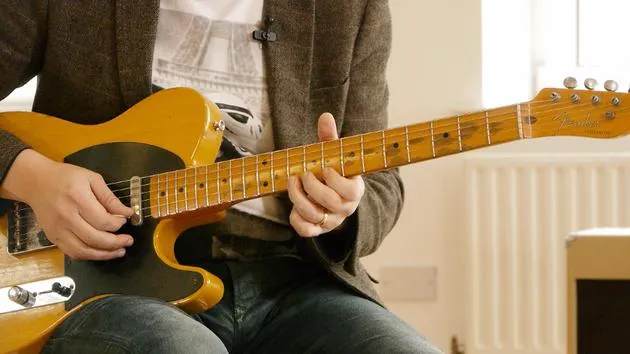
- Your left hand should dampen the first string across the A, D, G, B, and E strings, only allowing the E string to sound.
The goal is to create a "grunt" by hitting all the strings, not just going straight to the notes. If you are just hitting the low E, it won't sound the same.
- To practice:
- Hit a string, then damp the rest.
-
Continuing the Riff:
- The next note is on the third fret of the G string. Repeat the damping technique.
Remember to:
- Dampen every string that you're not using.
- Include an upstroke between each note to let the open strings ring.
E Sus Chord
Now, let's look at this part of the riff:
-
It incorporates an E sus chord, where you use your third finger across the A, D, G, and then go back to an E7.
So it goes:
(Play the E sus and E7 chords here)
Summary of the Riff
Putting it all together, it sounds like this when played slowly:
(Play the whole segment together slowly)
Key Takeaway
The essential part of left hand damping is that you can practice any scale while ensuring you hit one note each time and dampen the others. For example:
- Try practicing a G pentatonic scale with this technique.
Conclusion
I hope this lesson gave you some insight into left hand damping.
If you enjoyed this lesson and want to explore more techniques, pop over to musicgurus.com. There, you'll find plenty of interesting material to help make your guitar playing more engaging!
12 Lektionen
1 Std. 8 Min. strukturierte Videolektionen
Erweiterte Videofunktionen
Verlangsamen, Passagen loopen, mitlesen
Handy, Tablet & Desktop
Üben, wo du willst
100 % Zufriedenheitsgarantie
30 Tage Geld-zurück-Garantie
Lern deinen Guru kennen
Lern deinen Guru kennen
Ron Sayer ist ein Gitarrist für Gitarristen auf der britischen Blues-Szene und Mentor von Spielern wie Oli Brown und Sol Philcox. Er wurde viermal für die British Blues Awards nominiert - für das Album 'Better Side', die Single 'Don't Make Me Stay' und seine Mitwirkung als Co-Autor bei Oli Browns 'Here I Am' - und hat den Preis als Guitarist of the Year gewonnen. In seinen Kursen schlüsselt er das Phrasing, den Ton und das Feeling hinter dem elektrischen Blues-Leadspiel auf.







