



ICAUFO, Joe Bennett (Lektion)
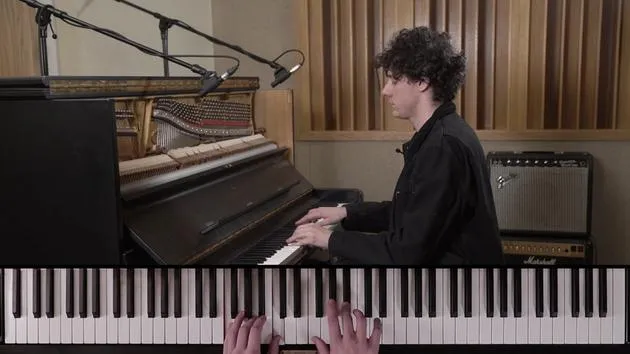
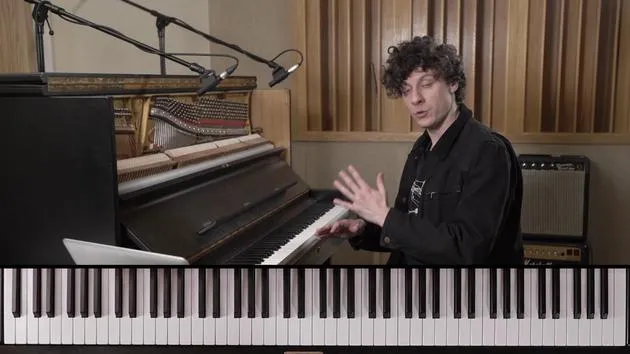
Andrew Johnson führt dich durch 'I See a UFO', Joe Bennetts Klavierstück für Anfänger, und behandelt seine Melodie in C-Dur / e-Moll sowie das Zusammenspiel mit dem Backing-Track.

Das steckt im Kurs
29 Lektionen (1h 50m) · 1 gratis
01. Make You Feel My Love, Adele (Performance)
1:26
02. The Long and Winding Road, The Beatles (Performance)
Gratis-Lektion1:43
03. Read All About It, Part III, Emeli Sande (Aufführung)
1:58
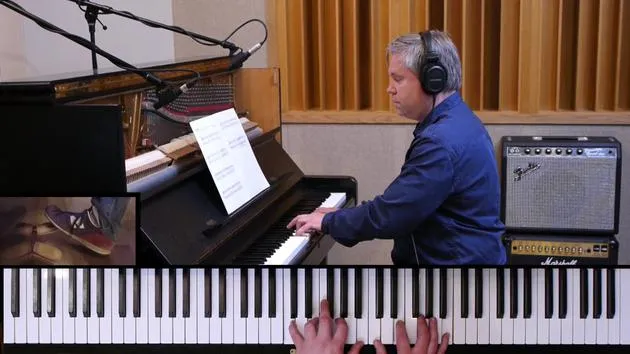
04. ICAUFO, Joe Bennett (Performance)
1:23
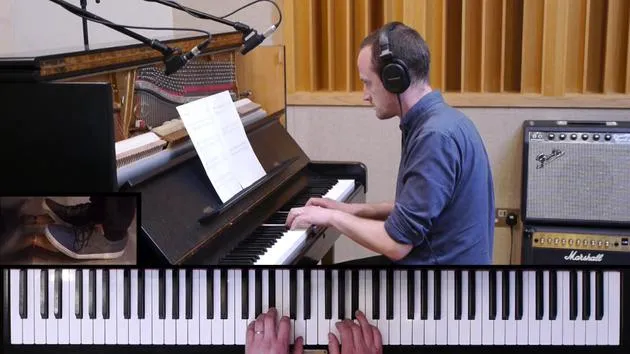
05. Umbra Bella, Simon Troup (Performance)
1:07
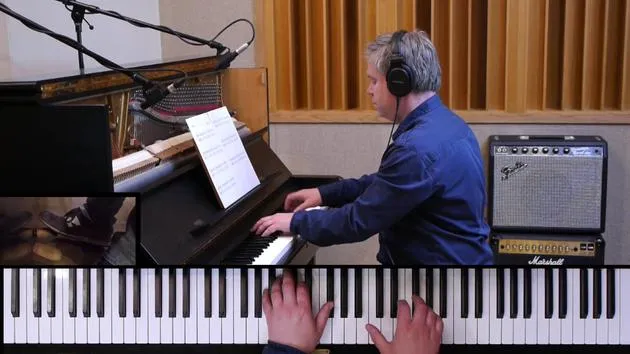
06. Fab Stomp, Deirdre Cartwright (Performance)
1:15
01. Make You Feel My Love, Adele (Lektion)
7:34

02. The Long and Winding Road, The Beatles (Lektion)
11:34
03. Read All About It, Part III, Emeli Sande (Lektion)
9:09
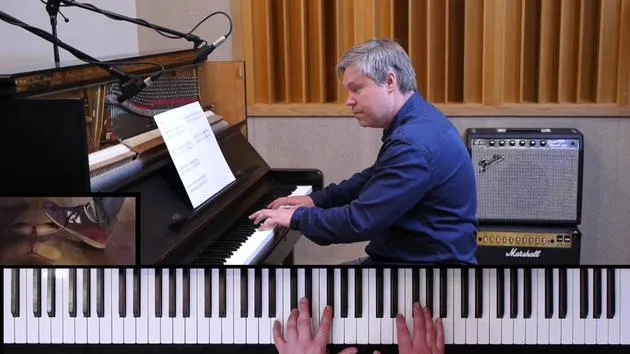
04. ICAUFO, Joe Bennett (Lektion)
Du bist hier7:45
05. Umbra Bella, Simon Troup (Lektion)
10:42
06. Fab Stomp, Deirdre Cartwright (Lektion)
6:39
Transkript der Lektion
I See a UFO - Music Lesson
Hi, everyone! Welcome back. Here we are, looking at I See a UFO. What a great title for a piece! Immediately, it conjures up images of space, planets, stars, and everything associated with the unusual and the unknown.
Getting Into the Mindset
When you play this piece, let's try and get into that frame of mind. We're doing something really interesting musically here.
Key and Melody
- Key: C major, E minor (no black notes at the beginning, making it a nice and easy key).
- Melody: As you listen through the track and play along, notice that your melody plays exactly with the violins.
Tip:
- Try to keep yourself in time with the strings, especially at the intro.
- Take your time; voice those notes as nicely as you can.
- Make them rounded and even.
- Sing out the melody before the main section comes in at bar five.
The B Section
Now, suddenly, we enter the B section. This is where things get a bit more tricky and complicated, especially for grade one:
- Rhythm: We have two different rhythms: quavers against crotchets (2, 3, 4).
Approaching the Rhythm:
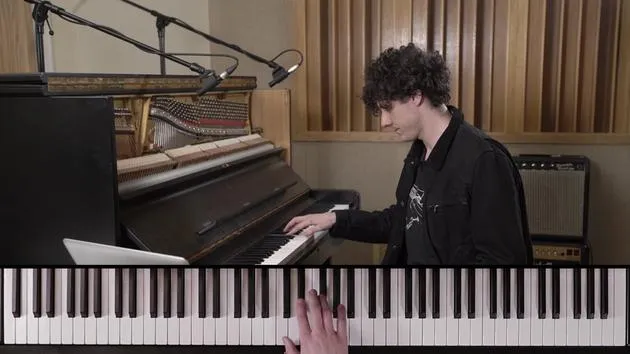
- If you get a bit scared or freaked out about this, here's what I do when learning a piece: I practice rhythms on my lap.
- Crotchet: 2, 3, 4
- Quaver: Twice as quick: 2, 3, 4
Now, for bars nine, eleven, and twelve, we have a really nice rhythm. Familiarize yourself with it.
Practice Tips:
- Play nice and slow to start with.
- Ensure all the crotchets meet at the same time.
Chordal Section
Now, we move to a more chordal section. Have fun with this:
- Don't be scared to play nice and loud.
- Bring out the power of those chords.
Playing in Unison
We'll now play in unison, with the right hand and left hand playing the same thing an octave apart:
- Right Hand: [Insert your right hand notes]
- Left Hand: [Insert your left hand notes]
Focus:
- Make sure they are all played evenly (1, 2, 3, 4).
D Section
In the D section, we're still in unison an octave apart. This section includes a tricky little phrase:
- Play hands separately to get really familiar with it.
- In the left hand: 3, 5, 3, 2, 1
- Move from your thumb to a three and back.
Tip:
- Don't worry about the last chord for now; just focus on those three bars of melody in unison.
Last Chord Techniques
There's an instruction in the music to execute this in two ways. We want to have a nice effect with the tied notes, creating an echo of sound:
- Left Hand: 5, 4, 2, 1 (using weaker fingers)
- Right Hand: 1, 2, 3, 5 (all white notes together in unison).
Pedaling:
- Consider using the pedal to get that shimmer effect.
Overall Strategy
All in all, it's a really good piece with four interesting sections. It's essential to test your chord and rhythmic playing:
- Progression:
- The score progresses from an easy beginning to a tricky middle section and ends with a very difficult one.
Steps:
- Start with the A section for a nice, simple start.
- Gain confidence and make a nice sound.
Tempo
Keep the tempo around 98. It's a nice pace, so you can take it slow.
Relax:
- When you play, you want to be loose. Aim to create a sense of calm in the melody.
Practice Bits
- If you want to use a metronome, slow it down to 80 or 70 BPM for more comfort.
- The B section picks up speed after a slow introduction.
Wishing you all the best of luck with this piece! It's a lot of fun! Enjoy playing along with the track, and remember, you have a great supporting role with this piece.
29 Lektionen
1 Std. 50 Min. strukturierte Videolektionen
Erweiterte Videofunktionen
Verlangsamen, Passagen loopen, mitlesen
Handy, Tablet & Desktop
Üben, wo du willst
100 % Zufriedenheitsgarantie
30 Tage Geld-zurück-Garantie







