



Beat The Mersey, Joe Bennett (Lektion)

Das steckt im Kurs
28 Lektionen (1h 26m) · 1 gratis


Transkript der Lektion
Music Lesson: Beat the Mersey
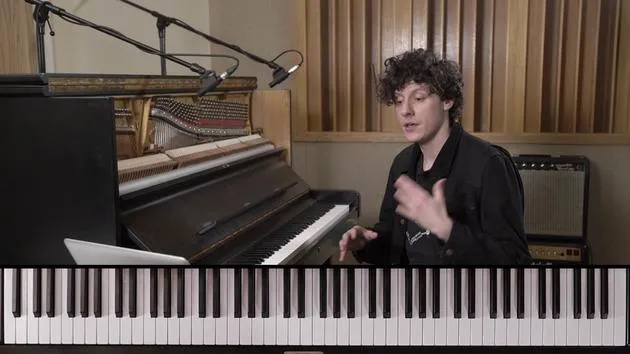
Hello, everyone!
Today, we're going to be looking at Beat the Mersey, a really nice song that has been composed for this debut grade for Rock School. This piece takes a lot of inspiration from the Beatles and other great bands from Liverpool that really came to prominence in the 60s.
Capturing the Spirit of the 60s
I think there's real inspiration in this music that captures the spirit of that era, hence the title, Beat the Mersey.
When you listen to the track, really try to get into the feel of it, the harmonica, drum beats, and guitars all playing along, creating that innocent pop music. The birth of pop music was at the start of the 60s, and this piece tries to replicate that in some way.
Let's Unpack the Piece
Before we begin, why don't we take a look under the hood of the piece and see what's actually going on?
- We're in a nice key, C major (all the white notes).
- We have G major, which is the dominant chord.
- Additionally, we have A minor.
- Even more interestingly, we've got E minor, a very expressive chord, almost like a hymn.
You can see where they got the inspiration, just like "Let it Be." Obviously, this isn't only about Beat the Mersey, but it gives you the idea that chord progressions are the building blocks of a good pop song.
Playing the Melody
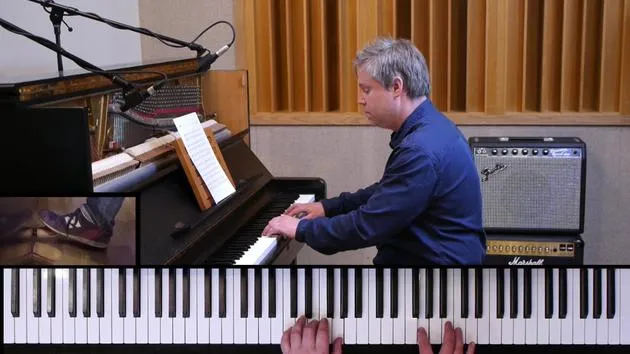
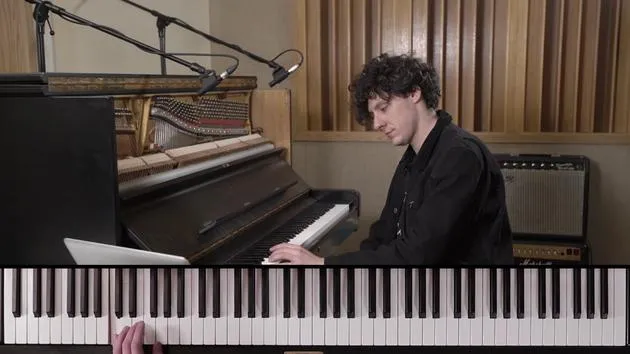
When we play this melody, we instantly start in the A section.
- The melody revolves around a C major vibe, so bring that out clearly using the strong fingers:
- 1, 2, 3, 2, 1, 2.
Make sure the chords underneath strike at the same time.
- Repeat the same rhythm with a different harmony, now featuring the lovely E minor that repeats throughout.
Transition to the B Section
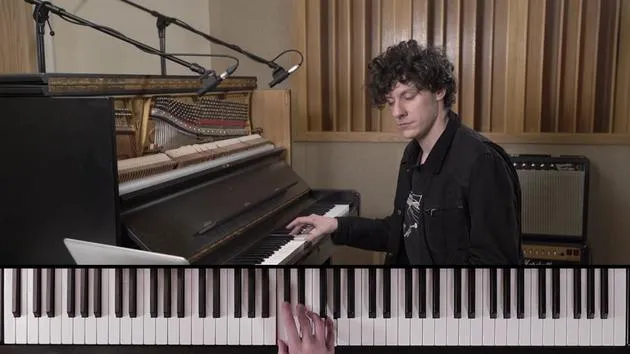
When we get to the B section, you suddenly have your own little solo part.
- Focus on bringing out this section nicely. Ensure the cross crotchets are rounded and full; use a bit of pedal if desired. The D major chord is the dominant of the dominant for the technically minded, followed by A minor, bringing us back to the home key of C major.
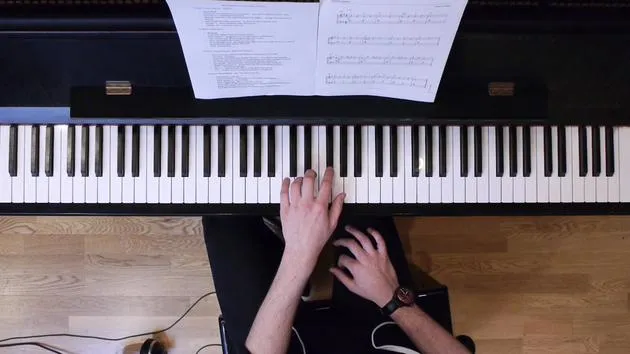
Make sure those chords are rounded, using strong fingers 1 and 3 on each side if you like.
Observations on the B Section
In the B section, you'll notice that the chords in the left hand remain the same. Once you're in position, just keep them there, play them four times, five times in a row.
It's all about the right-hand rest.
Now, we've introduced a new chord:
- D major
- F sharp (it's going to sound like that)
- Then back to A minor.
Focusing on the Right Hand
As we approach this piece, the right hand holds significant melodic interest.
- Bring out the phrasing nicely, keeping it rounded with a nice even tone.
- Stick with the five fingers; maybe even use your little finger on that G note.
You might be learning a five-finger exercise already. It's always good practice, and you can strengthen your fingers using those.
Embrace the Outer Fingers
Don't be afraid to use those outer fingers when playing a melody. I think it will enhance your playing experience if you reach out and incorporate those elements.
Conclusion
You'll have a lot of fun playing this song; it's truly enjoyable!
- Enjoy the chords.
- Enjoy the melody.
- Enjoy being involved.
Have the track on your headphones, listen to the beat, and get into the spirit of the 60s when you play Beat the Mersey.
It's a great song, and I'm sure you're going to have a lot of fun learning it!
28 Lektionen
1 Std. 26 Min. strukturierte Videolektionen
Erweiterte Videofunktionen
Verlangsamen, Passagen loopen, mitlesen
Handy, Tablet & Desktop
Üben, wo du willst
100 % Zufriedenheitsgarantie
30 Tage Geld-zurück-Garantie







