



Nosso Samba
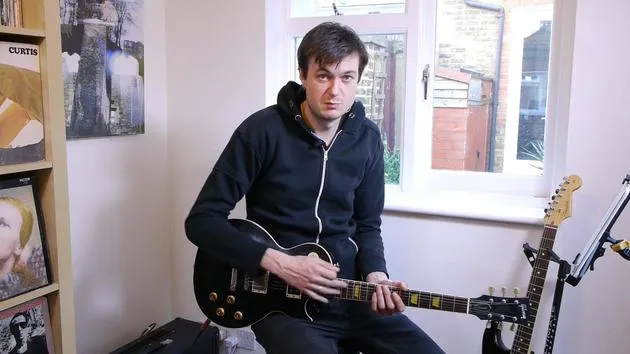
Rob Luft stellt das Bossa-Nova- und Samba-Feel hinter „Nosso Samba“ vor und behandelt die Daumen-und-Finger-Technik, die der brasilianischen Gitarre ihren Klang verleiht.
Das steckt im Kurs
43 Lektionen (3h 55m) · 1 gratis
01. Einführung in Ansätze zur Improvisation
1:00
02. Eine Melodie verzieren
5:36
03. Challenge: Reiche deine Melodie ein
0:26
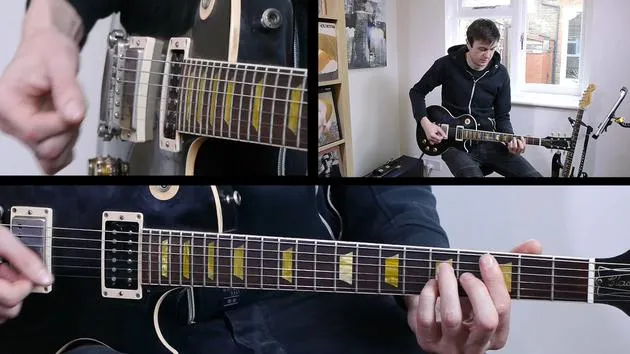
04. Septakkorde
6:38
05. Dein Solo komponieren
8:53
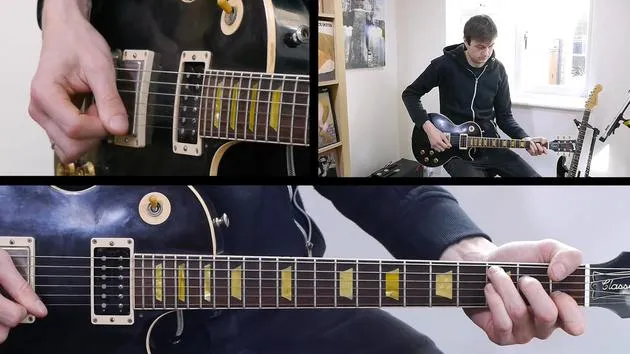
06. Fortgeschrittenes Anschlagen und Verzierungen
5:40
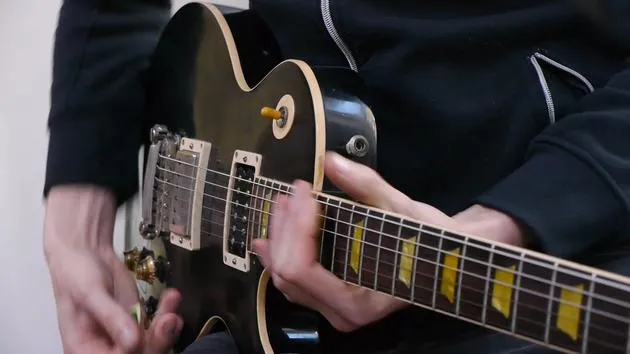
07. Comping in verschiedenen Musikstilen
8:36
08. Weitere Erweiterungen und Sus-Akkorde
4:19
09. Rhythmisches und melodisches Comping mischen
4:24
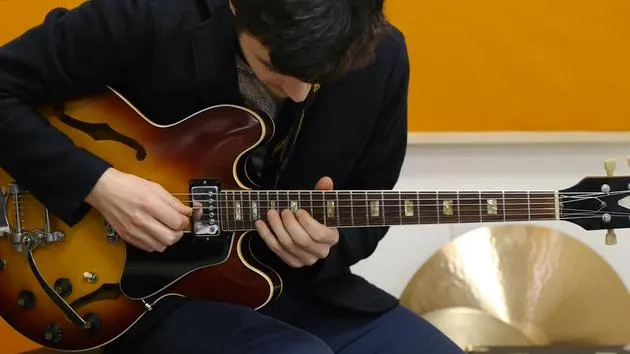
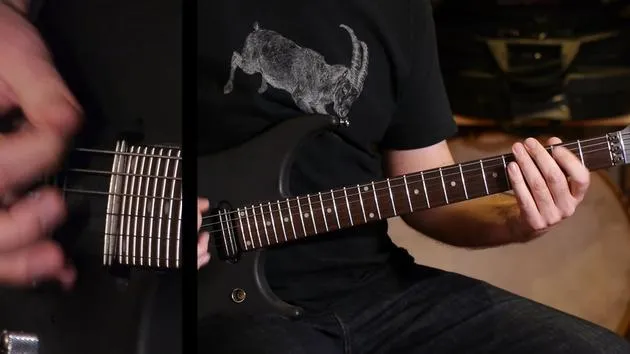
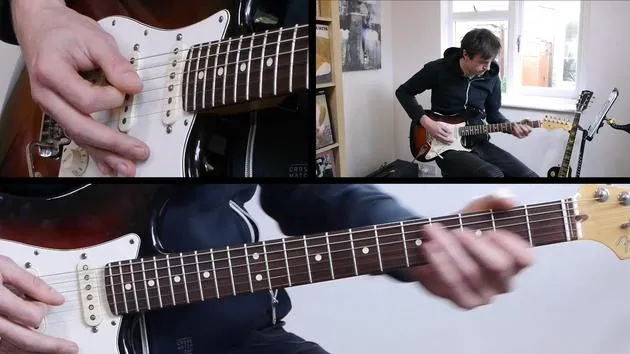
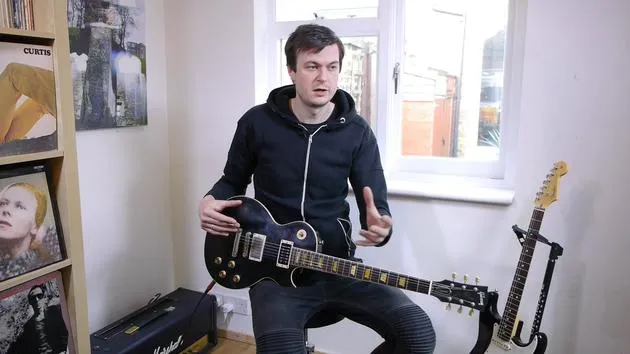
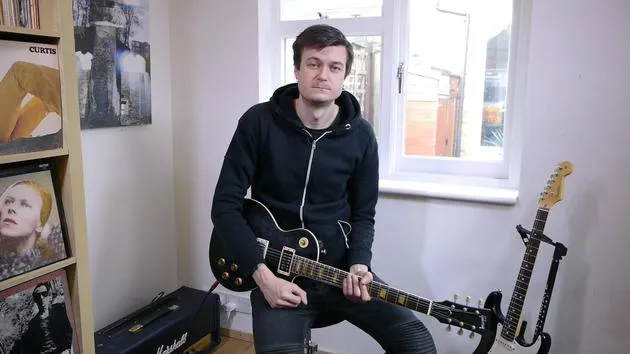
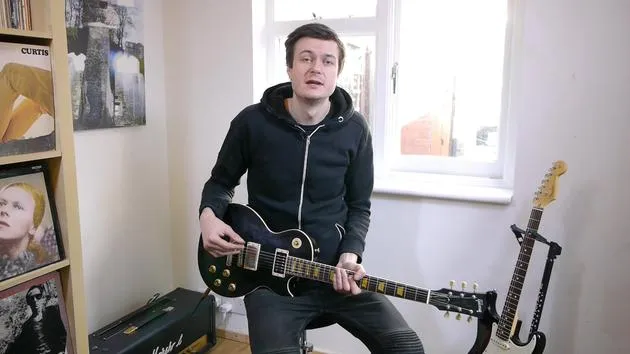
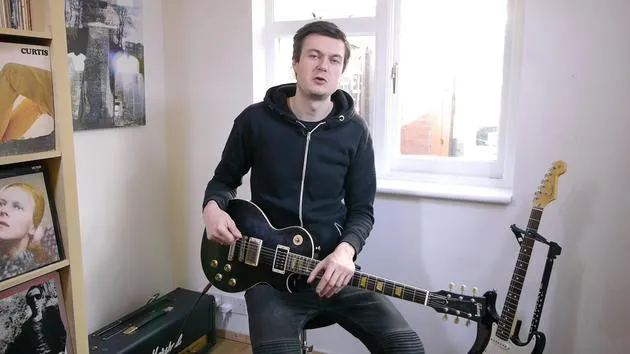
Transkript der Lektion
Noso Samba: Exploring Bossa Nova and Samba Styles on Guitar
Welcome to our lesson on the bossa nova samba styles! Brazilian music is hugely important on both electric and acoustic guitars.
Antonio Carlos Jobim: A Key Influencer
I'd have to say that the most important exponent of this genre has to be Antonio Carlos Jobim. He was a prolific composer of the 20th century who wrote such classics as "The Girl From Ipanema." Jobim was an innovator who fused various styles, including:
- Classical piano pieces by the likes of Frederick Chopin
- Jazz by Duke Ellington, Frank Sinatra, and Count Basie
- Brazilian styles such as samba and choro
This blending of genres led Jobim to become one of the most significant innovators in 20th-century popular music.
Achieving the Brazilian Guitar Sound
So, how do we get that famous Brazilian guitar sound?
Technique:
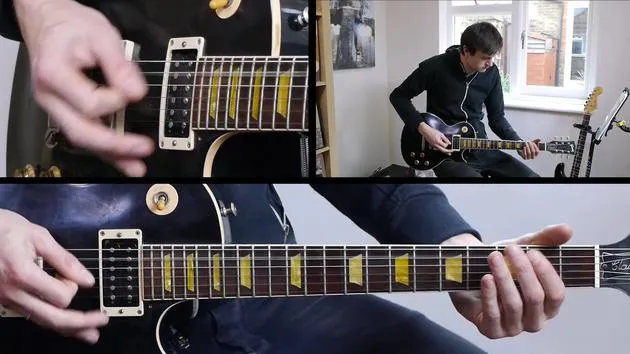
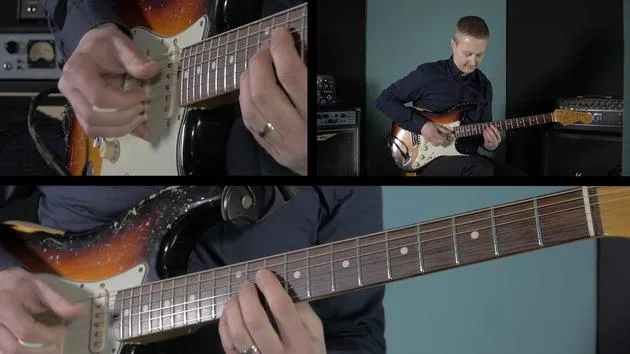
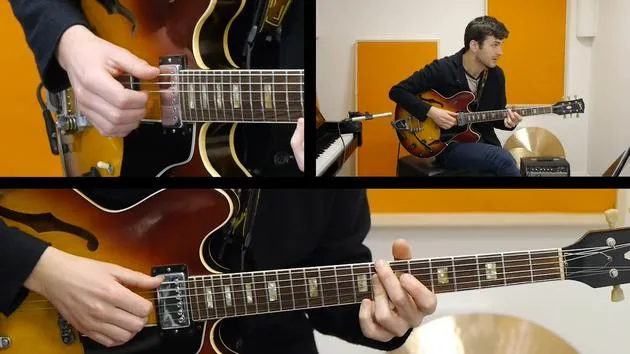
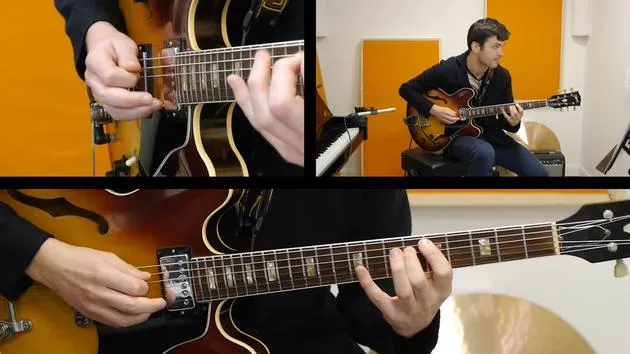
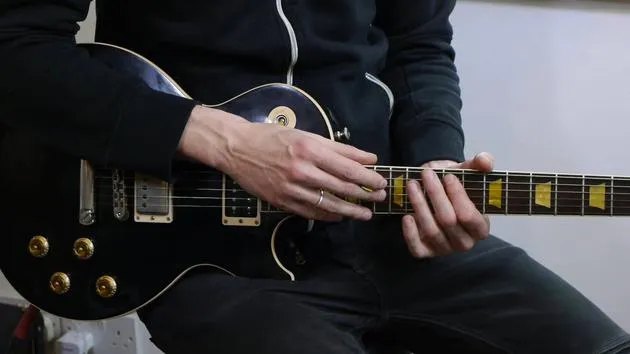
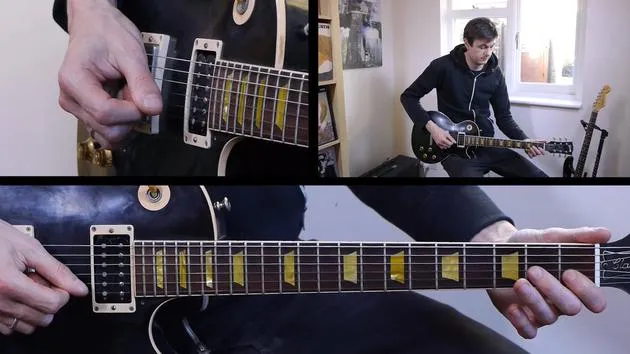
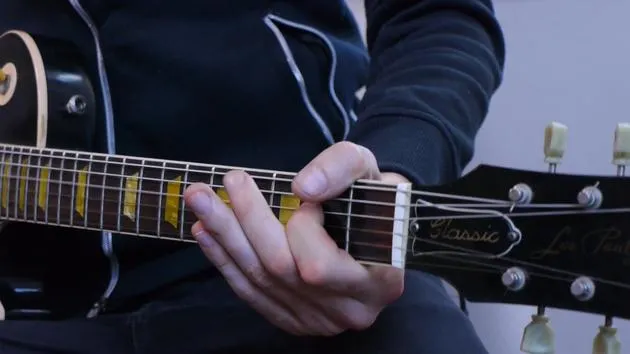
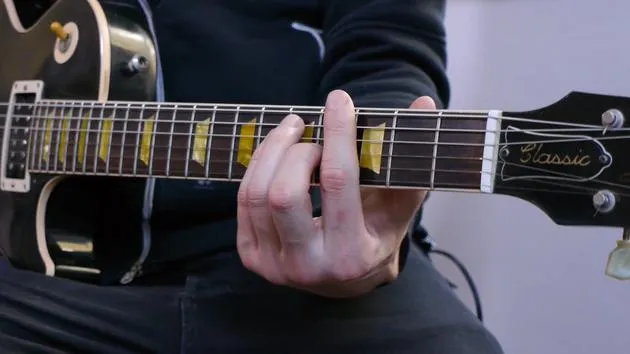
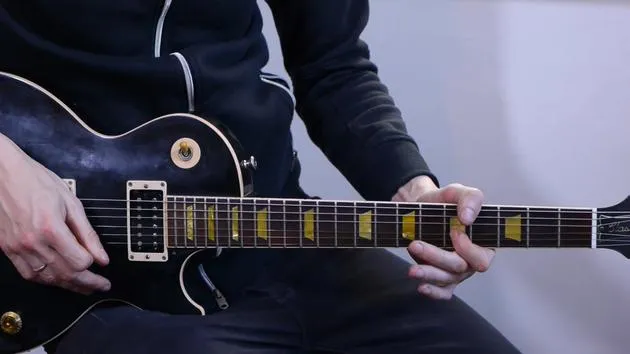
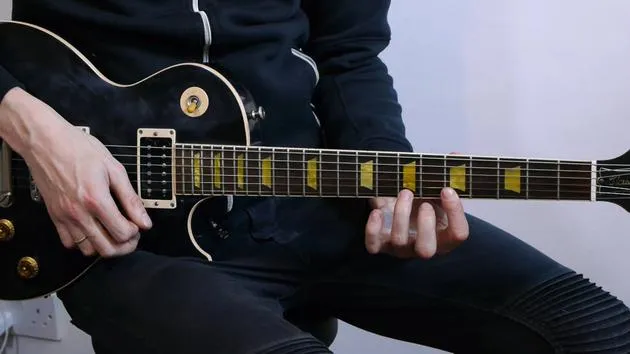
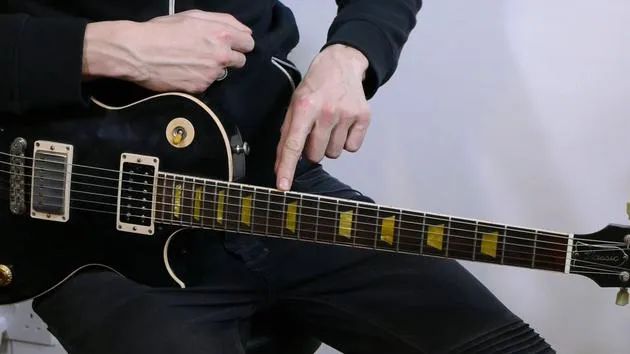
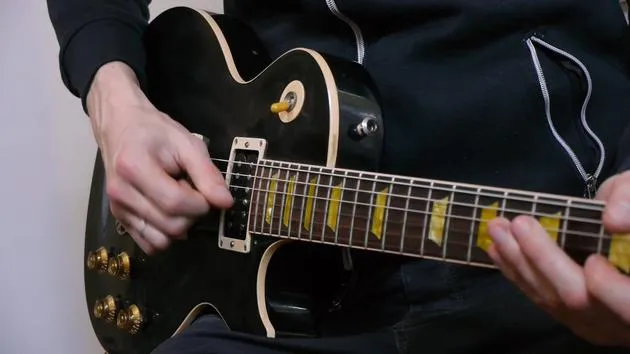
- I primarily use my thumb and fingers.
- Although I sometimes use a plectrum, let's focus on the intro for now.
The Thumb and Fingers Approach
- Thumb: Picks the bass notes
- Fingers: Strum or pluck the chords
Things often move at different times; for example, the bass note might stay on a G for two bars while the fingers move from the F# of Gmaj7 to E in G6. This creates an impression of what we call a batucada, a samba percussion school.
Batucadas were known for featuring large percussion groups with instruments like:
- Cuicas
- Agog?s
- Bells
- Triangles
- Surdos
- Drums
We mirror this concept on the guitar by creating a micro version of these macro batucadas.
Detailed Breakdown
In bar number 13, letter B, you can see where the picking starts:
-
Time Signature: 2/4 (two beats to the bar)
- The first quarter note repeats.
- The syncopation begins in the next bar.
-
Chord Movement:
- Gmaj7 transitions into G6/9 as we shift the F# and B down to an E and A (6th and 9th) in relation to G major.
Here's a musical example:
- Groove: Associated with guitarists like Jo ?o Gilberto and Nelson Faria, this groove can be played over any chord.
This rhythm is eternally groovy and can be practiced at various tempos; it remains musical whether played slowly or very fast.
Charlie Byrd Style and Harmony
Moving on, let's discuss letter D, which showcases a style reminiscent of Charlie Byrd. It's closely related to the techniques of jazz guitarists like Wes Montgomery.
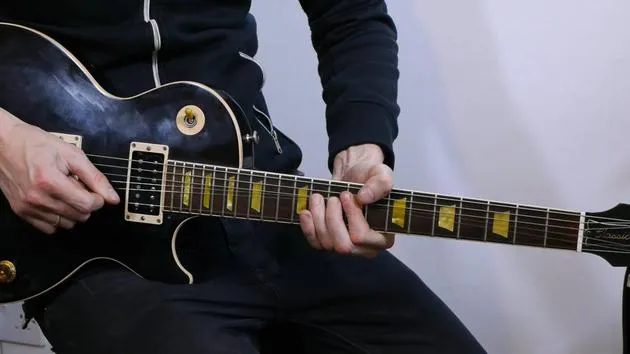
Chord Solos Technique
- This concept involves harmonizing a top-line melody with chord voicings underneath.
- The magic happens when you move only one note within the chord voicings, creating movement while retaining familiarity.
For example:
- The B half diminished/Bm7b5 chord has an A in it, which shifts to a G# in the E7b9 chord.
Technical Recommendations
- This technique requires practice and agility.
- Key to Success: Lightness in picking.
- If you pick too hard, you lose momentum and energy.
- A lighter touch allows for fluid movement: "da ga da da da da da da."
Comping Under a Solo
Now, let's talk briefly about comping underneath someone else's solo. In this arrangement, I played very lightly:
- Avoided overwhelming the bass solo.
- Developed the rhythm over the four bars of repeating chords.
This approach creates space for the other musicians to operate and improvise.
Transitioning into Samba and Bossa Nova
By the time we reach bar 79, where it goes to C major, you'll want to transition into your samba or bossa nova rhythm. Before that point, keep it simple to maintain subtlety.
Soloing and Scale Practice
When it comes to soloing, I primarily use the G major scale:
- Notes: G, A, B, C, D, E, F#
This piece is great for practicing not only the G major scale but also a three-octave scale.
Example of the Scale
- From the 15th fret on the high E string down to the 3rd fret on the low E string.
If you're having trouble with this scale, check the technical exercises section of the course for more information on scales and modes.
Introducing the Lydian Mode
I'd like to briefly introduce the Lydian mode. It's essentially the G major scale with a sharp fourth:
- Instead of C natural, play C#.
This alteration creates a jazzier ambience and allows you to integrate:
- A G triad
- An A major triad
Exploring these triads across the guitar will produce a wonderful sound.
Conclusion
In summary, this piece is excellent for enhancing both your fingerstyle and plectrum skills.
Recommended Listening
To deepen your understanding of samba and bossa nova styles, listen to:
- Jo ?o Gilberto
- Gilberto Gil
- Caetano Veloso
- Chico Buarque
- Antonio Carlos Jobim
Don't hesitate to ask your teacher for additional recommendations.
Enjoy the piece, and I look forward to seeing you again!
43 Lektionen
3 Std. 55 Min. strukturierte Videolektionen
Erweiterte Videofunktionen
Verlangsamen, Passagen loopen, mitlesen
Handy, Tablet & Desktop
Üben, wo du willst
100 % Zufriedenheitsgarantie
30 Tage Geld-zurück-Garantie







