



Comping in verschiedenen Musikstilen
Lerne, Rhythmen und Akkordvoicings zu variieren, um über verschiedene Musikstile zu compen.
Das steckt im Kurs
43 Lektionen (3h 55m) · 1 gratis
01. Einführung in Ansätze zur Improvisation
1:00
02. Eine Melodie verzieren
5:36
03. Challenge: Reiche deine Melodie ein
0:26
04. Septakkorde
6:38
05. Dein Solo komponieren
8:53
06. Fortgeschrittenes Anschlagen und Verzierungen
5:40
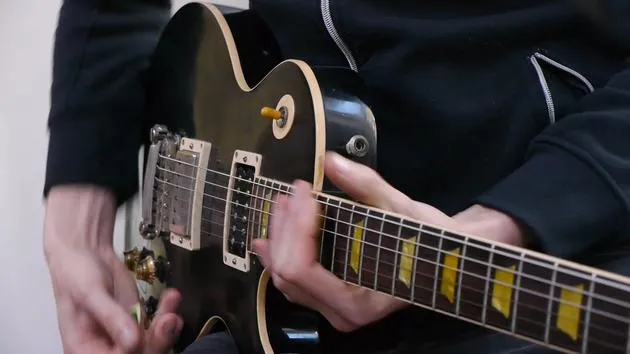
07. Comping in verschiedenen Musikstilen
Du bist hier8:36
08. Weitere Erweiterungen und Sus-Akkorde
4:19
09. Rhythmisches und melodisches Comping mischen
4:24
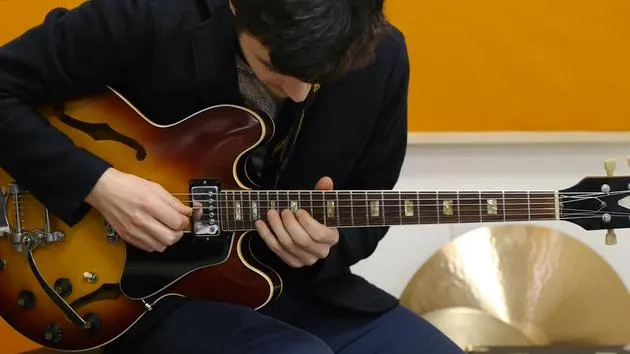
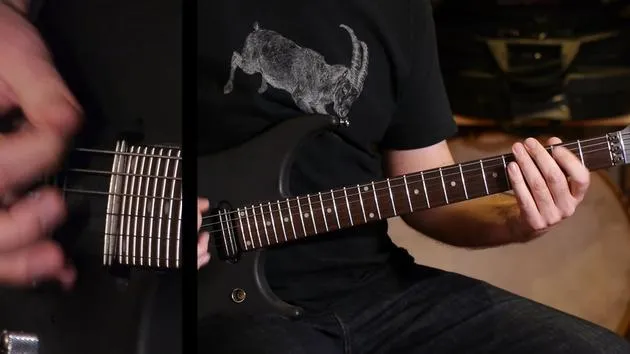
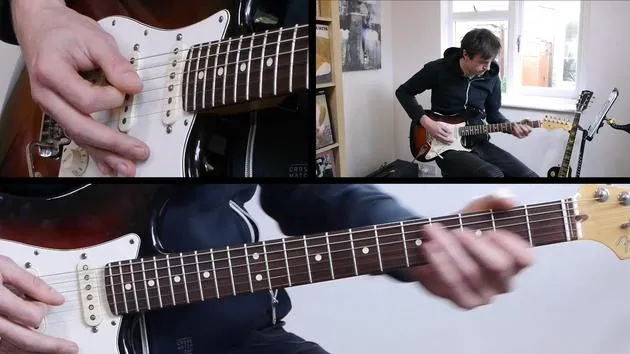
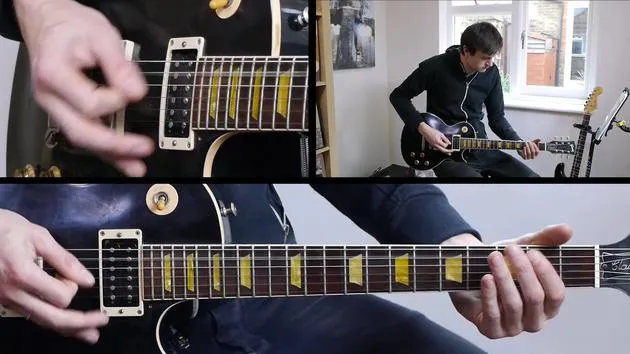
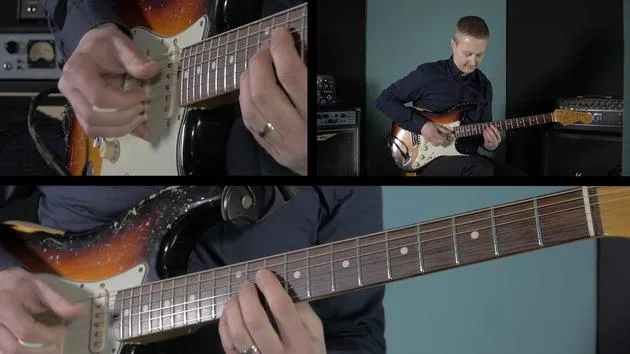
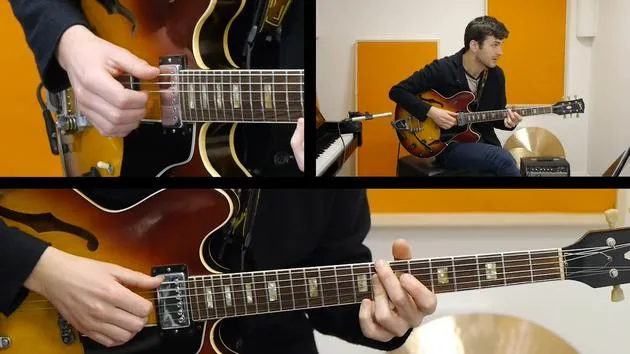
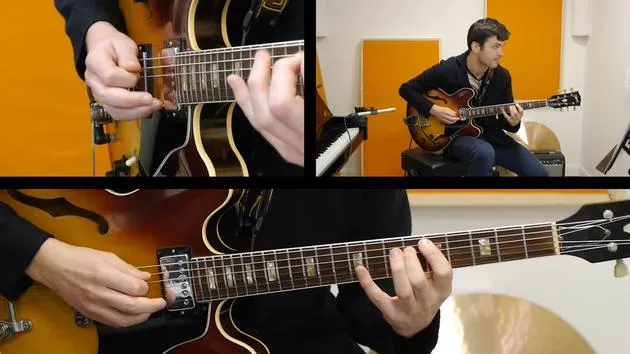

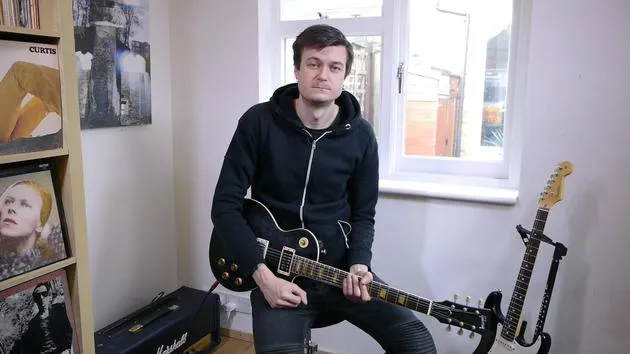
Transkript der Lektion
Understanding Comping: Styles and Techniques
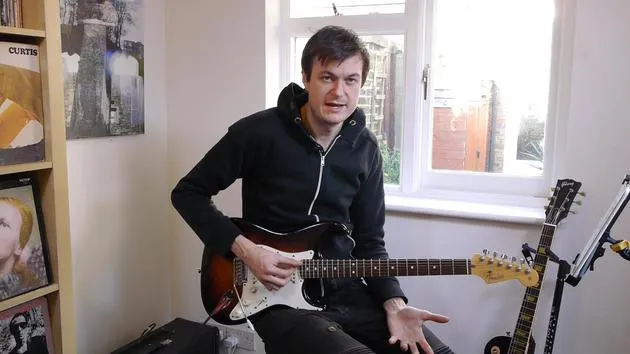
Alright then, guys. As you become more competent with the whole comping concept, the type of chords and the routes you choose will depend on the style of music you're playing.
Funk Example
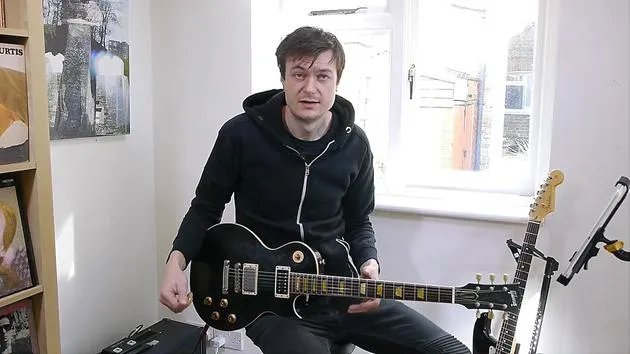
Let's take funk as our first example.
If you're playing a funk piece, it's probably not going to be appropriate to create a rhythm part based on open chords.
Chord Progression
Imagine we have a simple chord progression: A minor to D minor.
- It's not going to sound particularly funky in open position.
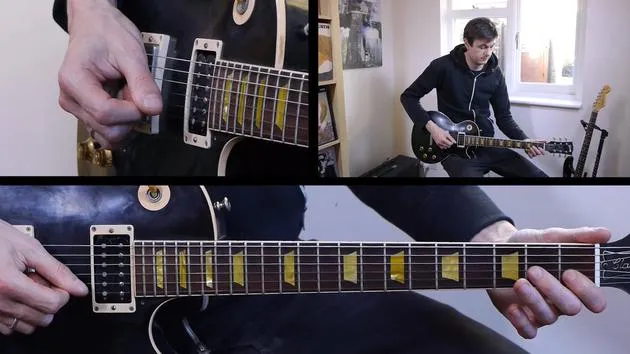
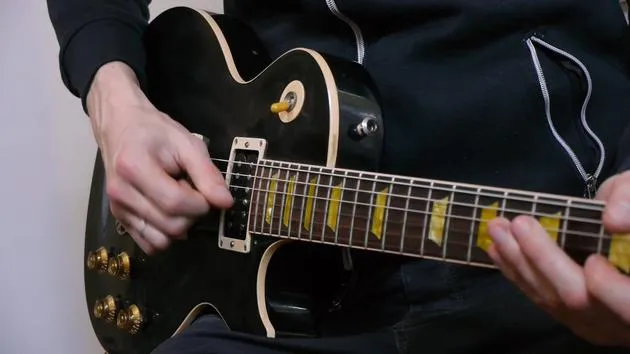
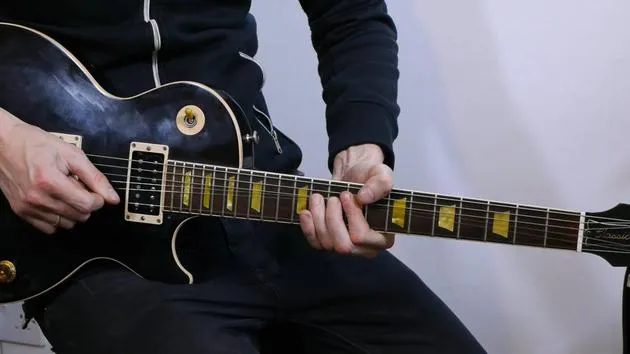
- Funk comping usually lives on the thinnest three strings: the G, B, and E strings.
- You would typically play little mini chunks of chords which sounds great.
Chord Voicings
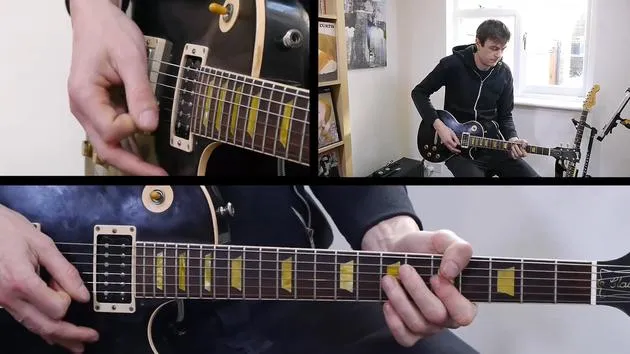
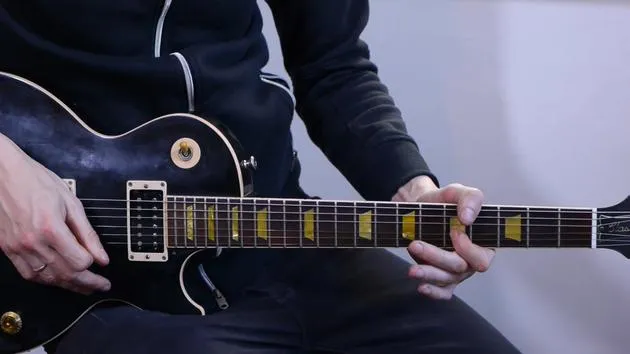
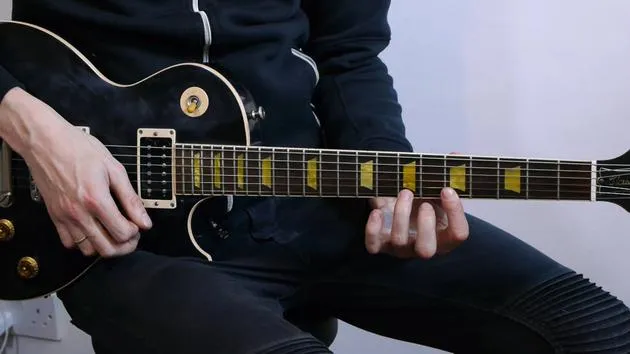
Let's try that here. We'll use the same strum pattern but with chord voicings on those top three strings:
-
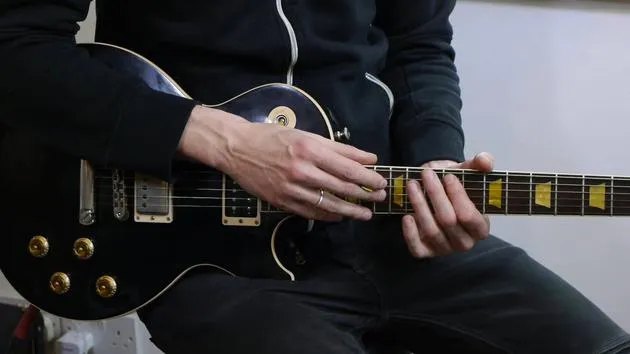
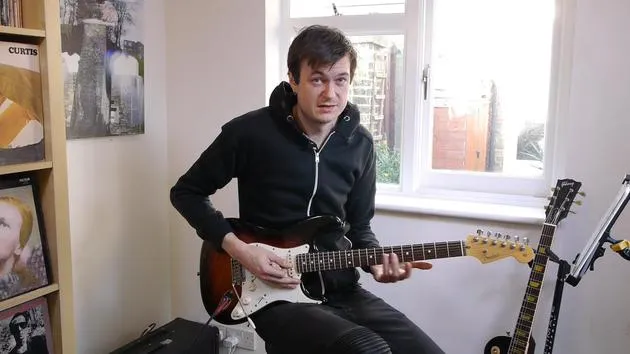
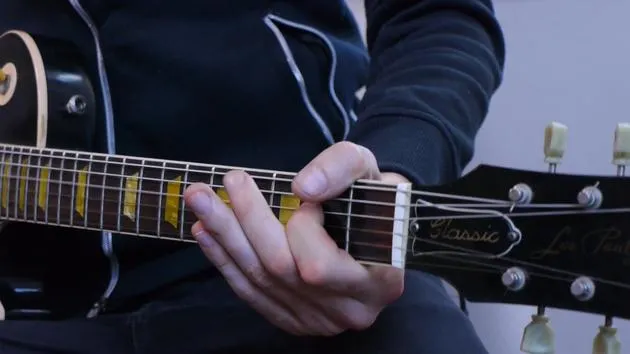
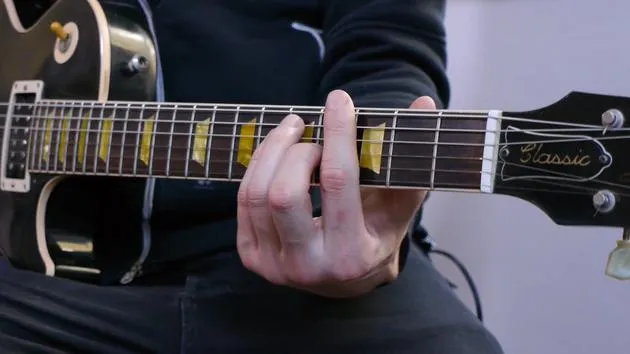
A minor chord voicing: Bowing across the fifth fret on the G, B, and E strings. This is taken from the common barre chord shape but only using the top half.
-
D minor chord voicing: Play a D shape here on the fifth fret. It's actually a D minor 7 I'm going to play.
Let's give it a try:
A Minor → D Minor:
- 1, 2, 3, 4.
You can hear how much more stylistically appropriate it sounds playing that funk part on the top three strings, as opposed to playing lower where it could sound muddy.
Enhancing Your Funk Skills
Funk is a great route to develop your chord library since it forces you to rethink your chord voicings not in open positions or full barre chords but on the top three strings.
- These smaller voicings allow your fingers to embellish the chords creatively.
For example, I used some simple embellishments, like:
- A minor 9 concept on the A minor chord.
- Added that same note over the D minor 7 chord.
This adds groove and interest without becoming melodic.
Chord Voicing Movement
As a final tip regarding funk, avoid moving too much between chord voicings.
- I chose A minor and D minor 7 because they are close together, only one note difference, in fact.
- This mindset resembles a piano player's approach to voicings, where they keep their voicings very close.
For example, while I could have played a variation like this:
- It sounds cool, but there's a big jump between the two chords.
- Instead, aim for small movements.
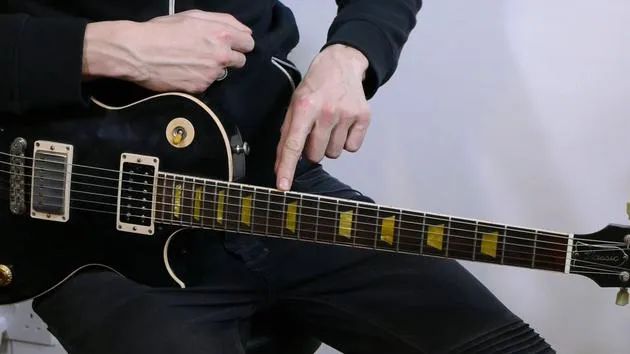
If I want to use the D minor 7 voicing higher up, I might change my A minor voicing to something like this.
Right-Hand Technique
We've discussed maintaining that 16th note driving rhythm with your right hand. It's essential to control your left-hand pressure while keeping a metronomic right hand.
- Set your metronome to 16th notes and start with a single chord.
- Experiment with staccato by varying your left-hand pressure, let some notes ring longer than others, cutting some short.
Rock Context
Now, let's apply this idea to a rock context.
Sound Differences
The first change would be the sound:
- Funk sound is usually quite clean, whereas rock will often be more driving and dirty.
Chord Voicings
Instead of extending out the voicings as we did in funk, in rock:
- You might make them smaller and play power chords rhythmically, which tend to be less 16th based and more 8th note based.
While it's not a hard rule, generally speaking:
- Funk leans toward 16ths.
- Driving rock emphasizes heavy 8ths, often with all downstrokes.
Power Chord Techniques
For the same chord progression, instead of extending out, I'd play power chords:
- For the D power chord, keeping A in the bass adds a dirty, aggressive sound, which can be cool in the right context.
Explore Additional Resources
If you're looking for more stylistic ideas in funk, rock, or any other genres featured in the Rock School syllabus, check out the performance pieces.
- You'll find many great insights from tutors on those pieces.
- Even pieces you might not be interested in playing can provide tons of information useful for improvisation and your development as a guitarist.
So, enjoy exploring these concepts, have fun with them, and let's move on to the next topic!
43 Lektionen
3 Std. 55 Min. strukturierte Videolektionen
Erweiterte Videofunktionen
Verlangsamen, Passagen loopen, mitlesen
Handy, Tablet & Desktop
Üben, wo du willst
100 % Zufriedenheitsgarantie
30 Tage Geld-zurück-Garantie







