



Dark Matter
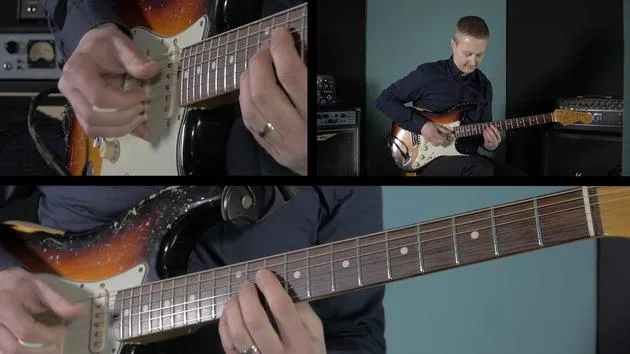
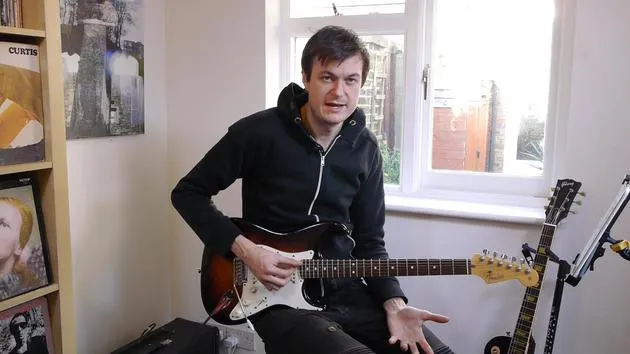
Rob Luft teilt seine Profi-Sicht auf das Jazz-Fusion-Stück 'Dark Matter' der Grade 8 und behandelt dessen Synkopierung, kantigen Ton und Alternate Picking.

Das steckt im Kurs
43 Lektionen (3h 55m) · 1 gratis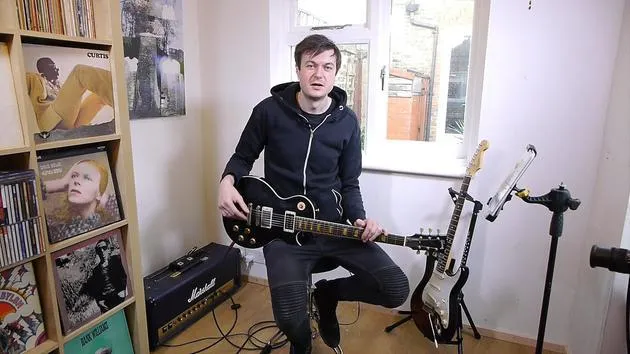
01. Einführung in Ansätze zur Improvisation
1:00
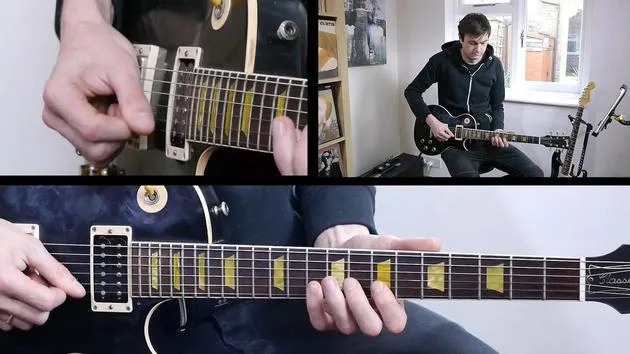
02. Eine Melodie verzieren
5:36
03. Challenge: Reiche deine Melodie ein
0:26
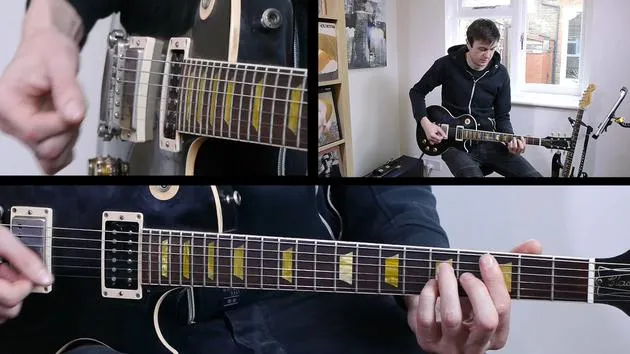
04. Septakkorde
6:38
05. Dein Solo komponieren
8:53
06. Fortgeschrittenes Anschlagen und Verzierungen
5:40
07. Comping in verschiedenen Musikstilen
8:36
08. Weitere Erweiterungen und Sus-Akkorde
4:19
09. Rhythmisches und melodisches Comping mischen
4:24
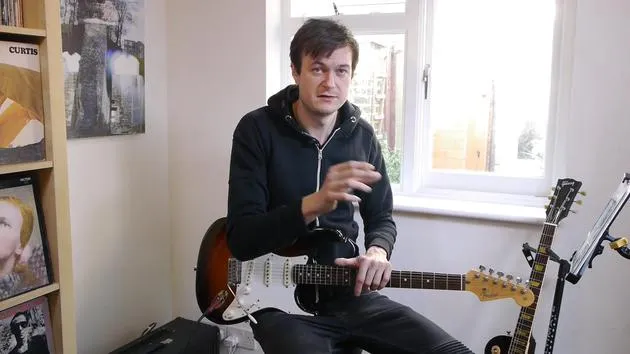
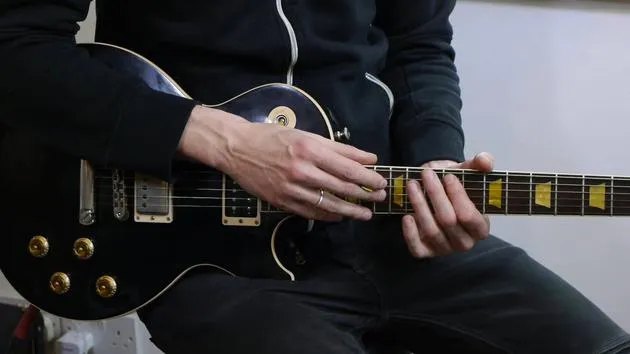

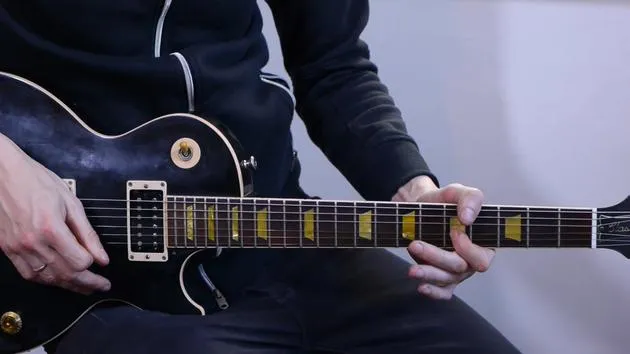
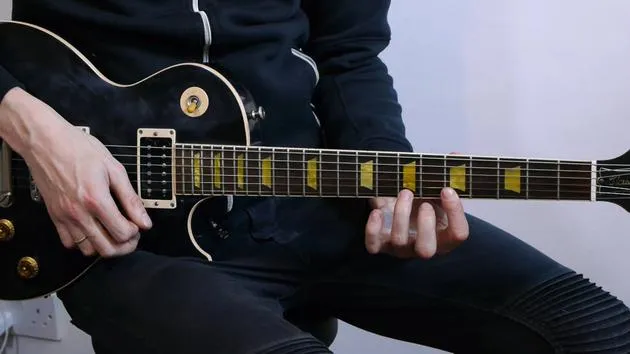
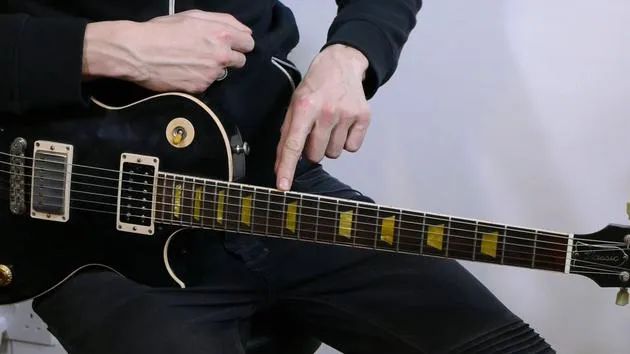
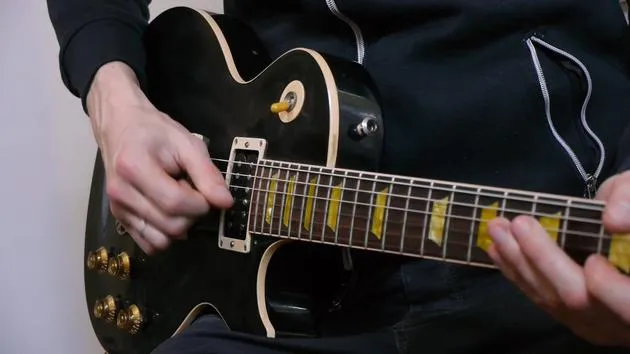
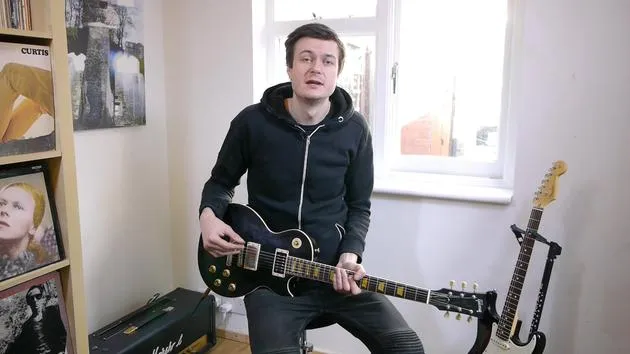
Transkript der Lektion
Dark Matter: A Jazz Fusion Lesson
Here we are playing some pretty serious and challenging jazz fusion. It's a piece inspired by the likes of:
- John Schofield
- Frank Gambale
- Alan Holdsworth
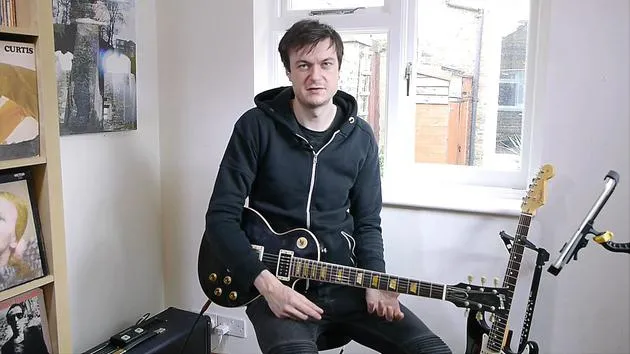
It's a heavily syncopated piece, and in terms of tone, you want something edgy and clear.
Tone Recommendation
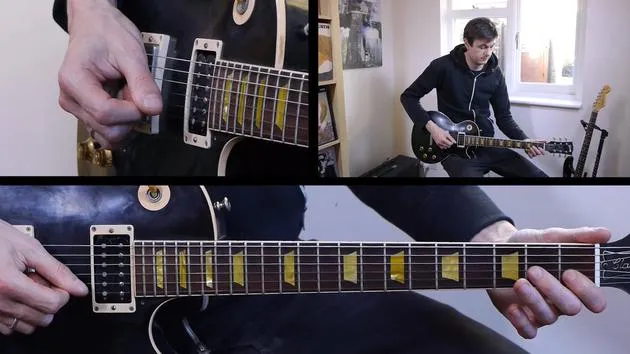
Something like bright on the back pickup I'm playing at the bridge might sound quite good. You really hear every note, rather than that darker, more Metheny-ish, Montgomery-ish jazz sound. In my opinion, that cuts through less than this more modernistic rock-influenced sound of Frank Gambale, John Schofield, or Mike Stern.
Anyway, enough on sound.
Technique: Alternate Picking
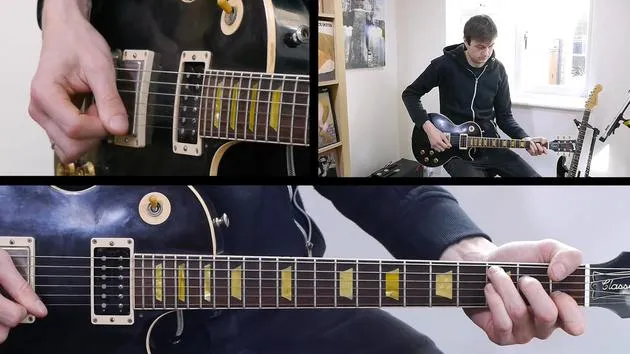
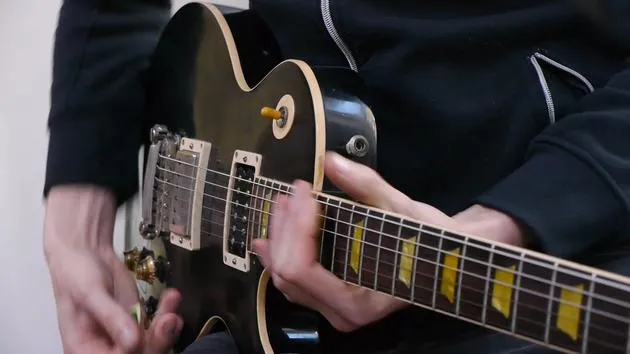
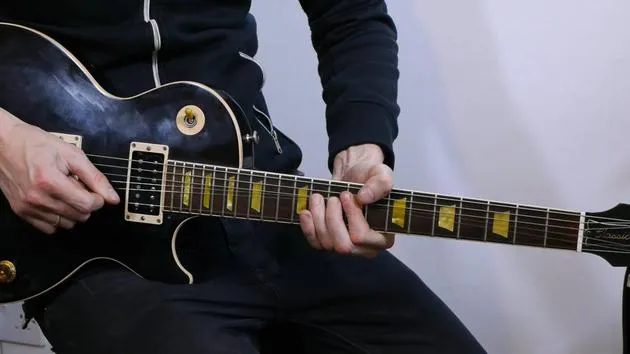
Let's talk about technique. This piece heavily involves the right hand's alternate picking technique.
I can't emphasize enough how important it is to develop a downstroke, upstroke, alternate picking technique as a budding jazz guitarist. It really helps you develop fluency and a kind of muscle memory, allowing you to think about the notes you're playing rather than worrying about your right hand.
Bebop Scale
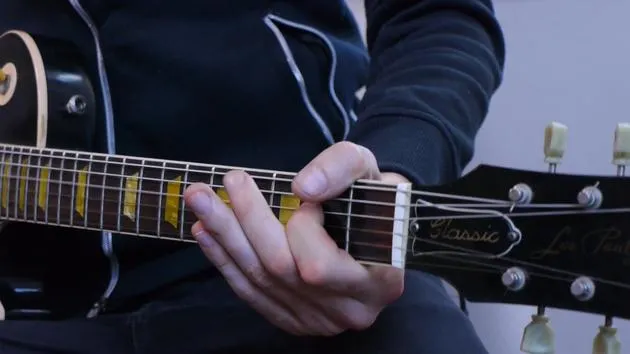
An example I would give for this is to practice the bebop scale. The bebop scale is essentially (let's talk about this in the context of the dominant):
- We're in the key of A here.
- Let's play a Mixolydian bebop scale.
It's the same as the Mixolydian mode, but you've added the natural seventh.
Importance of the Bebop Scale
Why is this so important? Because it has eight notes, it's an octatonic scale. When playing octatonic scales, you can really think about your right hand because the beat resolves at the same time as your downstrokes and upstrokes.
Example:
Down, down, down, when we're playing 1, 2, 3, 4, 4, 1.
1, 2, 3, 4.
1, 2, 3, 4, 1.
This is a fantastic way of developing your alternate picking.
Practicing the Scale
Someone like myself has spent months with a metronome, often at very slow tempos, actually just working on the bebop scale:
A, B, C sharp, D, E, F sharp, G, G sharp, A.
It will resolve every eight notes; every bar it will also resolve. This is a fantastic way of developing alternate picking.
Dark Matter and Alternate Picking
When it comes to playing pieces like Dark Matter, you have to alternate pick.
Example of a Melodic Line:
If the melodic line starts on the downbeat, such as in... well, in fact, there are no passages that start on a downbeat in this piece, apart from perhaps in the drum solo.
If we go to bar 33, look for that B flat (BB) on beat three of bar 33 and on beat three of bar 35. That would be an example where I would like you to try alternate picking.
Demonstration:
3, 4.
1, 2, 3, 4.
1, 2, 3, 4.
That technique of going B flat, B flat, A and just alternate picking each one is essential.
Additional Examples
A famous example of a piece involving alternate picking is "Miserloo" by Dick Dale.
Dick Dale was very lucky because he strung his guitar the other way around, so the low string was at the top and the high string was at the bottom. When he went... what you would actually hear is...
Off-Beat Technique
Take a quick look at bar number eight. Bar number eight is a good example of a phrase that starts on the offbeat. It starts on the second semiquaver (the second 16th note) of beat one.
I'd like you to try picking that all with alternate picking, starting with an upstroke.
Looping Example:
1, 2, 3, 4, 1.
1.
2, 3, 4, 1.
As you can see, all I'm doing is developing my technical command of upstrokes and downstrokes by looping certain phrases, isolating certain passages, and just trying to develop my awareness of this alternate picking style.
Guitar Solo Section
Now, let's talk about the guitar solo section.
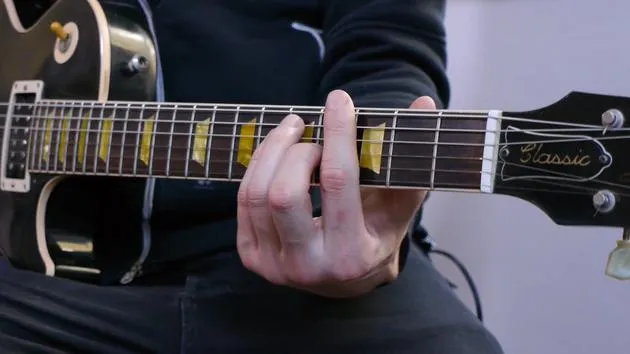
This is all based on an A minor chord, very simple, 16 bars of a minor seventh. In fusion music, it's good to develop an awareness of how to introduce some of the scales we've talked about or those in the technical exercises section of this course.
Introducing Dissonance
It's really important to introduce some more dissonant scales to the A minor sound.
- Rather than just playing a minor pentatonic or a minor blues scale, I'd like you to start employing some outside, more dissonant sounds.
- The simplest way of doing this is by moving this blues scale around in minor thirds:
Example:
So you get:
A, C minor imposed over very dissonant sounds.
Loop Example:
Let me show you:
A minor, C minor, E flat, F sharp.
That's just a very simple example of taking a blues scale and moving it around in minor thirds. This creates your most accessible point for creating tension. The way to release it is simply by resolving back to your A minor sound.
Diminished Scale
I'd like to also talk about the diminished scale.
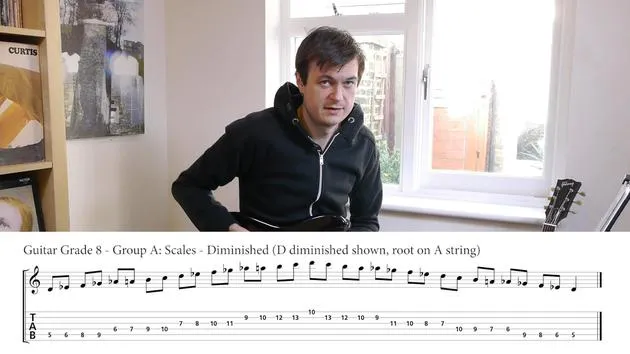
This is a symmetrical scale. It goes half step, whole step. It's very simple; it's octatonic, meaning it has eight notes.
Notes of the Diminished Scale:
A, B flat, C, C sharp, D sharp, E, F sharp, G, A.
It's symmetrical; when you move it by three frets, it repeats. That is to say, moving it up or down a minor third will give you the same pattern.
Creating Tension and Resolution
Between your diminished scale and four options for minor pentatonics, you can start to generate some rather dissonant sounds. All you have to do to resolve them is return to that simple A blues scale sound.
Summary
To sum up, I'd like to emphasize the need to listen to fusion guitarists in the vein of:
- Alan Holdsworth
- John McLaughlin
- Frank Gambale
- John Schofield
- Bill Frisell
- Pat Metheny
Album Recommendations:
- Check out Groovalation from John Schofield.
- Metal Fatigue by Alan Holdsworth.
These albums contain a lot of dissonant electric guitar playing with incredible advanced harmony. The guitarists on these records are also using extremely advanced alternate picking techniques, which you might want to ask your teacher about as well, as he may have some fantastic advice for you in this vein.
On that note, please do enjoy playing some music in the fusion style. Go and play with other musicians, attend jam sessions, there are loads of fusion groups playing out there.
It's a hugely popular style of music, so get into the nitty gritty of it and have a good time.
Thanks so much!
43 Lektionen
3 Std. 55 Min. strukturierte Videolektionen
Erweiterte Videofunktionen
Verlangsamen, Passagen loopen, mitlesen
Handy, Tablet & Desktop
Üben, wo du willst
100 % Zufriedenheitsgarantie
30 Tage Geld-zurück-Garantie







