



Ziggy Stardust – David Bowie (Analyse)
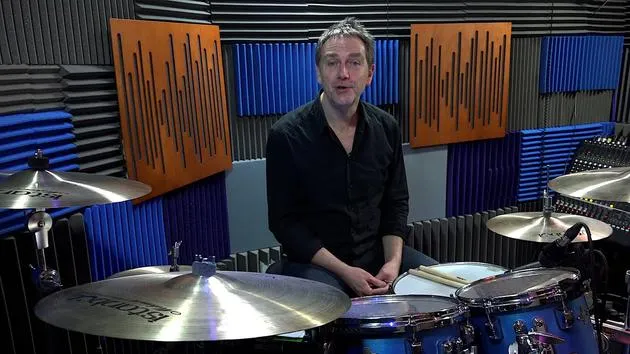
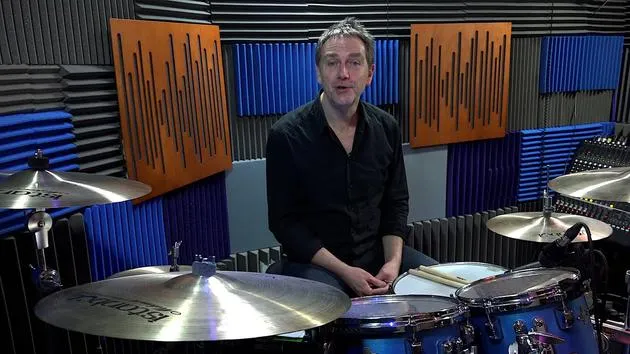
Der Schlagzeuger Pete Riley analysiert Bowies Ziggy Stardust und geht die wechselnden Unterteilungen durch - vom Achtelgroove bis zu Sechzehntel-Triolen- und Zweiunddreißigstel-Fills.

Das steckt im Kurs
29 Lektionen (2h 46m) · 1 gratis
01. Chameleon - Herbie Hancock
2:55
02. Superstition – Stevie Wonder
3:00
03. Dutch Flowerz – Skream
2:42
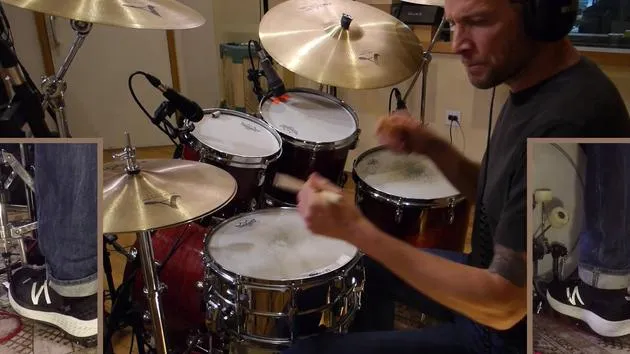
04. Ziggy Stardust – David Bowie
2:46
05. Rock The Bells – LL Cool J
3:04
06. I Got You (I Feel Good) – James Brown
2:51
07. Mohair Mountain
3:01
08. Pop It In The Top
Gratis-Lektion2:59
09. Mind Sweeper
2:35
10. Favela
2:41
11. Space Future
2:47
12. You Can Call Miguel
2:30
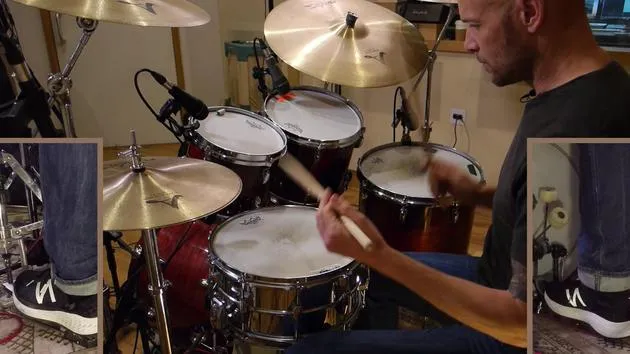
01. Ziggy Stardust – David Bowie (Analyse)
Du bist hier9:38
02. Dutch Flowerz – Skream (Analyse)
10:44
03. Superstition – Stevie Wonder (Analyse)
11:12
04. Chameleon - Herbie Hancock (Analyse)
11:20
05. I Got You (I Feel Good) – James Brown (Analyse)
9:37
06. Rock The Bells – LL Cool J (Analyse)
12:16
07. Mohair Mountain (Analyse)
12:25
08. Pop It In The Top (Analyse)
7:14
09. Mindsweeper
10:40
10. Favela (Analyse)
6:42
11. Space Future (Analyse)
4:50
12. You Can Call Miguel (Analyse)
8:24
Transkript der Lektion
Music Lesson: Analyzing David Bowie's "Ziggy Stardust"
Hi! Here we're looking at David Bowie's Ziggy Stardust. The track features a lot of different subdivisions, including:
- A basic eighth note groove
- Movement with sixteenth notes during the B section
- Sixteenth note triplet fills
- Thirty-second note fills
Introduction
I'll kick things off by playing the last six bars of the eight-bar intro, the first two bars of which are played on the guitar. It sounds like this:
So that 16th note triplet fill in bar six I'm playing using single strokes. I'll just play that slowly.
Verse (Letter A)
This brings us to the verse (or letter A), which has a more laid-back eighth note feel. There's also a drop in dynamics down to mezzo-forte.
I'll play that eight-bar verse now.
Key Points
A couple of points to look at during that:
-
Drum Figures: The drums follow the eighth note movement within the track. I've chosen to play that between the crash cymbals. You could stay on the same cymbal.
- I'll play those couple of bars around that just so you can see what I mean.
-
Challenging Elements: One of the most challenging elements of the track is the thirty-second note fill that appears during the eighth bar of that A section. There are a few variations of this within the piece.
Essentially, what I'm doing is maintaining sixteenth notes in my right hand and then the left hand fills in any other notes to create the thirty-second note movement. So, I'll play that final bar of letter A slowly so you can get a feel for how those thirty-second notes look and feel.
B Section
Next, we head to the first B section, where we've got a lot more sixteenth note movement going on with the bass drum. We also have a few more of these thirty-second note fills, which are slightly shorter this time, just landing on beat four.
This first B section finishes with a whole bar of sixteenth note triplets, which are played using single strokes, beats one to three on the snare and beat four heading over to the floor tom.
I'll play that eight-bar B section now.
The Challenge
One of the challenges of that B section feel is the additional backbeat added on the second sixteenth note of beats 2 and 4 after the regular backbeat.
We need to play two backbeats of the same volume. That second sixteenth note is going to fall in between the hi-hat part as well, so I'll just play the first bar of letter B a little more slowly.
Returning to the Intro Feel
After that first B section, we head back to the intro feel for another four bars, which sounds like this:
So at the end of that second bar, bar 26, we've got a flam figure, playing single stroke triplets. The fourth note is a flam. Then, in the fourth bar, we've got single strokes on beat four.
At that point, we play through another verse section, which once again leads to a B section and ends in the final bar (the eighth bar) with more thirty-second note movement.
I'll take you from the last two bars of that second A section into the second B section.
Closer Look at the Thirty-Second Note Fill
Let's take a closer look at that thirty-second note fill during bar 26.
Once again, it's essentially single strokes with your right hand playing sixteenth notes, and your left is going to fill in the spaces. The figure itself is this:
- Right hand: plays the sixteenth notes
- Left hand: fills out to create the thirty-second note movement
Second Bridge/B Section
At this point, we've reached the second bridge or B section, which is pretty similar to the first, with the same sort of thirty-second note and sixteenth note triplet fills. This ultimately leads into the outro, which is essentially the same as the intro, punctuated on the crash cymbals.
I'll play that outro in its entirety.
Bar 46 Focus
Let's take a closer look at what happens during bar 46, where we have some flam movement on the snare drum.
The last beat of that bar is a hand-foot triplet (right-left-foot), followed by a flam on the snare.
Conclusion
That should cover all the parts you need to play Ziggy Stardust. Have fun playing along with the track!
29 Lektionen
2 Std. 46 Min. strukturierte Videolektionen
Erweiterte Videofunktionen
Verlangsamen, Passagen loopen, mitlesen
Handy, Tablet & Desktop
Üben, wo du willst
100 % Zufriedenheitsgarantie
30 Tage Geld-zurück-Garantie







