



Mohair Mountain (Analyse)
Yusuf Ahmed zerlegt 'Mohair Mountain', ein Hardrock-Stück im Stil von Led Zeppelin, und das von John Bonham inspirierte Feel dahinter.

Das steckt im Kurs
29 Lektionen (2h 46m) · 1 gratis
01. Chameleon - Herbie Hancock
2:55
02. Superstition – Stevie Wonder
3:00
03. Dutch Flowerz – Skream
2:42
04. Ziggy Stardust – David Bowie
2:46
05. Rock The Bells – LL Cool J
3:04
06. I Got You (I Feel Good) – James Brown
2:51
07. Mohair Mountain
3:01
08. Pop It In The Top
Gratis-Lektion2:59
09. Mind Sweeper
2:35
10. Favela
2:41
11. Space Future
2:47
12. You Can Call Miguel
2:30
01. Ziggy Stardust – David Bowie (Analyse)
9:38
02. Dutch Flowerz – Skream (Analyse)
10:44
03. Superstition – Stevie Wonder (Analyse)
11:12
04. Chameleon - Herbie Hancock (Analyse)
11:20
05. I Got You (I Feel Good) – James Brown (Analyse)
9:37
06. Rock The Bells – LL Cool J (Analyse)
12:16
07. Mohair Mountain (Analyse)
Du bist hier12:25
08. Pop It In The Top (Analyse)
7:14
09. Mindsweeper
10:40
10. Favela (Analyse)
6:42
11. Space Future (Analyse)
4:50
12. You Can Call Miguel (Analyse)
8:24

Transkript der Lektion
Music Lesson: Mohammed Mountain
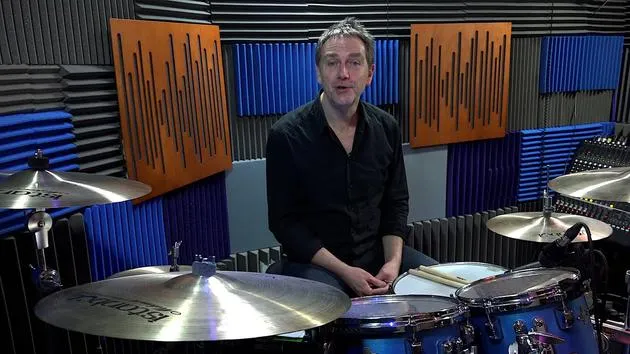
Welcome to today's lesson on Mohammed Mountain. This tune is performed in the Led Zeppelin heavy rock style, heavily influenced by the legendary John Bonham, Led Zeppelin's drummer.
Key Drummers to Explore
-
John Bonham (Led Zeppelin)
- Known for his heavy feel and groove
- Always focused on the music
-
Mitch Mitchell (Jimi Hendrix Experience)
-
Elvin Jones (Jazz)
- Influenced the triplet vocabulary used by rock drummers
-
Alvin Judge
- Notable for fills transitioning from straight 8th notes or 16th notes to triplets
Importance of Groove
-
Nailing the Groove:
- Critical to ensure the band sounds unified
- Most important aspects: Feel and Timing
- Avoid rushing, especially with 16th note bass drums on displaced divisions (second or fourth)
-
Hi-Hat Techniques:
- Use of closed vs. open hi-hat impacts:
- Energy Levels: Open hi-hat is great for solos or song climaxes
- Definition: Closed hi-hat adds clarity, especially during vocal parts
- Allows for accents when switching from closed to open
- Use of closed vs. open hi-hat impacts:
Demonstration of Hi-Hat Sounds
"1, 2, 3, 4."
Notice the difference in energy between the open and closed hi-hat.
Triplet Bass Drum Figure
The triplet bass drum figure can be tricky; here are some practice tips:
- Start Slow: Nail the triplet phrase.
- Use Different Techniques:
- A ruff or flam before the backbeat snare drum.
Bass Drum Technique
- Heel Up Technique: Common in heavier music styles for a fuller sound.
- Heel Down Technique: Used in softer styles for a more bouncy response.
Example:
"As you can see, there's different sound, different kind of attack."
Building Speed
- Practice slowly.
- Aim for muscle development in the legs.
Time Signature Changes (4/4 to 7/8)
-
Transition Smoothly:
- Count in your head:
- "1, 2, 3, 4, 5, 6, 7"
- Count in your head:
-
Internal Pulse:
- Feel 8th notes in 4/4 to maintain a smooth transition to 7/8.
-
Listening and Singing Along:
- Helps internalize the groove.
Groove-Based Soloing
- Stick to a groove-based solo for musicality and audience connection.
- Philosophy: Make it enjoyable; avoid overwhelming listeners.
Practice Tracks
- Use play-along tracks for practice.
- Great opportunity to experiment with fills in 4/4 and 7/8.
Feel Change
- The feel changes from a straight 4/4 to a shuffle:
- Check out other progressive rock bands like King Crimson, Yes, or Pink Floyd for similar rhythmic creativity.
Demonstration of Shuffle Feel
"1, 2, 3, 4."
Purdy Shuffle
- Named after drummer Bernard Purdy:
- Instead of quarter notes, use two 8th notes.
Example of the Purdy Shuffle
- Great as an introduction to the shuffle style.
- Influences heard in John Bonham's playing, particularly in "Fall in the Rain."
Conclusion
This piece offers a wide range of techniques to work on. Practice with your teacher and explore creative orchestration of fills across your instrument.
-
Dynamics:
- Incorporate crescendos and decrescendos during solos.
-
Fun and Relaxation:
- Maintain a laid-back groove, particularly with faster bass drum figures.
Remember: Avoid rushing, and enjoy the process! Happy drumming!
29 Lektionen
2 Std. 46 Min. strukturierte Videolektionen
Erweiterte Videofunktionen
Verlangsamen, Passagen loopen, mitlesen
Handy, Tablet & Desktop
Üben, wo du willst
100 % Zufriedenheitsgarantie
30 Tage Geld-zurück-Garantie







