



You Can Call Miguel (Analyse)
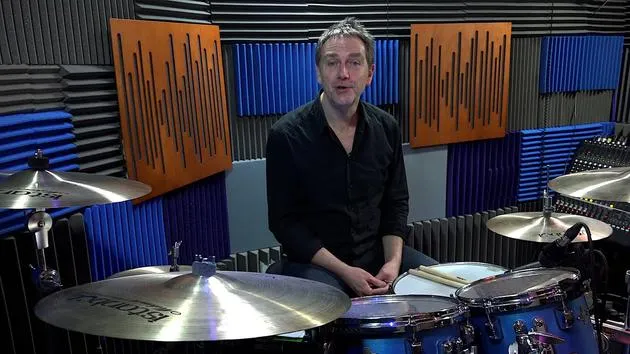
Harry Pope analysiert das Grade-6-Schlagzeugstück 'You Can Call Miguel', von seinem Afrobeat-angehauchten Four-to-the-floor-Groove bis zu den Fills im Stil von Steve Gadd.

Das steckt im Kurs
29 Lektionen (2h 46m) · 1 gratis
01. Chameleon - Herbie Hancock
2:55
02. Superstition – Stevie Wonder
3:00
03. Dutch Flowerz – Skream
2:42
04. Ziggy Stardust – David Bowie
2:46
05. Rock The Bells – LL Cool J
3:04
06. I Got You (I Feel Good) – James Brown
2:51
07. Mohair Mountain
3:01
08. Pop It In The Top
Gratis-Lektion2:59
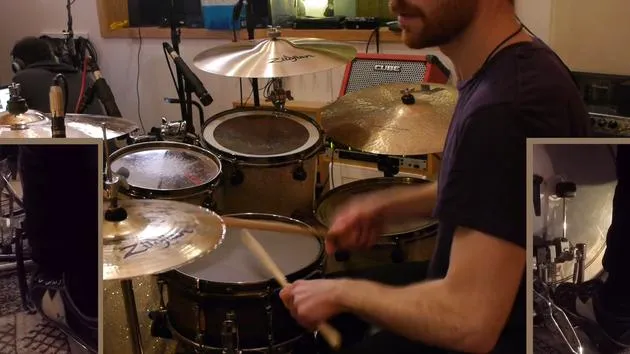
09. Mind Sweeper
2:35
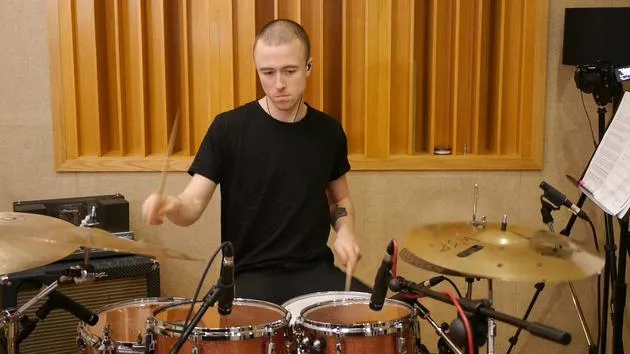
10. Favela
2:41
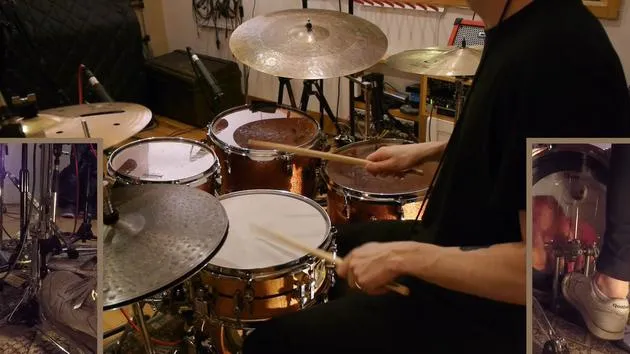
11. Space Future
2:47
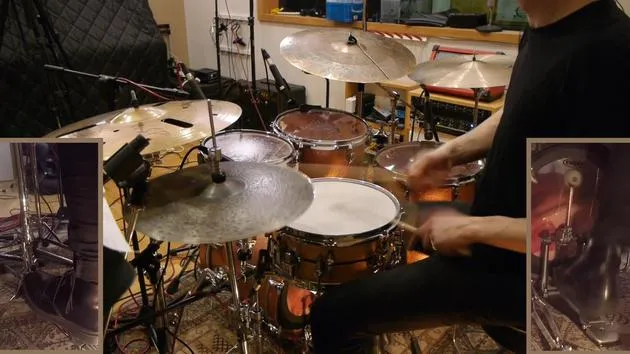
12. You Can Call Miguel
2:30
01. Ziggy Stardust – David Bowie (Analyse)
9:38
02. Dutch Flowerz – Skream (Analyse)
10:44
03. Superstition – Stevie Wonder (Analyse)
11:12
04. Chameleon - Herbie Hancock (Analyse)
11:20
05. I Got You (I Feel Good) – James Brown (Analyse)
9:37
06. Rock The Bells – LL Cool J (Analyse)
12:16
07. Mohair Mountain (Analyse)
12:25
08. Pop It In The Top (Analyse)
7:14
09. Mindsweeper
10:40
10. Favela (Analyse)
6:42
11. Space Future (Analyse)
4:50
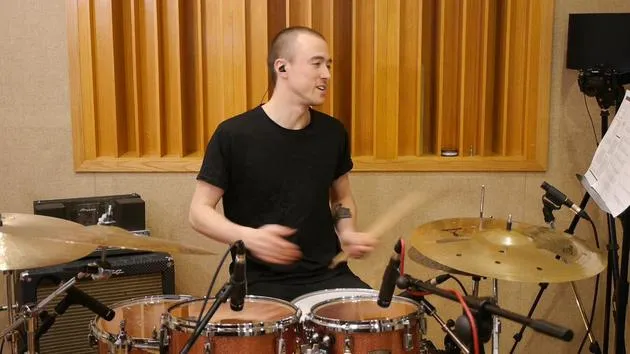
12. You Can Call Miguel (Analyse)
Du bist hier8:24
Transkript der Lektion
Lesson: Exploring Afrobeat Rhythms
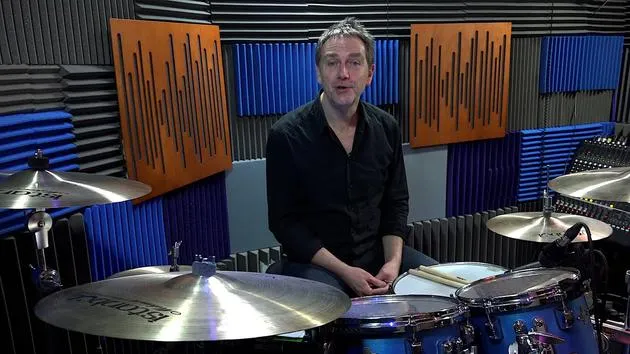
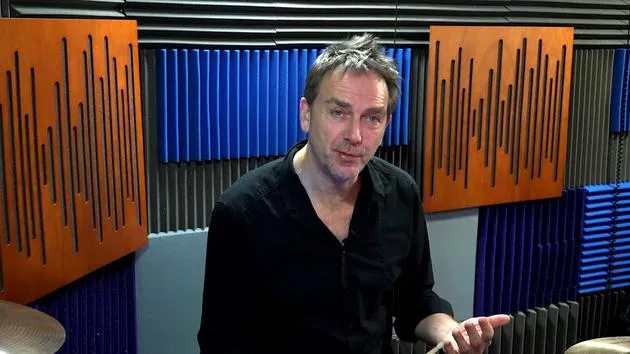
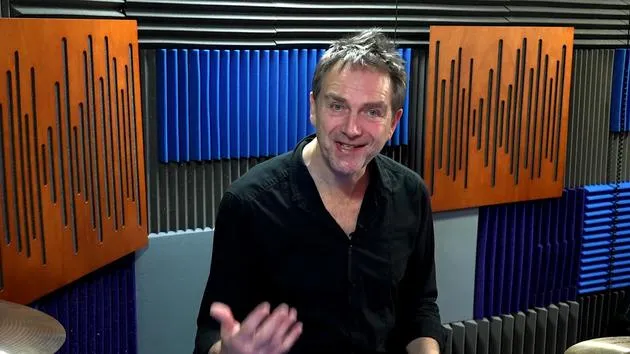
Okay. So you can call it "Miguel." I mean, yeah, everybody loves a pun in the title, right? This is grade six Latin, kind of. I mean, it's Latin based, but I'm feeling more of an Afrobeat kind of feel to this track, to be perfectly honest with you. Soca Calypso. Sure, yeah, why not?
Introduction to the Groove
It's a great tune. We're starting off four to the floor with a floor tom very reminiscent of "You Can Call Me Al" by Paul Simon.
- Listen to that tune: Whack the floor tom out. It sounds great.
- Again, in bar eight, you've got a fill that is very, very similar (if not directly thieved) from Steve Gadd's classic fill from "You Can Call Me Al." So sick. (I think it's Steve Gadd; I hope so!)
Hi-Hat Patterns and Fills
Moving on, we got a slightly more involved hi-hat pattern at B, but essentially the same groove, with less floor tom.
Fill Analysis
- Tasty fill: In C, we've got some demi-semiquavers on the snare drum.
- I would do a five-stroke roll: Right, right, left, left, right, left. Sorted.
Tip: Don't be trying to throw fast singles in there. Don't make your life harder than it is.
Afrobeat Groove
We have C, where I hit my favorite groove, potentially of the whole school syllabus.
- We got a nice kind of Afrobeat Soca groove.
- I want a sizzle on those hi-hats.
- You know, we don't want to be going [bad hi-hat sound]. Sounds just upsetting and wrong and it hurts me.
- Whereas a nice [good hi-hat sound] is what you're after. It adds intent, but it's not too much.
Kick Drum and Accent Patterns
- The kick drum needs to be really, really steady and allows us to accent:
- The last semi-quaver of one and then two and last semi-quaver of three, then four.
Books have been written about this rhythm. It's African music all over and is one of the most fun things to throw in anywhere.
Example: If I want to have a bit of a laugh on a wedding gig, I'll play every single tune as an Afrobeat tune. People love it and I love it.
Coordination and Practice
Coordination-wise, it's not the most advanced thing in the world, but like a lot of music, if it's right, it feels really, really right. If it's okay, it just feels fine.
- Recommendation: Take your time and really work it out.
- The first bar has just quavers; I would advise just playing that for a while. Take that slow, then start adding the semi-quavers in.
- Once you're more comfortable, try adding ghost notes to fill it out. All those little semi-quaver gaps are tantalizingly left for you to fill with your own things, and it sounds really, really cool.
Drum Solo Section
There's a tricky fill going into D. Slow it down, do it with a metronome, and carry on, and everything will be just fine.
Then you got a drum solo, D for eight bars.
- From the nature of any African music, there's going to be toms, it's a vibe.
- Just play with some toms, play some rhythms.
- Think about motifs; you don't have to get all the notes you can possibly play in that eight bars.
What it is about is staying true to that style of music.
Personal Insight: If a drum solo came up on an Afrobeat gig, I would happily sit there for 16 bars and just watch everybody smile.
Groove and Rhythm
Remember to stay within the groove. Don't sacrifice the rhythm and vibe of the tune for chops. That's not what you're after at all.
Sax Solo and Groove Development
At E, we've got a lovely sax solo. It says it's cheesy and beautiful and I love it.
- We're playing pretty much the same groove as C and then it says, "develop."
There are so many things you can do to develop this groove:
- Keep the semi-quavers on the hi-hat going constantly, which sounds great.
- Free your hands up; play right, left, right, left, and just throw your hands around, all while keeping that kick drum going.
Anchor Point: I would not move away from the kick drum, whatever that is; it's your anchor.
Open-Handed Techniques
This leads me to my next idea for kind of opening up the groove, the open-handed idea:
- Place your left hand on the hi-hat playing offbeats, and let your right hand move around the drums.
- Many players do this really well; Tom Skinner from Melt Yourself Down got me into this type of playing.
Moving to Rides and Adding Color
- We got the same kind of rhythm, playing it with your right hand and playing the hi-hat with your left.
- Your right hand can move around the drums; we've got these lovely tom textures.
Just let them sing; it'll be great!
- Moving to the rides at Bar 34 and then moving to an offbeat on the bell is great.
- As that develops, I'm adding semi-quavers again, which sound good moving up to the bell. It's a nice little color to throw in.
Additional Considerations
- You could use the open-handed technique again if you wanted. Just bear in mind that your right hand should reach the toms if you want.
You got a tricky septuplet fill going back to B and a reasonably involved fill at the coda too.
- Just practice it slowly, and everything will work out fine.
- Watch out for the transition between semi-quavers and semi-quaver triplets; that can mess with your time center a bit.
Listening Recommendations
Other than that, I suppose all there is to say is to check out some music in this style.
- Your book has already mentioned Harry Belafonte and David Garibaldi.
- I mean, I would listen to Fela Kuti. He is the guy to be listening to for this kind of music; it sounds really, really cool.
- Some amazing British bands like Melt Yourself Down and Chewbacca Hutchins with Sons of Kemet are playing this kind of music in a raw and nasty style.
Conclusion
So yeah, have a listen to that. Other than that, practice it. Have fun with it!
This is potentially the most fun piece of this grade, in my humble opinion.
So enjoy it! It's happy music, and it will make you happy. It made me happy.
That's all from me.
29 Lektionen
2 Std. 46 Min. strukturierte Videolektionen
Erweiterte Videofunktionen
Verlangsamen, Passagen loopen, mitlesen
Handy, Tablet & Desktop
Üben, wo du willst
100 % Zufriedenheitsgarantie
30 Tage Geld-zurück-Garantie







