



Analyse von Prelude, Loure, Gavotte en Rondeau mit Rachel Podger
Das steckt im Kurs
11 Lektionen (2h 38m) · 1 gratis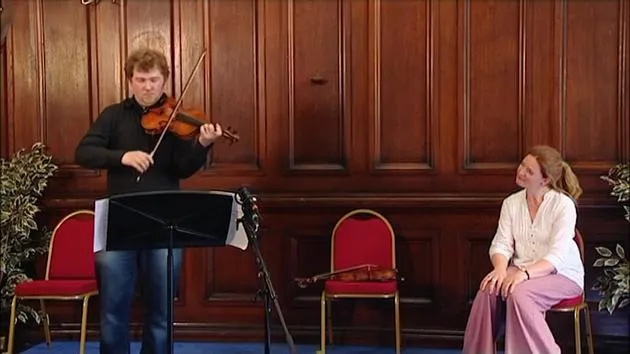
Transkript der Lektion
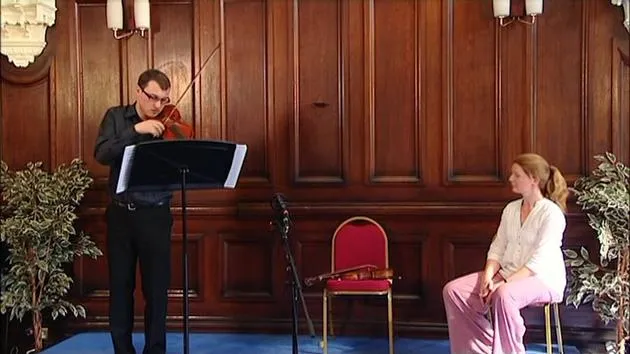
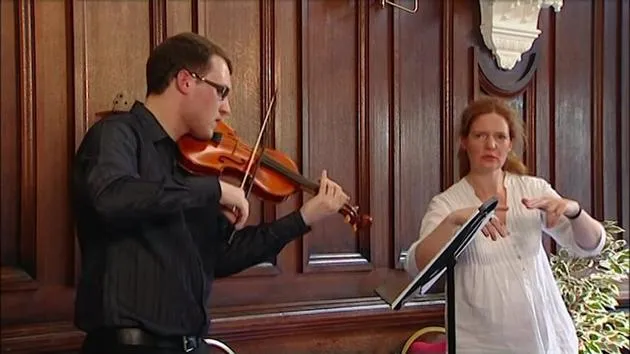
Music Lesson
Introduction
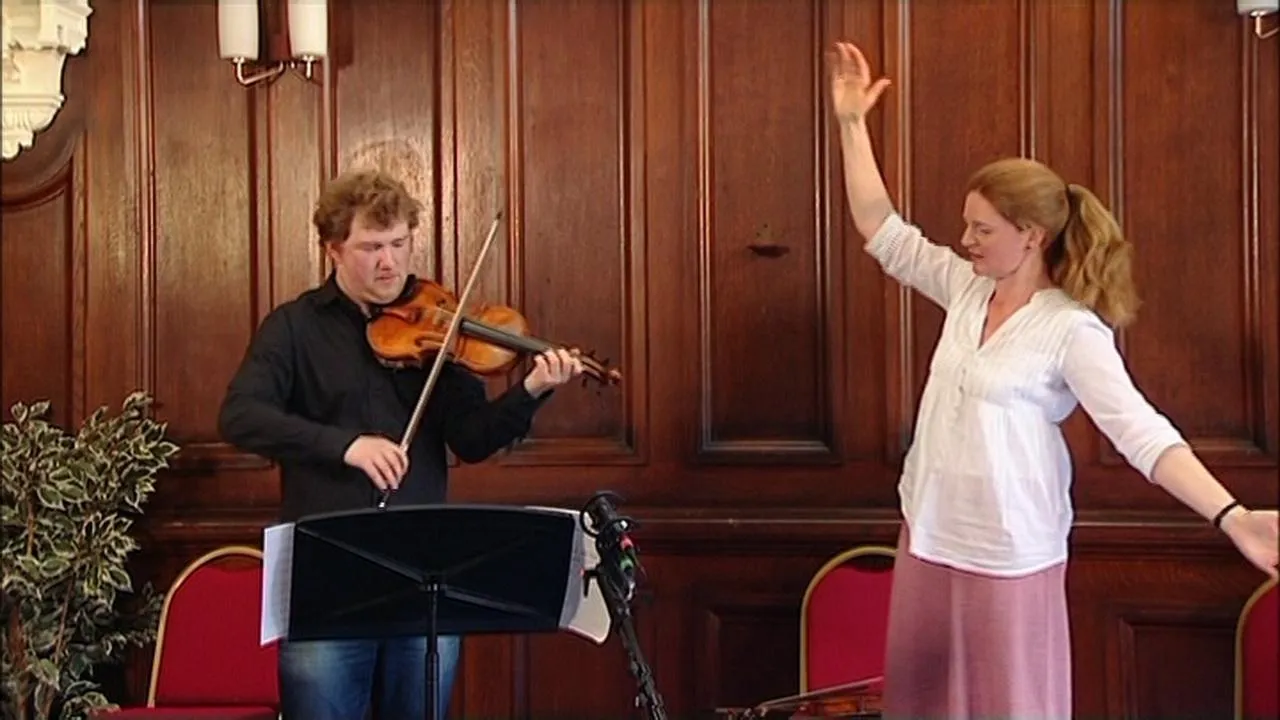
Great. Good. Especially well done in this heat. And of course, playing with gut strings in this heat is quite a different matter.
Challenges of the Partita
But not just that, it's also this particular partita. I mean, I personally find it one of the hardest to play, mainly because of the key.
- There's a lot and lots of stretches, of course, in E major, so many sharps.
- The resonance as well; it's quite hard to get the right kind of resonance in E major.
I think that's something we can talk about a little bit.
Feedback on the Preludio
But I loved your preludio. I thought it was really accurate, and you had some lovely character changes, which I thought were lovely.
- The only thing I'd like to say about that is actually that you could enjoy the harmonies more.
- And of course, it does have a kind of sense of exploration, doesn't it, this piece?
I mean, looking back to earlier times when toccatas and preludios were, you know, very much a kind of fantasy-type piece where things were explored and harmonies and kind of weird things which would come in as well.
If you think about Frescobaldi and Forbagger and all of those keyboard pieces, this is actually a little bit different because it's continuous and everything's just right there, just laid out for you.
- You haven't got any kind of long notes where you can take a lot of time or any ties that you could kind of explore, any rebate with.
- It's all pretty much there.
The only point where I think you might be able to take a bit of time is when it maybe goes to a major second half of it or where he changes figuration with the slurs.
Maybe that could have just a little bit more of a: "Ah, now it's something different. Now I'm going to tell you about this bit." You know, so very much kind of projecting what you're doing. I think it could benefit from that.
Feeling the Music
The other thing was just feeling, well, it goes along with the harmony, enjoyment of harmony, feeling the bass. Especially when you've got three different changes in the bar.
- Of course, that's how we get our structure, looking at what's happening harmonically.
- Sometimes there'll be a sequence over six bars, changing every two bars or so, so you've got three parts.
And sometimes you'll actually have, even though you've got continuous semiquavers, you'll have a cadence within the bar, and you'll have three different harmonies in one bar.
That, of course, punctuates the whole piece with different sections. I think that could come out more.
Practice Plan
Well, why don't we do a little bit on this and then a bit on the other two as well?
Yes. Okay, good.
I'm just going to stop you. It's very hard to stop, actually. I don't know where to stop you. It's continuous; it's lovely.
Could it have a bit more of a feeling? So you actually travel from the bottom beat that we don't have because we start on the off beat.
But if you feel that kind of like a trampoline, really, it sends you up and then you catch it at the top.
Maybe a little bit more bow on the E string.
And then that also gives you a kind of different character, different change. And when you get to your barolage, just enjoy this kind of sensation, rowing or whatever, chicken wings, you know, just space.
Lots of space. And, you know, don't be self-conscious about that at all. They love it too: moving around.
Tips on Resonance
It actually helps resonance, I think, in general, doesn't it? A bit more freedom in the arm.
C sharp. Oh, didn't mean to make you play the whole thing again. You just couldn't stop. I was thinking, should I stop that? No, no, no. It doesn't work. No, you just got it. That was great. We should do a double act; I'll do the dancing. That was great.
Working on the Lure
Well, let's do a bit of the lure.
I thought in the lure, maybe there could be a little bit more air in between the upbeats and downbeats.
And I don't know if you noticed that George was doing the French style bowing, which was great sometimes when it works.
Yes, exactly. Which is, of course, the feature of the lure: to have this rhythm tear down.
Understanding Rhythm
"Ta ta dum, ta ta dum, da."
And when you dance it, you have to do complicated things with your arms, which I can't remember how they go, but you actually go backwards: "Ta dum PA ta dum PA."
It's very elegant. And so you can imagine everything swinging a lot.
So it's nice to get that feeling. So it's not just one direction: "Da dum ba." So it really characterizes the way you actually play that upbeat.
- If you can think about that less as a lesser upbeat D and then more on the downbeat, I think that might just change the character a little bit.
- It was very nice; nicely played.
But I think it just needs a bit more of the dance lilt.
Exaggerating the Performance
Yes. Should we try?
Good. Yeah. Nice. Very nice.
Let's try to exaggerate even more: "Ta ta." And don't be afraid to take time. It's lovely to feel that air.
And maybe if you can kind of caress the end of the stroke a little bit more.
So this, the shape comes out gradually.
Exploring Sound Dynamics
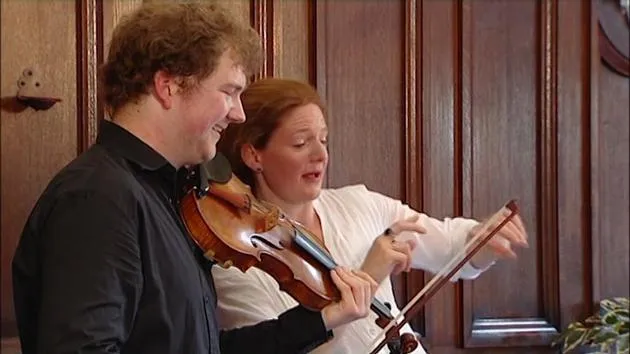
Yeah. Tell Wa Wa. I happen to have a violin here; let's see what comes.
Yeah. It's not easy to do. I need to practice it too.
So that's a kind of sense of going into the string, isn't there? And then if you time the release, that informs you how you do the next stroke.
Do you want to just do it on an open string?
Yeah. Lovely.
And even more on the first one, on the first downbeat.
So retake in the wrong place. So we have a kind of six-four feeling.
Yes. Maybe after the first one, you don't need to retake, do you? So that's how you get the shape.
Oh, okay. Oh, you do that as it comes. Oh, fine. Yeah, yeah. That's also a possibility, isn't it?
Interpreting the Cadence
And then when you have this cadence, I think it can afford a little breath before the next phrase, can't it?
Yeah. Let's do it one more time.
Yeah. Nice secret.
Okay.
I think that the trick is to do a slightly faster bow on the upbeats. So where we just got to, I think that's how we get the elegance of that, just from that.
Working on the Gavotte
Ye. Lovely.
Okay, I'm just going to stop you there. We should do a little bit of the gavotte.
I enjoyed this very much. I'm just wondering whether you can bounce a bit more?
Yes. Did you feel that too?
Yeah, yeah. So bouncy ball syndrome. The ball never stops, so it's the same with the sound.
So the ball doesn't go, you know, it's always in motion. So same with the arm, and that's how we get the resonance.
Let's try that. Good.
Okay, good. Can it have a little bit more jubilation?
Mattison says about the gavotte that it needs to be jubilant. Very, very joyful, isn't it?
And this key as well. And it's so wonderful to have that seven. It's like, ah, yeah. And where next?
So very, very lively and very, very bouncy start.
Final Thoughts on Performance
Yeah. Nice. A little bit more fun in the slurs there, especially at the end of that.
And then, of course, that cadence. Because that's the information there, you can just come away to the cadence, can't you?
And then the return of the rondo is somehow more significant.
I would take a little bit more time between the actual rondo and then the couple. So just so that the listener kind of understands.
Okay, right. We've heard that; that must be the rondo because we've heard that twice now.
And now I'm going to take you on a journey. I'm going to tell you the story of what happens next.
Yeah, just very much, you know, you need to involve them so much in everything you do, as you know.
But we do need to exaggerate that, especially in terms of timing and space.
Exploring Character Variations
Yeah. Why don't we? Why don't you just play the cave?
Something going in, maybe a different color here because harmonically, what it's doing.
And also, if you think about the other couples, what you've done so far, they're being quite direct.
Yeah. So you could, or you could change the one before, but it might be quite nice to have a different character.
Yes, just that one sequence.
So it's lovely, this kind of trumpety thing, trumpet called: "Ta da dum, ti da dum, ta da."
I mean, business sequence.
Conclusion
What did, I mean, so lots of different characters.
Yeah. So wouldn't be too strong starting out. When they do the kind of second phrase of that.
Should we give them trumpet?
Bidding it, really. Thank you very much. Lovely. Really nice.
11 Lektionen
2 Std. 38 Min. strukturierte Videolektionen
Erweiterte Videofunktionen
Verlangsamen, Passagen loopen, mitlesen
Handy, Tablet & Desktop
Üben, wo du willst
100 % Zufriedenheitsgarantie
30 Tage Geld-zurück-Garantie
Lern deinen Guru kennen
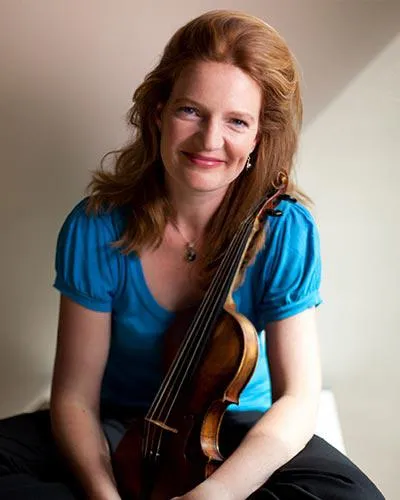
Lern deinen Guru kennen
Rachel Podger ist eines der kreativsten Talente, die auf dem Gebiet der historischen Aufführungspraxis hervorgetreten sind. In den vergangenen zwei Jahrzehnten hat sie sich als führende Interpretin der Musik des Barock und der Klassik etabliert, mit zahlreichen Aufnahmen, die von der Musik des frühen 17. Jahrhunderts bis zu Mozart reichen. Sie wurde in Deutschland und in England an der Guildhall School of Music and Drama ausgebildet, wo sie bei David Takeno und Micaela Comberti studierte.
Nach Anfängen mit The Palladian Ensemble und Florilegium war sie von 1997 bis 2002 Konzertmeisterin von The English Concert. 2004 begann Rachel eine Gastleitung beim Orchestra of the Age of Enlightenment und tourte durch Europa und die USA. Ein Höhepunkt dieser Zusammenarbeit war ein im Fernsehen übertragenes Konzert bei den BBC Proms 2007. 2009 entstand eine Aufnahme von Mozarts Sinfonia Concertante mit dem Bratschisten Pavlo Beznosiuk, zusammen mit zwei Violinkonzerten von Haydn.
Über die Jahre hat Rachel zahlreiche Kooperationen mit Orchestern in aller Welt genossen; ihr besonders am Herzen liegende Projekte umfassten jene mit Arte dei Suonatori (Polen), Musica Angelica und Santa Fe Pro Musica (USA), der Academy of Ancient Music, der European Union Baroque Orchestra und der Holland Baroque Society.
In ihrem MusicGurus-Kurs über Bachs Werke für Violine und Violoncello solo erschließt Rachel dieses grundlegende Repertoire und teilt, wie sie es angeht, und hilft dir, stilistisches Verständnis, Phrasierung und barocke Sensibilität in dein eigenes Bach-Spiel einzubringen.
Fotocredit: Jonas Sacks







