



Gerollte Akkorde
Paddy erklärt, wie gerollte Akkorde einen Boogie bereichern können, und schlüsselt die Technik auf, die man braucht, um sie flüssig zu spielen
Das steckt im Kurs
24 Lektionen (2h 1m) · 2 gratis
01. Einführung in die Bässe & Übungstipps
2:23
02. Boogie-Bässe aufbauen
Gratis-Lektion6:22
03. Bässe weiterentwickeln
8:57
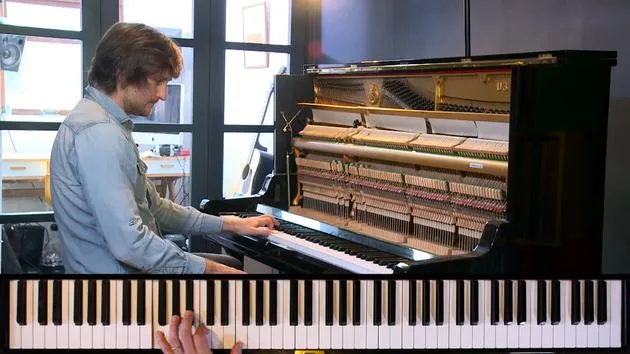
04. Moll-Bässe
3:02
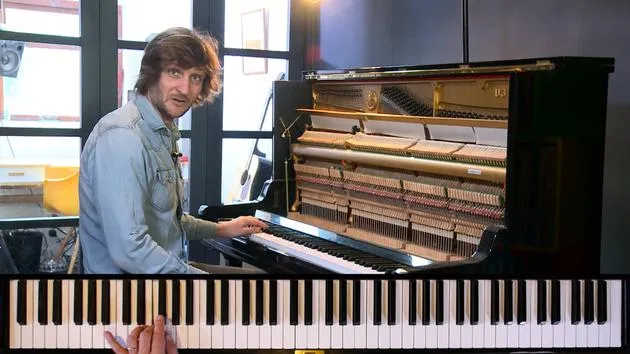
05. Walking Basses
7:05
06. Kreativ werden mit Eight-to-the-Bar-Bässen
5:33
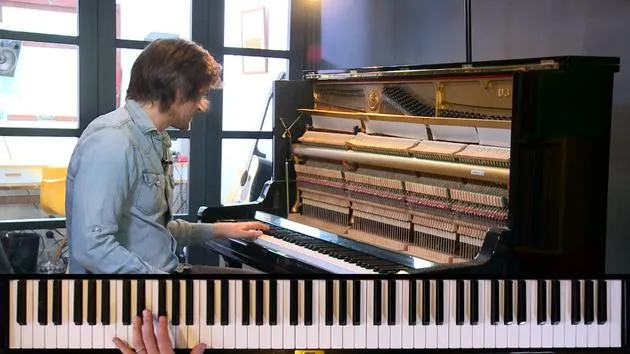
07. Latin-Bässe im Stil von Jimmy Yancey
2:07
08. Entwickle deine eigenen Bässe - Rhythmische Ideen
6:04

09. Deine eigenen Bässe entwickeln - Harmonische Ideen und Suitcase-Blues-Studie
8:08
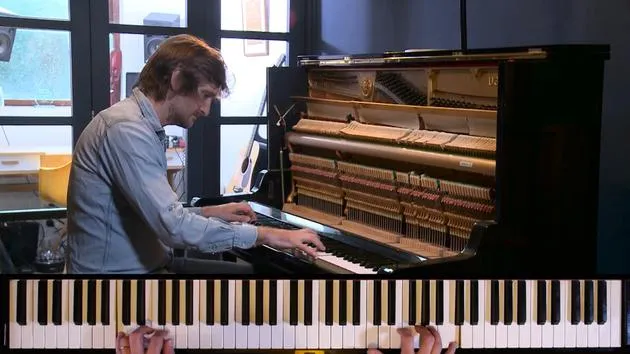
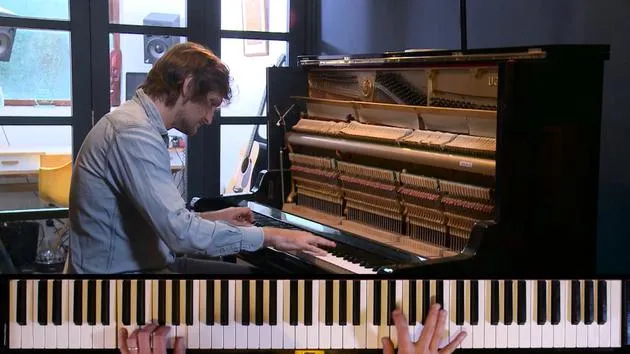
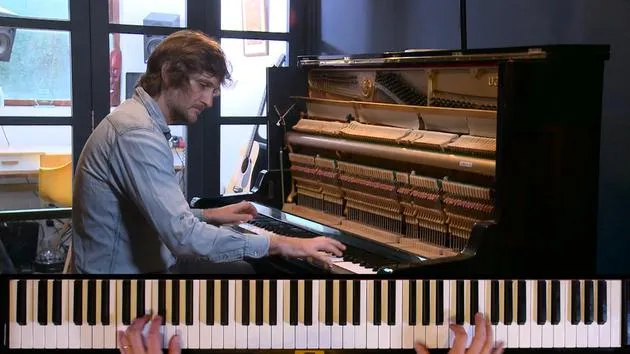
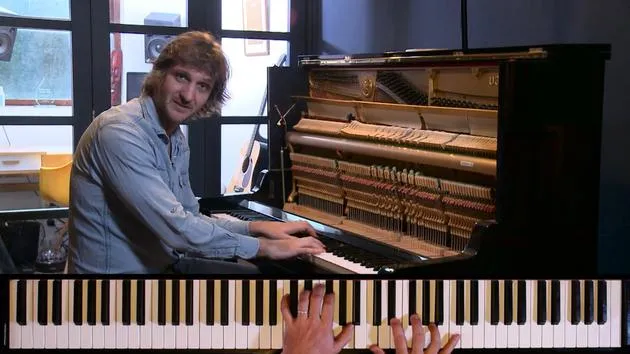
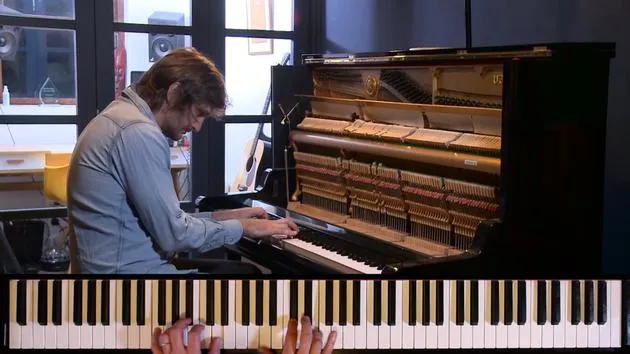
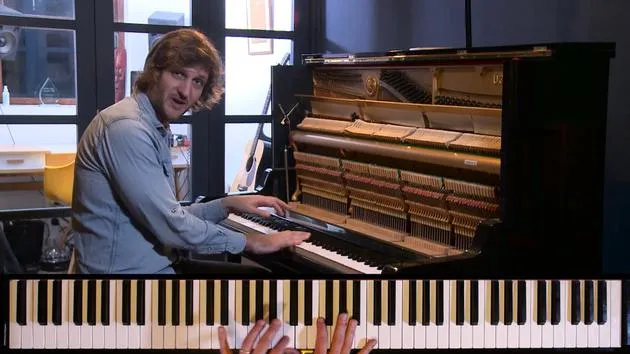
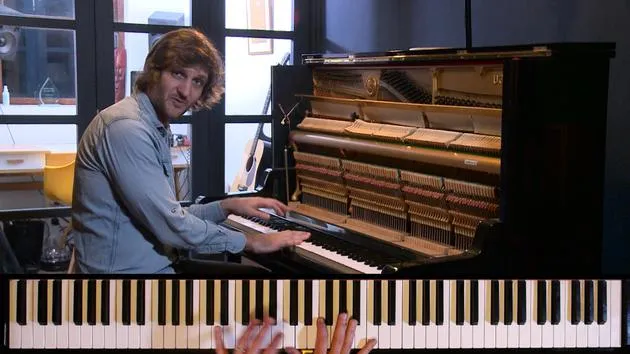
Transkript der Lektion
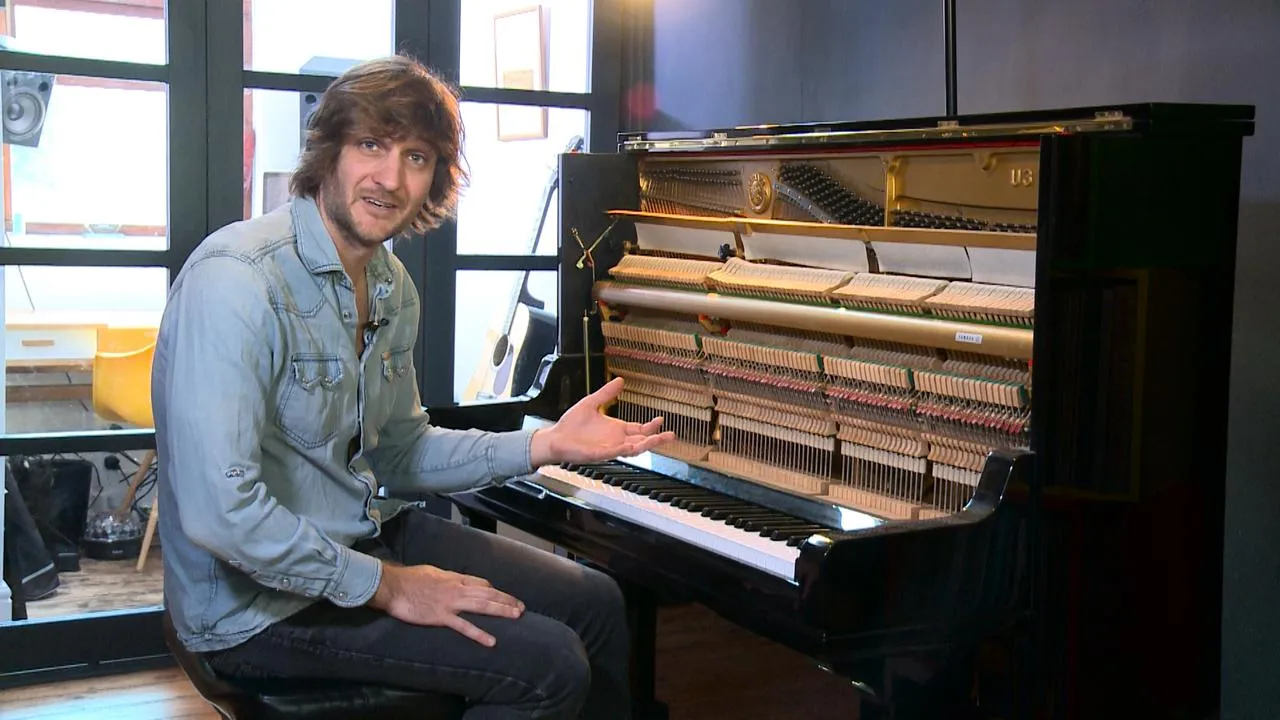
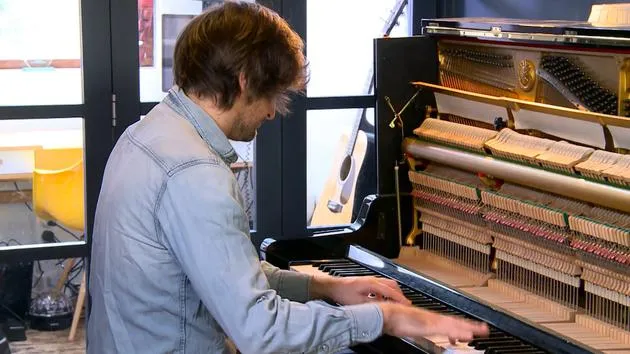
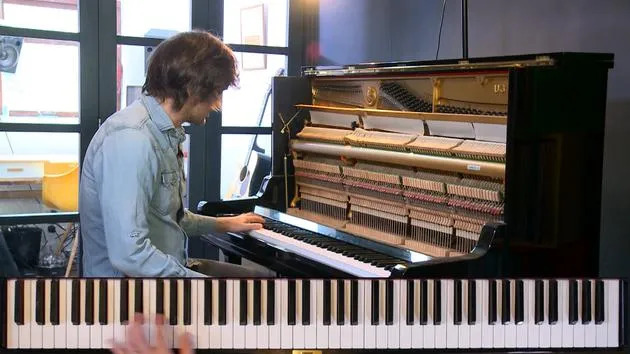
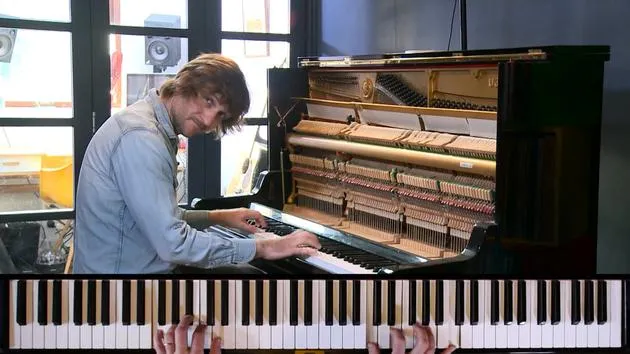
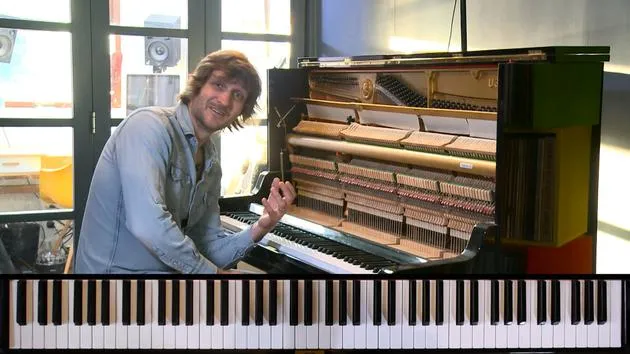
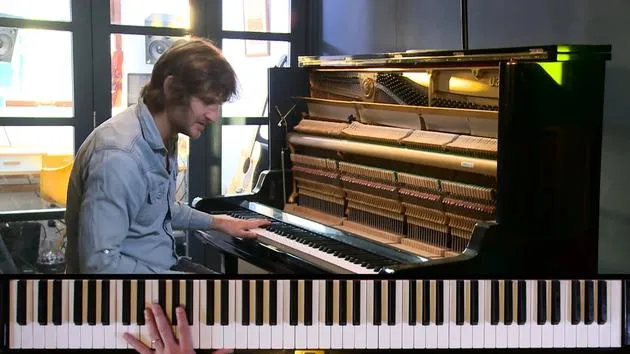
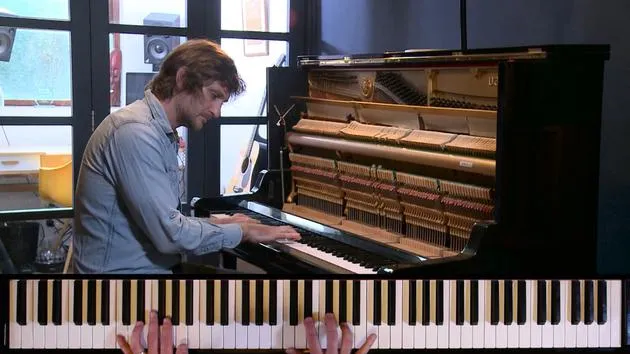
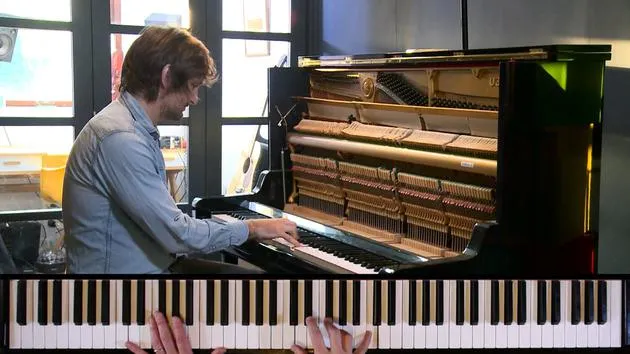
Rolling Chords in Piano
Let's look at just some rolling chords.
Concept Overview:
- Can be very useful.
- This is a Jimmy Yancey style thing: very simple, just outlining the C6 chord.
Technique:
- Sliding off the D# (E flat), going via the D.
- When it goes to the F7, slide off the D again.
This rolling technique can be used with:
- Thirds
- Sixths
Example
For example, you could do something like:
- There's the rolling thing.
- There's the thirds with a couple.
- There's an octave thrown in as a linking note.
You could go down to those thirds.
Minor Tonality
Playing with that minor tonality fits with the F7.
- Those sixths to the thirds.
Rhythmic Variations
How about exploring the rhythms?
- You could play around with phrasing like that.
- Or you could play around with where that actual pattern is placed.
Alternative Approach
Let me try another 12-bar exercise to demonstrate different sounds.
- I'm adding loads of other little ideas from thirds and sixths, incorporating extra ideas.
- This helps mitigate that slightly strange syncopation when it starts on, like, the fourth beat.
Roll and Rhythm
Let's analyze that roll further.
- It doesn't always have to start on beat one or three of the bar.
For instance:
- The first time could start on beats one and four rather than just at the beginning.
Creating Tension and Release
By manipulating the phrasing rhythm, you can create tension and release, which adds excitement to the music.
Contextual Rolling Ideas
Let's look at some rolling ideas in different contexts.
- I often use the rolling idea or break a chord down into an arpeggio over various harmonies.
Harmonic Progression Example:
- C to D minor
- D# diminished to E7
- F to A
- G minor to G# diminished
- F7
Cascading Effect
Something fun I do is to come down from the five:
- This can be based on sixths moving all the way down, creating a cascading, waterfall-like effect.
You can also play this as a simpler arrangement.
Practical Application
Now, how might you use this:
- Use the rolling idea at the end of a chorus.
- For example, you might come down, then go back up.
Linking Ideas
In context, coming down from the V chord into the next chorus, listen for how I link those two riff ideas together using thirds, sixths, and a few linking notes.
Technique for Rolling Piano Parts
Let's look at the technique behind those rolls.
- It may seem involved, but at the base of it, there's nothing crazy going on.
Basic Practice Suggestions:
- Practice at the fastest tempo you're comfortable with.
- Stay in one hand position to build comfort.
- Use a metronome for guidance.
- Gradually increase the tempo until comfortable, and then change the hand position.
I'm confident that before long, you will be able to execute these rolls at faster tempos!
24 Lektionen
2 Std. 1 Min. strukturierte Videolektionen
Erweiterte Videofunktionen
Verlangsamen, Passagen loopen, mitlesen
Handy, Tablet & Desktop
Üben, wo du willst
100 % Zufriedenheitsgarantie
30 Tage Geld-zurück-Garantie
Lern deinen Guru kennen

Lern deinen Guru kennen
Paddy Milner gilt als einer der besten Blues-Pianisten der Welt – derzeit ist er der Stammkeyboarder von Sir Tom Jones, nach mehreren Jahren an der Seite des großartigen, verstorbenen Jack Bruce –, aber er ist auch ein hervorragender eigenständiger Songwriter und ein unverwechselbarer Sänger. Lies einfach das Lob von Größen wie Dave Brubeck weiter unten! Sein Spiel war auf dem Soundtrack des Kinohits 'Rocketman' von 2019 zu hören.
Zweimal wurde er bei den British Blues Awards als bester Keyboarder ausgezeichnet, und als Gründungsmitglied der Ronnie Scott's Blues Explosion hat er eine langjährige Residency im weltberühmten Club Ronnie Scott's.
Seine aktuelle Band LONDONOLA spielt selbst geschriebene britische Musik mit einer kräftigen Portion New-Orleans-Geist, und sein gemeinsames Projekt JAWBONE geht seit der Veröffentlichung des gleichnamigen Debütalbums von Stärke zu Stärke.
- „Ich liebe es... da ist einer, der wirklich Klavier spielen kann" - Dave Brubeck
- „Ich kann es nur wärmstens empfehlen. Irgendwie fängt alles an, sich viel besser anzufühlen!" - Jack Bruce
- „Der beste Blues-Pianist Europas..." - Blues Access, USA
- „Beeindruckend und originell" - The Times
- „Blendend" - The Independent
In seinen Kursen zerlegt Paddy den authentischen Blues-Shuffle, Slow Blues, Boogie-Woogie, Rock 'n' Roll und das New-Orleans-Piano – bis hin zu drei klassischen Boogie-Woogie-Songs –, damit du diese Stile bei einem der Allerbesten des Fachs lernst.







