



Deine eigenen Bässe entwickeln - Harmonische Ideen und Suitcase-Blues-Studie
Kreative Ideen, um die Boogie-Bässe harmonisch weiterzuentwickeln, einschließlich einer Studie über Suitcase Blues von Albert Ammons
Das steckt im Kurs
24 Lektionen (2h 1m) · 2 gratis
01. Einführung in die Bässe & Übungstipps
2:23
02. Boogie-Bässe aufbauen
Gratis-Lektion6:22
03. Bässe weiterentwickeln
8:57
04. Moll-Bässe
3:02
05. Walking Basses
7:05
06. Kreativ werden mit Eight-to-the-Bar-Bässen
5:33
07. Latin-Bässe im Stil von Jimmy Yancey
2:07
08. Entwickle deine eigenen Bässe - Rhythmische Ideen
6:04
09. Deine eigenen Bässe entwickeln - Harmonische Ideen und Suitcase-Blues-Studie
Du bist hier8:08
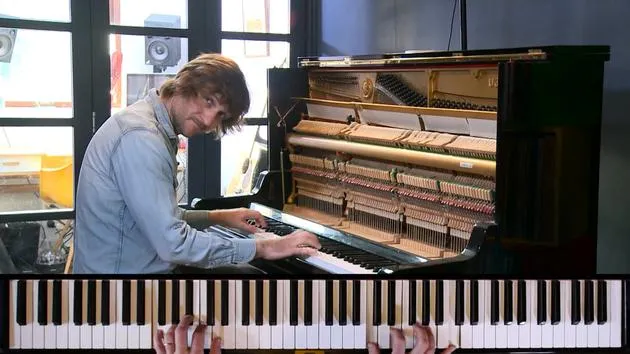
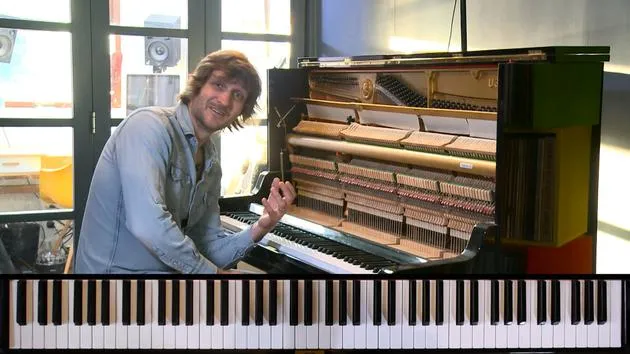
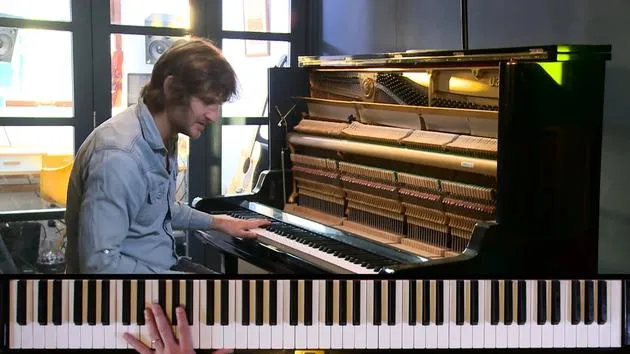
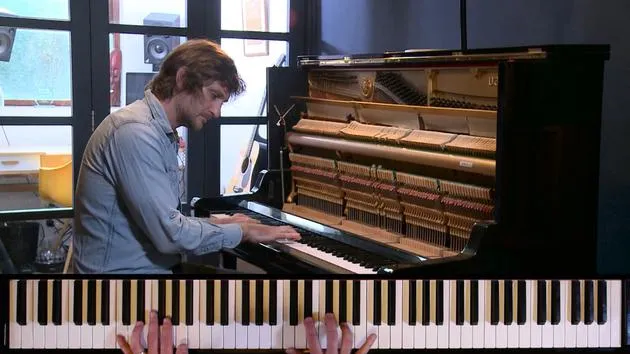
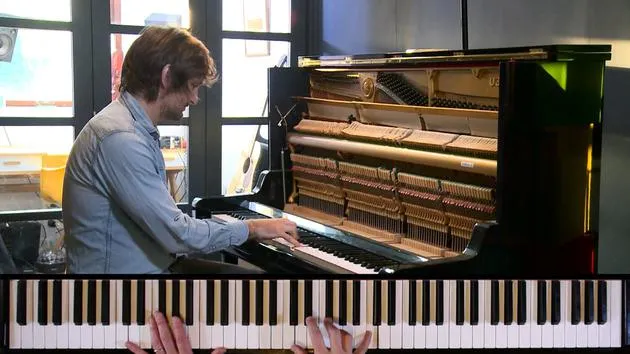
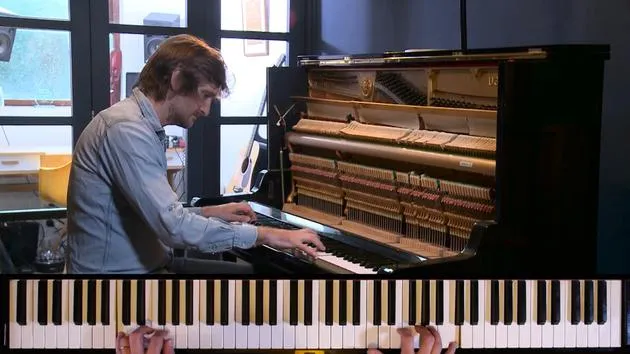
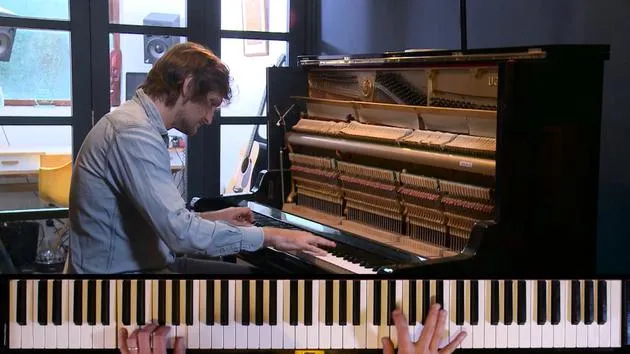
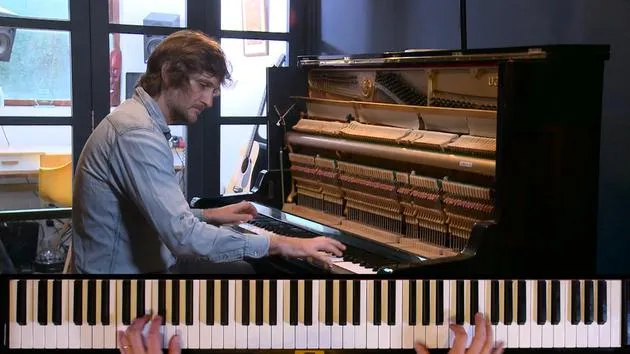
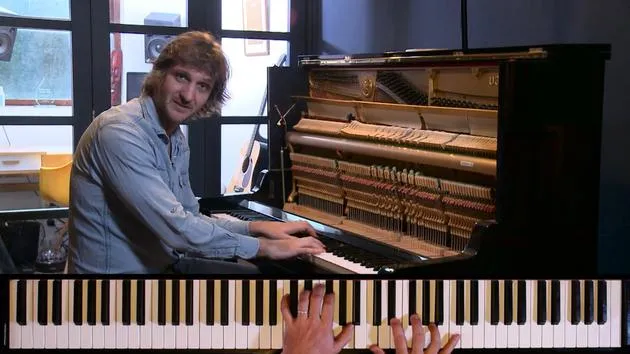
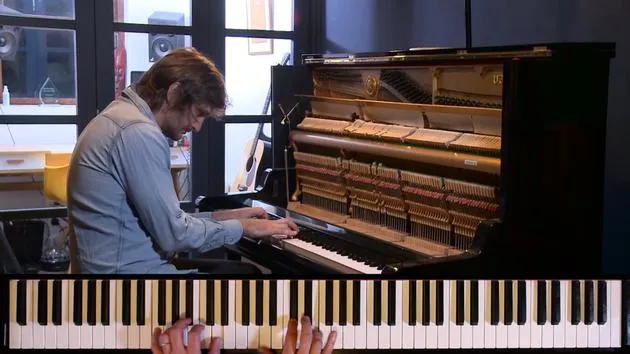
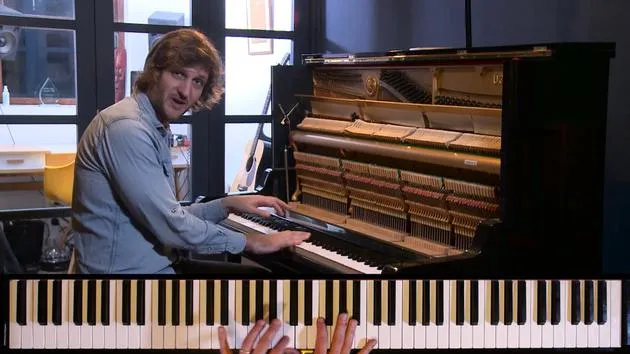
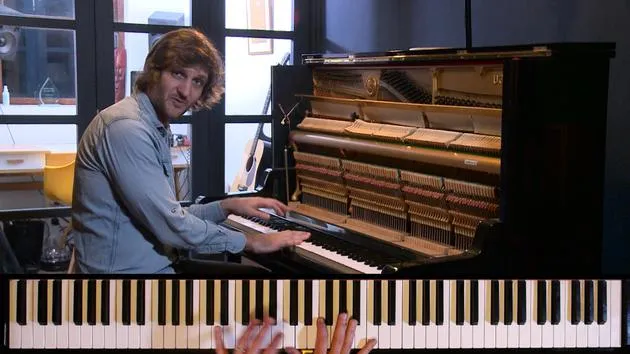
Transkript der Lektion
Exploring Creative Bass Lines: Albert Ammons' "Suitcase Blues"
Talking about getting creative with bass lines, let's look at a truly interesting one by the fantastic Albert Ammons in his piece "Suitcase Blues."
Introduction to the Bass Line
- Identifiable Piece: The bass line is easily recognizable.
- Basis in Tenths: This bass line is based on tenths, which we haven't actually explored yet.
Essentially, it's a variation on a very simple bass line, but Ammons adds the 10th on top, which greatly enriches the texture.
- The root and the 10th stay where they are, and only the middle note moves.
The whole bass line goes like this:
When it moves up to the 4, it does this:
- It walks down the same intervals.
You'll notice it's exactly the same on the C and then back up to the G.
The V Chord: A Deeper Dive
When we reach the V chord, things get really interesting and quite complex.
- The harmonies seem to be influenced by stride piano playing, where tenths are more common.
- Ammons was a great stride piano player.
So when he approaches the V chord, he does so via a G (first inversion) to a B flat diminished chord, which is where the harmony transitions to A:
- This is actually a D7 in second inversion, with that tenth voicing.
So, it flows in tenths with the fifth in the middle or sixth, depending on how you look at it. It does this cool little phrase, and you could even put a little skip in there:
- Something like that.
Revisiting the Turnaround
There's a lot of notes here, and then we return to the diminished again. Next comes the turnaround, which I'll explain:
- The turnaround might look something like this:
So, the harmonies on the turnaround could be something like that, based on this:
- But he keeps transitioning to the G7 to the D7.
What he's done here is taken those harmonies and structured them in tenths. However, he's broken them up to maintain that rhythmic rolling feel:
- On 2, 3, 4.
And then we're back into the tune.
The Left Hand Feature
That's quite an involved left hand from Albert Ammons, and there's a fantastic little break during the tune which I'm excited to share.
- This segment is a left-hand feature before returning to the main theme.
Essentially, it involves going up the triad and back into the tune, with some rolls included.
- The whole break might look something like this, then back in.
Let me just show you that little turnaround back into the tune.
Right Hand Integration
Now, to give you a glimpse of how the actual tune sounds, we will also look at the right hand stuff alongside the tenth in the left hand:
That's the main part of the tune!
Conclusion
There you go! That's just a little insight into "Suitcase Blues" by Albert Ammons.
24 Lektionen
2 Std. 1 Min. strukturierte Videolektionen
Erweiterte Videofunktionen
Verlangsamen, Passagen loopen, mitlesen
Handy, Tablet & Desktop
Üben, wo du willst
100 % Zufriedenheitsgarantie
30 Tage Geld-zurück-Garantie
Lern deinen Guru kennen

Lern deinen Guru kennen
Paddy Milner gilt als einer der besten Blues-Pianisten der Welt – derzeit ist er der Stammkeyboarder von Sir Tom Jones, nach mehreren Jahren an der Seite des großartigen, verstorbenen Jack Bruce –, aber er ist auch ein hervorragender eigenständiger Songwriter und ein unverwechselbarer Sänger. Lies einfach das Lob von Größen wie Dave Brubeck weiter unten! Sein Spiel war auf dem Soundtrack des Kinohits 'Rocketman' von 2019 zu hören.
Zweimal wurde er bei den British Blues Awards als bester Keyboarder ausgezeichnet, und als Gründungsmitglied der Ronnie Scott's Blues Explosion hat er eine langjährige Residency im weltberühmten Club Ronnie Scott's.
Seine aktuelle Band LONDONOLA spielt selbst geschriebene britische Musik mit einer kräftigen Portion New-Orleans-Geist, und sein gemeinsames Projekt JAWBONE geht seit der Veröffentlichung des gleichnamigen Debütalbums von Stärke zu Stärke.
- „Ich liebe es... da ist einer, der wirklich Klavier spielen kann" - Dave Brubeck
- „Ich kann es nur wärmstens empfehlen. Irgendwie fängt alles an, sich viel besser anzufühlen!" - Jack Bruce
- „Der beste Blues-Pianist Europas..." - Blues Access, USA
- „Beeindruckend und originell" - The Times
- „Blendend" - The Independent
In seinen Kursen zerlegt Paddy den authentischen Blues-Shuffle, Slow Blues, Boogie-Woogie, Rock 'n' Roll und das New-Orleans-Piano – bis hin zu drei klassischen Boogie-Woogie-Songs –, damit du diese Stile bei einem der Allerbesten des Fachs lernst.







