



Für Boogie-Woogie typische Intros
Paddy Milner erklärt, wie man ein Boogie-Woogie-Stück beginnt, und baut Intros rund um die klassische Akkordbewegung von C7 zum verminderten Akkord.
Das steckt im Kurs
24 Lektionen (2h 1m) · 2 gratis
01. Einführung in die Bässe & Übungstipps
2:23
02. Boogie-Bässe aufbauen
Gratis-Lektion6:22
03. Bässe weiterentwickeln
8:57
04. Moll-Bässe
3:02

05. Walking Basses
7:05

06. Kreativ werden mit Eight-to-the-Bar-Bässen
5:33
07. Latin-Bässe im Stil von Jimmy Yancey
2:07
08. Entwickle deine eigenen Bässe - Rhythmische Ideen
6:04

09. Deine eigenen Bässe entwickeln - Harmonische Ideen und Suitcase-Blues-Studie
8:08
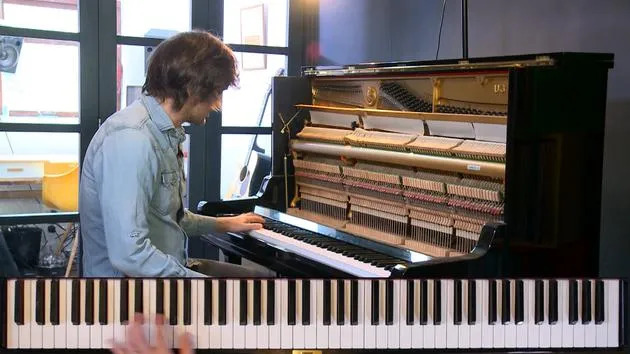
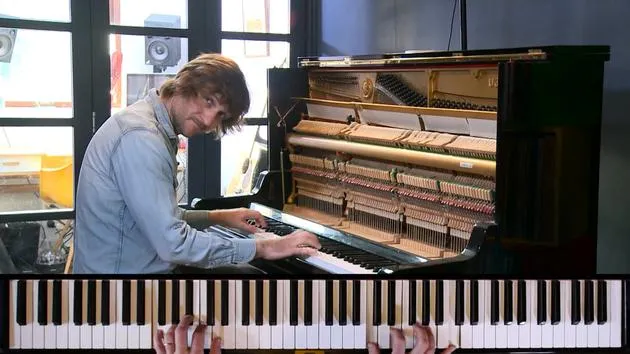
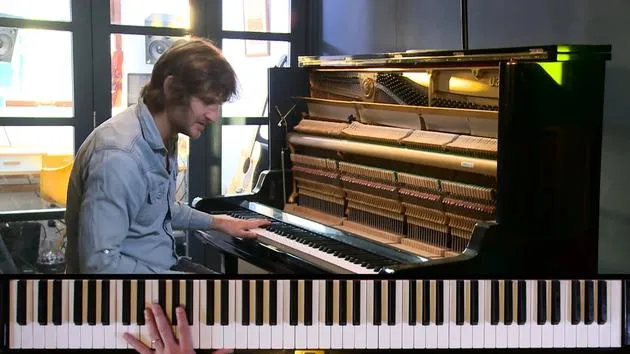
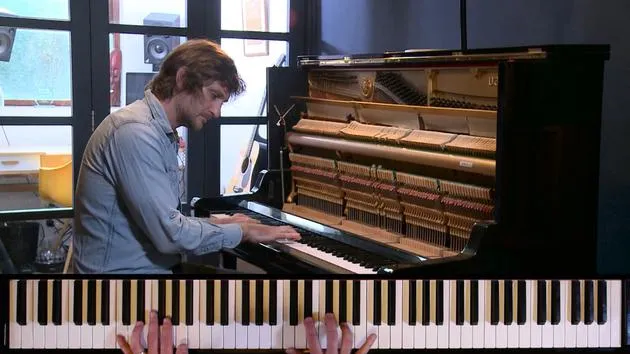
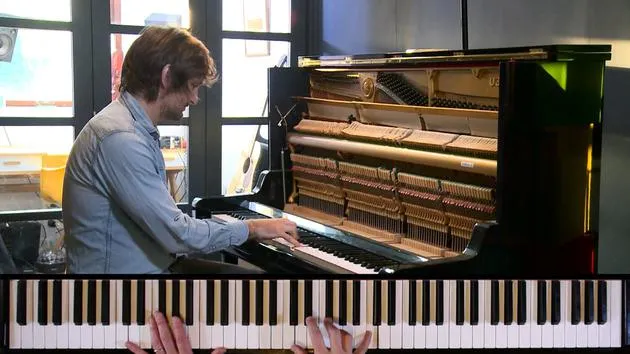
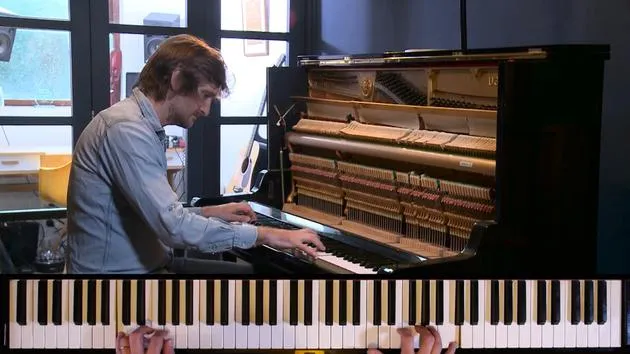
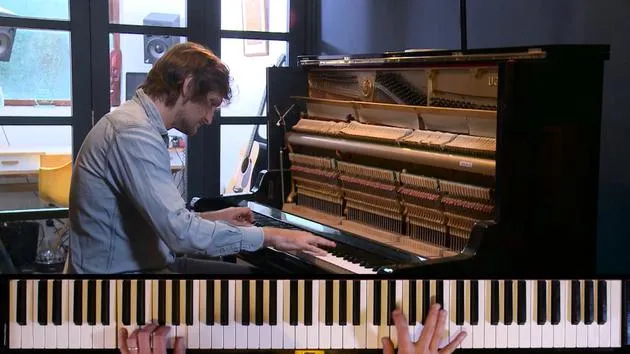
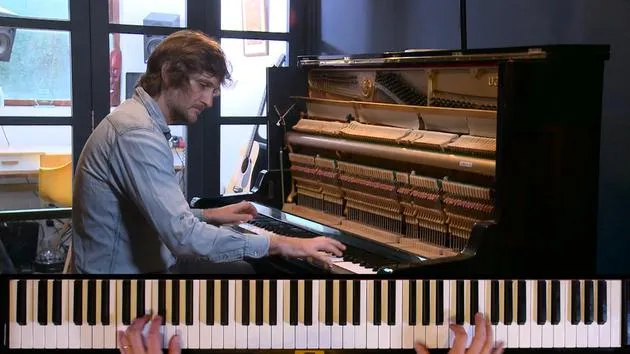
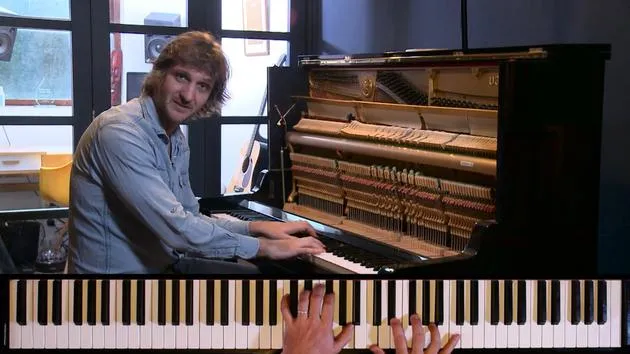
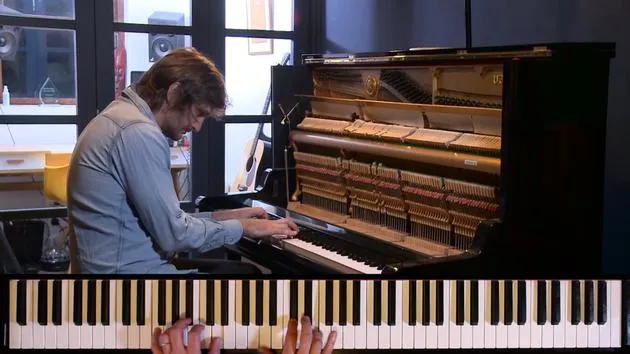
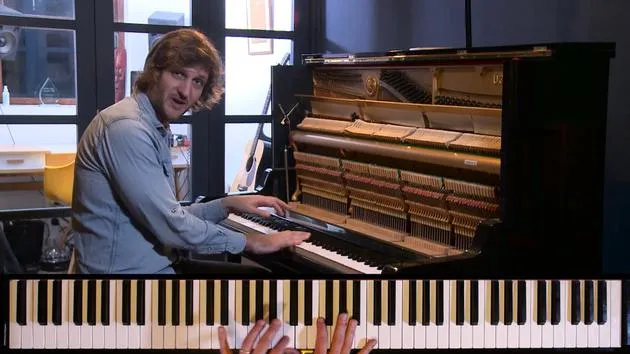
Transkript der Lektion
Starting a Boogie Woogie Tune
So how do you start a Boogie Woogie tune?
Basic Chord Movement
Well, most boogie tunes have an intro, and a lot of them are built around this kind of chord movement:
- C7 to C diminished 7 and then back to C7.
There are some variations on that. For example:
- C7 to diminished 7 to an F minor or D minor half diminished chord back to the C7.
A lot of them are built by adding a rhythm to that basic harmonic movement.
Example:
You might have a simple version like this:
- This particular voicing is definitely one that was used a lot. Essentially, it's the third and the seventh in the bass going down, while in the right hand, the octave stays the same.
So you've got the whole diminished seventh there. You could add some extra note values in there, say, like that or that kind of thing.
You'll probably hear that this is very similar to a lot of the Albert Ammons intros and Pete Johnson's very famous intro to Roland Pete.
Introduction to Roland Pete
Let's look at that introduction to Roland Pete by Pete Johnson.
You'll hear it's built on the same harmonies that we just looked at, plus some other ones thrown in.
I'm going to play it for you once and then break it down.
Playthrough:
So that's it. Now, let's break it down.
- It starts with a little line to introduce it: G, A, B in octaves.
- Very simple! It uses the same harmony as we looked at, but with the C at the bottom.
The diminished here is:
- It's the same, but it has this discordant B at the bottom, which, if you listen to the record, adds a feeling of movement downwards.
This works in context as follows:
- To the C7
- Then, lots of parallel chords at the bottom.
These parallel chords are essentially an F. Occasionally, I do put in a little roll there.
So there you go, there's Pete Johnson's intro to Roland Pete.
Another Classic Intro
Let's look at another classic intro.
This one is by Albert Ammons to his Boogie Woogie Stomp, which he actually took from the original Pinetops Boogie Woogie intro.
Approach
This one is built on tremolos between the two hands.
Playthrough:
So, yeah, it involves a bit of technique there, just trying to get this rhythm as consistent as possible between the hands.
Breakdown
Let's play it slowly:
- The first bit has this little run in the left hand, and then it's rocking with the right hand.
- It's always the left hand that leads.
- Then it does it again.
Notice these harmonies going up.
And then this time, it does the same thing on the F with the run-up.
Final Thoughts
That's the basic idea!
Just remember, tempo-wise, try to play it at a comfortable speed before ramping it up. Eventually, you'll get up to the speed of the original.
24 Lektionen
2 Std. 1 Min. strukturierte Videolektionen
Erweiterte Videofunktionen
Verlangsamen, Passagen loopen, mitlesen
Handy, Tablet & Desktop
Üben, wo du willst
100 % Zufriedenheitsgarantie
30 Tage Geld-zurück-Garantie
Lern deinen Guru kennen

Lern deinen Guru kennen
Paddy Milner gilt als einer der besten Blues-Pianisten der Welt – derzeit ist er der Stammkeyboarder von Sir Tom Jones, nach mehreren Jahren an der Seite des großartigen, verstorbenen Jack Bruce –, aber er ist auch ein hervorragender eigenständiger Songwriter und ein unverwechselbarer Sänger. Lies einfach das Lob von Größen wie Dave Brubeck weiter unten! Sein Spiel war auf dem Soundtrack des Kinohits 'Rocketman' von 2019 zu hören.
Zweimal wurde er bei den British Blues Awards als bester Keyboarder ausgezeichnet, und als Gründungsmitglied der Ronnie Scott's Blues Explosion hat er eine langjährige Residency im weltberühmten Club Ronnie Scott's.
Seine aktuelle Band LONDONOLA spielt selbst geschriebene britische Musik mit einer kräftigen Portion New-Orleans-Geist, und sein gemeinsames Projekt JAWBONE geht seit der Veröffentlichung des gleichnamigen Debütalbums von Stärke zu Stärke.
- „Ich liebe es... da ist einer, der wirklich Klavier spielen kann" - Dave Brubeck
- „Ich kann es nur wärmstens empfehlen. Irgendwie fängt alles an, sich viel besser anzufühlen!" - Jack Bruce
- „Der beste Blues-Pianist Europas..." - Blues Access, USA
- „Beeindruckend und originell" - The Times
- „Blendend" - The Independent
In seinen Kursen zerlegt Paddy den authentischen Blues-Shuffle, Slow Blues, Boogie-Woogie, Rock 'n' Roll und das New-Orleans-Piano – bis hin zu drei klassischen Boogie-Woogie-Songs –, damit du diese Stile bei einem der Allerbesten des Fachs lernst.







