



Dreiklänge ‚Äì Dreiklänge und Spiele
Mit
Talia GirtonLerne, wie Dreiklänge (Akkorde aus drei Tönen) funktionieren, höre den Unterschied zwischen Dur und Moll und festige sie mit ein paar Spielübungen.
Das steckt im Kurs
21 Lektionen (0h 42m) · 1 gratis

Transkript der Lektion
Understanding Triads
Triads are three-note chords. We had a look at this a little bit earlier with the C major chord and the A minor chord. As you might have guessed, it's called a triad because there are three notes.
Major and Minor Chords
You might recall that we have:
- Major chords which sound happy and uplifting
- Minor chords which sound a bit more melancholy
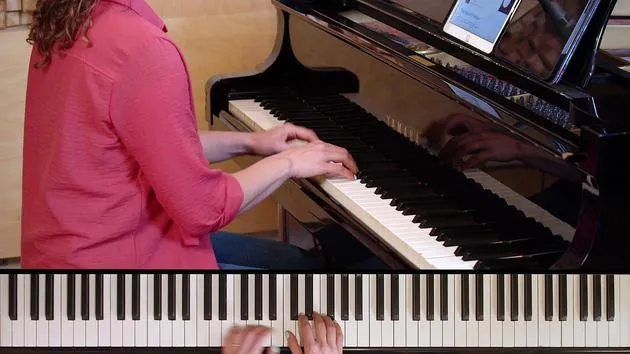
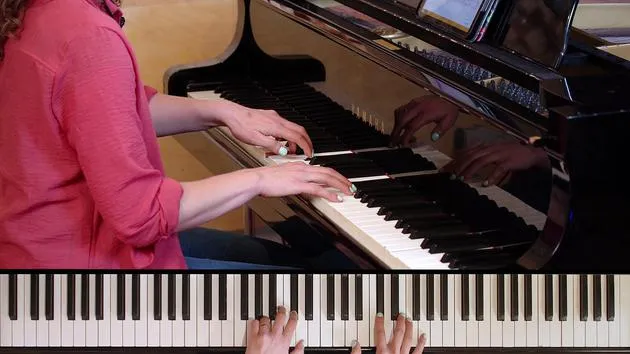
Now, we'll play some triad games to get this into your fingers.
Interactive Exercise
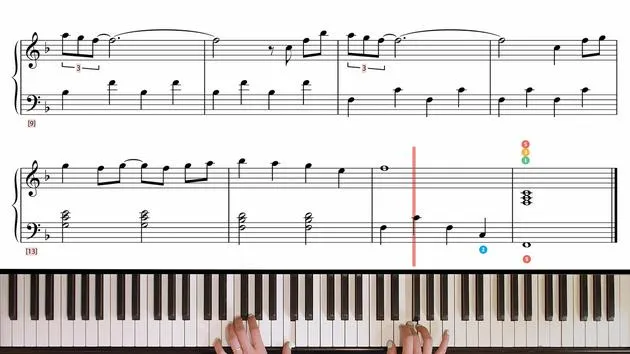
- I'll give you a chance to play, and then I'll show you the right answer, if you'd like to.
- As an added bonus, you can use your ear to see if you think it's a major triad or a minor chord.
(Note: I'll be using the words triad and chord interchangeably.)
Go ahead and hit pause, figure it out, and then come back and check the answer with me.
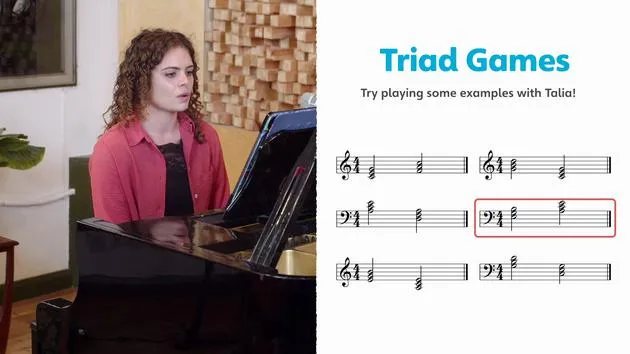
Example 1
Correct Answer: You might have realized that those were both major chords.
- The first one was C major with the C on the bottom.
- The second one was F major because there's an F on the bottom.
It'll be the same with the rest of the chords throughout this exercise.
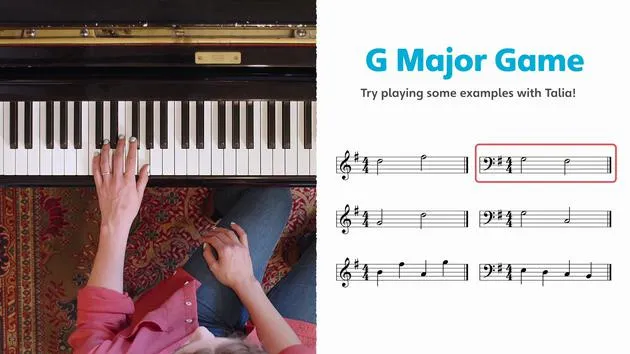
Example 2
Once again, pause the video, give it a try, and then you can come back to me to get the correct answer.
Correct Answer: You may have noticed that those were both major chords.
- We had a G major chord: G, B, and D.
- Then once again, we had our C major chord: C, E, and G.
Example 3
Let's try the next example. Pause the video, figure it out, and then come back when you're ready.
Correct Answer: Hopefully, you noticed that we've switched from the treble clef to the bass clef.
Did you notice that both of those chords were in a minor key? They had a darker, more melancholic sound to them.
- The first one was an A minor chord because it contains the notes A, C, and E.
- The second chord was a D minor chord because it contains the notes D, F, and A.
Example 4
Let's go on to the next example. Pause the video and come back when you're ready.
Correct Answer: You may have noticed that both of those chords were minor.
- The first chord was an E minor chord with the notes E, G, and B.
- The second chord was an A minor chord with the notes A, C, and E (the same one that we saw in the previous example).
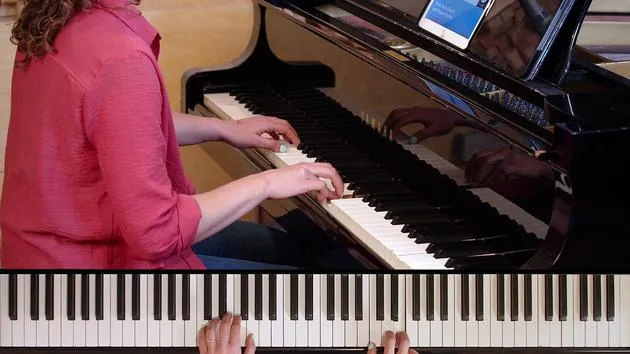
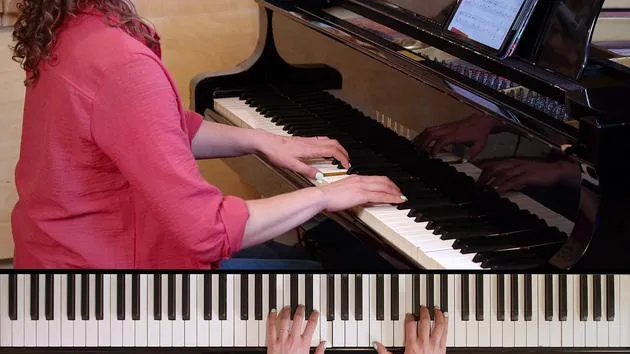
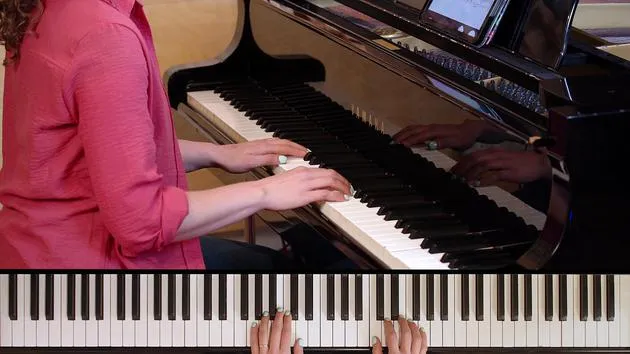
Feel free to experiment with triads going up and down the piano. You could even do them one after the other like this.
You can try with both hands or even with hands together to get a really nice, voluminous sound.
21 Lektionen
0 Std. 42 Min. strukturierte Videolektionen
Erweiterte Videofunktionen
Verlangsamen, Passagen loopen, mitlesen
Handy, Tablet & Desktop
Üben, wo du willst
100 % Zufriedenheitsgarantie
30 Tage Geld-zurück-Garantie
Lern deinen Guru kennen
Lern deinen Guru kennen
Talia Girton ist Musikerin und beim HCPC registrierte Musiktherapeutin sowie Gründerin von The Cycling Music Teachers. Ihre Arbeit verbindet Musiktherapie, Beratung und Pädagogik, und sie unterrichtet international im Musiktherapie-Ausbildungsgang der UDELAS in Panama und wirkt zudem an der beruflichen Weiterbildung mit der European Piano Teachers Association (EPTA) mit. Auf MusicGurus unterrichtet sie die Kurse Piano Method und Piano Foundations und führt absolute Anfänger von den ersten Schritten über Rhythmus, beide Hände, Theorie bis zur Aufführung.







