Rudiment #3 - Paradiddles
Mit
Harry Pope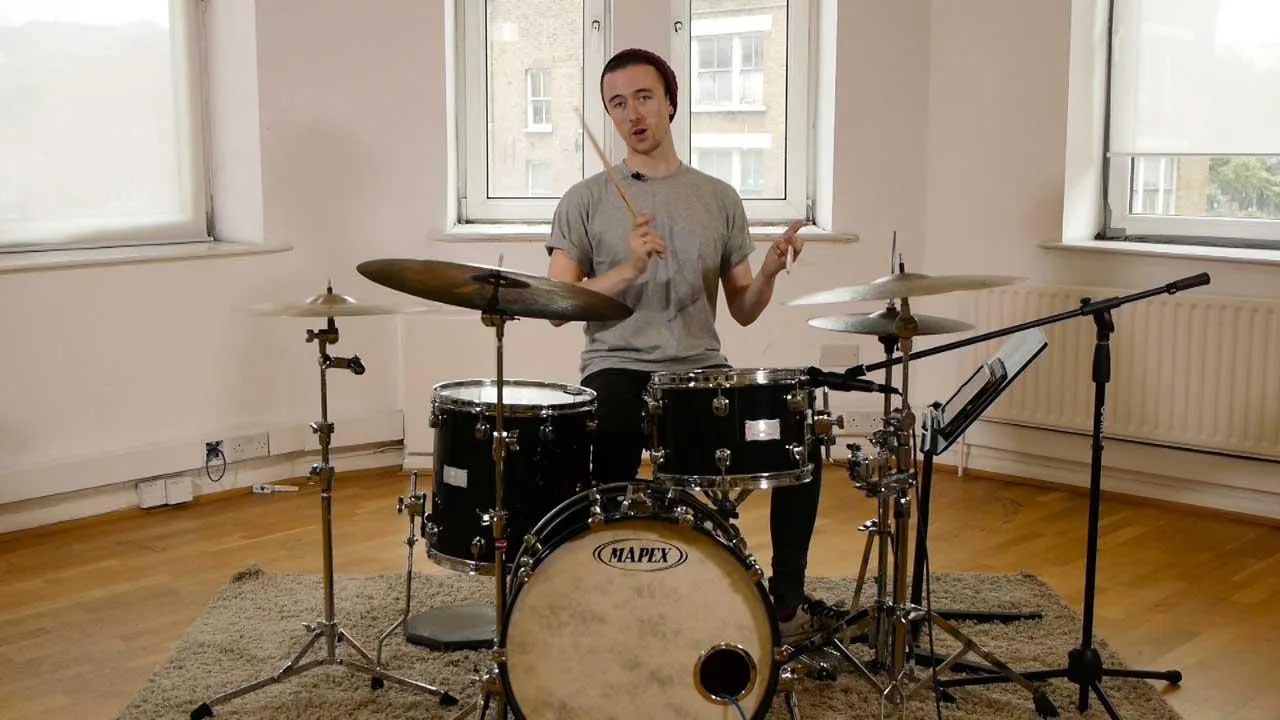
Das steckt im Kurs
15 Lektionen (1h 43m) · 3 gratis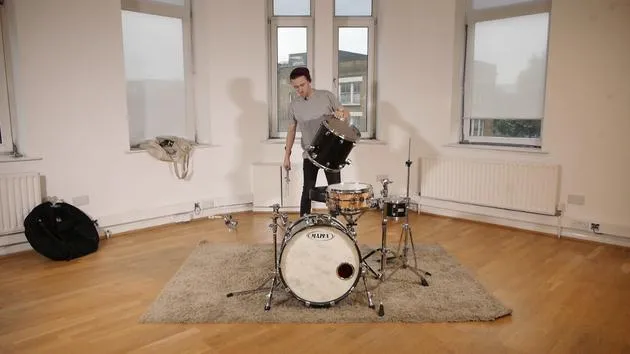
01. BONUS: Das Schlagzeug aufbauen
Gratis-Lektion2:36
02. Lerne Harry kennen
Gratis-Lektion2:01
03. Mach dich mit deinem Kit vertraut
Gratis-Lektion13:15
04. Stock- und Fußtechnik
10:18
05. Der Basis-Beat
7:26
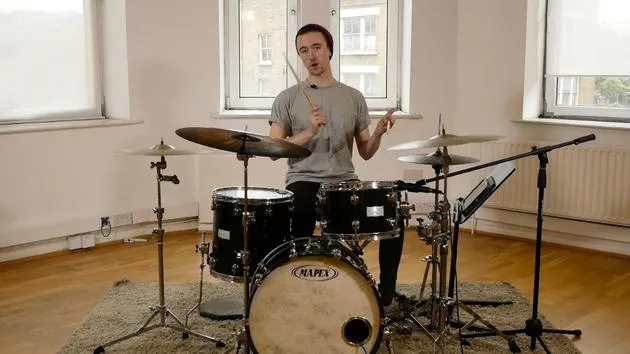
06. Viertelnoten und Achtelnoten
6:05
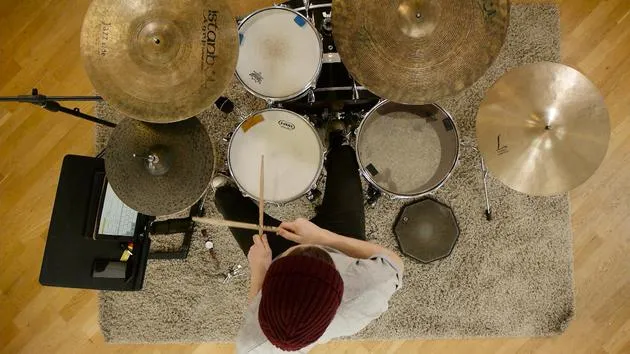
07. Den Beat variieren
8:06
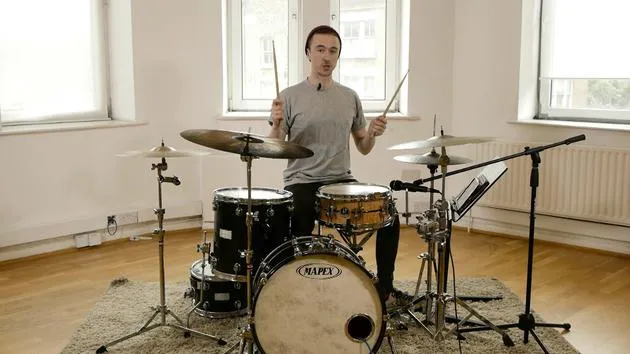
08. Rudiment #1 - Single Stroke Roll
9:39
09. BONUS: Fills mit dem Single Stroke Roll
5:06
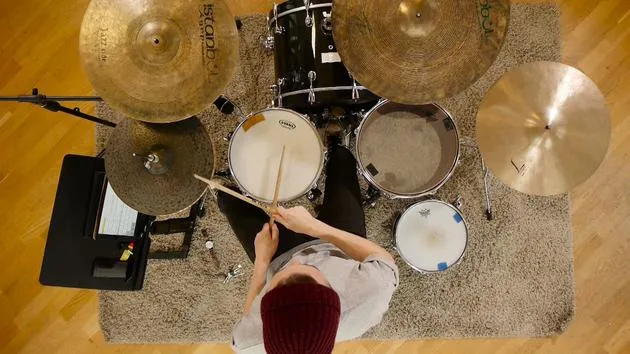
10. Rudiment Nr. 2 - Double Stroke Roll
7:11
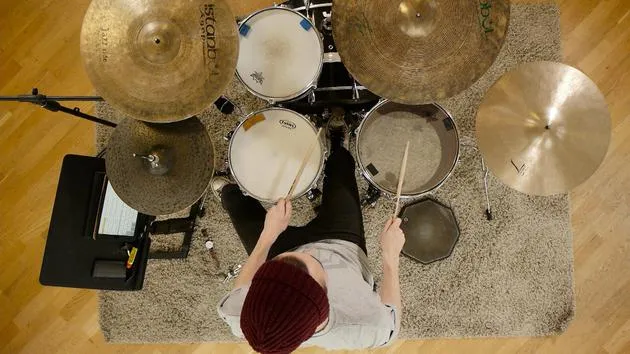
11. BONUS: Fills mit dem Double Stroke Roll
4:14
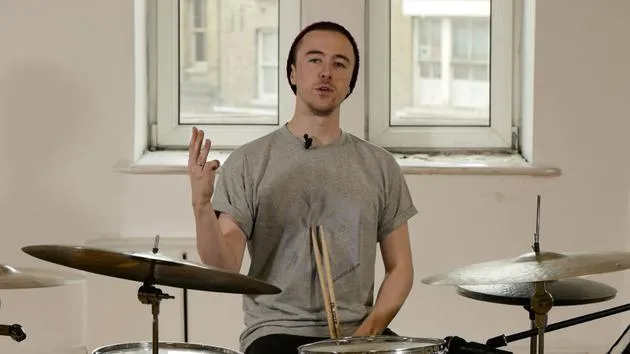
12. Rudiment #3 - Paradiddles
Du bist hier5:53
13. Grooven mit Paradiddles
7:03
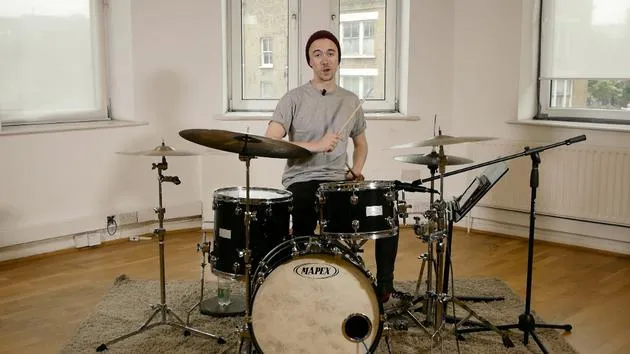
14. Sechzehntel und Verzierungen hinzufügen
7:28
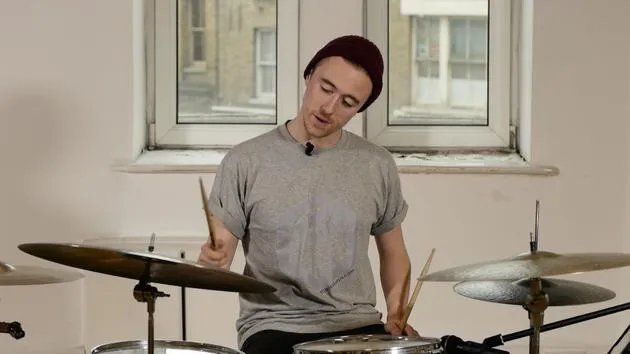
15. Ride-Becken und offene Hi-Hat hinzufügen
7:08
Transkript der Lektion
Music Lesson: Learning the Paradiddle
Welcome back!
Lovely to see you again. Today, we're going to learn one more rudiment.
We've already covered:
- Single Stroke Rolls
- Double Stroke Rolls
Both are reasonably simple to learn but hard to master.
Today's Focus: The Paradiddle
The third rudiment we're going to learn is called a paradiddle. It's a mixture of both single and double strokes. Here's how it breaks down:
- Right hand:
- Right, left
- Right, right
- Left hand:
- Left, right
- Left, left
Paradiddle Breakdown
So, one more time:
- Right, left, right, right
- Left, right, left, left
Tips for Practicing
What I find quite useful is to put one hand on a different surface, whether it's the floor tom, rack tom, hi-hat, or anything else. This way, you can hear how the sticking works.
If I play it on the snare drum correctly, it might sound like this:
"Bum, bum, bum."
However, it's good to practice on the snare because it's very clear and obvious if you're getting it right rhythmically.
But when you put your right hand on the floor tom, you hear a kind of melody, making it a bit easier to learn. Maybe I'm wrong, but give it a go!
Learning Process
Like the other two rudiments, we'll learn the paradiddle first as crotchets, then quavers, and finally semiquavers.
Crotchets
- Stay relaxed; playing these paradiddles quickly will be hard if you're tense.
Practice Example
-
Crotchets:
Hi-hat on all the crotchets.Count:
1, 2, 3, 4.- Right, left, right, right
- Left, right, left, left
Count again:
1, 2, 3, 4.
2, 2, 3, 4.
Important Note
Notice that when we play the paradiddle, a right-handed paradiddle sounds like:
- Right, left, right, right
And a left-handed one sounds like: - Left, right, left, left
It takes two bars to resolve (twice as long). Just keep an eye on this!
Count:
1, 2, 3, 4.
2, 2, 3, 4.
Moving On to Quavers
Now let's try it with quavers. The challenging part is remembering which side you're playing when the beat changes.
Practice Example
- Count:
1, 2, 3, 4.- Right, left, right, right
- Left, right, left, left
- Right, left, right, right
- Left, right, left, left (quavers)
Finally, Semi-quavers
Now let's try semiquavers. Begin dead slow to ensure you get the coordination right.
Practice Example
- Count:
3, 4.
"I think that sounds quite cool, actually!"
We're going to use that as our fill on beat four of our quaver.
Example Structure
- Three bars of quaver beat three.
- The fourth bar is going to be our fill in semi-quavers for the paradiddle.
Again, let's take it dead slow and aim for accuracy. Playing something simple and slow can still sound really, really good.
Conclusion
At the end of this lesson, we now have three rudiments together:
- Single Stroke Roll
- Double Stroke Roll
- Paradiddle
And we've used them all in fills.
Thanks very much for watching, and I'll see you again soon!
15 Lektionen
1 Std. 43 Min. strukturierte Videolektionen
Erweiterte Videofunktionen
Verlangsamen, Passagen loopen, mitlesen
Handy, Tablet & Desktop
Üben, wo du willst
100 % Zufriedenheitsgarantie
30 Tage Geld-zurück-Garantie
Lern deinen Guru kennen
Lern deinen Guru kennen
Harry Pope ist ein Londoner Schlagzeuger und Absolvent des Jazzprogramms am Trinity College of Music. Er hat mit der Brit-Award-Gewinnerin Eddi Reader, dem Gitarristen Jim Mullen, Graeme Duffin von Wet Wet Wet und der Royal Scottish National Orchestra Big Band gespielt. Sein Kurs für Anfänger beginnt beim Schlagzeug selbst – Haltung, Griff, Timing und deine ersten Grooves – in einem Tempo, das jedem passt, der zum ersten Mal die Sticks in die Hand nimmt.