



Die Melodie im 7/4-Takt platzieren - feat. Unsquare Dance, Earthrise

Lesson time: (12min 38sec)
Darius und Mike vergleichen die unterschiedlichen melodischen Gefühle über sieben in Dave Brubecks Unsquare Dance, Darius' Stück Earthrise und Mikes Stück Seven from Heaven
Course preview
This lesson is part of the course Ungerade Taktarten meistern
Watch a preview of the full course below.
Lesson transcript:
Music Lesson: Exploring Unsquare Dance and Earthrise
Unsquare Dance Tunes in Seven
Back to unsquare dance tunes in seven. Well, that's almost a non-tune.
- I don't even know of a published version.
- I'm not saying there isn't one, but it's really just a lick.
- It's just the same thing transposed, kind of blues like on the one chord, the four chord, and the five chord.
It's meant to be kind of like a hoedown violin kind of thing. That's fun!
Imagining the Dance
Just imagine a square dance with one one-legged hillbilly. It's always going to be a little bit asymmetrical. You can play the tune with the band, or we left enough space for you to improvise on it.
- Think of little obvious country type licks or blues licks; that'll be stylistically consistent.
In the original recording, there wasn't any melodic improvisation. There was just kind of a ticky wiki drum solo. It was actually drumsticks on a music stand that Joe Morello was using, and it sounded a bit like someone clog dancing.
Paul Desmond didn't play on it. He might also have been, well, he must have been, another hand clap person in the studio, but didn't play on it at all. But of course, you can play it on the saxophone. You just have to decide which note you're playing on. Are you playing on the 5th? Yeah? Okay.
The Head and Clapping Pattern
So this is how the head goes, and it fits very determinedly into the hand clap pattern. It doesn't conflict with it at any point.
- The hand clap pattern is really reinforcing.
- I hesitate to call it a melody; it's just a lick.
Here's how it sounds:
1, 2, 3, 4, 5, 6, 7.
The clapping is kind of like it's on the off beat:
1, 2, 3, 4, 5, 6, 7.
Be careful not to start there on the off beat. You're actually starting on the first beat of the measure, which is another way of thinking of it:
1, 2, 3, 4, 5, 6, 7.
1, 2, 3, four, five, six, seven.
1, 2, 3, 4, five, six, seven.
1, 2, 3, 4, 5, 6, 7.
1st, 2, 3, 4, five, six.
Now you're hearing it. Instead of hearing the seven-four in smaller units, you can hear it in one big unit, like one click per section.
Earthrise: A Serene Contrast
On the other hand, "Earthrise" is one of my tunes. Instead of being kind of earthy and hoedown, the mental picture here is the famous NASA photograph of the Earth rising over the lunar landscape.
- Obviously, I'm going for a melody that is rather free from gravity.
- To achieve that, there are a lot of long notes in it.
Even though the 7/4 meter is clear, the melody does not really reinforce it, like "Unsquare Dance" does with its strong angular accents.
"Unsquare Dance" is kind of jittery and fast. "Earthrise" is meant to be serene and out there in space.
Practice and Melody Structure
I'll give you a four-bar intro, and Mike, if you can just play the tune with me up to the end.
Earlier, Darius talked about how "Unsquare Dance" is a bit jittery with shorter fragments, while "Earthrise" features longer notes that give a floating feel.
For example, we get on the fifth bar:
- So it's one plus two plus two plus two, then the next bar, and then it wraps up.
The melody concludes on the last four bars, which I have to admit I struggled with. It's a long note, which can go against the bass.
Rhythmic Practice
I would take the longer notes and subdivide them instead of being five and a half beats.
- This could be one way of practicing it:
- Identify, "Oh, I've got these long notes.
- Where's the beat?
- Am I on four, five, or three?"
Again, you can break those longer notes down into twos or threes to help you with the rhythm.
The quartet recorded "Earthrise" for you, so you can hear that. There's also a PDF of the lead sheet we were working from.
Feel free to learn the tune; I'd be more than delighted to hear other versions recorded by blossoming maestros someday.
Transition to Mike and "Seven From Heaven"
Now, I'd like to hand over to Mike to discuss his tune, "Seven From Heaven."
Seven From Heaven
Okay, thanks, Darius.
On "Seven From Heaven," we're going to explore the melody, which starts with a simple phrase. Through the use of a musical sequence, we'll move it up to the four chord.
So we're in the blues, and the common chords are I, IV, and V.
- In the first bar, we're on the I chord.
- In the second bar, it's going to move to the IV chord and then back to the I chord.
We'll use that melodic idea from the first bar and transpose it to the IV chord.
From there, back to the I chord. Now we take that same idea and move it up a third.
Resolving the Melody
So it kind of resolves before we actually get to the IV chord. You can hear the main melodic idea moving through those first four bars:
1, 2, 3, 4, 5, 6, 7.
Then we get to the IV chord, and the rhythm shifts a little bit, getting funkier.
On the four chord:
1, 2, 3, 4, 4, 5, 6.
We'll go through that again from the IV chord.
Melodic Accents
It's important to have some strong melodic accents. You can hear on seven, ending on seven, not on one, and then ba ba da da.
We're on the beat, then off the beat, then back on the beat.
It gets a bit quirky there, but it always returns to the tonic.
You can hear a better version of it recorded by Mike's band, and you can also play along with a version without the saxophone.
Enjoy the challenge!
About the instructor
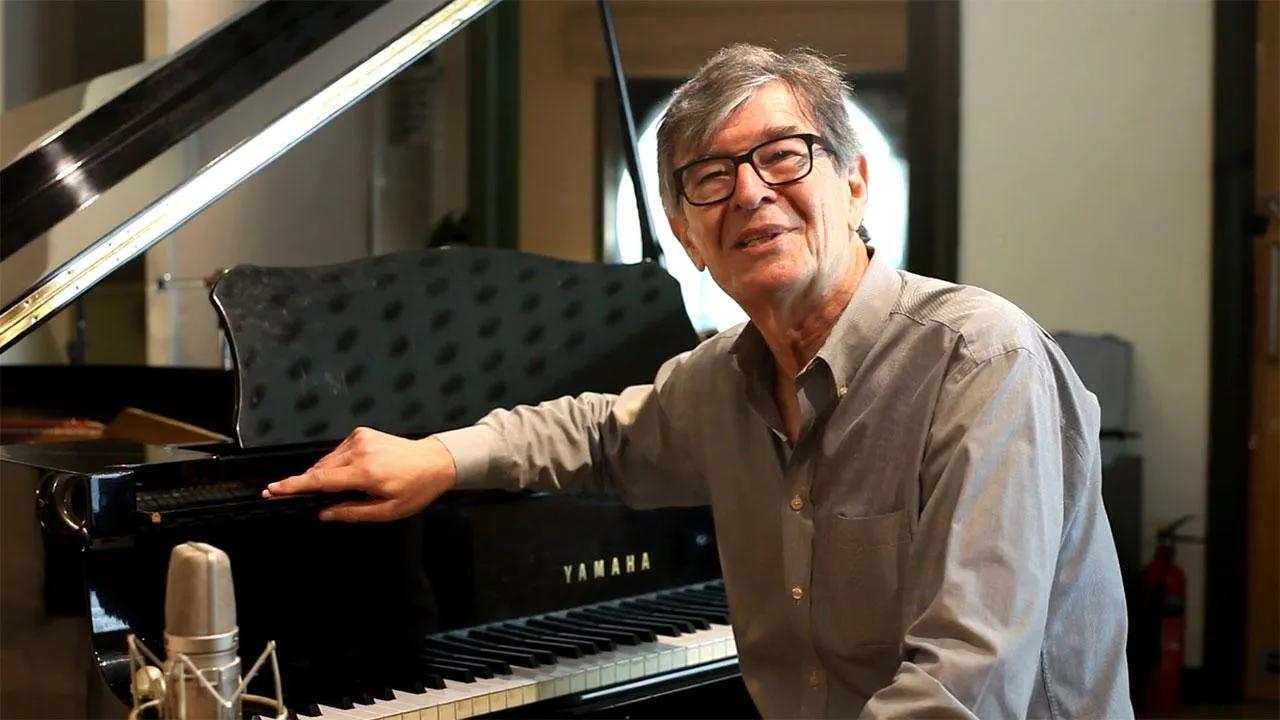
Darius Brubeck ist ein renommierter Jazzpianist und Musikpädagoge. Er hat zahlreiche Alben als Bandleader veröffentlicht, ist international mit seinen eigenen Gruppen getourt und hat mit seinen Brüdern an Brubecks Play Brubeck zusammengearbeitet. Darius war als Fulbright-Gastprofessor in Rumänien und der Türkei tätig. Er rief den ersten Jazz-Studiengang an einer afrikanischen Universität ins Leben, an der University of KwaZulu-Natal in Südafrika, wo er bis 2005 unterrichtete. Darius arbeitet häufig mit Mike Rossi zusammen, Saxofonist und Musikprofessor an der University of Cape Town. Zu Mikes Verdiensten zählen zahlreiche Aufnahmen und internationale Bühnenauftritte als Leader, Solist und Sideman unter anderem mit Tony Bennett, Dave Liebman, Winston Mankunku Ngozi, George Russell, Clark Terry und Alessio Menconi. Mit Darius als Mentor kommst du direkt zum Wesentlichen. In Harmony 101 entmystifiziert er die Jazzharmonik, damit du sie schnell anwenden kannst, und in Mastering Odd Times zeigt er dir, wie du in ungewöhnlichen Taktarten souverän spielst und improvisierst. read more