



Die Melodie im 5/4-Takt platzieren - mit Take Five, 5/4-Etüden

Lesson time: (11min 57sec)
Darius Brubeck erklärt die Melodie von 'Take Five', warum sie im 5/4-Takt funktioniert und die Geschichte, wie Dave Brubeck, Paul Desmond und Joe Morello sie schufen - plus Etüden, um deine eigene zu schreiben.
Course preview
This lesson is part of the course Ungerade Taktarten meistern
Watch a preview of the full course below.
Lesson transcript:
Understanding "Take Five"
You've just heard a fragment of that famous tune, Take Five. I'm often asked who wrote it, and usually the person asking has a slightly mischievous intent because it's attributed to Dave Brubeck. But if you see the published versions, it was officially Paul Desmond who wrote it.
The Story Behind "Take Five"
Here's the story as I remember it:
- Joe Morello created the Take Five beat as a kind of warm-up.
- He thought it would be a cool exercise, not necessarily a tune.
- As a drummer, he explored interesting rhythms by switching from 3 to 2.
The quartet was already well known for doing three-four tunes in an interesting way. They had quite a famous recording of Someday My Prince Will Come that you might recall.
- The rhythm they played was 2, 3, 1, 2, 3, 2.
- Dave, especially, would improvise in four over that, while Joe was great at keeping time against time.
Sometimes the bass would just play on the downbeats, maintaining the harmonic flow, no lines, no walking. This layering was crucial as:
- Joe was working on that.
- Playing in three ultimately led to playing in five.
It wasn't so much about adding one beat to four. It sounded more like three against two with an additional couple of beats.
Collaborative Creation
Dave suggested that everyone try to write a melody that fits a different time signature. Paul decided to work with the 5 based on the version Joe laid down. What you hear in the original recording of Take Five is largely unchanged in subsequent renditions.
In the best sense, the tune's creation was very collaborative:
- The drummer came up with the beat.
- The saxophonist developed the melody.
- The pianist contributed the chords, recognizing the need for a bridge.
The famous da da da da da da da da section could be seen as a sequence of two fives, similar to what you find in jazz.
The Role of the Bass Line
Anchoring it all is the bass line articulating 1, 2, and 3, as in Someday My Prince Will Come, followed by two more beats: 1, 2, 3, 4, 5.
Performance Dynamics
It became a hit, and soon it was something other musicians had to learn to play.
- So, Mike, you're the sax player, and I'm the chord guy, the pianist.
- At the beginning, my role is simple, just keeping the vamp going, but it gets more complicated as the melody enters.
The Melody's Jazz Feel
The melody has a wonderful jazz essence:
- It carries a minor, bluesy sound, leading nicely into the main theme.
When announcing the melody, which is one of the most famous in Western civilization, I must avoid messing it up. It's essential to keep the subdivisions going and come in on the fourth beat or the three plus the two of the bar.
Example of Performance
Darius and I will demonstrate it.
- If I am distracted or not fully attentive, I can easily go off, leading to awkward moments, a situation I dread.
Exploring the Bridge
Now, moving to the middle section of Take Five, we go into a different key, adding more flats. Interestingly, the melody at the bridge starts firmly on one, contrasting with the previous pickups.
Here's the bridge of Take Five:
1, 2, 2, 3...
Practicing in 5/4
Another way to practice melodies in 5/4 is by creating very simple ones and working them through variations:
- For example, you could start with a fragment like:
E flat minor...
And then change it up between 2 and 3.
To take it a step further, refer to the book on page 17, which features the 3:2 etude. You have a play-along option with the rhythm section for two entire choruses.
On page 18, there's another etude that goes through three plus two and two plus three across all 12 keys, perfect for working on your instrument, hearing different keys, and crafting some nice melodies.
Recordings for Practice
There's a recording of the entire group playing it, as well as one of the rhythm section without Mike. This setup offers you an opportunity:
- Play along with the tune.
- If playing the complete tune feels too challenging, wait until the tune concludes and play over the vamp, which continues on E flat minor.
You can practice interesting rhythms and bluesy licks until we reach the bridge again.
Final Thoughts
It's about learning those two fives or diving deeper into 5/4.
So please, join the group!
About the instructor
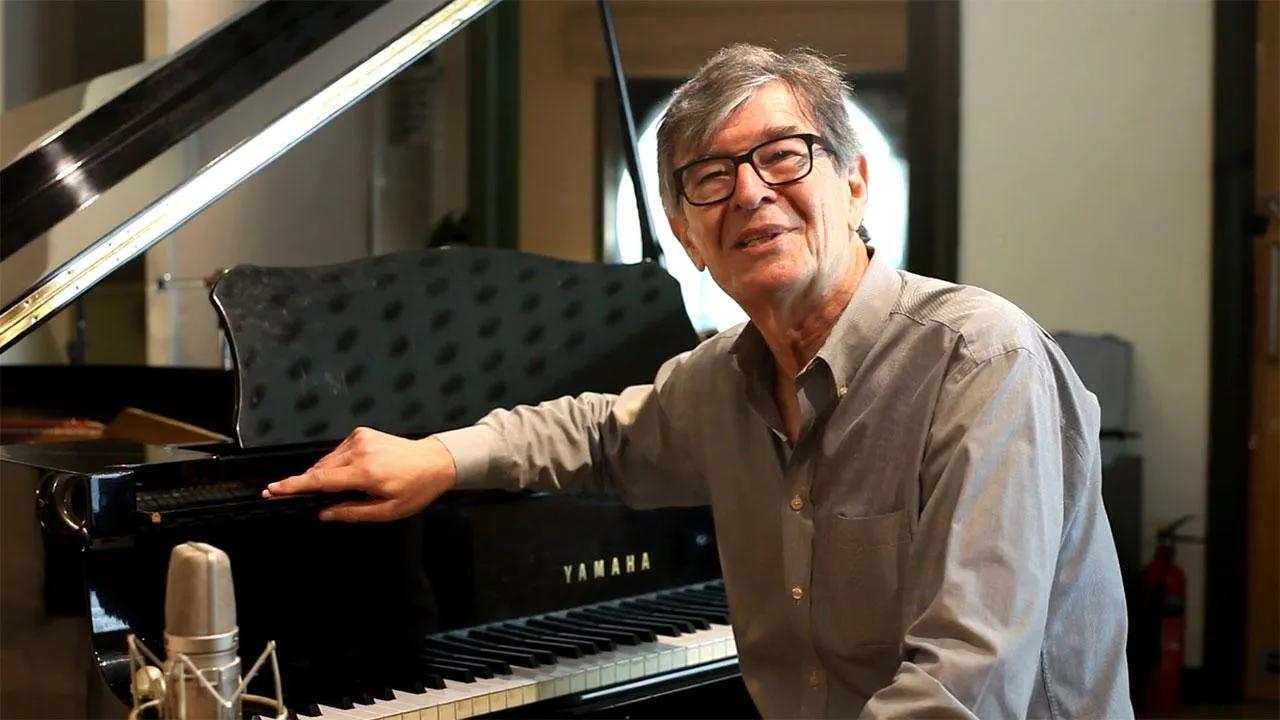
Darius Brubeck ist ein renommierter Jazzpianist und Musikpädagoge. Er hat zahlreiche Alben als Bandleader veröffentlicht, ist international mit seinen eigenen Gruppen getourt und hat mit seinen Brüdern an Brubecks Play Brubeck zusammengearbeitet. Darius war als Fulbright-Gastprofessor in Rumänien und der Türkei tätig. Er rief den ersten Jazz-Studiengang an einer afrikanischen Universität ins Leben, an der University of KwaZulu-Natal in Südafrika, wo er bis 2005 unterrichtete. Darius arbeitet häufig mit Mike Rossi zusammen, Saxofonist und Musikprofessor an der University of Cape Town. Zu Mikes Verdiensten zählen zahlreiche Aufnahmen und internationale Bühnenauftritte als Leader, Solist und Sideman unter anderem mit Tony Bennett, Dave Liebman, Winston Mankunku Ngozi, George Russell, Clark Terry und Alessio Menconi. Mit Darius als Mentor kommst du direkt zum Wesentlichen. In Harmony 101 entmystifiziert er die Jazzharmonik, damit du sie schnell anwenden kannst, und in Mastering Odd Times zeigt er dir, wie du in ungewöhnlichen Taktarten souverän spielst und improvisierst. read more