



Frühe Einflüsse der Rockgitarre
Lesson time: (6min 46sec)
Simon Bartholomew spricht über den Rock 'n' Roll, Skiffle und frühen Blues der 50er, die ihn zuerst für die Gitarre begeisterten.
Course preview
This lesson is part of the course Lerne die Grundlagen der Funk-Gitarre mit The Brand New Heavies
Watch a preview of the full course below.
Lesson transcript:
My Musical Journey: The Roots of Rock and Roll
My first real passion in music was kind of 50s Americana rock and roll. This was in the 70s. At the time, there wasn't really much rock and roll around. There were a few bands copying rock and roll, but I wanted to get back into the original stuff.
When I heard it, it gave me this incredible energy. I think really it's the energy of post-war America booming, and this sound was emerging from the swing bands into a new genre called rock and roll, which was quite a threat to society in America. It was rebellious and a bit teenage. I was around 11 or 12 years old when I first started getting guitar lessons.
Discovering Rock and Roll
Unfortunately, my teacher was able to teach me rock and roll, so I learned the songs I wanted to hear, things like "Summertime Blues." I played electric notes in there, but that stuff really got me excited. Bands like The Who were also influenced by this music.
In many ways, my influences are very similar to those of rock bands like Led Zeppelin and The Yardbirds, who were also digging back into the early blues. My dad was a big fan of a guy named Leadbelly, who sang cotton-picking songs, blues, and folk songs. He wrote "Rock Island Line," which is significant because it contributed to the skiffle movement that led into early rock music.
The Skiffle Craze
During this time, if you were poor, you might have an acoustic guitar, a washboard for rhythm, thimbles, and a bass made out of a broom handle and a piece of string. The skiffle music craze took off in the UK. It was reminiscent of early blues, with its rhythm and blues vibe.
I started collecting records and loved it all:
- Gene Vincent
- Eddie Cochran
- Chuck Berry
- Fats Domino
Then, there was a rebellious rock and roll show called Cruisin' on Capitol Radio. I used to record it on my little cassette machine, playing it back again and again to discover more R&B and a bit of doo-wop.
Jazz Influences
My mum was not heavily into jazz, but she loved artists like Charlie Parker, Lionel Hampton, and Nelly Lutcher. She would take me to Pizza Express in Soho, where I'd sit through jazz performances. I didn't really get it at the time, but it all absorbed into me.
In the beginning, I got my first guitar, a £26 acoustic guitar. I recommend starting on an acoustic guitar because they're harder to play and they hurt your fingers more. You don't want to start with something easy and then go backward. They're also useful for traveling and represent where the blues comes from.
Early Guitar Lessons
On the acoustic guitar, you tend to play more open chords. I learned tunes like "Peggy Sue." Initially, the chords were hard to get used to, but it was really my right hand (if you're right-handed) that became the master of delivering funk and all sorts of music.
One tune, "Peggy Sue," had some really fast passages. It was challenging to wrap my head around back in the day. There were also blues elements coming in that resonated with me deeply, and the feelings those songs evoked were incredible.
Personal Style and Influence
I was starting to get into dressing up, which I'm still passionate about today. It was all about luminous socks and Brill Cream in my hair. I had this one album called The Many Sides of Rock and Roll, which featured the original versions of songs. Inside the gatefold sleeve was an ad for Levi's jeans, featuring a guy standing with a guitar in his stay-pressed Levi's, foot on a box.
I imagined myself in the playground, playing guitar and surrounded by girls, that's one of the reasons I started playing guitar.
It's not just about music; it's about style and your presence. One of the first things I learned was a crucial blues riff. It might not have been brilliant, but that kind of blues thing would give me shivers up my spine.
Listening to it while playing, it had that upstroke that created a funky vibe, simple yet impactful, perfectly fitting within the music.
About the instructor
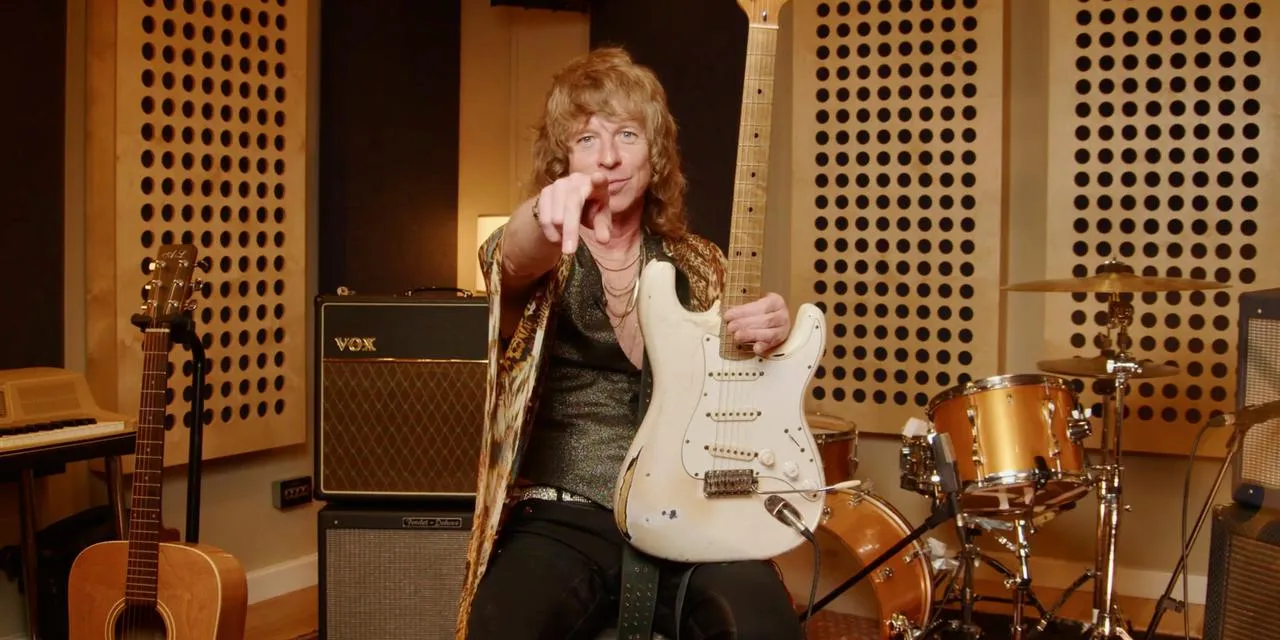
Simon Bartholomew ist der Gitarrist der britischen Funk/Pop/Soul-Gruppe The Brand New Heavies – einer Band, die dafür bekannt ist, ihre Instrumente live selbst zu spielen, statt sich auf zeitgenössische computerbasierte Programmierung zu stützen. Genau dieses Bekenntnis zu echtem, im Groove sitzendem Spiel macht ihn zu einem so guten Wegweiser für Funk-Gitarre, und der Produzent Mark Ronson sagte Simon einmal, dass er und Nile Rodgers seine Lieblingsgitarristen seien. Gemeinsam mit seinem Bandkollegen Andrew Levy schreibt, produziert und mischt Simon und überwacht den Betrieb einer voll funktionierenden, tourenden und aufnehmenden Band. Die beiden lernten sich auf der weiterführenden Schule kennen und begannen, nachdem sie im Club The Cat In The Hat Funk gehört hatten, miteinander zu jammen; als die DJs des Clubs einen ihrer Titel, 'Catch That Beat', von einer Kassette spielten, begann die illustre Reise der Band. Von jenen frühen Tagen in London bis hin zu Reisen durch die USA und Japan hat die Band praktisch die ganze Welt bereist, half, die frühe Hip-Hop-Szene in Los Angeles und New York anzutreiben, und wurde zu den Hauptvertretern der Acid-Jazz-Bewegung der frühen 90er. The Brand New Heavies können auf ihren zahlreichen Alben Platin- und Goldverkäufe vorweisen und hatten mehrere Songs auf Filmsoundtracks – vor allem Happy Feet, das einen Song ihres Albums Heavy Rhyme Experience verwendete, das als das erste Rap-Album gilt, das eine Live-Band einsetzte. Simons musikalische Einflüsse reichen tief und weit: Blues, Jazz, Soul, Rock, Punk, Psychedelia, Prog Rock, Klassik und Classic Rock – und so ziemlich alles andere, von den Live-Bands und Orchestern überall im Fernsehen, mit denen er aufwuchs, bis zu der selteneren Musik, die er in der John Peel Show und über die Plattensammlungen von Freunden entdeckte. Während er weiterhin mit The Brand New Heavies tourt und aufnimmt, hat er auch Musik für Dokumentarfilme geschrieben und an Projekten wie Akimbo und 1ibear gearbeitet, mit weiteren in der Pipeline. Simons Mission ist es, Rock und Funk zu verschmelzen, und wie er es ausdrückt: 'In allem steckt Funk, wenn man nur hinschaut und danach fühlt.' Genau diesen Geist bringt er in Learn the Fundamentals of Funk Guitar with The Brand New Heavies ein. read more