



Boogie-Woogie-Breaks

Mit
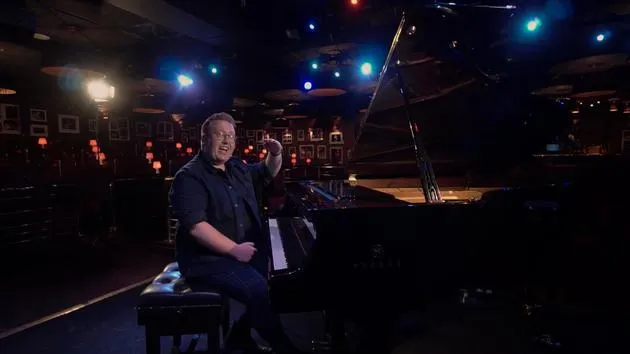
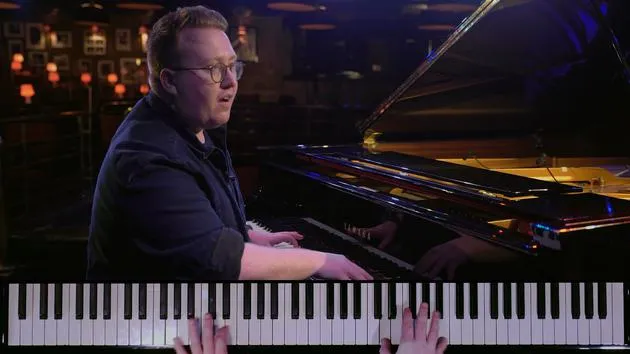
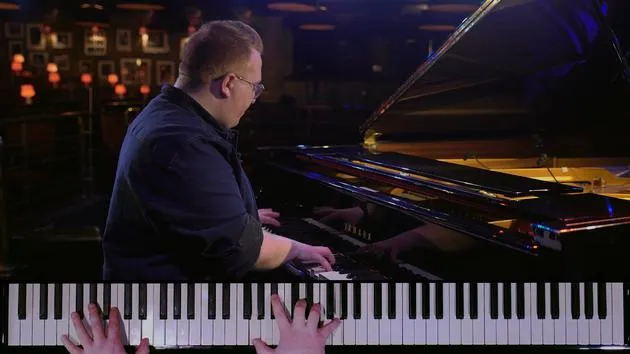
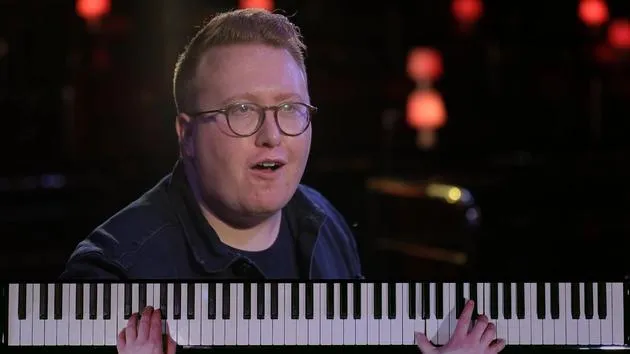
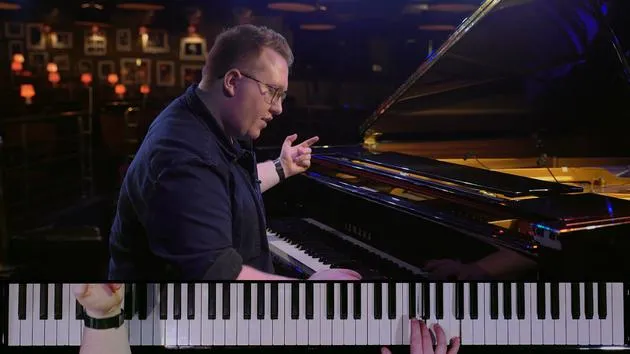
Tom SealsTom Seals zerlegt den Boogie-Woogie-"Break" – die linke Hand für ein paar Takte auf einer C6-Form anhalten und die Lücke dann mit der rechten Hand füllen.

Das steckt im Kurs
21 Lektionen (1h 47m) · 1 gratis
01. Einführung in 'New York State of Mind'
3:05
02. Terzen verwenden
Gratis-Lektion1:41
03. Es 'bluesig' machen
10:58
04. Es ‘jazzig’ machen
1:20
05. Selbstvertrauen beim Solieren aufbauen
3:05
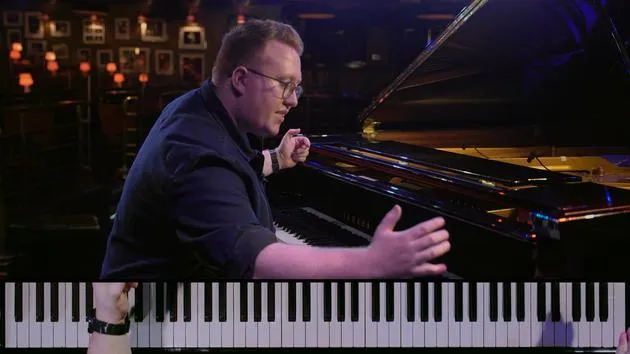
06. Fortgeschrittene Solo-Ideen
7:30
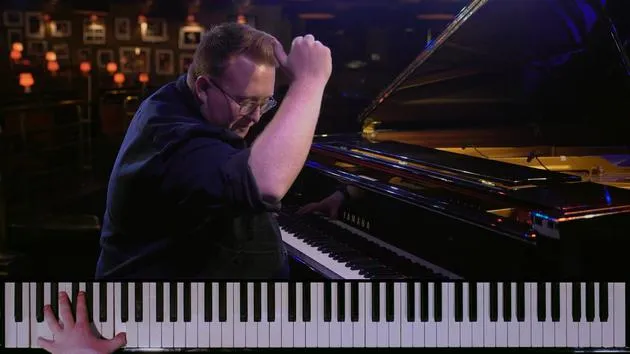
07. Ein klassisches ‚Billy'-Ende
3:47

08. Tom Seals spielt Billy Joels 'New York State of Mind'
6:26
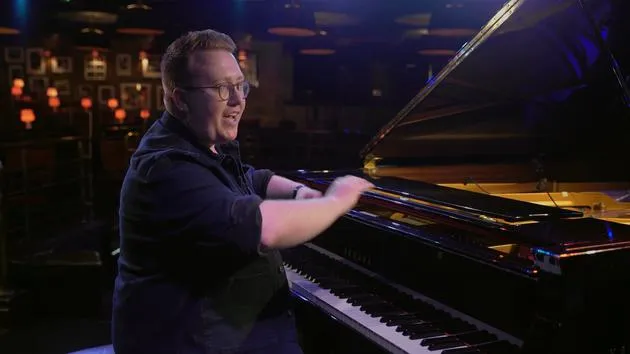



Transkript der Lektion
Boogie Woogie: Understanding the Brakes
One thing that is standard in boogie woogie is what we call brakes.
Now, I'll play it in context. I'll give you a nod when it happens so you can hear.
Here we go:
I'll start, of course, without the brake. I'll give you a nod when it happens. Okay, it's coming up now. And then we're back in.
The Concept of Brakes
So, the brakes are, to me, they represent a real change, not in tempo or anything else, but it gives a bit of dynamic. It stops the left hand for a couple of bars, and then we get straight back into it.
Chord Breakdown
I'll show you what I played there:
- I started with a C6 chord.
- We're going to take a C and add the sixth, which is the A.
- It sounds like this: da da da da da da da.
So I did it in both hands:
- C, E, G, A
- C, E, G, A
- And I put a C at the top there.
We're nearly using every single finger there and playing all the notes at the same time.
Adjusting the Chord
Next, we're going to move the E and the G down by semitones:
- E becomes E flat
- G becomes F sharp
So in context, while playing every other note as well, you get this:
Adding a Glissando
I like to do a little glissando, a little run up the piano to this. Now, because that's so full on and a bit frantic, I like to take the left hand off and just do a two bar fill with the right hand.
Here's an example:
It could be any blues line, any riff, anything you like. What I played in that example was this:
- C and G at the same time
- C and F sharp at the same time
- C and F at the same time
So you get this melody:
- G, F sharp, F natural, E flat, E, C (always add the C in).
Practicing the Melody
Now, that's quite fast and you can do that all the way down the piano. Get that into your fingers.
Putting it Together
So let's add those things together:
- C6
In my mind, that replaces the first four bars of C in the 12-bar pattern. The 12-bar pattern is just on repeat:
- Repeat the 12 bars, repeat the 12 bars, repeat the 12 bars, but maybe once.
Only use this trick once throughout the whole piece, as you want it to be effective and have impact.
Transitioning Back into Boogie Woogie
This little passage here replaces the four bars of C. So when you come back into the boogie woogie, don't go back to C; you have to go straight back into F.
Here's how it would break down:
- Bar 1: C
- Bar 2: C
- Bar 3: C
- Bar 4: C
- Bar 5: F
Now I will play 12 bars: I'll play the little break for you and then come back in.
Here's the playthrough:
- Bar 1,
- Bar 2,
- Bar 5,
- And in on F.
Ending a Boogie Woogie
Now, of course, we need to end it.
The Standard Ending
How do we end a boogie woogie?
As soon as I play this ending, you'll say, "I have heard that ending on thousands of records."
Here it is at speed:
- C, E, F, F sharp, G, G, A, B natural, C.
- (Again, that's C down to the E, F, F sharp, G, A, B, C.)
You know the rhythm because everybody knows this.
Adding a Dramatic Finish
You can hold on that E and then end with a nice C7 chord:
- C in the bottom, E, G, B flat.
For the seventh, we love the seventh! Add the ninth and then run that up the piano. Give it your best dramatic ending.
Alternative Endings
That's one ending.
Let's look at an alternative ending.
Here's another option:
- C to E again,
- F, F sharp G.
All of that is the same as the first one. Instead of running up like we did before, we'll go:
- G, B flat up to E flat, which gives it a nice jump.
Crafting Your Unique Ending
You're working all the way back up to C. This gives it a nice jump, making it sound different to the ear.
Then you might end with a nice C7 at the end.
Another thing you could do, as you're playing solo piano, you've got freedom. If there's a little gap, make up your own ending.
For example:
It could sound like this, allowing you that space.
Using Blues Scale Variations
So give your right hand that freedom, take your left hand off, and just use the simple blues thing that we learned before to come up with your own.
As long as you end on a C with a big C7 chord to finish, the world is your oyster!
Conclusion
Use the blues scale to finish that. Incorporate little blues ideas, use the E flat as your grace note, use some repetition.
You could even mix it up:
- First half using the blues scale
- Second half making your own.
This could sound like this, or this, and everybody will know that you finished.
Final Thoughts
Hopefully, you will have just played a great boogie woogie. The audience will be standing on their feet!
I hope you enjoyed that little boogie trick. Remember, this doesn't just work for boogie woogie. These little right-hand tricks here will work over anything.
Pick any classic tune, for instance, Billy Joel's New State of Mind, these right-hand tricks will make your playing bluesy.
So enjoy them, get them into your fingers. And don't forget: sit on Facebook with your right hand, drill a boogie with your left hand. Once you've got the boogie, add the woogie, and there'll be no stopping you.
I can't wait to hear you play it!
21 Lektionen
1 Std. 47 Min. strukturierte Videolektionen
Erweiterte Videofunktionen
Verlangsamen, Passagen loopen, mitlesen
Handy, Tablet & Desktop
Üben, wo du willst
100 % Zufriedenheitsgarantie
30 Tage Geld-zurück-Garantie
Lern deinen Guru kennen
Lern deinen Guru kennen
Den Titel des UK Piano Man haben lange Elton John, Jools Holland und Jamie Cullum getragen. In den vergangenen fünf Jahrzehnten kam ihm sonst niemand auch nur ansatzweise nahe – bis jetzt!
Frisch von seiner ausverkauften Tour "Let The Good Times Roll" hat Tom Seals – "möglicherweise schlicht die Zukunft von Jazz und Blues" – die Welt in den Fingerspitzen. Sein virtuoses Solospiel, seine hervorragenden Improvisationsfähigkeiten und seine unverwechselbare Stimme haben führende Branchengrößen dazu bewogen, ihn als besten Boogie-Woogie- und Blues-Pianisten und -Sänger Großbritanniens zu feiern.
Noch Mitte zwanzig, hat Seals bereits ausverkaufte Shows rund um den Globus gespielt, darunter Londons legendäres Ronnie Scott's, ein umwerfender Auftritt im Birdland Jazz Club am Broadway in New York und Arbeiten an der Seite von Jools Holland.
Bemerkenswerte Auftritte:
- 'Gregory Porter & Friends' beim Cheltenham Jazz Festival
- Jools Hollands 'Boogie Woogie & Blues Spectacular'
- Birdland Jazz Club, New York City
- British Summer Time - Hyde Park
- Ronnie Scott's Jazz Club
- Gisburne Park Pop-Up
- Montreux Jazz Festival
- Cropredy Festival
- The Steinway Two Pianos Festival
- Glastonbury
- Newark Showground "Drive-In"
- Blenheim Palace
In seinem Kurs lüftet Tom die Geheimnisse hinter seinem Spiel – er zeigt dir, wie du Standards am Klavier zum Swingen bringst, authentische Boogie-Woogie- und Blueslinien aufbaust und die Freiheit zum Improvisieren findest –, damit du selbst zum ultimativen Piano Man wirst.
Die vollständige Biografie von Tom findest du unter www.tomseals.co.uk.







