



The White Pass Trail (Lektion)
Lesson time: (10min 17sec)
Laurence Juber bringt dir sein Akustikgitarrenstück The White Pass Trail bei und arbeitet an seinem rollenden keltischen Muster, Hammer-ons und Pull-offs sowie einem Frailing-Schlag.
Course preview
This lesson is part of the course The Guitarist: Sechs Originalstücke in DADGAD und Standardstimmung
Watch a preview of the full course below.
Lesson transcript:
White Pass Trail Lesson
Introduction
So here we go with the White Pass Trail, which starts with a kind of a rolling Celtic type pattern.
Techniques and Patterns
Left Hand Momentum
- There is a lot of hammers and pulls.
- Feel the momentum of the piece from what the left hand is doing.
- The accents come from some of these hammers.
Section Breakdown
- B Flat Bass Note: The same pattern comes over a B flat bass note and then a C.
- Low F Bend: Just a little bit of a bend on that low F.
Frailing Pattern
- Moves into a frailing pattern.
- Lightly brush the strings, hitting the bass note, and then a downward strum with the back of the second fingernail.
- A bit of an up and down strumming motion is occurring.
Expanding Melody and Strum
- The melody expands while keeping the frailing going.
- A strum comes up to signal the end of the first section of the tune.
B Section
Introduction to the B Section
- The B section, which follows, gets a little tricky.
- It has a strum happening on the C chord followed by an octave pattern.
Octave Pattern
- Hammering, hitting the octave above, and then pulling off.
- Here's how it goes: "I'll do that slowly like that."
Moving Up the Neck
- Moves up the neck. This section is pretty tricky.
- Hammering
- Sliding
- Sliding back
- Pulling off
Repetition and Power Chords
- The whole pattern repeats.
- Like in "Cobalt Blue," strum using little power chords.
- Strumming the bottom three strings with the back of the first finger.
Distant Train Impression
Creating the Sound
- A whole episode in this piece gives the impression of a distant train.
- I've got a bend with a little bit of vibrato.
- "I try and take my time on that and just let it die out naturally."
- After that, I slide up to a unison off the open string.
Unique Lick
- The particular lick is done a little differently every time, embodying a "bluesy, slightly Celtic" feel.
Percussive Section
Technique Overview
- In this section, I hit the bass note with my index finger, followed by a finger slap of the 12th fret to bring out the harmonics.
- Using hammers and pulls to punctuate it.
Keeping the Rhythm
- Slides up in the bass, keeping the rhythm going, while also hammering.
- Using the backs of the fingernails to get little strums.
Aggressive Section
Building Intensity
- This is where it gets aggressive; do a hit here and a hit here.
- Just strumming and pulling up, leading to a busy hammer-pull pattern.
- The last note is played by strumming down for a muted pattern.
Returning to the Pattern
- Return to this pattern and repeat, which brings back the strum.
Final Licks
Closing the Lesson
- Slowly slide on the second and fifth strings from the 10th fret to the 12th fret, picking strings four and one open.
- The final lick involves raking across the strings using my thumb, followed by some power chords back to the original riff.
Harmonic Analysis
Simplicity and Complexity
- Looking at the harmonic point of view, there's not a lot of complexity.
- We have this C shape in DADGAD since everything on the first two strings and the bottom string is tuned a whole step lower.
Impressionistic Quality
- The melody evolves by playing the strings across the chord.
- The B flat bass note with a G, A, and D on top gives a rich B flat major 7 with an added 6.
- Some interesting textures arise from using open strings to generate extra overtones.
Conclusion
And there's the White Pass Trail with a nice strum at the end!
About the instructor
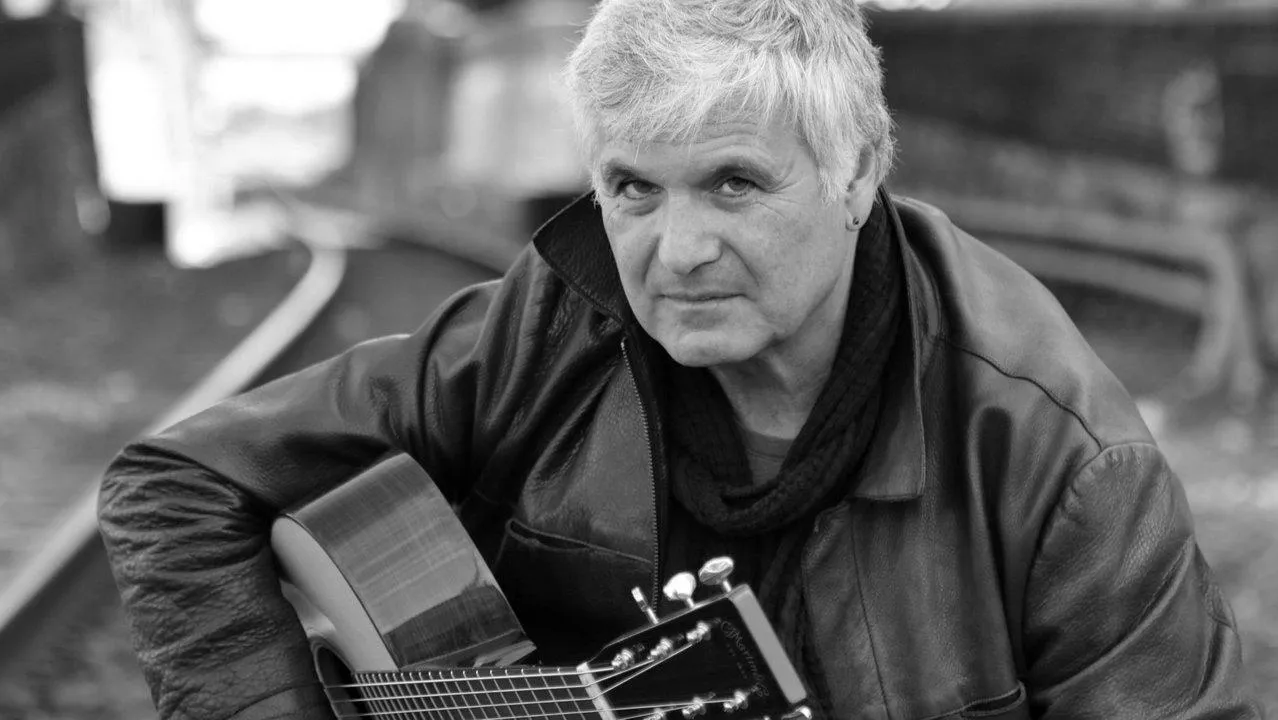
Laurence Juber wurde zunächst als Leadgitarrist in Paul McCartneys Band Wings bekannt. Seither hat er sich eine Karriere als Fingerstyle-Gitarrist, Komponist und Arrangeur aufgebaut und arbeitet vorwiegend in der DADGAD-Stimmung, die ihm den Beinamen 'the Duke of DADGAD' einbrachte.Von den Lesern des Fingerstyle Guitar Magazine wurde er zum Gitarristen des Jahres gewählt und vom Magazin Acoustic Guitar zu den besten Gitarristen gezählt – dazu kommen eine lange Liste von Soloalben und Welttourneen.In seinen Kursen vermittelt er seine Fingerstyle-Technik und die DADGAD-Stimmung, für die er bekannt ist, wie man Melodie, Harmonie und Bass für die Solo-Gitarre zusammenführt, und die Stücke – wie sein charakteristisches 'Wooden Horses' –, die all das vereinen. read more