



The Ornament Waltz
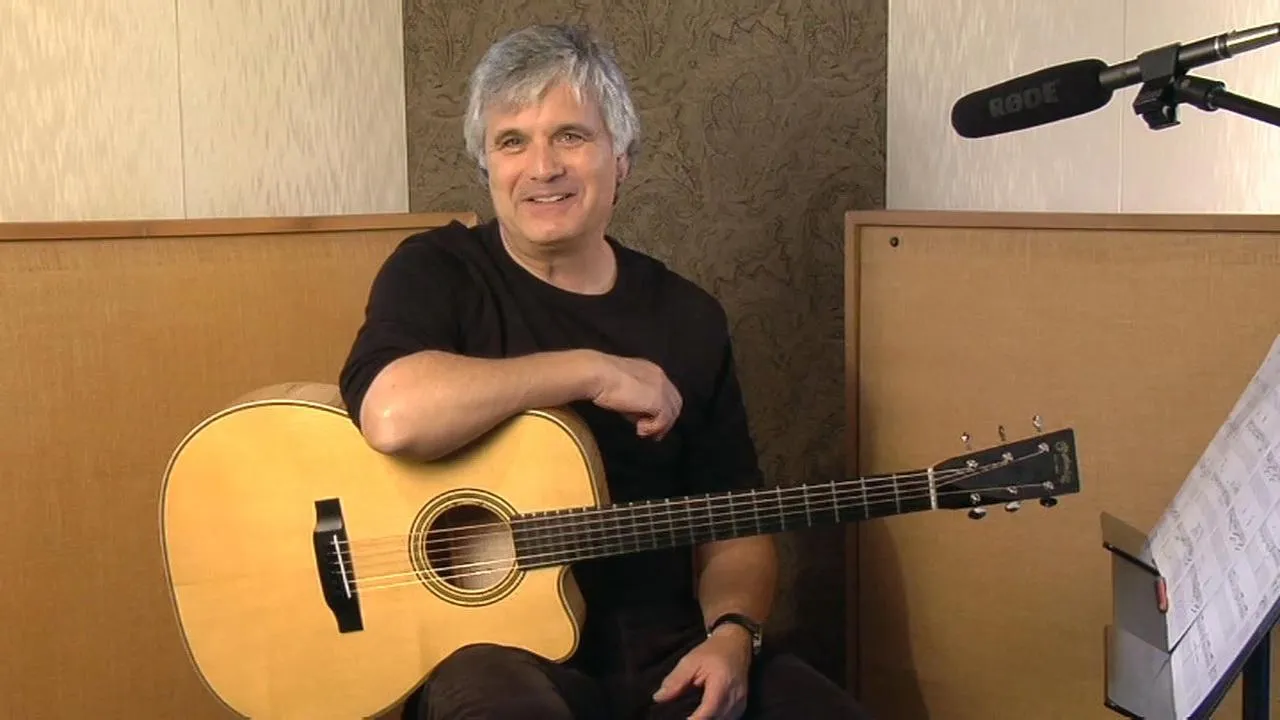
In dieser Lektion bringt dir Laurence Juber bei, sein Stück The Ornament Waltz auf der Akustikgitarre zu spielen.
Das steckt im Kurs
14 Lektionen (1h 33m) · 1 gratis
01. Enough Is Never Enough
8:12
02. Guitar Noir
5:34
03. The Crow's Nest
Gratis-Lektion5:15
04. Maple Avenue Strut
9:05
05. The Ornament Waltz
Du bist hier10:38
06. Rufus
7:19
07. Highway 17
8:38
08. Being Here With You
4:51
09. Wooden Horses
7:42
10. Double Agent
7:01
11. Shebeg & Shemore
4:44
12. Around The Block
6:39
13. Portobello Road
6:28
14. Abschließende Gedanken
1:03
Transkript der Lektion
DADGAD Tuning for the Ornament Waltz
Welcome back! Today we're diving into DADGAD tuning for the Ornament Waltz. This piece features a simple melody with light accompaniment. Here are some key points to keep in mind:
Fingering and Chords
-
Building Fingering:
- The melody is played across multiple strings while other chord tones sound simultaneously.
-
Careful Attention:
- In measure 9, be cautious as things start to get complex.
- Measure 10 features a moving inner line.
B Section Introduction
-
At measure 19, we transition into the B section:
- The chord is a BB flat major 7 with an add 13.
- Focus on playing the melody with the bass note while incorporating some inner voices.
-
Fingering Tips:
- Finger the upper strings and then reach for the lower string to play the B flat.
- Prepare the entire bar with your pinky at the beginning, as there won't be time for changes.
Accompaniment Parts
- In measure 26, avoid adding the fifth string to ensure smooth arpeggiation.
- Notice how I anticipate the chord with the bass note. I'll play that section again at 31.
Important Exercises
- Be mindful of measure 34, as it features a C bass note which offers a good exercise.
- After measure 34, we da capo (dc) and return to the beginning, ensuring it is played in a swung, jazz waltz style.
Advanced Techniques
-
When you play the third time at measure 37, remember:
- Instead of ascending a chromatic scale on a single string, take advantage of two adjacent scale tones.
-
Moving into measure 39:
- This features an E9 chord transitioning to an E flat 7 over an A.
Further Sections
- Let's play measure 43 up to speed again.
- In measure 46, there's a little bend to emphasize.
Exploring Voicings
- I particularly enjoy the E minor voicings in DADGAD, transitioning to F sharp 7.
- In measure 49, notice the pivoting to maintain the bass note.
Harmonics and Fingering
- At measure 50, incorporate harmonics with the picked bass note.
- Be careful in measure 51 with fingering ? it's all notated for clarity.
Sliding and Melody Positioning
- In measure 54, slide down on that diminished tonality.
- Measures 55 and 59 showcase the melody line spread out wide; watch for those glissandi.
Chord Transitions
- Ensure proper fingering from B minor 7 to D7. Use your fourth finger on the fourth string for these transitions.
Coda Preparation
-
As you go into the coda, prepare for a slight variation:
- Instead of the regular progression, I'm using a seventh flat nine (just a flat nine, actually) and then transitioning to E9.
-
In measure 74, notice the movement up by minor thirds on the diminished tonality, culminating in a clean D chord at the end.
Final Thoughts
It's crucial with this tune to:
- Embrace the Swing: Allow the tempo to breathe and let the rhythm flow.
- Focus on Ornamentation: Think about it as adding filigree, giving it a festive mood.
Enjoy practicing the Ornament Waltz!
14 Lektionen
1 Std. 33 Min. strukturierte Videolektionen
Erweiterte Videofunktionen
Verlangsamen, Passagen loopen, mitlesen
Handy, Tablet & Desktop
Üben, wo du willst
100 % Zufriedenheitsgarantie
30 Tage Geld-zurück-Garantie
Lern deinen Guru kennen
Lern deinen Guru kennen
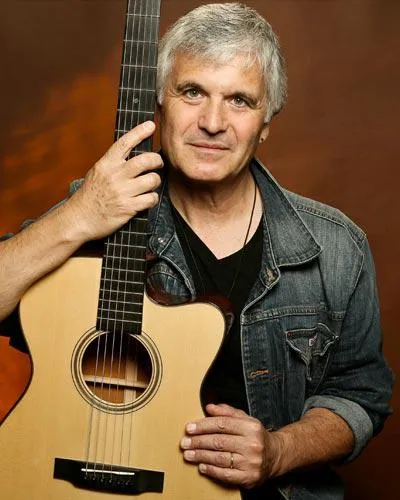
Laurence Juber wurde zunächst als Leadgitarrist in Paul McCartneys Band Wings bekannt. Seither hat er sich eine Karriere als Fingerstyle-Gitarrist, Komponist und Arrangeur aufgebaut und arbeitet vorwiegend in der DADGAD-Stimmung, die ihm den Beinamen 'the Duke of DADGAD' einbrachte.
Von den Lesern des Fingerstyle Guitar Magazine wurde er zum Gitarristen des Jahres gewählt und vom Magazin Acoustic Guitar zu den besten Gitarristen gezählt – dazu kommen eine lange Liste von Soloalben und Welttourneen.
In seinen Kursen vermittelt er seine Fingerstyle-Technik und die DADGAD-Stimmung, für die er bekannt ist, wie man Melodie, Harmonie und Bass für die Solo-Gitarre zusammenführt, und die Stücke – wie sein charakteristisches 'Wooden Horses' –, die all das vereinen.







