



Navigation in Ableton Live - Clips
Mit
Isaac Cotec
Das steckt im Kurs
20 Lektionen (2h 16m) · 1 gratis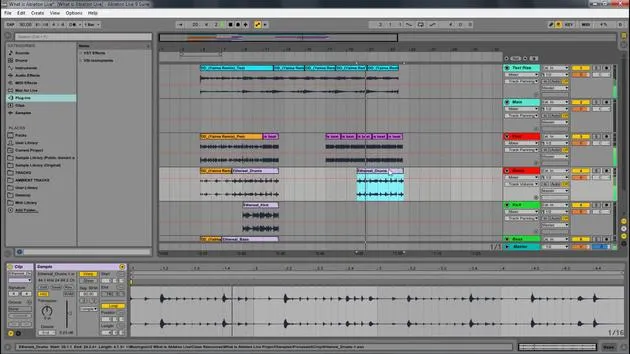
Transkript der Lektion
Understanding the Building Blocks of Ableton
Now let's look at understanding what the building blocks of Ableton is.
Just knowing what those windows are is not going to help you; however, it will create a common language so we can describe where things are and what pages we're looking at.
The Parts That Make Ableton Work
Now we really need to understand the parts that make Ableton work. What are the things that play the music and musical ideas?
The Clips
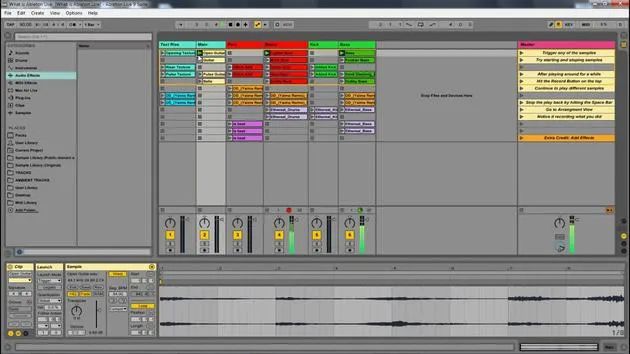
The basic music building blocks of Live are called clips.
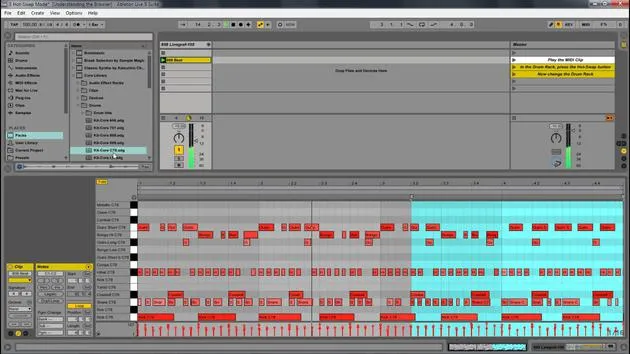
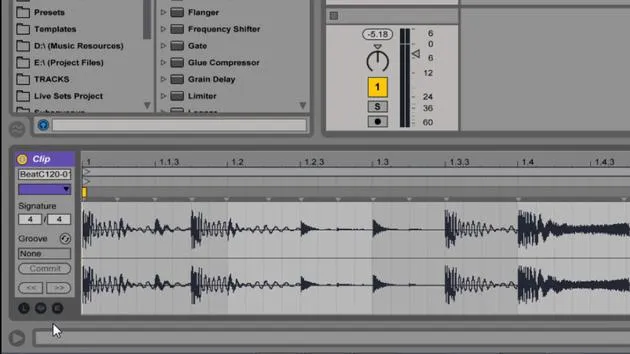
A clip is a piece of musical material: a melody, a drum pattern, a bass line, or even a complete song.
Live allows you to record and alter clips and to create larger musical structures from them, such as:
- Songs
- Scores
- Remixes
- DJ sets
- Whole stage shows
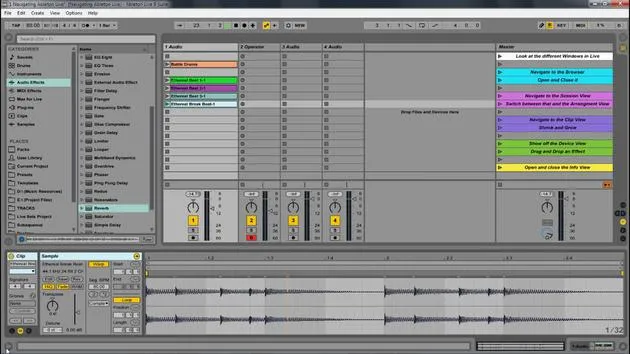
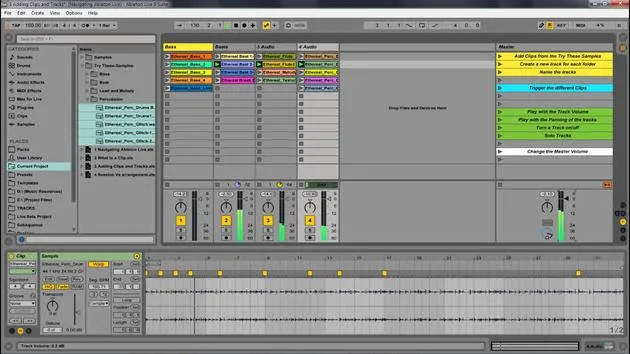
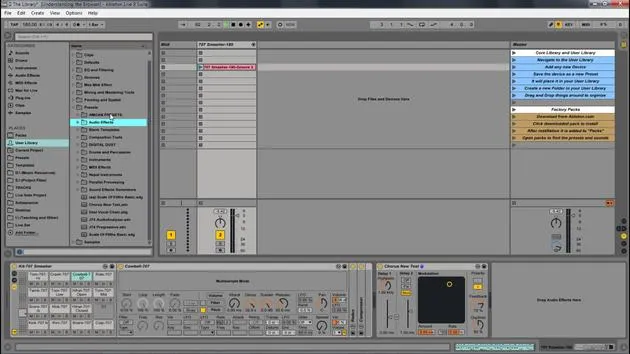
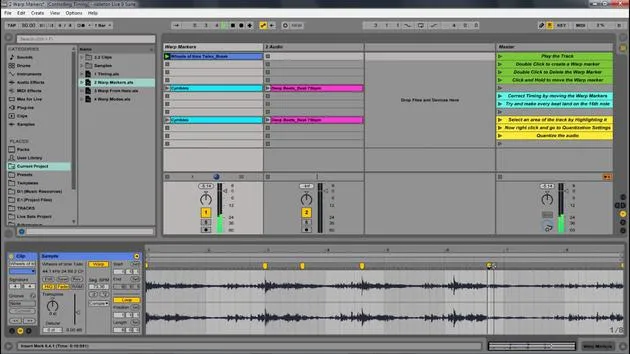
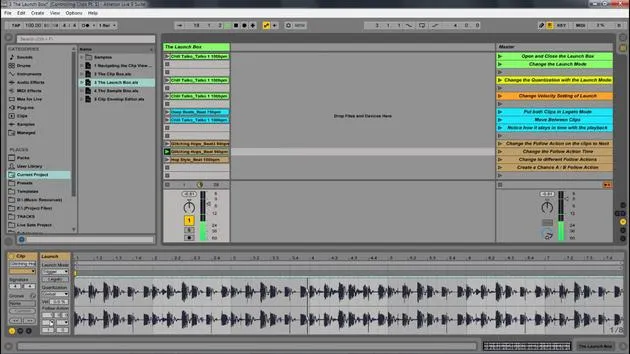
In this image, we have tracks, which represent clips. We're going to look deeper into that.
Clips as Containers
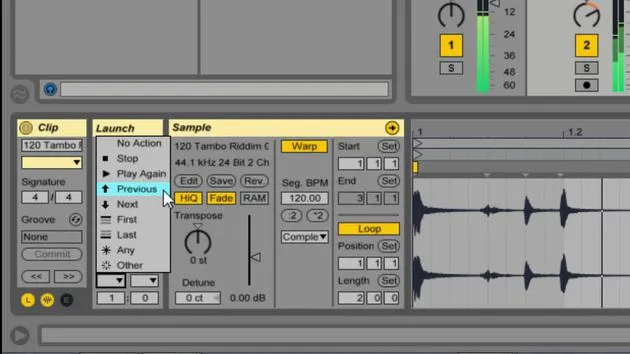
Clips are a container. It's really important to realize that this is kind of like a wrapper around a piece of audio. It doesn't actually mean it's the audio.
This leads us to what is called non-destructive editing, which allows for multiple versions of the same sample.
Example of Non-Destructive Editing
Let me show you that.
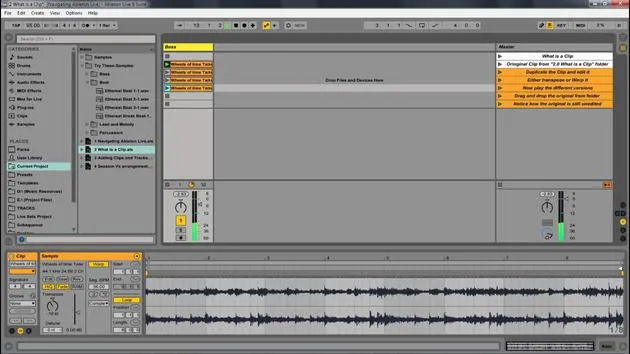
Here we have this "wheel of time" thing that I've created. Now, if I take this, I can hold Control and move it down to duplicate it.
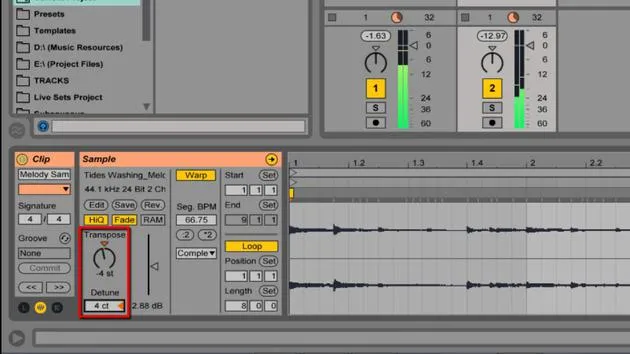
As an example, I can come in here and transpose this one down quite a bit. Notice how this one's transposed while this one is as is.
I can also do other things, such as:
- Shrink this one to that section
- Change its color for the sake of understanding
Let's put this one up. See how this is all the same sample and I've changed it in some ways, but the original sample is totally fine. I have not changed that in any way.
I'm just saying with this container, the orange, blue, and so on, that the clip is saying, "Well, I want to play this one differently."
Understanding the Sample
If I click here, this is just going to show me what that sample is. Here's the original sample, which has not been changed in any way. There are not multiple versions of the sample; it's the same thing.
But the clip is indicating that we are playing it back differently.
I can also drag in any sample; I can drag in this beat, and so on. Anything I can just drag over can be added to my live set.
20 Lektionen
2 Std. 16 Min. strukturierte Videolektionen
Erweiterte Videofunktionen
Verlangsamen, Passagen loopen, mitlesen
Handy, Tablet & Desktop
Üben, wo du willst
100 % Zufriedenheitsgarantie
30 Tage Geld-zurück-Garantie
Lern deinen Guru kennen
Lern deinen Guru kennen
Isaac Cotec ist wohl einer der besten Ableton-Trainer der Welt! Während er an seiner eigenen Musik arbeitete, begann er, Privatschülern Aufnahmetechniken, Sounddesign und Ableton Live beizubringen, und seit seiner Zertifizierung als offizieller Ableton Certified Trainer hat er Tausenden von Produzenten geholfen, ihr Niveau zu steigern und als Musiker erfolgreich zu sein.
Isaac begann 2005 mit Psyche Sonics elektronische Musik zu produzieren, einer experimentellen Gruppe, die sich mit der Wissenschaft und Erforschung binauraler Beats und der Bewusstseinsveränderung durch Klang beschäftigte. Nach dem Touren schrieb er weiter Musik unter dem Alias Cotec und trat später als Künstler Subaqueous hervor, der seine elektronische Vergangenheit mit zukunftsgewandten wie organischen Produktionstechniken verband. Bis heute hat er 3 Alben und 4 EPs veröffentlicht.
Isaac ist außerdem Gründer und Manager des Plattenlabels Invibe Music, das einige der besten Elektronik-Künstler des Pacific Northwest vertritt und sich auf Midtempo-Dance-Musik spezialisiert.
In seinen Ableton-Live-Kursen teilt Isaac die Produktions-, Sounddesign- und Songwriting-Techniken, die er über Jahre verfeinert hat – genau jene Fähigkeiten, mit denen er aus dem Funken einer Idee einen fertigen Track macht.







