



Zusammengesetzter Takt und Dis: Einführung, Fingersatz und Übungen
Eine Einführung in den zusammengesetzten Takt und den 6/8-Takt, mit Fingersatz und Übungen für den neuen Ton Dis.
Copyright © 2023 Universal Edition (London) Ltd., alle Kompositionen von James Rae, sofern nicht anders angegeben.
Das steckt im Kurs
27 Lektionen (1h 0m) · 1 gratis
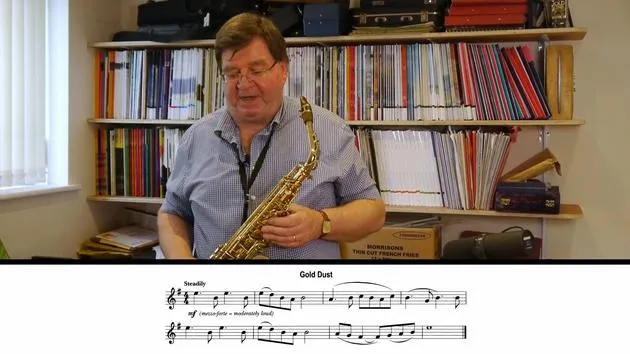
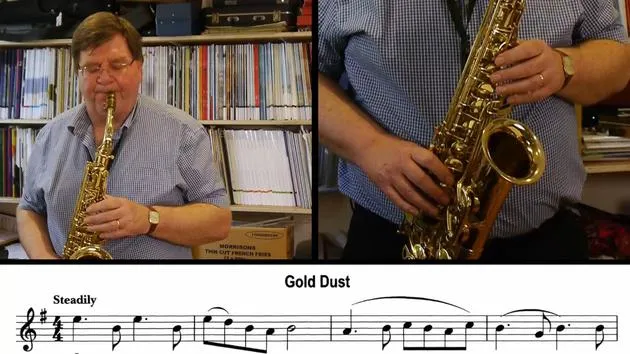
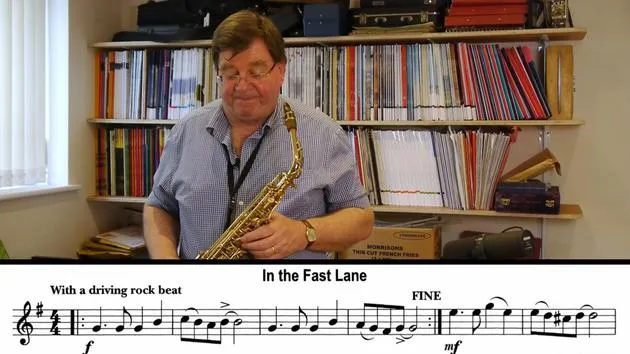
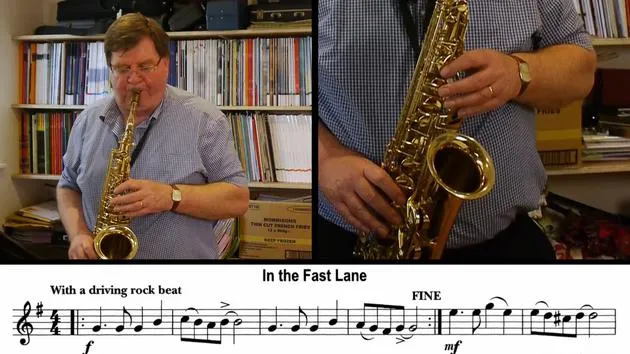
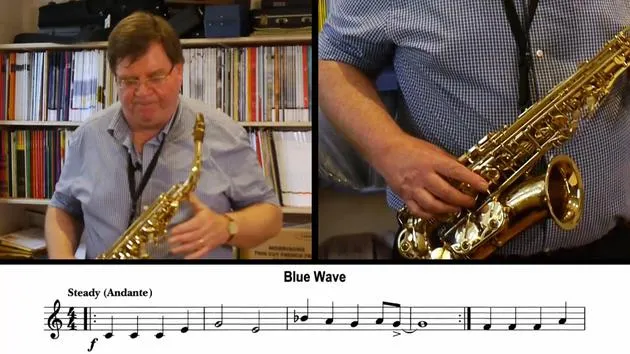
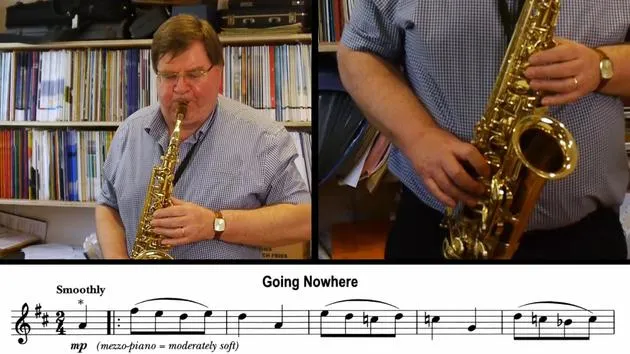
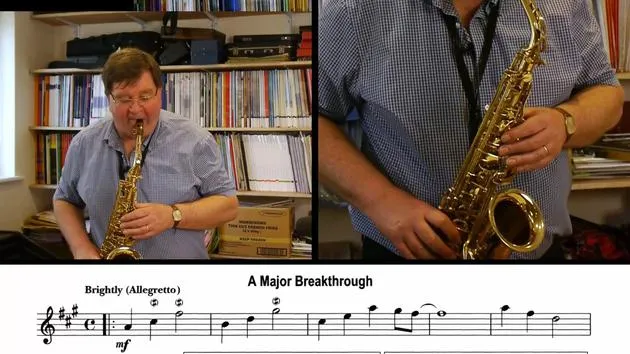
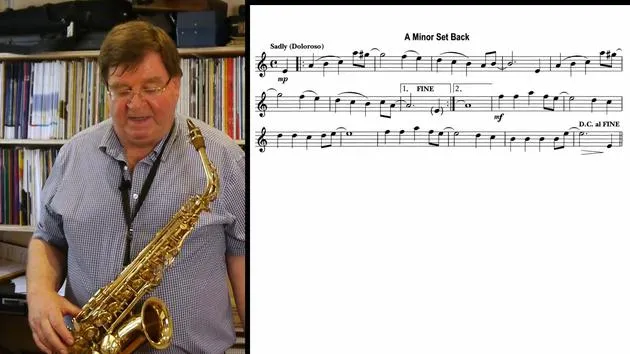
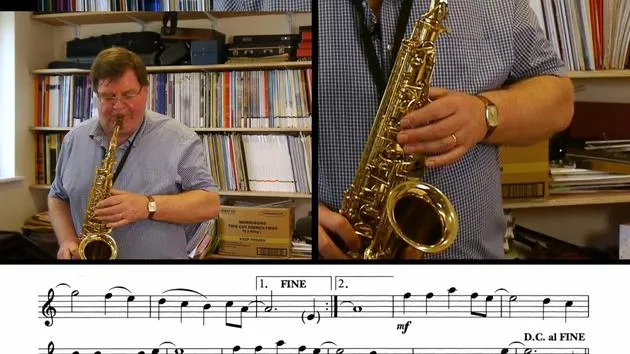
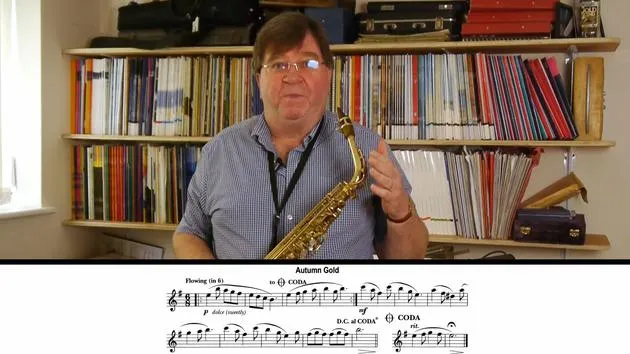
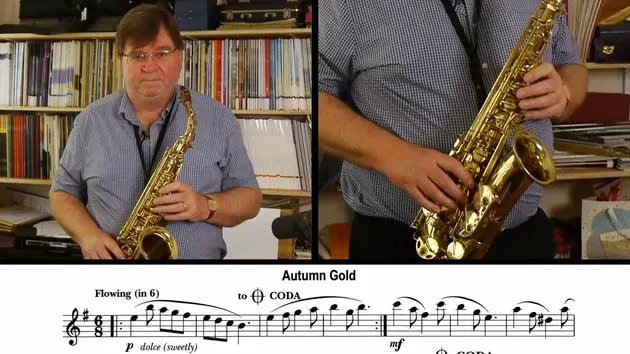
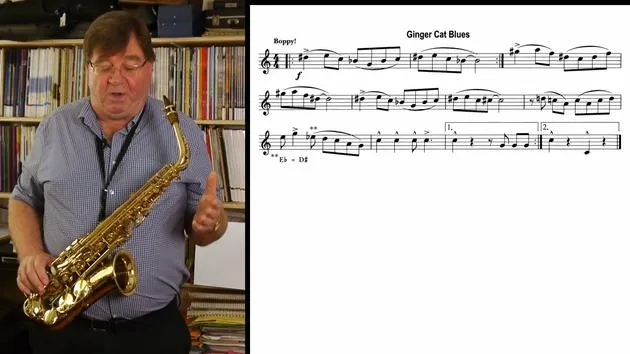
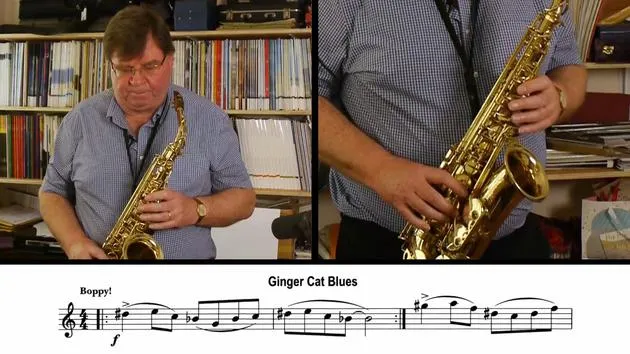
Transkript der Lektion
Compound Time and D Sharp: A Music Lesson
Introduction to Compound Time
In this section, we deal with compound time. Up till now, we've been dealing with time signatures in what we call simple time:
- 2/4
- 3/4
- 4/4
In simple time, each beat is divided into two quaver beats. Compound time, however, involves dividing each beat.
Understanding 6/8 Time Signature
The unit of pulse in 6/8 is the dotted crotchet, which is worth three quavers. While this sounds complicated, it's actually quite simple when you put it into practice.
Key Points:
- 6/8 has two big beats in the bar, each beat being a dotted crotchet.
- Comparison with 2/4:
- 2/4: 1, 2, 1, 2, T, T, T, T, T, T
- 6/8: Ta, T, T, T, T, T, T, T
Rather than counting 1, 2, 3, 4, 5, 6, you can think of it as:
- 1 and a, 2 and a, 1 and a 2 and a.
In a fast tempo, you would play 6/8 in two. For pieces written in slower 6/8, count in six:
1, 2, 3, 4, 5, 6.
Practical Exercise
- Examples of both are included in this section.
Introducing D Sharp
The note D sharp is fingered the same as D:
- Thumb on the register key
- Little finger of the right hand
Important Notes:
- D sharp presses the first key you come to (not the low C key).
- D sharp and E flat sound the same, although they are written differently. These are called enharmonics, which we will discuss later in the course.
Sounding D Sharp
- D: [audio example]
- D sharp: [audio example]
- E: [audio example]
Notation
D sharp sits on the fourth line with the sharp sign.
Exercises
Exercise 1: Workout for Little Fingers in 6/8
- Set a pulse and notice the bar repeat sign (looks like a percentage symbol: two dots and a slash).
- This sign tells you to repeat the previous bar. You can have any number of these repeat signs.
- In Exercise 1, play the first bar three times, and settle on the E.
Repeat this exercise as many times as you like. Though I suggest four times, you can do it 40 times if you're feeling good!
Exercise 2: Finger Strengthening with F
- Similar to Exercise 1, but now you'll also practice F.
- Start slowly, then gradually build up speed.
- Aim for an even finger technique so all notes sound the same length.
Technique Tips
- Remember the old click stop position.
- Avoid dragging your fingers: keep a firm action to prevent sounding slurred.
E Minor Scale
Now, we come to the scale of E minor. This scale on the saxophone spans over a twelfth, going up 12 notes (not a full two octaves, but a twelfth for convenience).
Key Points about Minor Scales:
- These are harmonic forms.
- Watch for the big gap between the sixth and seventh degrees (C natural and D sharp).
Tip:
- This gap is an interval of an augmented second, so be mindful of that leap, as it may feel like breaking into an arpeggio.
Practicing the E Minor Scale
- When played in its entirety, the scale sounds quite nice.
- You can loop the second bar, which aids in developing an even technique.
The scale gives an oriental flavor, characteristic of the harmonic minor scale.
E Minor Arpeggio
- The arpeggio of E minor consists of: E, G, and B.
- Since it spans only a twelfth, repeat the top and final notes to maintain rhythm.
Slurring Techniques
- Some scales have slurs with broken lines, allowing you to play them either tongued or slurred.
- Practice both methods, as you will need to perform scales in these ways for exams.
Study in E Minor
Now, we turn to our next piece: Study in E Minor. This piece is written in a fast 6/8.
Practice Method:
- Choose a pulse of 2 in a bar.
- Start at a slow tempo, gradually speeding it up as you gain confidence.
The Secret of Fast Playing
- As I tell my students: the secret to fast playing lies in slow practice.
- It's much like programming a computer; building a program takes time, but once done, it operates smoothly.
Finger Technique Tips
- Concentrate on the speed of release of your fingers.
- Your fingers should move rapidly, even when playing slowly.
The fingers should move like little electromagnets, but avoid any clattering. Aim for clear, clean sounds.
Conclusion
When practiced correctly, the transition to faster playing will come naturally, and the music will resonate clearly and beautifully.
27 Lektionen
1 Std. 0 Min. strukturierte Videolektionen
Erweiterte Videofunktionen
Verlangsamen, Passagen loopen, mitlesen
Handy, Tablet & Desktop
Üben, wo du willst
100 % Zufriedenheitsgarantie
30 Tage Geld-zurück-Garantie
Lern deinen Guru kennen
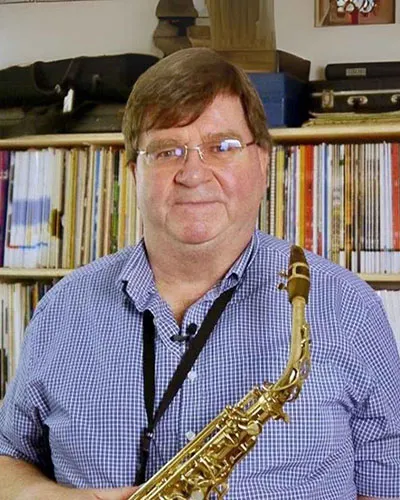
Lern deinen Guru kennen
James Rae wurde 1957 in Tyneside geboren. Von 1975 bis 1979 studierte er Klarinette, Bassklarinette, Klavier und Komposition an der Guildhall School of Music and Drama, bei den Professoren Yona Ettlinger, Stephen Trier, Meriel Jefferson beziehungsweise Patric Standford. Seit er die Guildhall verlassen hat, verfolgt er eine höchst erfolgreiche und abwechslungsreiche Laufbahn in drei Bereichen: als Interpret, Komponist und Lehrer.
James Rae hat in zahlreichen Produktionen des West End und des Royal National Theatre mitgewirkt, darunter Sir Peter Halls preisgekrönte Oresteia mit Musik von Sir Harrison Birtwistle, und er hat zahlreiche freie Engagements bei einigen der führenden Orchester und Ensembles des Landes erhalten. Er ist der Leiter des Phoenix Saxophone Quartet, das im Laufe der Jahre viele Konzerte und BBC-Sendungen bestritten und das Gesamtwerk von Carey Blyton auf zwei Alben aufgenommen hat, 'The Return of Bulgy Gogo' und 'Sherlock Holmes meets Dr Who'.
Als Komponist ist James Rae einer der meistveröffentlichten Autoren pädagogischer Bläsermusik Europas, mit über 250 Publikationen, die hauptsächlich bei Universal Edition erschienen sind. Zu seiner Musik gehören instrumentale Studienbücher, Sonaten, Schulen, barocke, klassische und Jazz-Transkriptionen sowie zahlreiche Bände mit Duetten, von denen viele in allen großen Prüfungslehrplänen für Blasinstrumente weltweit vertreten sind. Er hat außerdem vier Musicals für Schulen mit Mike Cornick geschrieben, und zu seinen größeren Auftragswerken zählen The Turn of a Wheel, ein bedeutendes Werk für Blasorchester, das im November 1999 für die North Tyneside Concert Band uraufgeführt wurde, deren Gründungsmitglied er als Junge war, sowie die Ouvertüre Moving On aus dem Jahr 2012.
James Rae war umfassend als Lehrplanberater und Komponist sowohl für das Associated Board als auch für das Trinity College London tätig und maßgeblich an der Entwicklung der Blattlese-Anforderungen für Holzbläser bei beiden Prüfungsverbänden beteiligt. Als Lehrer hatte er zahlreiche Positionen im staatlichen wie im privaten Sektor inne und arbeitet derzeit an der King's College School Wimbledon, wo er das Wind Orchestra und die Concert Band leitet, sowie an der Shrewsbury House School in Surbiton, wo er drei große Ensembles und eine Kammergruppe betreut. Diese Lehrerfahrung zieht sich durch seine Saxophon-Reihe für MusicGurus, die dich Schritt für Schritt von deinen allerersten Tönen bis zu einem sicheren, stilsicheren Spieler führt: First Notes, New Keys & Low Notes, Expanding Your Range, Scales & High Notes, Extended Range & Rhythm, und Polish & Style.







