



Der Ton fis - Einführung und Übungen
Lerne den Ton fis und die G-Dur-Tonleiter in der hohen Lage mithilfe der Oktavklappe, mit Übungen zum Aufbau deines Fingersatzes.
Copyright © 2023 Universal Edition (London) Ltd., All compositions by James Rae except where otherwise indicated.
Das steckt im Kurs
27 Lektionen (1h 0m) · 1 gratis
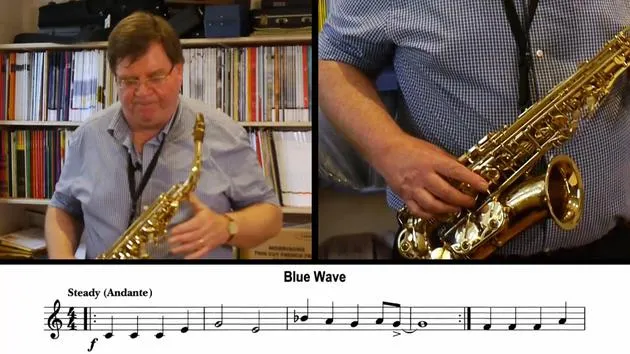
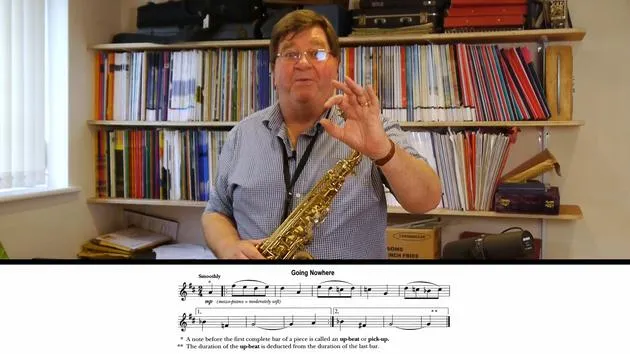
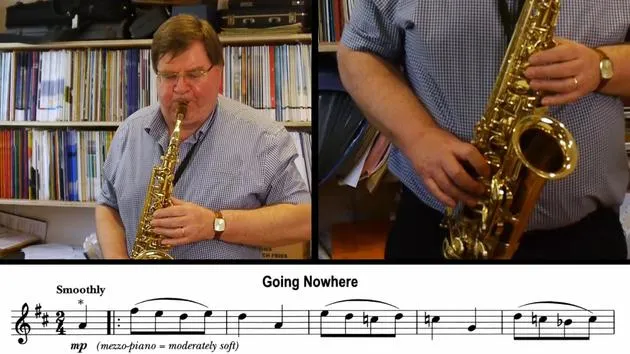
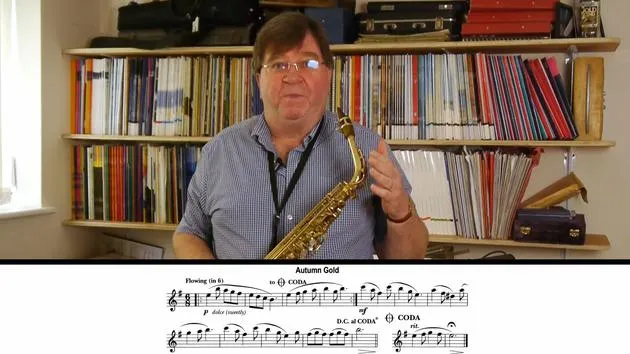
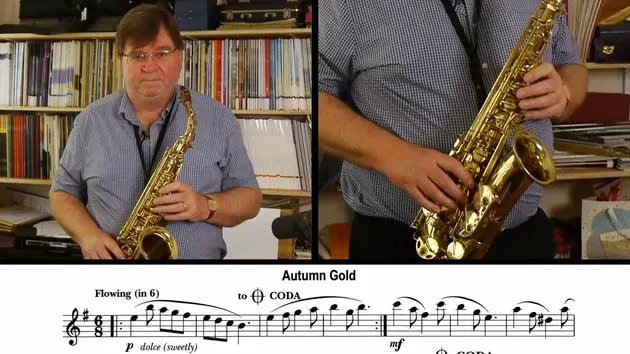
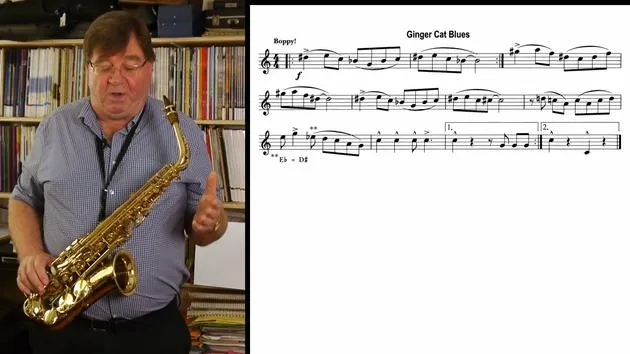
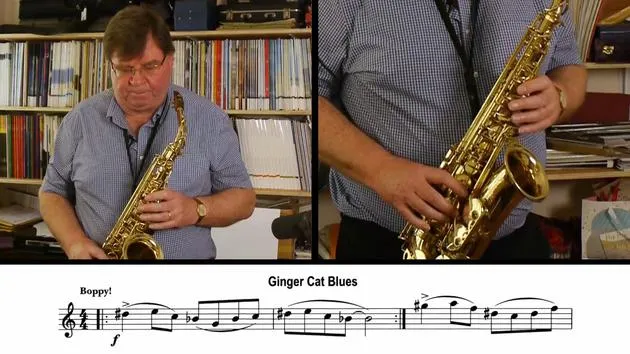
Transkript der Lektion
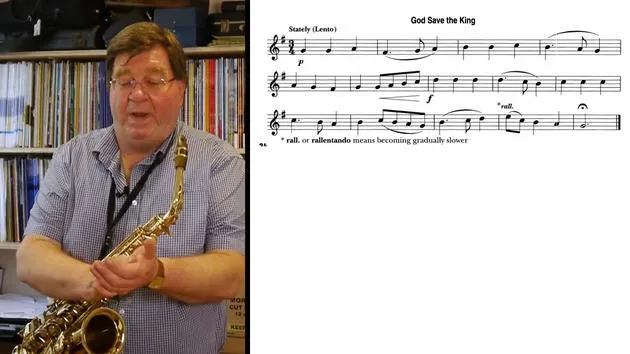
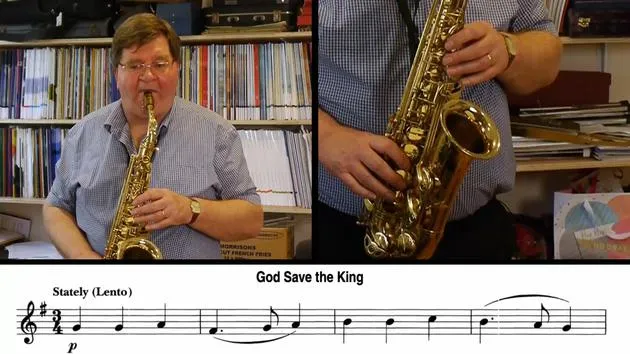
G Major Scale Lesson
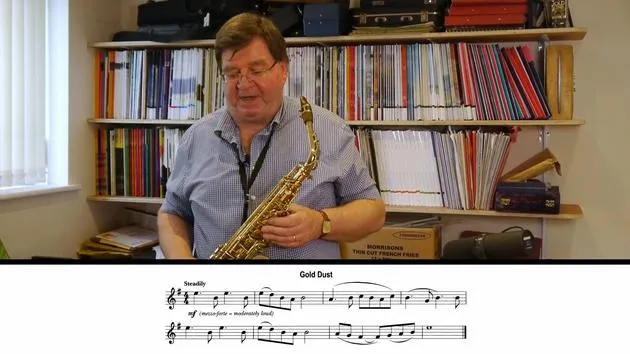
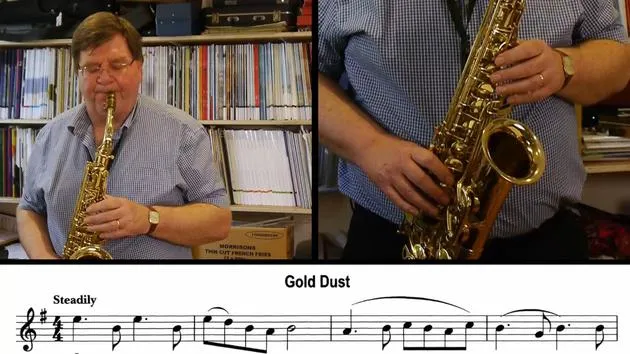
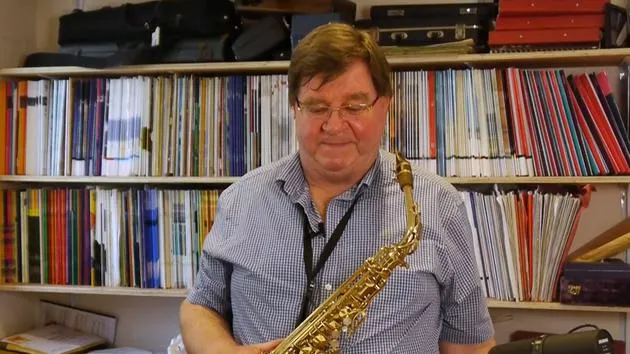
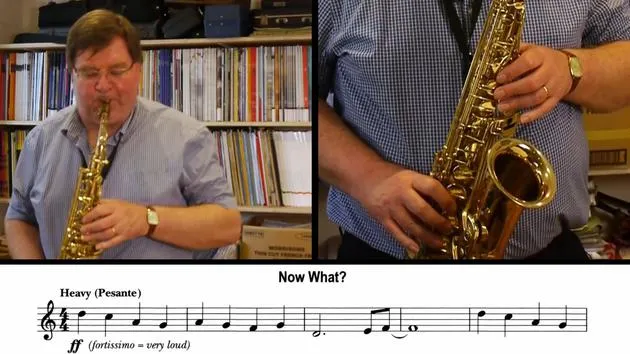
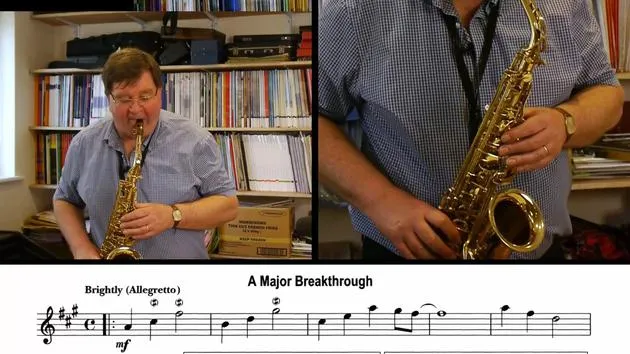
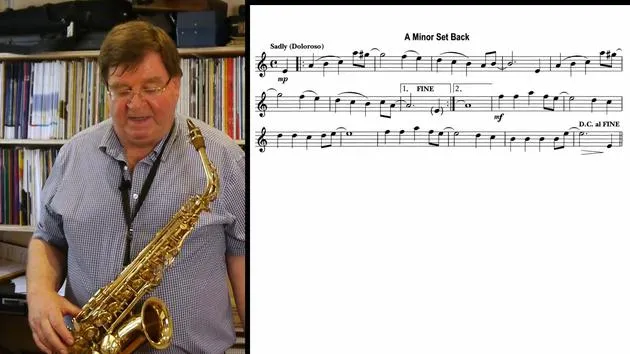
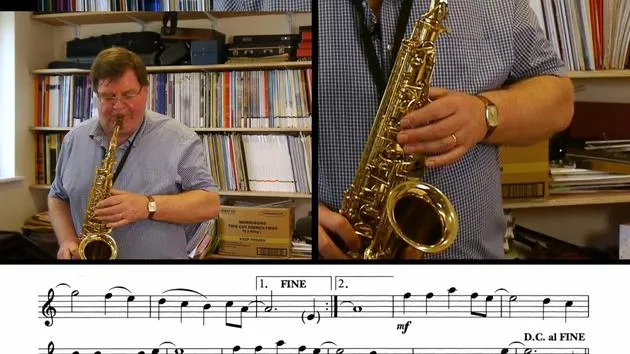
The next scale we learn is the scale of G major, which involves the F sharp. We learned about this earlier in the low octave register of the saxophone. In this case, we use the upper F sharp as well, which is fingered exactly the same, but with the octave key.
Tuning Note
There's the low one, nice easy note to play. That note is the tuning note, commonly used when you tune with a piano. It sounds A at concert pitch.
As you know, the saxophone is a transposing instrument:
- When you read a C and play what you read, it doesn't sound like a C.
- It's actually an E flat in this case.
This is why it's called an E flat alto saxophone. When you finger a C, and play a C, in order for the pianist to play the same note, they have to play an E flat.
Transposing Instruments
It's called a transposing instrument. A lot of instruments are transposing, such as:
- Trumpets
- Saxophones
- Clarinets
- Brass band instruments (cornets, flugelhorns, and more)
The alto saxophone is pitched in the key of E flat. So when you play a C, it sounds in the real world like an E flat.
On the tenor and soprano saxophones, which are pitched in B flat, when they read a C, it actually sounds B flat. That's why they're called:
- B flat tenor
- B flat soprano
- E flat alto
- E flat baritone saxophone
They are all transposing instruments.
G Major Scale Preparation
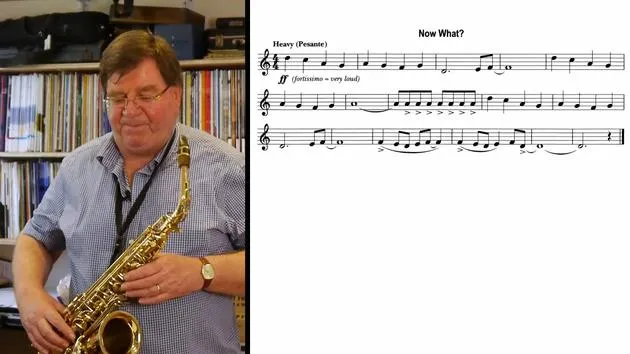
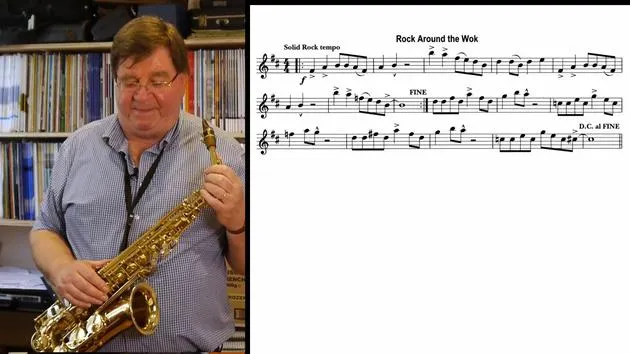
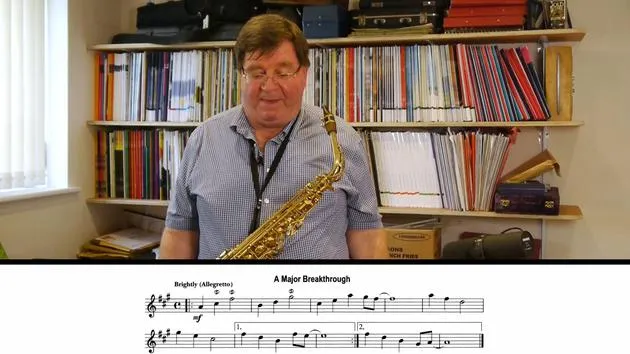
Now, back to the G major scale. We have the usual preparation here, where we do four notes. As you can see, I'm playing these slightly faster because as you progress, your technique will get faster, and you'll be able to play the exercises faster, too.
When we put that together, we get:
"Scales are fun when they're played well; they're not when they're not."
G Major Arpeggio Preparation
- Arpeggio Preparation involves again, two fingers, etc.
- You can play them more than four times if you want, but it's all good practice.
Then we put that lot together, and we have a perfectly formed arpeggio.
Dotted Crotchet
The next issue we deal with in this lesson section is the dotted crotchet.
We talked about dots earlier with regard to minims. A dot after a crotchet adds half its value, so it adds half a beat.
When practicing these rhythms, it's good to set your old metronome. Let's just do that now. I've got the metronome right here, just propped up there, giving us a nice even pulse.
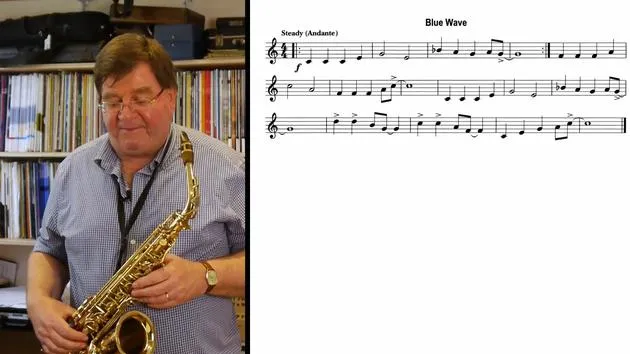
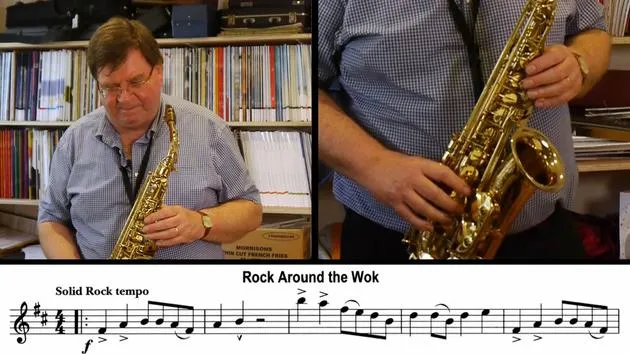
So, the rhythm of exercise five goes like this:
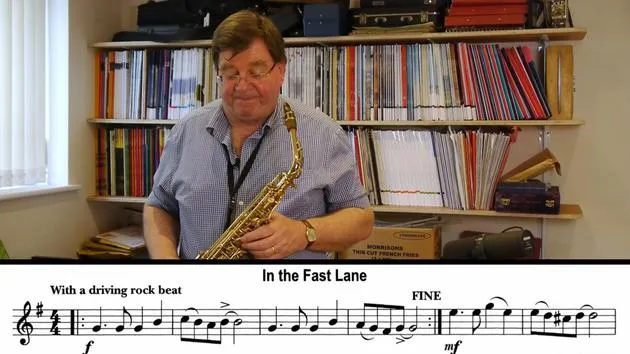
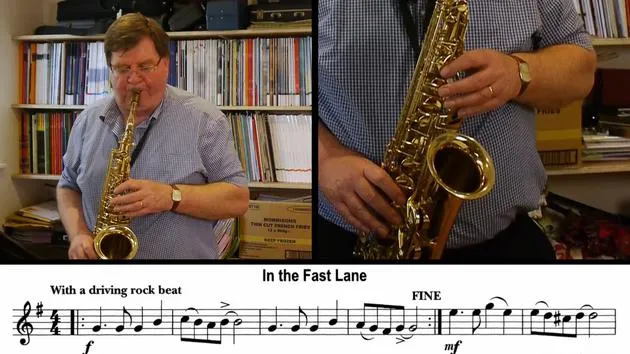
When I play that exercise on a single note, the next exercise involves a bit of movement. You have to move your tongue and your fingers at the same time. Always be precise.
27 Lektionen
1 Std. 0 Min. strukturierte Videolektionen
Erweiterte Videofunktionen
Verlangsamen, Passagen loopen, mitlesen
Handy, Tablet & Desktop
Üben, wo du willst
100 % Zufriedenheitsgarantie
30 Tage Geld-zurück-Garantie
Lern deinen Guru kennen
Lern deinen Guru kennen
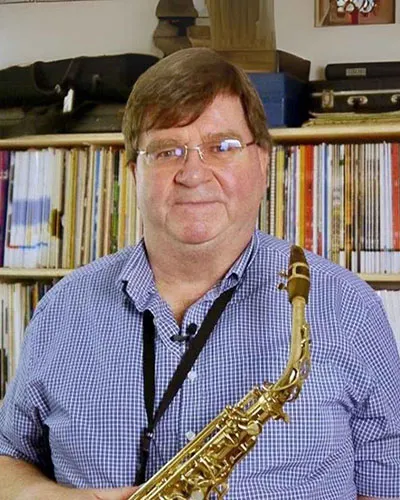
James Rae wurde 1957 in Tyneside geboren. Von 1975 bis 1979 studierte er Klarinette, Bassklarinette, Klavier und Komposition an der Guildhall School of Music and Drama, bei den Professoren Yona Ettlinger, Stephen Trier, Meriel Jefferson beziehungsweise Patric Standford. Seit er die Guildhall verlassen hat, verfolgt er eine höchst erfolgreiche und abwechslungsreiche Laufbahn in drei Bereichen: als Interpret, Komponist und Lehrer.
James Rae hat in zahlreichen Produktionen des West End und des Royal National Theatre mitgewirkt, darunter Sir Peter Halls preisgekrönte Oresteia mit Musik von Sir Harrison Birtwistle, und er hat zahlreiche freie Engagements bei einigen der führenden Orchester und Ensembles des Landes erhalten. Er ist der Leiter des Phoenix Saxophone Quartet, das im Laufe der Jahre viele Konzerte und BBC-Sendungen bestritten und das Gesamtwerk von Carey Blyton auf zwei Alben aufgenommen hat, 'The Return of Bulgy Gogo' und 'Sherlock Holmes meets Dr Who'.
Als Komponist ist James Rae einer der meistveröffentlichten Autoren pädagogischer Bläsermusik Europas, mit über 250 Publikationen, die hauptsächlich bei Universal Edition erschienen sind. Zu seiner Musik gehören instrumentale Studienbücher, Sonaten, Schulen, barocke, klassische und Jazz-Transkriptionen sowie zahlreiche Bände mit Duetten, von denen viele in allen großen Prüfungslehrplänen für Blasinstrumente weltweit vertreten sind. Er hat außerdem vier Musicals für Schulen mit Mike Cornick geschrieben, und zu seinen größeren Auftragswerken zählen The Turn of a Wheel, ein bedeutendes Werk für Blasorchester, das im November 1999 für die North Tyneside Concert Band uraufgeführt wurde, deren Gründungsmitglied er als Junge war, sowie die Ouvertüre Moving On aus dem Jahr 2012.
James Rae war umfassend als Lehrplanberater und Komponist sowohl für das Associated Board als auch für das Trinity College London tätig und maßgeblich an der Entwicklung der Blattlese-Anforderungen für Holzbläser bei beiden Prüfungsverbänden beteiligt. Als Lehrer hatte er zahlreiche Positionen im staatlichen wie im privaten Sektor inne und arbeitet derzeit an der King's College School Wimbledon, wo er das Wind Orchestra und die Concert Band leitet, sowie an der Shrewsbury House School in Surbiton, wo er drei große Ensembles und eine Kammergruppe betreut. Diese Lehrerfahrung zieht sich durch seine Saxophon-Reihe für MusicGurus, die dich Schritt für Schritt von deinen allerersten Tönen bis zu einem sicheren, stilsicheren Spieler führt: First Notes, New Keys & Low Notes, Expanding Your Range, Scales & High Notes, Extended Range & Rhythm, und Polish & Style.







